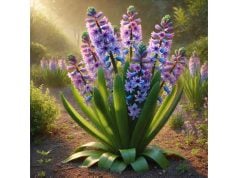
Himalayan blue poppy is usually admired first for its rare, luminous flowers, but its story does not end in the garden. In Tibetan traditional medicine, species within the Meconopsis genus have also been used for heat-related complaints, swelling, pain, and certain inflammatory conditions. That does not make it a well-proven modern remedy. In fact, Himalayan blue poppy sits in an unusual space: it has a long ethnomedical history, interesting alkaloids and flavonoids, and promising laboratory findings, yet very little direct human research.
That gap matters. It means the plant is best approached with curiosity and caution at the same time. Its most plausible value today lies in anti-inflammatory, antioxidant, and possibly analgesic support, but those possibilities come mostly from compound analysis, cell studies, and broader Meconopsis reviews rather than from well-designed clinical trials. If you are considering Himalayan blue poppy for wellness use, the smartest approach is to understand what is known, what remains uncertain, and why self-dosing is not the strongest choice.
Essential Insights
- Traditional use centers on pain, swelling, and heat-related inflammatory complaints, but modern proof is still early.
- Its most plausible benefits are anti-inflammatory and antioxidant support rather than broad, proven disease treatment.
- Published laboratory work used extract ranges of 31.25–500 μg/mL, not an established human oral dose.
- Avoid unsupervised use if you are pregnant, breastfeeding, under 18, or taking sedatives, opioids, or alcohol regularly.
Table of Contents
- What is Himalayan blue poppy?
- Key compounds and medicinal properties
- Does it have real benefits?
- How is it used?
- How much and when?
- Safety, interactions, and who should avoid it
- What the research actually shows
What is Himalayan blue poppy?
Himalayan blue poppy, commonly identified as Meconopsis betonicifolia, is a high-altitude flowering herb in the poppy family. Most people know it as an ornamental plant because its petals carry an unusually saturated blue tone that few flowers can match. In traditional medicine, however, Meconopsis species have been used for far more practical reasons. Within Tibetan medical practice, the genus has been associated with clearing heat, easing swelling, and reducing pain. That background gives Himalayan blue poppy a genuine medicinal history, even if modern evidence is still catching up.
A useful way to think about this herb is to separate identity from reputation. Identity tells you what it is: a pharmacologically interesting mountain plant in the Papaveraceae family, not a casual tea herb and not a culinary staple. Reputation tells you what people hope it might do: help calm inflammatory processes, soften pain, and support recovery in certain traditional indications. Those hopes are not baseless, but they are also not fully settled.
Several practical points make this herb different from more familiar botanicals. First, species confusion can happen within the Meconopsis genus, especially because multiple related species have been used in Tibetan medicine and discussed together in modern papers. Second, supply can be limited. Blue-flowered Meconopsis has been described as relatively scarce compared with some related species, which matters for both sustainability and product authenticity. A bottle labeled “blue poppy” does not always tell you clearly which species was harvested, which part of the plant was used, or how strongly it was extracted.
There is also an important mindset issue. Himalayan blue poppy should not be treated like an everyday wellness herb that you can use casually because it sounds natural. It belongs in the category of specialized traditional medicinals: interesting, potentially active, but not simple. That matters because poppy-family plants often contain meaningful alkaloids, and meaningful alkaloids deserve respect.
For readers trying to make a practical decision, the honest summary is this: Himalayan blue poppy is most compelling today as an ethnobotanical and preclinical herb. It may eventually earn a clearer place in modern herbal practice, but right now its strongest value lies in supervised traditional use, careful product selection, and future research. In plain language, it is both a beautiful flower and a serious plant, and accurate expectations are the beginning of safe use.
Key compounds and medicinal properties
The medicinal discussion around Himalayan blue poppy begins with its chemistry. Reviews of the Meconopsis genus describe a phytochemical profile built mainly around alkaloids and flavonoids, with additional phenols, terpenes, steroids, and other secondary metabolites. More recent comparative work on blue- and yellow-flowered Meconopsis found a broad compound landscape that included flavonoids, alkaloids, fatty acyls, phenylpropanoids, glycerophospholipids, organic acids, and related compounds. That is important because it suggests the plant’s effects are unlikely to come from a single “magic ingredient.” Instead, this is a whole-herb chemistry story.
The alkaloid side is especially important. A newer mechanistic study of Meconopsis betonicifolia found that roots appear to be the main site of alkaloid accumulation, and it highlighted isoquinoline-pathway intermediates such as codeinone and salutaridine. In practical terms, that tells us two things. First, the plant is not chemically inert. Second, different parts of the plant may not be equally active. A root-based preparation and a flower-based preparation may not deliver the same pharmacologic profile, even if the label uses the same common name.
Flavonoids likely contribute a different layer of activity. These compounds are often linked with antioxidant and inflammation-modulating behavior in many medicinal plants, and Meconopsis reviews repeatedly identify them as a major constituent class. They probably help explain why laboratory studies show effects on oxidative stress markers and inflammatory signaling. The blue petals themselves also involve pigment chemistry, including anthocyanin and flavonol interactions, but flower color should not be confused with medicinal power. A plant can be visually dramatic without being clinically strong.
When people use the phrase “medicinal properties,” the most defensible description for Himalayan blue poppy is this:
- Anti-inflammatory potential
- Antioxidant support
- Possible analgesic or pain-modulating activity
- Possible antispasmodic effects
- Broader traditional use for heat-related and swelling-related complaints
That said, “possible” matters. These properties are best understood as plausible and partly demonstrated in preclinical work, not as fully established human outcomes.
Another helpful insight is that solvent and extraction method probably matter a great deal. Modern experiments often use ethanol-based extracts, while traditional practice may rely on decoctions or compound formulas. That means two products can differ in strength even when they appear similar on the shelf. It also means the part used, extraction ratio, and standardization method should matter more to buyers than marketing language.
So the key ingredients in Himalayan blue poppy are not just a list of compounds. They form a pattern: alkaloids that suggest real pharmacologic activity, flavonoids and phenolics that may shape antioxidant and anti-inflammatory effects, and a broader matrix that likely works through synergy rather than through one isolated molecule alone.
Does it have real benefits?
Yes, Himalayan blue poppy appears to have real potential benefits, but that sentence needs careful boundaries. The strongest case is not that it is a proven treatment for a specific disease. The strongest case is that it shows credible anti-inflammatory and antioxidant activity in traditional use and modern lab models, which may help explain why it has long been used for pain, swelling, and heat-related complaints.
The most plausible benefit is inflammation support. In preclinical work, blue-flowered Meconopsis extracts have reduced nitric oxide output in inflamed immune cells and lowered inflammatory signals such as IL-1, IL-6, and TNF. Those markers matter because they sit close to the biological “volume knobs” of inflammation. When they move in the right direction, the plant earns a legitimate place in early-stage anti-inflammatory research. That does not prove it will reduce pain or swelling in a person with arthritis, headaches, or hepatitis, but it does show the traditional reputation is not purely folkloric.
The second plausible benefit is antioxidant support. Laboratory models suggest Meconopsis extracts can improve glutathione and superoxide dismutase activity while reducing oxidative stress markers. That matters because inflammatory states and oxidative stress often travel together. In practice, this points to a realistic interpretation: Himalayan blue poppy may be more useful as a stress-modulating support herb than as a dramatic symptom suppressor.
Pain relief is the third benefit worth mentioning, though it should be framed conservatively. Traditional sources often connect Meconopsis with easing pain, and genus-level reviews mention analgesic and antispasmodic properties. If that translates meaningfully in real-world use, it would probably matter most for discomfort linked to inflammation, tissue irritation, or spasm rather than for severe acute pain. It is not reasonable to treat this as an herbal substitute for prescription pain control.
Traditional use also extends to conditions involving the liver, lungs, headaches, and fluid retention. Those uses are historically important, but they should not be read as modern proof. A traditional indication tells you where practitioners found the herb useful; it does not automatically tell you how much it works, which patients benefit most, or how safe it is alongside contemporary medications.
For readers making a practical decision, the most realistic benefits today are:
- Mild to moderate support for inflammatory discomfort
- Adjunctive antioxidant support
- Possible help in formulas designed for heat, irritation, or swelling patterns
- Potential niche use under a trained traditional practitioner
That is a narrower list than many supplement pages promise, but it is a more honest one. If your goal is a daily herb with stronger human evidence for soreness and inflammatory discomfort, ginger’s anti-inflammatory profile is much easier to evaluate. Himalayan blue poppy is better understood as promising, selective, and still underdefined rather than broadly proven.
How is it used?
Himalayan blue poppy is not usually used the way people use kitchen herbs or mainstream herbal teas. Historically, Meconopsis species have been worked into traditional systems where preparation, combination, and indication matter. In other words, the herb is more often part of a therapeutic context than a casual daily beverage. That distinction is important, because many of its modern problems come from people trying to treat it like a simple wellness product.
Traditional use has included preparations such as decoctions, powders, and compound formulas. In those systems, the herb may be chosen not only for its own actions but also for how it balances with other botanicals. That is common in Tibetan and other traditional medical approaches, where the final formula often matters more than any single plant. From a modern viewpoint, this means a Himalayan blue poppy product used alone may not behave like the herb as traditionally practiced.
Today, when it appears on the market at all, it is more likely to show up as:
- A dried powdered herb
- A tincture or liquid extract
- A blended traditional formula
- A raw material sold through specialist herbal suppliers
This is where quality questions become central. A responsible product should identify the full botanical name, the plant part used, and the extraction method. An extract made with 70 percent ethanol is not equivalent to a home tea, and a flower-only product is not necessarily equivalent to a root-containing one. Because modern research suggests different tissues may hold different alkaloid levels, those details are not trivial.
It is also wise to separate medicinal use from ornamental familiarity. The fact that Himalayan blue poppy can be grown as a prized garden flower does not mean it should be harvested and used informally. Homegrown medicinal use raises questions about exact species identity, drying conditions, potency, and contamination. For this plant, those unknowns matter more than they do for a familiar food herb.
If a practitioner does recommend Himalayan blue poppy, a sensible user approach includes:
- Confirm the full Latin name.
- Ask which plant part is included.
- Check whether the product is a simple powder, tincture, or standardized extract.
- Use one new product at a time so you can track your response.
- Keep the use goal narrow, such as short-term inflammatory support rather than vague “detox.”
For many everyday concerns, this herb is simply not the first practical option. If what you want is a gentle evening infusion or mild digestive comfort, you are usually better served by chamomile for sleep and digestion than by an obscure alkaloid-containing poppy relative. Himalayan blue poppy is best reserved for informed, intentional use rather than casual experimentation.
How much and when?
The most important dosage fact about Himalayan blue poppy is also the least exciting one: there is no well-established human oral dose. No widely accepted clinical monograph defines a standard milligram range for Meconopsis betonicifolia, and current published work does not give a reliable conversion from laboratory activity to safe home use. That means any article claiming a precise universal dose is sounding more confident than the evidence allows.
What modern studies do give us is an experimental frame. In one anti-inflammatory laboratory model, blue Meconopsis extract was tested across a non-toxic concentration range of 31.25–500 μg/mL, with meaningful nitric oxide inhibition seen inside that range. The same paper reported anti-inflammatory activity values in the low-hundreds of micrograms per milliliter. Those numbers are useful for researchers, but they are not a human dose. A concentration in cultured cells cannot be turned directly into a teaspoon, capsule count, or daily gram amount.
That is why dosage for Himalayan blue poppy depends heavily on variables such as:
- Exact species identity
- Plant part used
- Powder versus tincture versus extract
- Extraction solvent
- Standardization, if any
- Alkaloid content
- The user’s sensitivity and medications
In practical terms, the safest dosing framework looks like this:
- Do not self-invent a dose from raw herb.
- Prefer products with a clear label and full botanical disclosure.
- If working with a qualified practitioner, follow the labeled or prescribed amount rather than internet guesses.
- Start at the lowest stated amount for that specific product.
- Reassess quickly rather than taking it indefinitely.
Timing also deserves a conservative approach. Because Himalayan blue poppy may contain pharmacologically active alkaloids, it is better not to combine a first trial with alcohol, nighttime sedatives, or other calming agents. If a practitioner approves oral use, many people would do best taking it at a consistent time and monitoring for dizziness, sedation, stomach upset, or unusual mental effects. If any of those appear, stopping early is wiser than pushing through.
Duration should also stay modest unless you are under supervision. This is not the kind of herb that benefits from a “more is better” mindset. Short, targeted use is easier to evaluate than open-ended daily intake.
So, when people ask, “How much Himalayan blue poppy should I take?” the most evidence-based answer is: there is no established self-care oral dose. The only quantified range in current literature is a laboratory extract range, not a consumer dosing guide. For now, precision in labeling matters more than boldness in dosing.
Safety, interactions, and who should avoid it
Safety is where Himalayan blue poppy deserves the most restraint. The biggest red flag is not a famous documented toxicity event. It is the lack of robust human safety data. When an herb has active alkaloids, limited standardization, and very little clinical dosing research, the burden shifts toward caution. In herbal medicine, absence of proof of harm is not the same as proof of safety.
The most reasonable concern comes from the plant’s chemistry. Meconopsis betonicifolia contains isoquinoline-related alkaloid pathways, and poppy-family plants are known for pharmacologically meaningful compounds. That does not mean Himalayan blue poppy behaves like opium poppy, and it would be inaccurate to say that it does. But it does mean this is not a harmless flavoring herb. Possible adverse effects from unsupervised use could include:
- Drowsiness or unusual calmness
- Dizziness or light-headedness
- Nausea or digestive upset
- Headache
- Intolerance when combined with alcohol or other sedatives
Direct human trial data for those effects are weak, so they should be read as prudent concerns rather than a proven side-effect catalog. Still, prudent concerns matter when real alkaloids are involved.
Drug and herb interactions are another important issue. The clearest theoretical interaction category is additive sedation. Himalayan blue poppy should be approached carefully, or avoided, alongside alcohol, opioids, sleep medicines, benzodiazepines, strong antihistamines, cannabis, and heavy sedating herbal blends. It is also wise to use extra caution if you take multiple prescription drugs and no one can tell you how the product was standardized.
The groups most likely to need avoidance are:
- Pregnant people
- Breastfeeding people
- Children and teenagers
- Anyone with a history of strong reactions to sedatives or alkaloid-containing herbs
- People using opioids, sleep medications, or several central nervous system active drugs
- Anyone with a serious medical condition who is considering self-treatment in place of care
A few common-sense rules help here. Do not drive or operate risky equipment after first use. Do not combine it with alcohol “just to relax more.” Do not treat it as interchangeable with gentler calming herbs. Someone looking for a softer stress or sleep option should not assume Himalayan blue poppy is a substitute for passionflower for stress and sleep. And do not use it as a workaround to postpone medical evaluation for ongoing pain, fever, liver symptoms, chest symptoms, or unexplained swelling.
The most practical safety summary is simple: this herb may be pharmacologically interesting, but it is not well-characterized enough for carefree use. Until better human data exist, Himalayan blue poppy should be treated as a specialist botanical that calls for conservative dosing, careful product review, and a low threshold for avoidance.
What the research actually shows
The research on Himalayan blue poppy is promising, but it is still far from decisive. A fair reading of the literature shows four layers of evidence. The first is traditional use, which is meaningful and consistent enough to take seriously. The second is phytochemistry, which is solid enough to confirm that Meconopsis species contain active classes such as alkaloids and flavonoids. The third is preclinical pharmacology, where anti-inflammatory and antioxidant signals look credible. The fourth, which is the layer most consumers really care about, is human evidence. That layer remains thin.
This gap explains why Himalayan blue poppy can sound impressive on paper while still being hard to recommend confidently in practice. For example, recent work has mapped large chemical profiles, shown roughly shared composition between blue- and yellow-flowered Meconopsis species, and demonstrated dose-dependent effects in cell inflammation models. Another modern paper traced tissue-specific alkaloid accumulation in M. betonicifolia roots and clarified part of the plant’s biosynthetic logic. These are valuable advances. They make the herb more believable, more chemically coherent, and easier to study.
But they do not answer the questions a patient or consumer usually asks:
- What oral dose works in humans?
- Which symptoms respond best?
- How long does it take?
- What are the most common adverse effects?
- Which medicines create meaningful interactions?
- Which extract form is most reliable?
At the moment, those answers are not well established. Another limitation is that some papers discuss the Meconopsis genus broadly rather than M. betonicifolia alone. That broad view is useful scientifically, but it can blur species-specific conclusions. It also matters that blue-flowered Meconopsis has been described as relatively scarce, which raises product substitution and sustainability questions.
So where does that leave the herb today? In a credible but not yet clinically mature position. Himalayan blue poppy has enough chemistry and preclinical support to justify continued interest. It does not have enough human evidence to deserve strong, routine consumer claims. That makes it a specialist herb rather than a first-line wellness recommendation.
For readers looking for a practical takeaway, the best summary is this: Himalayan blue poppy is promising, real, and still under-proven. It makes the most sense in carefully supervised traditional practice or in research-informed herbal work, not in broad self-prescribing. The same evidence gap is one reason clinicians more often reach for better-studied options such as milk thistle for liver-focused support when that is the main goal. Himalayan blue poppy may earn a stronger place later, but it has not fully earned it yet.
References
- Comparative Evaluation of the Chemical Components and Anti-Inflammatory Potential of Yellow- and Blue-Flowered Meconopsis Species: M. integrifolia and M. betonicifolia – PMC 2024 (Preclinical Study)
- Multi-omics analysis reveals the potential role of MbDDC in tissue-specific alkaloid biosynthesis and distribution in Meconopsis betonicifolia – PubMed 2025 (Mechanistic Study)
- Recent Advances in Alkaloids from Papaveraceae in China: Structural Characteristics and Pharmacological Effects – PMC 2024 (Review)
- An Ethnopharmacological, Phytochemical and Pharmacological Review of the Genus Meconopsis – PubMed 2016 (Review)
- Phytochemical and biological studies of plants from the genus Meconopsis – PubMed 2010 (Review)
Disclaimer
This article is for educational purposes only and is not medical advice. Himalayan blue poppy has a traditional use history and encouraging laboratory data, but it does not have a clearly established human dosing standard or a robust modern safety profile. Do not use it to diagnose, treat, or delay care for a medical condition. Speak with a qualified clinician before using this herb if you are pregnant, breastfeeding, taking prescription medicines, managing a chronic illness, or considering it for pain, liver symptoms, respiratory symptoms, or ongoing inflammation.
If this guide helped you, please share it on Facebook, X, or your preferred platform so more readers can find evidence-aware herbal information.