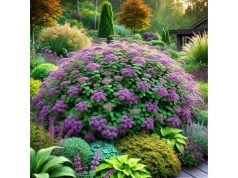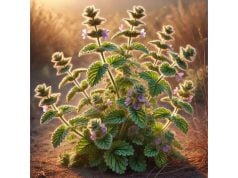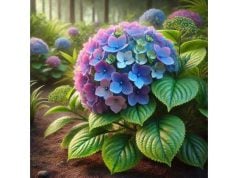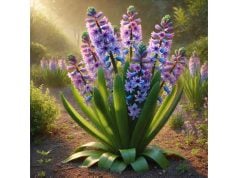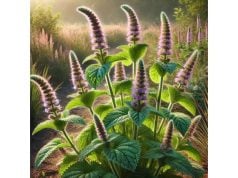
Ardisia crenata is an evergreen shrub better known in many botanic and horticultural references as coral ardisia, coralberry, or Christmas berry. The title term “Himalayan coralberry” is used inconsistently in the plant trade, which makes the Latin name especially important when discussing medicinal use. In traditional East Asian practice, the root has been used for throat complaints, inflammatory pain, bruising, and respiratory irritation. Modern lab research adds another layer of interest: the plant contains triterpenoid saponins, benzoquinones, bergenin-related compounds, flavonoids, and the much-studied compound FR900359 associated with its leaf nodules. At the same time, the evidence base is still uneven. Most of the promising findings come from chemistry, cell work, or animal models rather than human clinical trials, and safety guidance remains more traditional than standardized. That means Ardisia crenata is best viewed as a pharmacologically interesting medicinal plant with real potential, but not as a well-proven self-care herb for casual daily use.
Quick Overview
- Traditionally used for sore throat, upper respiratory irritation, and inflammatory pain, but modern evidence is still mostly preclinical rather than clinical.
- Its best-known compounds include triterpenoid saponins, benzoquinones such as embelin and rapanone, bergenin-related molecules, and the Gq inhibitor FR900359.
- A traditional oral decoction range often cited for crude root is 15 to 30 g per day, while some modern prepared decoction-piece listings use 3 to 9 g.
- Avoid self-use during pregnancy and breastfeeding, and avoid giving it to children unless a qualified clinician advises it.
- Do not treat garden berries or ornamental foliage as a casual edible remedy, especially around pets or grazing animals.
Table of Contents
- What is Himalayan Coralberry?
- Key compounds in Ardisia crenata
- What does it help with?
- How is it used?
- How much per day?
- Side effects and who should avoid it
- What research actually shows
What is Himalayan Coralberry?
Ardisia crenata is a small evergreen shrub in the primrose family that usually grows between about 4 and 6 feet tall. It has glossy leaves, pale pink to white flowers, and persistent bright red berries that often remain on the plant for long periods. Native-range descriptions place it across parts of South and East Asia, including India, China, Japan, and the Philippines, while horticultural sources note that it has also naturalized and become invasive in parts of the southeastern United States.
One point worth clearing up early is naming. In reliable plant references, Ardisia crenata is usually listed as coral ardisia, coralberry, spiceberry, scratch throat, Australian holly, or Christmas berry. By contrast, “Himalayan coralberry” is also used for other Ardisia species in some nursery and photo databases, especially Ardisia macrocarpa. For readers, that means the scientific name matters more than the common name. When medicinal claims, safety, or dosage are discussed, the label “Ardisia crenata” is the anchor that reduces confusion.
Medicinally, the part most often discussed is the root, known in Chinese materia medica as zhushagen. Traditional sources describe it as being used for sore throat, respiratory infections, inflammatory conditions, traumatic pain, toothache, and certain menstrual or injury-related complaints. Ethnobotanical reviews of the wider Ardisia genus show that these plants have long been valued in regional medicine, but they also stress an important limitation: historical use does not automatically equal proven clinical effectiveness. Traditional relevance tells us where to look; it does not settle the question of how well the herb works in modern human care.
The plant also sits at an unusual crossroads between ornamental gardening and herbal medicine. In many homes, it is grown mainly for its decorative berries. In medicinal research, however, those berries are not the main story. Researchers focus far more on the root, leaf chemistry, and microbial symbiosis in the leaf nodules. That split matters because an attractive potted plant is not automatically the same thing as properly identified, processed medicinal material. Using random ornamental material as if it were standardized medicine is one of the easiest ways to misunderstand both the potential and the risk of Ardisia crenata.
Key compounds in Ardisia crenata
The chemistry of Ardisia species is broad and unusually rich. Reviews of the genus summarize a long list of identified compounds, including triterpenoid saponins, quinones, phenols, coumarins, cyclic depsipeptides, and flavonoids. In Ardisia crenata specifically, the most discussed groups are triterpenoid saponins, benzoquinones, flavonoids, catechins, bergenin-related compounds, and certain lactones isolated from the leaves. These are the substances that drive most of the plant’s reported anti-inflammatory, antimicrobial, cytotoxic, and signaling-related activity in lab research.
The triterpenoid saponins are especially important. Chemical studies on Ardisia crenata describe molecules such as ardisiacrispin A and B, ardisicrenosides, and ardicrenin-related compounds. Saponins often interest pharmacologists because they can interact with cell membranes and signaling pathways, and in Ardisia crenata they are frequently linked to anti-inflammatory or cytotoxic findings. That does not mean these compounds are automatically safe or effective as supplements, but it helps explain why the root has been repeatedly studied as a medicinal raw material rather than merely an ornamental shrub.
Benzoquinones are another key piece of the puzzle. Studies of red-berried Ardisia crenata roots have identified bioactive benzoquinones such as embelin and rapanone, and research suggests that these compounds can vary greatly by plant part and variety. The same line of work has also shown measurable cytotoxic activity in cell models, which is scientifically interesting but far from equivalent to proven anticancer use in people. The practical lesson is simple: chemical content is not uniform across roots, fruits, leaves, or color varieties. A remedy made from one preparation cannot be assumed to behave like another.
Leaves bring a somewhat different chemistry. Researchers have isolated lactone compounds from the leaves that reduced nitric oxide and inflammatory cytokine release in macrophage models, and other studies link certain leaf and root compounds to antimicrobial activity. The leaves are also relevant because Ardisia crenata is associated with leaf-nodule bacteria that produce FR900359, a highly selective Gq and G11 signaling inhibitor. FR900359 is one of the most fascinating scientific stories around this plant, but it should be understood as a drug-discovery and signaling-research lead, not as evidence that home-prepared Ardisia tea will reproduce those experimental effects.
What does it help with?
If you look at traditional use first, Ardisia crenata is mostly a herb for the throat, upper respiratory tract, inflammatory pain, bruising, and certain wind-damp or trauma-style complaints in regional medicine systems. Ethnobotanical and pharmacognostic sources repeatedly connect it with sore throat, respiratory infections, arthralgia, toothache, and injury-related pain. That traditional pattern makes sense in light of the plant’s anti-inflammatory and antimicrobial chemistry, but it still needs to be translated carefully. Traditional “used for” and clinically “works for” are not the same statement.
The best-supported modern benefit claim is not a disease cure but a pharmacological direction: anti-inflammatory potential. In vitro studies on Ardisia crenata leaf compounds show reductions in nitric oxide and inflammatory mediators such as TNF-α and IL-1β in stimulated macrophage models. That supports the old reputation of the herb as something used for swollen, painful, or irritated conditions. What it does not yet give us is a clinically validated outcome like “reduces sore throat pain by a specific amount in humans after three days.” That gap is the main reason careful articles about this herb should stay realistic.
Antimicrobial activity is another area of interest. Recent studies report that root extracts showed inhibitory effects against Candida albicans and Aspergillus flavus, while leaf extracts showed activity against Pseudomonas aeruginosa and Staphylococcus aureus. Some isolated bergenin-related compounds and catechins also showed activity in assay systems. These are useful findings for future drug discovery and for explaining why the herb is linked to throat and respiratory infections in traditional use. Still, test-tube inhibition at measured concentrations is not the same as a proven herbal treatment protocol for people with real infections.
There is also a recurring cancer-research thread around Ardisia crenata compounds, especially saponins and benzoquinones. Several studies report cytotoxic or pro-apoptotic effects in cancer cell lines. That makes the plant scientifically important, but it should never be marketed as a self-treatment for cancer. The right takeaway is that Ardisia crenata is a promising source of bioactive molecules, not an evidence-based substitute for oncology care. For everyday throat comfort, better-defined soothing herbs such as marshmallow for throat support are easier to use responsibly because their consumer guidance is clearer and their goals are more modest.
How is it used?
Traditional use centers on the root, usually as a decoction rather than a casual tea. In Chinese-language materia medica references, oral use is generally described as simmering the crude root in water, while external use is described as crushed fresh material or a prepared application to affected areas. Folk examples also show the herb being combined with other plants rather than used in isolation. That is typical of many traditional systems, where the herb is selected for a pattern of symptoms and then balanced with companion ingredients.
In practice, this means Ardisia crenata is not used like a culinary herb and not usually treated like a wellness beverage. Unlike familiar household infusions such as peppermint, it belongs more to the category of medicinal raw material that should be properly identified and deliberately prepared. Research papers often use alcohol extracts, fractionated leaf compounds, purified saponins, or chromatographically characterized root samples. Those are very different from tossing a few leaves or berries from an ornamental pot into hot water.
Some ethnobotanical references also describe juices from crushed leaves or broader whole-plant use for fever, cough, diarrhea, or trauma. Those reports are useful because they show the range of traditional experimentation across regions. But from a modern safety standpoint, they should not be taken as ready-made home instructions. The active compounds differ between roots, stems, leaves, and fruits, and the concentration of certain benzoquinones or saponins can change by variety and plant part. Even before we talk about side effects, that variability makes casual use unreliable.
The most practical modern advice is conservative: if the interest is historical or academic, focus on properly sourced medicinal material and professional guidance. If the goal is simple self-care for a minor sore throat or cough, Ardisia crenata is not the easiest starting herb because it lacks the dosage clarity, product standardization, and human trial base that make other botanicals more user-friendly. Its strongest present-day value is as a medicinal plant under study, not as a first-line self-treatment sitting in the average kitchen cupboard.
How much per day?
Dosage is the most delicate part of this topic because there is no widely accepted modern evidence-based dose for standardized Ardisia crenata extracts in general consumer use. What we do have are traditional ranges and product-form differences. A commonly cited traditional range for crude root decoction is 15 to 30 g per day by mouth, with external application used separately as needed. Some disease-specific folk examples also use smaller daily amounts such as 9 to 15 g. That tells us the herb has a real dosing tradition, but it does not automatically turn those numbers into universal self-care instructions.
Complicating things further, some more modern prepared decoction-piece listings give a lower range of 3 to 9 g. The most likely explanation is that different references are talking about different forms, processing standards, or therapeutic contexts. Whole crude material, sliced decoction pieces, regional practices, and formula-based prescribing do not always map neatly onto one another. When an herb shows this kind of dosing spread, the safe conclusion is not “pick any number in the middle.” The safe conclusion is that form and context matter.
What cannot be given honestly is a reliable capsule-equivalent, tincture-equivalent, or long-term wellness dose for the general public. The published research on Ardisia crenata is rich in chemistry and lab assays, but not in standardized human dose-finding trials. That means there is no strong basis for saying, for example, that a certain extract strength should be taken once daily for eight weeks for throat health or joint comfort. Any article that pretends otherwise is filling the evidence gap with guesswork.
A reasonable bottom line is this: when traditional material is used, it should be treated as a short-term practitioner-guided medicinal herb rather than a casual, indefinite supplement. The absence of clear human dosing research is especially important for people who are pregnant, medically complex, or already taking multiple therapies. With Ardisia crenata, the correct dose is not just about grams. It is about plant part, preparation, identity, duration, and clinical context.
Side effects and who should avoid it
Human safety data on Ardisia crenata are limited, so the absence of frequent reported adverse effects should not be mistaken for proven safety. Traditional sources commonly advise caution in pregnancy, and ethnomedical reviews of Ardisia species note historical use in areas such as menstruation and fertility regulation. That combination is enough to make pregnancy a clear avoid category unless a qualified clinician specifically directs otherwise. Because modern safety data are thin, the same caution should generally extend to breastfeeding and pediatric use.
Another safety issue is the ornamental berry. Some botanical sources note that fruits or leaves have been eaten in certain settings, but agricultural guidance still warns that toxicity is suspected for livestock, pets, and humans even though the toxicology literature is incomplete. That kind of mixed record is exactly why ornamental plant use should not be improvised. When the toxicology is uncertain and the medicinal tradition mainly centers on prepared root material, the bright red berries should not be treated as a harmless snack or folk shortcut.
Drug-interaction data are also not well developed. Since the plant contains multiple bioactive classes with anti-inflammatory, antimicrobial, and signaling-related effects, the cautious position is to avoid combining it casually with prescription regimens for serious illness without professional review. That is especially true in people with cancer, chronic inflammatory disease, liver or kidney impairment, or polypharmacy. Unknown interaction risk is still risk. With medicinal plants, what has not been well studied should never be marketed as automatically safe.
Who should avoid Ardisia crenata unless guided by a qualified practitioner? The short list is straightforward: pregnant people, breastfeeding people, children, anyone tempted to self-treat with raw ornamental berries or leaves, and anyone using it as a substitute for evidence-based treatment of infection or cancer. People who keep pets or livestock should also be careful about plant access. The theme here is restraint. This is a plant with interesting pharmacology, but not one that rewards casual experimentation.
What research actually shows
The research case for Ardisia crenata is strong at the level of phytochemistry and mechanism, and weak at the level that matters most to everyday decision-making: controlled human outcomes. We know the plant contains multiple active classes. We know isolated compounds and extracts can change inflammatory mediators, inhibit certain microbes in vitro, and show cytotoxic activity in cell models. We do not yet have a solid body of randomized human trials telling us who benefits, at what dose, for how long, and with what rate of adverse effects. That is the central evidence reality.
The FR900359 story is a good example of why this distinction matters. FR900359, associated with Ardisia crenata leaf nodules and bacterial symbiosis, is now a respected tool compound in Gq and G11 signaling research and has shown promise in experimental disease models, including airway and cancer-related pathways. That is exciting pharmacology. But it does not mean that a traditional decoction reproduces purified exposure, nor does it mean that home herbal use can mimic the controlled conditions of translational pharmacology. Drug leads and whole-herb practice overlap only partially.
Research quality is also shaped by identification and standardization. Closely related Ardisia species can look similar, and modern papers show meaningful differences between roots, stems, leaves, and even berry-color varieties. Some recent work has tried to compare whether non-root parts could substitute for roots, which highlights a real-world problem: not all Ardisia material is chemically interchangeable. For consumers, that means product identity matters as much as product enthusiasm. A mislabeled or loosely sourced preparation can change both benefit expectations and safety assumptions.
So where does that leave the herb? In a sensible middle ground. Ardisia crenata deserves attention as a traditional medicinal plant and as a source of novel compounds for inflammation, microbiology, and signaling research. It does not yet deserve the kind of broad consumer confidence reserved for herbs with clearer human data and more stable dosing norms. If the goal is simple support for inflammatory discomfort, a better-studied option such as boswellia for joint support is easier to evaluate from a modern evidence standpoint. Ardisia crenata remains promising, but it is still a “watch this space” herb rather than a settled self-care staple.
References
- The ethnomedicinal and functional uses, phytochemical and pharmacology of compounds from Ardisia species: An updated review 2022 (Review)
- Anti-inflammatory activity of a new lactone isolated from the leaves of Ardisia crenata Sims 2024
- Discovery of Potential Anti-Microbial Molecules and Spectrum Correlation Effect of Ardisia crenata Sims via High-Performance Liquid Chromatography Fingerprints and Molecular Docking 2024
- Bioactive benzoquinones content variability in red-berry and white-berry varieties of Ardisia crenata Sims. and assessment of cytotoxic activity 2021
- SS AGR 276/AG281: Identification and Control of Coral Ardisia (Ardisia crenata): A Potentially Toxic Plant 2024 (Official guidance)
Disclaimer
This article is for educational purposes only and is not medical advice, diagnosis, or treatment. Ardisia crenata has a meaningful traditional history and intriguing laboratory research, but it does not have strong, standardized human evidence for most consumer health uses. Because safety data are limited and traditional sources advise caution in pregnancy, do not use this herb medicinally without qualified professional guidance if you are pregnant, breastfeeding, treating a serious illness, or taking prescription medicines. Seek urgent medical or veterinary help if a child, pet, or grazing animal may have eaten ornamental parts of the plant.
If you found this guide useful, please share it on Facebook, X, or your preferred platform to help more readers find balanced, evidence-aware herbal information.