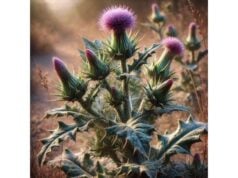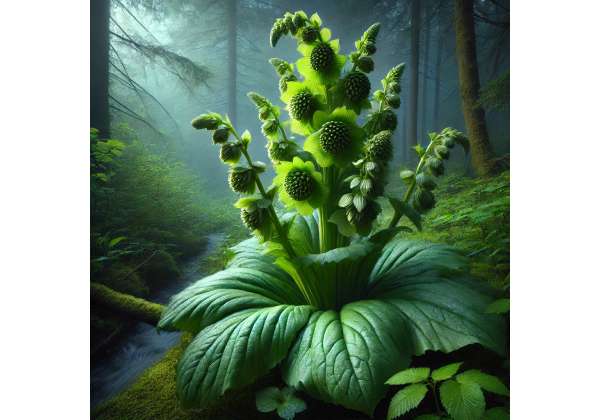
Itchweed, botanically Veratrum viride, is one of the clearest examples of a plant that sits on the boundary between medicine and poison. Native to broad parts of North America and better known today as green false hellebore or American hellebore, it was once used in serious nineteenth- and early twentieth-century medicine for conditions such as severe hypertension, feverish inflammatory states, and certain urgent circulatory problems. Its medicinal importance came from powerful steroidal alkaloids in the rhizome and roots, compounds capable of sharply slowing the pulse and lowering blood pressure.
Modern readers need a more careful frame. Veratrum viride is not a gentle herb, not a kitchen botanical, and not a safe candidate for casual self-treatment. The same chemistry that once made it therapeutically important also gave it a very narrow margin between effect and toxicity. Current interest is driven more by pharmacology, toxicology, and alkaloid research than by practical herbal use. A useful guide therefore has to do two things at once: explain the plant’s genuine medicinal history and make clear why modern self-dosing is a bad idea.
Top Highlights
- Veratrum viride was historically used to lower blood pressure and slow an overactive pulse, but those effects came with major toxicity risk.
- Its main active compounds are steroidal alkaloids such as germitrine, germidine, veratramine, jervine, and related veratrum alkaloids.
- Historical purified alkaloids were dosed in sub-milligram to low-milligram ranges under medical supervision; raw plant self-dosing is unsafe.
- Pregnancy, breastfeeding, childhood use, heart disease, and unsupervised use with medication are strong avoid categories.
- The plant’s most important modern lesson is not how to use it at home, but where to draw the line between powerful pharmacology and poisoning.
Table of Contents
- What is itchweed
- Key alkaloids in itchweed
- What was itchweed used for
- Did itchweed really help
- How itchweed was prepared
- Is there a safe dose
- Itchweed side effects and who should avoid it
- What the research actually says
What is itchweed
Veratrum viride is an accepted North American perennial that grows from a rhizome and is found across a broad temperate range from Alaska and western North America across parts of Canada and the eastern United States. It favors wet meadows, stream edges, damp woods, and other moisture-rich habitats. The plant is large, strongly ribbed, and visually striking, with broad pleated leaves and tall flower stalks that can make it look almost edible to the inexperienced. That resemblance has caused repeated accidental poisonings when it is mistaken for edible spring plants.
The common name “itchweed” is only one of many attached to this species. In medical and botanical writing it more often appears as green false hellebore, American hellebore, American white hellebore, or Indian poke. The phrase “false hellebore” is important because it reminds readers that this is not the same plant as true hellebores in the buttercup family. The older names reflect how widely the plant was known in regional practice, but they can also confuse identification, especially because several Veratrum species and varieties overlap in appearance and distribution.
What makes itchweed significant is not its nutrition or everyday utility. It is significant because the roots and rhizomes contain a dense mixture of steroidal alkaloids with major cardiovascular and neurological effects. During the nineteenth century and well into the mid-twentieth century, this chemistry made Veratrum viride a serious medicinal plant in American medicine. Physicians used tinctures and purified alkaloid fractions to lower blood pressure, suppress an excessively forceful pulse, and manage some febrile or inflammatory states. But the same alkaloids also caused nausea, vomiting, bradycardia, marked hypotension, and even collapse.
That history is why itchweed still deserves careful attention. It is not a forgotten tonic. It is a powerful historical drug plant whose legacy now belongs more to toxicology and pharmacology than to modern kitchen herbalism. Readers who approach it with the expectation of a gentle traditional remedy will miss the central point. The plant’s value lies in its medicinal history, its alkaloid chemistry, and the cautionary lesson it offers about narrow therapeutic margins.
Key alkaloids in itchweed
The defining compounds in Veratrum viride are steroidal alkaloids. These are not minor supporting molecules. They are the reason the plant can slow the heart, lower blood pressure, trigger vomiting, and produce serious poisoning. Historical and modern reviews describe a broad family of veratrum alkaloids in North American Veratrum species, including germitrine, germidine, neogermitrine, protoveratrine-related compounds, veratramine, jervine, pseudojervine, and related molecules. In the specific case of V. viride, older medicinal importance centered especially on the hypotensive ester alkaloids in the rhizome and roots.
A practical way to think about itchweed chemistry is to divide the compounds by what they historically mattered for. Germidine and germitrine were identified as major contributors to the plant’s blood-pressure-lowering action. Protoveratrine A and B became especially famous in the broader Veratrum literature because purified preparations were studied clinically for hypertension. Veratramine, jervine, and related alkaloids belong to the same broad toxic and pharmacologically active family, even when their most famous stories come from other Veratrum species.
Mechanistically, veratrum alkaloids are best known for affecting excitable tissues, especially through sodium-channel-related activity and the reflex pathways that can produce bradycardia and hypotension. In poisoning and overdose settings, this translates into a classic pattern: early gastrointestinal distress, then a strong cardioinhibitory response with low heart rate and low blood pressure. Modern toxicology papers on Veratrum alkaloids continue to emphasize these cardiotoxic properties, which is one reason the plant no longer belongs in casual herbal practice.
This is also where itchweed starts to resemble another plant that lives on the border between medical importance and danger. Like foxglove as a medicine-poison boundary plant, Veratrum viride mattered because its compounds were powerful enough to shape formal medicine, not because it was a safe do-it-yourself herb. That distinction is essential. Potent chemistry can be historically important without being appropriate for home use.
One more detail matters for modern readers: extraction changes risk. Historical tinctures, purified alkaloids, crude root preparations, and modern experimental analytical samples do not deliver identical chemical exposure. Recent analytical work on medicinal Veratrum products confirms that toxic alkaloids can still be measured in highly diluted preparations, which reinforces the broader lesson that this genus is not chemically trivial even when sold in softer-looking forms.
What was itchweed used for
The use history of Veratrum viride is real, substantial, and far more serious than many modern herb readers realize. Ethnobotanical accounts collected in later reviews describe some Native American uses of the rhizome and root for colds, sore throat, venereal disease, snakebite applications, and other forceful medicinal purposes. These were not casual tea-herb uses. They belonged to a pattern of strong medicine, often handled with respect because of the plant’s power.
In nineteenth-century American medicine, itchweed moved from regional knowledge into physician use. Early physicians wrote about the plant and recommended it for inflammatory diseases and rheumatism because of its marked effect on the pulse. Later, Norwood’s tincture of the rhizome became widely distributed. Supporters thought it useful in fevers, inflammatory illnesses, pneumonia, epilepsy, and circulatory states marked by an overactive pulse. Detractors pointed out that the same bottle could produce vomiting, dangerous slowing of the heart, apnea, and collapse.
Its most historically important use, however, was hypertension. By the late 1940s and 1950s, crude veratrum extracts and then purified alkaloids were studied in patients with severe high blood pressure. Papers from that period described real blood-pressure lowering, and later historical reviews note that an extraordinary number of prescriptions for V. viride extracts were eventually written. That is astonishing by modern standards, especially for a plant now treated primarily as a toxic botanical.
But history also explains why the plant fell out of favor. The benefits were real enough to attract medical use, yet the side-effect burden was severe. Nausea, forceful vomiting, sweating, pronounced hypotension, bradycardia, conduction problems, and sedation made treatment difficult to manage. As better-tolerated antihypertensive drugs appeared, veratrum alkaloids were abandoned. The plant did not disappear because it was useless. It disappeared because it was too hard to use safely and consistently.
This history is worth comparing with plants that kept a medicinal place only after they were heavily standardized. One useful parallel is lobelia and its narrow safety margin, another plant whose genuine pharmacology does not make it a casual remedy. Veratrum viride belongs to that same difficult category: historically important, pharmacologically active, but unsuited to modern self-prescription.
Did itchweed really help
In a narrow historical sense, yes. Veratrum viride really did help lower blood pressure and suppress an excessively forceful circulation in some patients. That is not folk exaggeration. Clinical papers from the 1940s and 1950s documented measurable antihypertensive effects, and later historical reviews confirm that germidine, germitrine, protoveratrine-related compounds, and other ester alkaloids were central to that effect.
But “it helped” is only half the truth. The other half is that it helped at a cost. The same treatment that lowered blood pressure often produced marked nausea, vomiting, sweating, bradycardia, and weakness. Historical reviewers noted that even when physicians recognized the plant’s usefulness, they also recognized its danger. Modern summaries of hypertension treatment history are blunt: veratrum lowered blood pressure, but its therapeutic window was narrow and its adverse effects were major.
That makes itchweed a poor fit for the usual herb-benefit template. It is not like a gentle anti-inflammatory herb where the realistic outcome is modest symptom relief with relatively low risk. The realistic outcome with Veratrum viride, historically, was significant physiologic action paired with a real chance of overdoing it. That is why any honest benefit discussion has to include the plant’s decline from mainstream care as soon as better options became available.
Its other claimed benefits are even less stable. Historical sources describe use for rheumatism, fevers, inflammatory states, convulsive diseases, pneumonia, and obstetric hypertensive crises, but those uses now belong to medical history, not modern evidence-based herbal practice. In current terms, the strongest “benefit” claim for itchweed is really a historical one: it helped demonstrate that plant steroidal alkaloids could produce clinically important cardiovascular effects.
That is why readers who want modern symptom support are usually better served by better-tolerated botanicals. A person looking for pain-focused plant support, for example, is far better matched to willow bark for pain relief than to a historical hypotensive poison plant. The same logic applies broadly: a plant’s historical power does not automatically make it a good modern choice.
So, yes, itchweed really helped in specific historical settings. But it did not help in a way that justifies modern casual use. Its “benefits” were large enough to matter and risky enough to end its role as a routine remedy. That combination is what defines the plant.
How itchweed was prepared
Historically, Veratrum viride was prepared mainly from the dried rhizome and roots, not from the leaves or flowers. Historical reviews describe Norwood’s tincture as a crude alcoholic extract made by macerating dried rhizome in high-proof alcohol for an extended period. Later pharmaceutical work moved away from crude tinctures and toward more purified alkaloid mixtures and then specific compounds such as protoveratrine-related preparations. This shift tells an important story: the more medically serious the use became, the less acceptable crude home-style preparation became.
That movement away from home preparation was not merely about convenience. It was about risk control. With a plant this potent, crude extracts are unpredictable. Different roots, drying methods, harvest conditions, and extraction strengths can change alkaloid exposure. That means a historical tincture recipe is not practical consumer guidance. It is evidence of how physicians once worked before safer drug development overtook the plant.
A realistic preparation summary looks like this:
- The rhizome and roots were the main medicinal parts.
- Historical medicine used tinctures, fluid extracts, crude alkaloid mixtures, and purified alkaloids.
- Modern analysis treats Veratrum chemistry as something to measure carefully, not something to improvise at home.
- There is no responsible modern case for making homemade itchweed tea, tincture, powder, or capsule.
That last point matters more than the historical details. In many herb articles, “how to use it” turns into a practical recipe section. Here, the most useful preparation advice is what not to prepare. If you want a strong herb that still carries a serious safety conversation but is at least better framed in modern herbal writing, lobelia’s preparation and caution profile offers a much clearer model than Veratrum viride does.
So how was itchweed prepared? Historically, with alcohol, alkaloid isolation, and medical intent. How should it be prepared today for self-care? It should not. That is the clearest modern answer, and it is more useful than pretending there is a safe folk method waiting to be rediscovered.
Is there a safe dose
For raw Veratrum viride as a home remedy, there is no safe self-care dose. That is the answer most readers need, even if it feels less satisfying than a neat gram range. The plant’s active steroidal alkaloids are too potent, too variable, and too close to toxic exposure for modern unsupervised dosing. Historical medical literature used the plant anyway, but it did so in a context of physician oversight, evolving purification, and frequent adverse effects.
The closest thing to a “dose range” belongs not to the raw herb but to historical purified alkaloid therapy. Official drug-database material summarizing protoveratrine B notes that oral doses in hypertensive patients began around 0.3 to 0.5 mg and were increased until blood pressure fell or vomiting limited further escalation. That is a striking reminder of how narrow the useful window was. The dose was measured in low milligrams, not teaspoons or household droppers, and even then it was constrained by toxicity.
That historical detail is useful only as context. It should not be treated as consumer guidance for the plant itself. The plant is not standardized protoveratrine B. It is a variable, multi-alkaloid rhizome. A preparation that contains several active steroidal alkaloids is inherently harder to predict than one purified compound. This is why the historical path of Veratrum viride moved from crude root use toward chemical isolation and then away from the plant entirely.
A practical dosing summary therefore needs to be very clear:
- There is no validated household dose of raw itchweed.
- Historical purified alkaloids were used in low-milligram medical ranges only.
- Vomiting, bradycardia, and hypotension often limited dose escalation.
- Modern self-dosing is not appropriate.
This is also the right place to say what a safer article must say plainly: dose curiosity is part of what makes this plant dangerous. Readers sometimes assume that starting with “just a tiny amount” is sensible. With Veratrum viride, that assumption is not justified. The right comparison is not with gentle digestives or teas. It is with plants that taught medicine to stop relying on raw plant dosing.
If a reader wants a plant article where dose can be discussed in a genuinely practical way, gentian’s more established dosing tradition offers a much better example of what responsible household guidance looks like. Itchweed does not belong in that category.
Itchweed side effects and who should avoid it
The side-effect profile of Veratrum viride is not subtle. In poisoning and overdose, the classic picture includes nausea, vomiting, sweating, bradycardia, marked hypotension, weakness, and sometimes heart block or other serious cardiovascular effects. Published case descriptions of V. viride poisoning describe significant bradycardia and hypotension, with nausea and vomiting as typical accompanying features. Modern cardiotoxicity work on other Veratrum alkaloid exposures supports the same general pattern and ties it to alkaloid action on cardiac sodium channels and associated reflex pathways.
This is not a plant where the safety section sits at the end as a formality. Safety is the main story. People most likely to be harmed include:
- Anyone attempting oral self-treatment.
- People with low blood pressure or slow heart rate.
- People taking cardiovascular medication.
- Pregnant or breastfeeding people.
- Children.
- People with conduction disorders, major electrolyte problems, or frailty.
Pregnancy deserves especially strong caution. In the broader Veratrum literature, teratogenic alkaloid research became famous because of cyclopamine and related compounds from other Veratrum species, especially V. californicum. That does not mean V. viride is the same in every respect, but it does mean pregnancy exposure should be treated as strictly avoid. The safest public guidance is absolute caution, not speculation.
There is also a practical interaction problem. Historical veratrum therapy already pushed the circulation downward. Combining a plant like this with antihypertensives, antiarrhythmics, sedatives, or anything else that lowers heart rate or blood pressure is clearly unsafe. Even without formal modern interaction trials, the pharmacology is serious enough that common sense applies. This is not a supplement to “stack.” It is a historical drug plant with poisoning potential.
In a broader herb context, itchweed belongs with plants that are remembered as much for risk as for benefit. That is why it is more useful to compare it to foxglove’s narrow therapeutic boundary than to routine botanicals. Both plants mattered to medicine, and both taught the same lesson: some useful plant chemistries are simply too dangerous to remain raw-herb remedies.
The safest bottom line is direct. Almost everyone should avoid unsupervised medicinal use of Veratrum viride. Its modern role is educational and toxicological, not practical.
What the research actually says
Modern research does not support Veratrum viride as a routine consumer herb. What it does support is a much more nuanced picture. First, historical and phytochemical reviews make clear that V. viride was a major North American medicinal Veratrum species and that its alkaloids genuinely affected blood pressure, pulse, and inflammatory physiology. Second, contemporary toxicology reinforces that these same alkaloids remain dangerous and clinically relevant in poisoning cases. Third, much of the most exciting modern anticancer and developmental biology work in the Veratrum genus comes not from V. viride itself, but from other species such as V. californicum, especially through cyclopamine and hedgehog-pathway research.
That last point is important because it prevents a common misunderstanding. Readers often see “Veratrum alkaloids” and assume the whole genus shares one identical modern medicinal future. It does not. Veratrum viride is historically linked most strongly to antihypertensive alkaloids and poisoning literature. By contrast, much of the modern drug-discovery enthusiasm around hedgehog-pathway inhibition comes from cyclopamine-centered work in other Veratrum species. So when people speak broadly about Veratrum as an oncology-relevant genus, that does not automatically make itchweed a practical anticancer plant.
Recent analytical work adds another layer. Modern HPLC-MS/MS work on medicinal Veratrum globules shows why old and highly diluted preparations still deserve analytical scrutiny. Toxic alkaloids can remain measurable in some medicinal products, and quality control matters. This is modern herbal safety in action: not romance about old remedies, but careful measurement of alkaloid content.
So what is the most honest research conclusion?
- Veratrum viride has real medicinal history.
- Its rhizome alkaloids had genuine antihypertensive and pulse-slowing effects.
- Those effects came with major toxicity, which ended its role as a practical modern remedy.
- The most advanced modern Veratrum drug-discovery work is largely genus-level and often centered on species other than V. viride.
- There is no current evidence base supporting home use of itchweed for health.
Readers looking for a stronger modern evidence trail for inflammation or symptom support are better served by better-characterized plants such as boswellia with a much clearer modern research profile. Itchweed remains important, but mainly as a plant that taught medicine something profound: a strong effect is not the same thing as a good remedy.
References
- Phytochemical Analysis of Veratrum Alkaloids in Medicinal Veratrum Globules Using High‐Performance Liquid Chromatography Coupled With Tandem Mass Spectrometry 2026
- Insights into the Cardiotoxic Effects of Veratrum Lobelianum Alkaloids: Pilot Study 2022
- Review: Veratrum californicum Alkaloids 2021 (Review)
- Medicinal history of North American Veratrum 2013 (Review)
- Poisoning due to ingestion of Veratrum viride (false hellebore) 1990 (Case Reports)
Disclaimer
This article is for educational purposes only and does not diagnose, treat, or replace medical care. Veratrum viride is a toxic plant with a narrow historical therapeutic margin and no safe modern self-care dose. It should not be brewed, tinctured, powdered, chewed, or used internally outside expert supervision. Seek urgent medical attention after ingestion or exposure if symptoms such as nausea, vomiting, sweating, dizziness, slow pulse, weakness, low blood pressure, chest symptoms, or fainting occur.
If this guide helped you, please share it on Facebook, X, or another platform where careful, evidence-based plant information can help others.