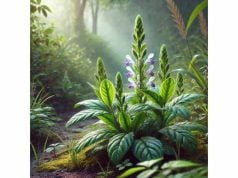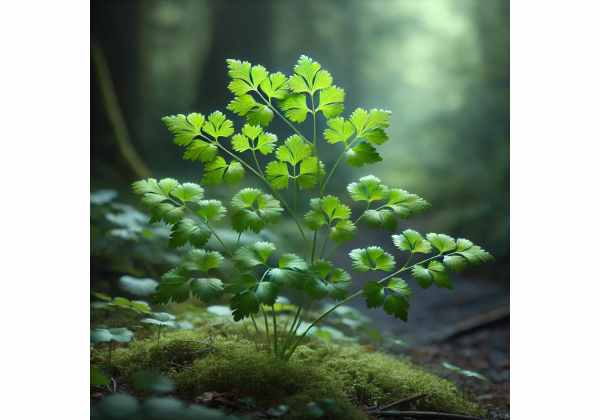
Japanese parsley, better known as mitsuba, is a delicate leafy herb from East Asia that sits somewhere between a culinary garnish and a traditional medicinal plant. It belongs to the Apiaceae family, the same broad family as celery, coriander, and fennel, but its flavor is gentler and greener, with a fresh aroma that feels both clean and slightly sweet. In Japanese cooking it is valued for brightness and balance. In traditional use, it has also been associated with digestion, fluid balance, and general restorative support.
What makes Japanese parsley especially interesting is that its appeal is not only sensory. Research suggests it contains volatile oils, flavonoids, phenolic compounds, and other plant chemicals linked with antioxidant and anti-inflammatory activity. At the same time, this is not a heavily studied supplement herb. Most of its strongest evidence comes from laboratory and animal work, not large human trials.
That makes Japanese parsley a good example of a food-first herb: practical, promising, and best appreciated for steady culinary use rather than exaggerated medicinal claims.
Core Points
- Japanese parsley may help support antioxidant defenses and a healthier inflammatory response.
- Its traditional use also points to digestive and mild fluid-balance support.
- A practical culinary amount is about 5 to 15 g of fresh leaves and stems per day.
- People with Apiaceae-family allergies should be cautious, especially with concentrated extracts.
Table of Contents
- What is Japanese parsley
- Key ingredients and medicinal properties
- Does Japanese parsley have benefits
- How do you use it
- How much Japanese parsley per day
- Side effects, interactions, and who should avoid it
- What the evidence actually shows
What is Japanese parsley
Japanese parsley is the common English name for Cryptotaenia japonica, a perennial herb native to East Asia and widely known by its Japanese name, mitsuba. The name “mitsuba” means “three leaves,” a nod to the plant’s distinctive three-part leaf pattern. Although the herb is sometimes compared with flat-leaf parsley, it is not simply a Japanese version of European parsley. It has its own botanical identity, its own flavor, and its own traditional uses.
In everyday cooking, Japanese parsley is usually treated as a fresh finishing herb. The stems and leaves are both edible, and in some preparations the young shoots are valued as much as the leafy top. Its taste is often described as a soft mix of parsley, celery, and mild angelica, but those comparisons only go so far. Mitsuba is less sharp than celery leaf and less peppery than parsley, which is why it works well in subtle dishes where a heavier herb would dominate.
Its culinary role helps explain its medicinal reputation. Japanese parsley is not usually presented as an aggressive remedy or a high-dose tonic. Instead, it belongs to the long tradition of herbs that nourish while gently influencing digestion, fluid movement, and overall meal quality. In that way, it fits naturally beside other aromatic kitchen herbs used for both flavor and function.
Traditional Chinese and East Asian materia medica describe Cryptotaenia japonica as both edible and medicinal. In the Chinese context, the whole plant has been recorded for weakness, urinary difficulty, and swelling. That does not mean it is a proven treatment for those conditions in modern clinical practice, but it does tell us how earlier practitioners viewed the herb: not merely as garnish, but as a plant with physiologic effects.
Another important point is that the whole plant profile matters. Japanese parsley is not defined by a single root, seed, or bark the way some medicinal herbs are. Its aerial parts are central to both food and traditional use. That usually signals a gentler therapeutic style. Leafy herbs often work through repeated exposure, broad phytochemical diversity, and culinary consistency rather than dramatic one-time dosing.
For modern readers, the most useful way to classify Japanese parsley is as a medicinal food herb. It sits between nutrition and herbalism. It is flavorful enough to earn a place on the plate, yet bioactive enough to deserve a closer look. That combination often makes a plant more practical than more famous “superherbs,” because people are more likely to use it regularly and in amounts that actually fit daily life.
Key ingredients and medicinal properties
Japanese parsley has a chemistry that matches its clean, aromatic character. The plant contains volatile oils, flavonoids, phenolic acids, phytosterols, and other secondary metabolites that likely work together rather than through one dominant “active ingredient.” That is important because many food herbs do not act like drugs with a single star molecule. Their effects come from a network of compounds that shape aroma, taste, and physiology at the same time.
One of the best-described parts of its profile is the essential oil fraction. Studies of different cultivated forms of Cryptotaenia japonica show that the oils are rich in terpenoid compounds, especially sesquiterpenes. Reported major components include alpha-selinene, beta-selinene, germacrene D, trans-farnesene, beta-myrcene, and beta-pinene. These compounds help explain the herb’s fresh aroma and may also contribute to its antioxidant and antimicrobial potential.
The plant also contains phenolic compounds and flavonoids. Traditional and experimental literature has pointed to apigenin, luteolin-related compounds, and other phenolic constituents as part of the reason Japanese parsley attracts attention for antioxidant and anti-inflammatory activity. In broader herbal terms, those are the kinds of molecules often associated with vascular protection, lower oxidative stress, and mild tissue-calming effects.
Other compounds reported in the literature include:
- phytosterols such as stigmasterol,
- triterpene-related compounds such as friedelin,
- polysaccharide-rich fractions,
- and anthocyanin-related biosynthetic capacity in some plant tissues and forms.
These ingredients support the main medicinal properties usually attributed to Japanese parsley.
First, it appears antioxidant. This means extracts and fractions can help neutralize reactive molecules or reduce oxidative processes in experimental settings. For a reader, the practical meaning is modest: the herb may support a diet richer in protective plant compounds, not perform a magical detox function.
Second, it appears anti-inflammatory. Cell and animal work suggest that Cryptotaenia japonica extracts can reduce inflammatory signaling and lower certain pro-inflammatory markers. This is one of the more credible reasons the plant has remained interesting beyond its taste alone.
Third, it may have mild metabolic value. Seed and aerial-part research points toward effects on lipid handling, oxidative balance, and possibly carbohydrate response. These findings are still early, but they help explain why Japanese parsley is sometimes discussed alongside other Apiaceae herbs linked with digestion and metabolic support.
Fourth, it may have gentle diuretic or fluid-regulating implications in traditional use. That traditional reputation should be described carefully. It does not mean modern evidence proves Japanese parsley treats edema or urinary disorders. It simply reflects how the herb was historically categorized.
Taken together, the chemistry suggests a plant that is nutritionally useful, aromatic, and biologically active without being pharmacologically forceful. That is a useful middle ground. Japanese parsley is not inert garnish, but it is also not a high-intensity medicinal root. Its best medicinal properties likely emerge through regular food use, mild anti-inflammatory support, and the cumulative effects of many small phytochemicals working together.
Does Japanese parsley have benefits
Japanese parsley appears to have real benefits, but they are best described as supportive rather than dramatic. This is not a herb with strong human clinical evidence for treating major disease. Instead, it is a promising edible plant whose traditional uses and experimental data suggest several meaningful but modest roles.
The clearest potential benefit is antioxidant support. Japanese parsley contains volatile oils and phenolic compounds that show free-radical scavenging and oxidative stress-lowering activity in laboratory work. In plain language, that means the plant may help reduce some of the chemical wear and tear associated with inflammation, environmental stress, and poorer diet quality. That is useful, but it is also something best achieved through consistent diet rather than occasional heroic doses.
A second likely benefit is anti-inflammatory support. Extract studies suggest the herb can reduce inflammatory mediators and influence pathways related to nitric oxide production, cytokine release, and stress signaling. Again, the most honest interpretation is moderate. Japanese parsley is not a replacement for evidence-based care in inflammatory disease, but it may fit into a dietary pattern designed to lower chronic low-grade inflammatory load.
A third area is lipid and metabolic support. Seed oils and seed extracts have shown antioxidant and hypolipidemic effects in animal research. That does not mean a sprinkle of mitsuba instantly lowers cholesterol, but it does suggest the plant family chemistry has metabolic relevance. This is one reason Japanese parsley can be viewed as more than a garnish.
Traditional use adds another layer. In Chinese records, the whole plant has been used for weakness, swelling, and urinary difficulty. These uses should be framed as historical, not clinically confirmed. Still, they offer insight into how the plant was understood: as a gently restorative herb that may support fluid movement and general resilience.
Everyday benefits may be even more practical than pharmacologic ones. Fresh aromatic herbs often improve meal quality in quiet ways. They can make lighter foods more satisfying, reduce the need for heavy sauces, and increase overall phytochemical diversity in the diet. Japanese parsley is especially good at this because it is vivid without being overpowering. Like many food herbs, one of its real benefits is that it encourages better eating patterns.
Reasonable benefit expectations include:
- added antioxidant compounds from a fresh edible herb,
- mild anti-inflammatory dietary support,
- a possible contribution to metabolic health over time,
- digestive freshness with meals,
- and broader plant diversity in the diet.
Those may sound less dramatic than supplement marketing language, but they are more believable and more useful. Japanese parsley should be understood the way we understand many high-quality herbs: as a plant that helps nudge physiology in a healthier direction rather than as a stand-alone cure.
That is also why it pairs well conceptually with other food-first plants known for steady antioxidant support. Its value is not in intensity. Its value is in repeatability, flavor, and enough biologic activity to matter when used consistently.
How do you use it
Japanese parsley is easiest to use as a fresh culinary herb. That is both its traditional strength and its most practical modern role. The leaves and stems are commonly used, and in some regional cooking the young shoots are prized for their tenderness. Freshness matters because the aroma fades with long cooking.
The most common ways to use it include:
- as a finishing herb over soups and noodles,
- chopped into egg dishes,
- added to rice or porridge,
- mixed into salads,
- folded into tofu dishes,
- lightly blanched and dressed as a side vegetable,
- or used as a fragrant topping for fish and broths.
Because the flavor is delicate, Japanese parsley is usually added near the end of cooking. Long simmering can flatten its character and waste what makes it special. A quick blanch or raw garnish often preserves its best qualities.
A simple way to start is:
- Wash and dry the herb gently.
- Chop the leaves and tender stems.
- Add a small handful to warm food just before serving.
- Taste before adding salt-heavy sauces, since the herb is easiest to notice in lightly seasoned dishes.
- Increase the amount gradually if you enjoy the flavor.
This gradual approach matters. Japanese parsley does not behave like basil or mint, where large handfuls can define an entire dish. Its role is subtler. Think of it as a clean aromatic accent rather than a dominant green.
It also combines well with sesame, soy, yuzu, mushrooms, tofu, mild broths, and eggs. In mixed herb preparations, it can stand in for part of the parsley or celery leaf component, but its best use is often in dishes where it can remain recognizably itself. That is why many cooks treat it the way they treat other fresh finishing herbs with a distinctive identity, using it to lift a dish rather than bury it.
As a medicinal-style use, tea is possible but less common than fresh food use. A light infusion from the leaves and stems may be taken for a gentle herbal effect, though this is not the most traditional or most researched form. Dried powders and supplements also exist, but quality varies and the research base is much thinner than the marketing language often suggests.
There is also a seasonal logic to using Japanese parsley. Many traditional food herbs are most appealing when climate and appetite call for lighter, fresher meals. Japanese parsley fits that pattern. It can make simple foods feel more alive, which may be one reason it has kept its place in everyday cuisine.
The most effective long-term use is not necessarily medicinal in the narrow sense. It is culinary repetition. A herb that reliably appears in soups, rice, tofu, and vegetable dishes may do more for daily health than an expensive bottle of capsules used once and forgotten.
How much Japanese parsley per day
There is no established clinical dosage for Japanese parsley in the way there is for some better-studied supplement herbs. No major body of human trials defines an official daily amount for pain, glucose control, or inflammation. That means dosage should be discussed in practical, food-based terms rather than pretending there is a proven therapeutic standard.
For fresh culinary use, a practical amount is about 5 to 15 g of leaves and stems per day. That usually corresponds to a small handful or a generous garnish spread across one or two meals. This is a reasonable range for someone using Japanese parsley regularly as a food herb.
For people who enjoy the flavor and use it more like a leafy vegetable, higher amounts may be tolerated, often around 15 to 30 g in a day. That still keeps the intake within a food-like pattern rather than pushing it into concentrated-herb territory.
If using dried herb, the amount will naturally be smaller because water has been removed. A rough culinary equivalent is often around 1 to 3 g of dried material per day, though dried Japanese parsley is less common and often less satisfying than fresh. As with most aromatic herbs, drying changes the balance of flavor and may alter the experience enough that direct conversion is imperfect.
If using an extract or capsule, there is no dependable universal dose. Products vary in:
- plant part used,
- extraction method,
- essential oil content,
- and standardization, if any.
That variability is the main reason food use is easier to recommend. When a herb has a shallow clinical literature and a wide range of supplement types, the label becomes a poor substitute for evidence.
Timing is straightforward. Japanese parsley is best used with meals. That approach fits its traditional role and makes any digestive or meal-quality benefits more plausible. A small amount at lunch or dinner is usually more practical than taking it on an empty stomach. If the herb is being used in tea form, a light cup once or twice daily is a more conservative starting point than a strong decoction.
Duration is where this herb becomes most interesting. Japanese parsley is not a “take for three days and expect a breakthrough” plant. Its likely benefits are cumulative. Regular use over weeks or months as part of normal meals makes more sense than short bursts of concentrated use.
The biggest dosage mistake is assuming a culinary herb must be better in supplement form. Often the opposite is true. With Japanese parsley, the strongest real-world case is repeated exposure in food, not pharmacologic escalation.
So, if someone asks for the most honest dosage advice, it is this: use it regularly, use it fresh when possible, and stay within normal food-like amounts unless a qualified professional has a specific reason to recommend otherwise. That keeps the herb aligned with both its traditional role and its current evidence base.
Side effects, interactions, and who should avoid it
Japanese parsley is generally considered safe when eaten as a food. That is the most important safety point. Most people who use it in normal culinary amounts are unlikely to have problems. The safety conversation becomes more relevant when intake is unusually high, when concentrated extracts are used, or when a person already has allergies related to the Apiaceae family.
Possible side effects in sensitive people may include:
- mild stomach irritation,
- bloating if eaten in larger raw amounts,
- mouth sensitivity to the fresh volatile oils,
- or allergic reactions in people predisposed to related herb or vegetable allergies.
The allergy question is the most practical one. Japanese parsley belongs to the same broad family as celery, coriander, fennel, and carrot. People who already react strongly to that family may want to start with a very small amount or avoid it altogether. This does not mean cross-reactivity is inevitable, only that caution is sensible.
When used as a supplement rather than as food, the safety picture becomes less certain. That is not because Japanese parsley is known to be highly toxic, but because concentrated products have not been studied in the same way that common culinary use has. Extracts can amplify exposure to volatile and phenolic compounds beyond what a person would normally eat, and there is little human dosing research to guide that process.
Drug interactions are not well defined for Cryptotaenia japonica. Still, a cautious approach is wise for people using:
- anticoagulant or antiplatelet medication,
- glucose-lowering drugs,
- strong diuretics,
- or multiple herbal supplements with similar metabolic claims.
This is a precaution, not a firm evidence-based warning. The point is that when a plant has experimental metabolic or anti-inflammatory signals, it is better not to assume concentrated doses are automatically neutral.
Pregnancy and breastfeeding deserve a distinction. Food amounts used in cooking are one thing; concentrated extracts are another. Japanese parsley as a garnish or fresh herb in meals is generally a reasonable food choice, but high-dose medicinal use lacks enough human evidence to justify confident recommendations.
Who should be most cautious?
- people with Apiaceae-family allergies,
- those with a history of unusual reactions to fresh herbs,
- pregnant or breastfeeding people considering extracts,
- young children using supplements rather than food,
- and anyone taking multiple medications while experimenting with concentrated herbal products.
For most readers, the safest rule is simple: keep Japanese parsley in the kitchen lane unless there is a very good reason to move it into the supplement lane. That food-first approach is often better than trying to force a gentle herb into a role better suited to stronger plants such as more deliberately medicinal digestive herbs.
What the evidence actually shows
The evidence for Japanese parsley is encouraging, but it is still limited and uneven. That is the fairest summary.
What looks strongest is the phytochemical and experimental evidence. Researchers have identified volatile oils, flavonoids, phenolic compounds, sterols, and other constituents that make the herb biologically plausible as an antioxidant and anti-inflammatory food plant. Studies on extracts from aerial parts and seeds also suggest effects on inflammatory signaling, oxidative stress, and lipid metabolism in animal models. These findings are coherent and not random.
Traditional-use evidence is also meaningful. East Asian medical sources record the plant as both edible and medicinal, especially for weakness, swelling, and urinary difficulty. Traditional use does not prove clinical efficacy, but it does give the herb context. Japanese parsley was not treated only as garnish; it had a recognized place in food-medicine culture.
What remains weak is human clinical evidence. There are no large, modern randomized trials showing that regular Japanese parsley use clearly improves a specific medical outcome in humans. That gap matters. Without that level of research, many claims must stay modest.
So what can be said with confidence?
- The herb is edible and traditionally medicinal.
- It contains a meaningful range of aromatic and phenolic compounds.
- Extracts show antioxidant and anti-inflammatory effects in lab settings.
- Seed-based research suggests possible hypolipidemic effects in animal models.
- Human therapeutic dosing remains uncertain.
This is why Japanese parsley is best understood as a promising medicinal food rather than a proven herbal intervention. The phrase “medicinal food” is useful here because it keeps expectations proportional. A medicinal food can matter. It can improve dietary quality, expand phytochemical diversity, and provide low-level physiologic benefits over time. It simply does not need to carry the burden of acting like a drug.
Another reality is that different plant parts may not behave identically. Fresh leaves and stems used in cuisine are not the same as seed essential oils or methanol extracts in experimental studies. This matters when people read about impressive lab findings and assume they translate directly to the dinner plate. They may point in the same direction, but they are not the same exposure.
The most responsible conclusion is this: Japanese parsley deserves more attention than it gets, but not more certainty than the evidence allows. It is a useful aromatic herb with credible antioxidant and anti-inflammatory potential, interesting traditional uses, and a particularly good fit for regular food-based use. Its future research story may become stronger. For now, its best value lies in being an elegant, functional herb that makes healthy meals easier to enjoy.
References
- Apiaceae Medicinal Plants in China: A Review of Traditional Uses, Phytochemistry, Bolting and Flowering (BF), and BF Control Methods 2023 (Review) ([PMC][1])
- The high-quality genome of Cryptotaenia japonica and comparative genomics analysis reveals anthocyanin biosynthesis in Apiaceae 2024 ([PubMed][2])
- Protective effect of the methanol extract from Cryptotaenia japonica Hassk. against lipopolysaccharide-induced inflammation in vitro and in vivo 2012 (Preclinical Study) ([PubMed][3])
- Comparison of Essential Oils from Three Kinds of Cryptotaenia japonica Hassk (Kirimitsuba, Nemitsuba, and Itomitsuba) used in Japanese Food 2017 ([PubMed][4])
- Hypolipidemic and antioxidant activity of mountain celery (Cryptotaenia japonica Hassk) seed essential oils 2008 (Preclinical Study) ([PubMed][5])
Disclaimer
This article is for educational purposes only and is not a substitute for medical advice, diagnosis, or treatment. Japanese parsley is widely used as a food, but its medicinal effects have not been confirmed by strong human clinical trials. Speak with a qualified healthcare professional before using it therapeutically, especially if you are pregnant, breastfeeding, have known Apiaceae-family allergies, or plan to use concentrated extracts alongside prescription medicines.
If you found this article useful, please share it on Facebook, X, or any other platform you prefer.