Keranji, also known as Dialium indum, is a tropical tree fruit from Southeast Asia that sits in an interesting space between food and traditional medicine. Many people know it first as a tangy, sweet-sour fruit with a dry, powdery pulp, sometimes compared to tamarind, while researchers are more interested in its peel, seed, and leaf chemistry. That split matters. Keranji is not a modern, standardized herb with a well-defined clinical dosing tradition. Instead, it is an edible wild fruit with a growing body of laboratory research suggesting antioxidant, antimicrobial, and enzyme-inhibiting effects that may have future nutraceutical relevance.
The most useful way to approach keranji is with both curiosity and restraint. Its fruit appears rich in phenolics and related bioactive compounds, and some early studies suggest possible digestive, metabolic, and protective effects. At the same time, the evidence is mostly preclinical, not based on large human trials. So a careful article should explain what keranji contains, where it may realistically help, how it is commonly used, and why safety still matters even for an edible fruit.
Top Highlights
- Keranji fruit appears rich in phenolics and other compounds linked to antioxidant activity.
- Early laboratory studies suggest possible support for digestive comfort and carbohydrate-handling pathways.
- No standardized medicinal dose range has been established for keranji extracts or leaf preparations.
- Whole fruit as a food is generally a safer starting point than concentrated peel, seed, or leaf extracts.
- Pregnant or breastfeeding adults, children, and people taking diabetes medicines should avoid self-treating with keranji extracts.
Table of Contents
- What is keranji and what is in it
- Does keranji help oxidative stress and digestion
- Can keranji support blood sugar and metabolism
- How keranji is used
- How much keranji per day
- Keranji safety and who should avoid it
- What the research actually shows
What is keranji and what is in it
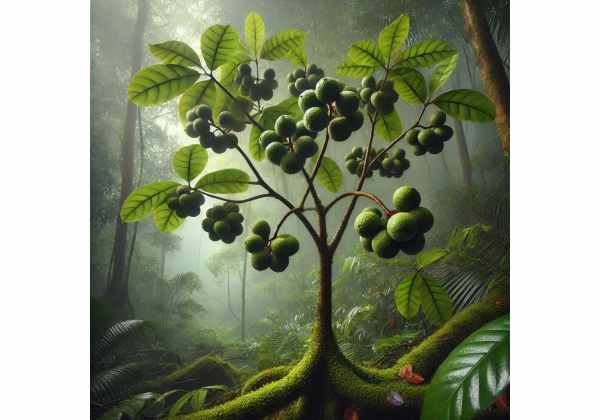
Keranji is the Malay and Indonesian common name for Dialium indum, a tree in the Fabaceae family. It grows across parts of Thailand, Malaysia, Indonesia, and nearby tropical regions, where it is valued mainly for its edible fruit. The fruit is small, dark, and hard-shelled, with a thin layer of brownish, sweet-sour pulp around one or sometimes two seeds. That pulp is the part most people actually eat. It has a dry, powdery texture rather than the juicy flesh people expect from more familiar fruits, which is one reason keranji is often described as unusual but memorable.
From a health perspective, keranji matters because the fruit is more than a snack. Laboratory studies suggest that different parts of the fruit carry different classes of bioactive compounds. The pulp, peel, and seeds do not behave the same way. In some antioxidant studies, the seed and peel fractions showed stronger activity than the edible pulp, even though the pulp is the part used as food. That matters because casual internet summaries often blur together “the fruit” as if every part were interchangeable.
The most relevant compounds discussed in the research include:
- phenolic acids,
- flavonoids,
- tannin-like compounds,
- amino acids,
- vitamin C and carotenoid-associated antioxidant components.
That combination helps explain why keranji attracts interest as a functional fruit. Phenolics and flavonoids are common in plants with antioxidant potential. Tannins contribute the dry, slightly puckering mouthfeel some users notice. Vitamin C and pigment-related compounds add to the fruit’s broader protective profile, even if amounts vary by variety and processing.
One especially useful insight is that the strongest antioxidant fractions are not always the parts people normally eat. In keranji, the seed methanol fraction and the exocarp, or outer fruit coat, showed notable activity in laboratory assays. In practical terms, this means that the fruit’s health reputation is partly driven by research on fractions that are more concentrated and less food-like than ordinary snacking use. That is an important reality check. A laboratory fraction with strong antioxidant behavior is not the same thing as eating a handful of fruit.
The leaf also has a separate research track. A phytochemical screening paper reported compounds such as saponins, alkaloids, terpenoids, flavonoids, phenolics, tannins, and glycosides in the leaf extract. That does not automatically make the leaf a proven medicine, but it does suggest that keranji is chemically active beyond the edible fruit itself.
For readers who like comparisons, keranji is closer to tamarind as a tangy tropical fruit than to a classic tea herb. It is best understood as a food plant with medicinal interest, not a fully standardized supplement. That distinction shapes everything else: benefits, uses, dose, and safety.
Does keranji help oxidative stress and digestion
The most believable early benefit for keranji is antioxidant support. That does not mean it is a miracle anti-aging fruit. It means the fruit contains compounds that can neutralize unstable molecules in laboratory systems and may help explain why traditional diets often value sour, dark, phenolic-rich fruits. Keranji’s antioxidant reputation comes mainly from in vitro work on the fruit and its fractions rather than from human trials, so the right word is “promising,” not “proven.”
Why does this matter in real life? Because antioxidant-rich fruits often overlap with a broader pattern of benefits:
- support for cellular defense against oxidative stress,
- more plant diversity in the diet,
- better fit within whole-food patterns that favor metabolic health.
Keranji’s digestive relevance is more practical than dramatic. As a sour-sweet fruit, it naturally stimulates saliva and may feel appetite-promoting or mouth-wakening, much like other tart fruits. In traditional use, fruits of this type often show up as light snacks, digestive bites, or seasonal foods eaten for both flavor and perceived bodily balance. That does not prove keranji treats indigestion, but it fits the broader logic of sour fruits that help meals feel lighter or more complete.
Its dry, powdery pulp may also change how people experience it. Unlike juicy fruits, keranji tends to be eaten more slowly and in smaller amounts, which can make it feel less like dessert and more like a tangy, functional nibble. In that sense, it behaves differently from everyday fruit and more like a concentrated, naturally tart snack. Some readers compare this kind of use to bael as a traditional digestive fruit, although keranji is less established clinically and more notable for its peel and seed research.
There is another reason to be careful here: antioxidant findings are easy to oversell. A test-tube result tells us a fruit fraction can react with a lab chemical. It does not tell us the fruit will meaningfully reduce inflammation, prevent disease, or change symptoms in a person. Human biology is much messier. Absorption, dose, food matrix, gut processing, and metabolism all matter.
So what can be said fairly? Keranji is a reasonable candidate for a diet that emphasizes polyphenol-rich plant foods. It may contribute antioxidant value, and its tart, dry fruit profile may support digestive enjoyment in a traditional food context. But it should not be framed as a treatment for gastritis, reflux, bowel disease, or chronic inflammatory disorders. A food can be useful without being medicinal in the strong clinical sense.
The most practical takeaway is that keranji’s strongest near-term value may lie in food-first use: a fruit that brings flavor diversity, phytochemicals, and possibly some digestive advantages, especially when eaten in place of more refined sweets.
Can keranji support blood sugar and metabolism
This is where keranji starts to sound more exciting online than the evidence really allows. There is some real reason for interest. An in vitro study on hydro-ethanolic fruit pulp extract found antioxidant potential and inhibitory effects on two enzymes linked to carbohydrate digestion, alpha-amylase and alpha-glucosidase. Those enzymes matter because slowing them can reduce how quickly carbohydrates are broken down and absorbed.
That sounds impressive, but it needs translation into ordinary language. What the research really shows is this:
- keranji fruit pulp extract can affect carbohydrate-processing enzymes in a laboratory model,
- the effect is concentration-dependent in vitro,
- this supports the idea that the fruit may have metabolic relevance,
- it does not prove that eating keranji lowers blood sugar in people.
That distinction is critical. Enzyme inhibition in vitro is one step in the chain, not the end of the story. Many plant extracts look helpful in lab enzyme tests but fail to show meaningful or practical benefits in humans. The reasons are familiar: the effective concentration may never be reached in the body, the active compounds may be poorly absorbed, or the food form may behave very differently from the extract form.
Still, keranji has some qualities that make the metabolic conversation reasonable. It is a tart fruit with phenolics and other bioactive compounds, and these compounds often show up in discussions of post-meal glucose handling and oxidative stress. If future work confirms these signals, keranji could become more interesting as a functional fruit ingredient or food-based nutraceutical.
For now, the fairest way to describe metabolic support is modestly:
- keranji may have early antidiabetic relevance at the laboratory level,
- whole-fruit food use is not the same as concentrated extract use,
- there is no human trial evidence strong enough to recommend keranji as a glucose-lowering strategy.
That last point matters most for readers with diabetes or prediabetes. Keranji should not be treated like bitter melon for blood sugar discussions, because bitter melon has a much longer and more direct reputation in glucose-related herbal use. Keranji’s evidence is thinner and more exploratory.
There is also a practical nutrition angle. Fruit choice affects more than chemistry. If keranji is used as a small sour snack instead of candy or more heavily sweetened foods, it may indirectly support better eating patterns. That kind of benefit is real, but it is behavioral rather than pharmacological.
So can keranji support blood sugar and metabolism? Possibly, in an early scientific sense. But current evidence is best viewed as a signal for future study, not a basis for self-treatment. Readers looking for honest guidance should see keranji as a potentially interesting metabolic fruit, not a validated antidiabetic remedy.
How keranji is used
Keranji is used first as a fruit and only second as a medicinal material. That order matters. Many herb profiles start from the assumption that the plant is already a treatment. Keranji is better approached as a food with medicinal interest. In Southeast Asian contexts, the fruit pulp is commonly eaten as a tangy snack or sweet-sour treat, while research has expanded attention to the peel, seed, and leaves.
The simplest use categories are:
- fresh or dried fruit pulp as food,
- fruit-derived fractions in research settings,
- leaf extracts in phytochemical and antimicrobial investigations.
For a regular person, the only straightforward and familiar use is the fruit itself. That is the form with the longest ordinary intake history. Once the conversation shifts to peel fractions, seed methanol fractions, or leaf extracts, it moves from food culture into experimental territory.
A practical hierarchy of use looks like this:
- Start with the edible fruit if it is available and correctly identified.
- Treat leaf or extract products as uncertain unless the label is unusually clear.
- Avoid products that do not specify whether they contain pulp, peel, seed, or leaf.
- Do not assume research extracts behave like home preparations.
This last point is easy to miss. In the literature, keranji fractions are often generated with solvents and then separated into active components. That kind of preparation can highlight antioxidant or antimicrobial properties, but it does not tell you what a homemade infusion or powdered product will do.
The fruit itself fits best into food-based use cases:
- as a tart seasonal snack,
- as a flavoring fruit,
- as a less conventional alternative to candy-like sour fruit treats,
- as part of a varied plant-based eating pattern.
That is why it helps to compare keranji with familiar food plants rather than with high-dose supplements. Someone who already uses ginger as a food with medicinal overlap will understand the distinction. Ginger can be eaten, brewed, extracted, or standardized, but not every form has the same evidence or intensity. Keranji is even more form-sensitive because its human research is much thinner.
A second practical rule is to avoid “extract inflation.” If a product promises strong immune, antimicrobial, metabolic, and detox effects all at once, it is almost certainly borrowing language from general plant chemistry rather than from direct keranji evidence. The safest keranji use is the least glamorous one: identifiable fruit, modest expectations, and minimal guesswork.
For now, keranji is best used as an edible fruit with traditional value and interesting preclinical potential, not as a heavily engineered daily supplement. That framing protects both safety and credibility.
How much keranji per day
This is the section where many articles become misleading, because they force a neat dose onto a plant that has not earned one. Keranji does not have a validated medicinal dosing framework from human clinical trials. That means there is no evidence-based daily range for keranji pulp extract, peel extract, seed fraction, or leaf product that can be recommended with real confidence.
That does not mean the plant is unusable. It means the dosing discussion has to be split into two very different categories.
As food:
Keranji fruit can be eaten in ordinary fruit-like amounts based on tolerance, appetite, and availability. This is the most traditional and least risky route because it reflects real dietary use rather than laboratory concentration. Still, even here, the fruit’s tartness, dryness, and occasional added sweetening mean moderation makes sense.
As a medicinal extract or leaf product:
There is no standardized oral dose. The research on antioxidant, enzyme inhibition, and phytochemical content does not translate into a clinically validated serving.
So what is the most honest advice?
- There is no established daily medicinal dose.
- There is no best-studied time of day.
- There is no validated treatment duration.
- Whole-fruit use is safer than concentrated extract experimentation.
- Seed, peel, and leaf products should not be treated as casual equivalents of the fruit.
A good practical decision rule is to separate curiosity from treatment. If you are eating keranji as a fruit, ordinary food-level use is the sensible frame. If you are considering a powder, tincture, capsule, or leaf preparation, you are stepping into a space where evidence becomes much thinner and safety less predictable.
This matters especially because research often highlights the non-pulp fractions. The strongest antioxidant signals in some studies came from seed or peel fractions, not from the fruit exactly as people eat it. That can tempt marketers to imply that “more concentrated” is better. But a stronger lab fraction is not automatically a safer or more useful human product.
Readers sometimes want a number anyway. In keranji’s case, the most responsible answer is not a number but a boundary: do not invent a therapeutic dose from preclinical papers. If a product label is vague, skip it. If the goal is a health effect serious enough to need dosing precision, keranji is not currently evidence-based enough to be the right first choice.
In other words, keranji has a food range, but not a proven medicinal range. That may be less satisfying than a supplement chart, but it is a much more trustworthy answer.
Keranji safety and who should avoid it
As a fruit, keranji is likely much safer than as an extract. That is the central safety idea to keep in mind. The pulp has a history of ordinary food use, while peel, seed, and leaf preparations are mainly studied in laboratory or early phytochemical contexts. Safety changes when you move from food to concentration.
For most healthy adults, the edible fruit itself is likely a low-risk food when eaten in normal amounts. The more realistic concerns are practical rather than dramatic:
- sour fruit may irritate very sensitive stomachs,
- sugary preserved forms may not fit metabolic goals,
- unusual fruits can still trigger intolerance in sensitive people.
The bigger caution zone is concentrated or poorly labeled products. There are several reasons for this.
First, keranji does not have a good human safety dossier for medicinal extract use. Second, the plant parts differ in chemistry, so a leaf preparation is not the same as pulp. Third, some of the biological activity that makes the plant scientifically interesting is exactly what should make consumers more careful. Potent plant chemistry is not the same as guaranteed benefit.
The groups who should be especially cautious include:
- pregnant adults,
- breastfeeding adults,
- children,
- people using diabetes medicines,
- people with significant gastrointestinal disease,
- people taking multiple prescription drugs,
- anyone considering a leaf, peel, or seed extract rather than the edible fruit.
Why call out diabetes medicines in particular? Because keranji has early enzyme-inhibition data linked to carbohydrate metabolism. That does not prove a direct interaction, but it is enough to suggest caution if someone is also taking glucose-lowering medication. In that situation, self-experimentation is not smart.
Another practical point is acidity and fruit form. Keranji’s tartness may be enjoyable for many people, but those with active mouth ulcers, severe reflux, or acid-sensitive digestion may tolerate it poorly. The same principle applies to many sour fruits, including tamarind in high-acid culinary use. Food can still be beneficial overall while being the wrong fit for a sensitive digestive system.
There is also a labeling issue. If a supplement says “velvet tamarind” but does not specify species, plant part, or extraction method, that is not enough information for safe use. Common names are often messy, and species confusion is common with under-studied plants.
The safest overall rule is simple: fruit use is one thing, extract use is another. Whole-food keranji can fit into a varied diet. Medicinal keranji products should be approached cautiously, and many people are better off skipping them altogether until better evidence exists.
What the research actually shows
Keranji has a real evidence base, but it is narrow. That is the most important conclusion.
The science currently supports four broad ideas:
- keranji is a clearly identified edible tree fruit from Southeast Asia,
- the fruit and leaf contain phytochemicals of medicinal interest,
- laboratory studies show antioxidant, antimicrobial, and enzyme-inhibiting activity,
- there is not enough human evidence to make strong therapeutic claims.
That profile places keranji in the “promising functional plant” category rather than the “clinically established herb” category.
One reason keranji attracts attention is that different parts of the plant do different things. The fruit pulp is the edible form. The peel and seed may show stronger antioxidant activity in some assays. The leaf has its own phytochemical and antimicrobial research track. This makes keranji scientifically interesting, but it also makes consumer advice harder. A plant with part-specific chemistry is more complicated than a simple fruit or a simple herb.
Another useful truth is that keranji’s evidence is stronger for mechanism than for outcome. We can say it contains phenolics, flavonoids, tannins, and related compounds. We can say extracts inhibit certain enzymes in vitro. We can say some fractions show antimicrobial effects against test organisms. What we cannot yet say is that keranji reliably improves digestion, lowers blood sugar, or treats infection in people.
This distinction between mechanism and outcome is often what separates good herbal writing from hype. If a source says keranji “fights diabetes” or “kills harmful bacteria in the body,” it is skipping several scientific steps. Real evidence for those claims would require controlled human studies, dosing work, safety data, and reproducible clinical outcomes. Keranji is not there yet.
Still, the plant should not be dismissed. A fruit that combines traditional food use with measurable lab activity is worth attention. It may have future roles in functional foods, nutraceuticals, or food-derived bioactive research. It may also remain most useful simply as an underused fruit with interesting chemistry.
For readers, the best interpretation is balanced:
- keranji is more than a novelty fruit,
- it is less than a proven medicinal supplement,
- its food use is currently more defensible than its extract use,
- its strongest claims should remain modest until human evidence improves.
That balance is what makes keranji worth writing about. It is not empty folklore, but it is not settled science either. Used as a fruit and discussed honestly, keranji is interesting. Oversold as a cure, it becomes unreliable.
References
- Dialium indum L. | Plants of the World Online | Kew Science 2024 (Official Database)
- A Comprehensive Review of The Chemical Composition and Pharmacological Activities of The Genus Dialium 2024 (Review)
- Antioxidant Activities of Dialium indum L. Fruit and Gas Chromatography-Mass Spectrometry (GC-MS) of the Active Fractions 2018 (Preclinical Study)
- In vitro antioxidant potential and inhibitory effect of hydro-ethanolic extract from African black velvet tamarind (Dialium indium) pulp on type 2 diabetes linked enzymes 2018 (Preclinical Study)
- Phytochemical Screening of Dialium Indum Leaf extract (Velvet Tarmarind) 2017 (Preclinical Study)
Disclaimer
This article is for educational purposes only and is not medical advice. Keranji is an edible fruit with emerging phytochemical and laboratory evidence, but it does not have a clinically established medicinal dosing framework. It should not replace professional care for diabetes, digestive disease, infection, or any ongoing health condition. If you are pregnant, breastfeeding, taking medicines, or considering keranji extracts rather than the whole fruit, speak with a qualified healthcare professional first.
If you found this article useful, please share it on Facebook, X, or another platform where it may help someone make a more informed and careful decision.