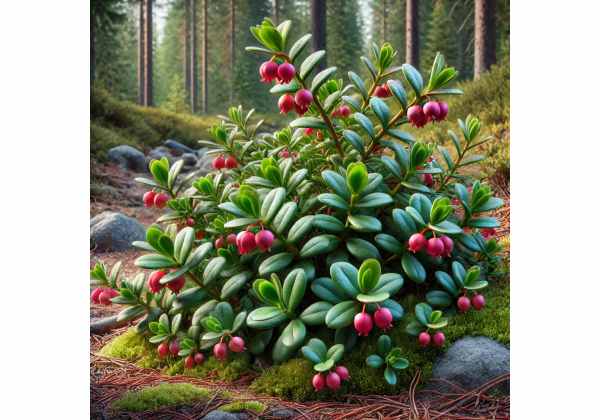
Kinnikinnick, better known in herbal medicine as bearberry leaf, comes from the evergreen shrub Arctostaphylos uva-ursi. The leaf, not the berry, is the part used medicinally. For generations it has been taken as a short-term urinary herb, especially when people want help with mild burning, urgency, or frequent urination. Its reputation rests on a distinctive mix of compounds led by arbutin, alongside tannins and flavonoids, which give the plant its classic antimicrobial, astringent, and mildly anti-inflammatory profile.
What makes kinnikinnick interesting is also what makes it easy to misuse. It is not a general “detox” tonic, not a daily wellness tea, and not a replacement for proper treatment when symptoms suggest a true urinary tract infection. Used carefully, it can fit a narrow role: brief, targeted support for lower urinary discomfort in the right adult. Used too long or in the wrong person, it becomes a poor choice. The key to using it well is understanding what it can realistically do, how little is usually needed, and when safety matters more than tradition.
Essential Insights
- Kinnikinnick is best known for short-term support in mild lower urinary tract symptoms such as burning and frequent urination.
- Its best-known benefits come from arbutin-rich compounds and tannins that help explain its urinary antiseptic and astringent actions.
- Traditional short-course use often aims for about 400 to 840 mg arbutin derivatives daily, divided across 2 to 4 doses.
- Avoid it during pregnancy, breastfeeding, childhood, and with kidney disease unless a clinician specifically advises otherwise.
Table of Contents
- What is kinnikinnick?
- Key compounds and actions
- Does kinnikinnick help UTIs?
- How to use kinnikinnick
- How much kinnikinnick per day?
- Safety, side effects, and interactions
- What the evidence really shows
What is kinnikinnick?
Kinnikinnick is the common North American name for bearberry leaf, the medicinal leaf of Arctostaphylos uva-ursi, a low-growing evergreen shrub that thrives in cold and rocky regions. The plant has small leathery leaves, red berries, and a creeping habit that helps it spread close to the ground. In herbal medicine, the dried leaf is the important part. It is usually prepared as a tea, cold maceration, capsule, tablet, or liquid extract.
One detail that helps avoid confusion: the word “kinnikinnick” can also refer more broadly to traditional smoking mixtures used in some Indigenous and historical contexts. In modern herbal product language, though, it usually means bearberry leaf itself. That matters because the medicinal profile being discussed in supplements and monographs belongs to the leaf of Arctostaphylos uva-ursi, not to a mixed preparation.
Traditionally, kinnikinnick has been used for lower urinary tract irritation rather than for whole-body wellness. In plain terms, it is a narrow-purpose herb. People do not usually reach for it to support immunity, digestion, sleep, or stress. They reach for it when urinary symptoms such as burning, urgency, and frequency start to feel bothersome and they want a brief herbal option while staying alert to signs that medical care may be needed.
This narrow focus is one reason the herb still appears in official herbal monographs. It has a long history of use for mild, recurrent lower urinary tract complaints, especially in adult women. At the same time, the same sources that recognize this tradition also emphasize limits: short duration, careful patient selection, and prompt medical review if symptoms worsen.
The leaf’s strong taste also tells you something about it. Kinnikinnick is bitter, drying, and tannic. Those qualities fit its medicinal pattern. It is not a soothing, mucilaginous herb. It is more tightening than coating, more targeted than nourishing. Compared with broader urinary herbs such as goldenrod for urinary support, kinnikinnick is typically used more specifically and more cautiously.
A good way to think about it is this: kinnikinnick is a focused herbal tool, not a daily habit. When used correctly, its role is brief, intentional, and tied to a clear reason. That practical framing helps separate the herb’s real value from online claims that make it sound like a general bladder cleanser, kidney detoxifier, or long-term antimicrobial. It is none of those things in a reliable, evidence-based sense.
Key compounds and actions
Kinnikinnick’s medicinal reputation comes from a compact but potent chemistry. The best-known compound is arbutin, a phenolic glycoside that serves as the plant’s signature marker. In the body, arbutin can be metabolized into hydroquinone-related compounds, which helps explain why the herb has long been described as a urinary antiseptic. That description is traditional, but it is not empty folklore. It reflects a real chemical pathway that has shaped how the herb is used.
Arbutin is only part of the story. Bearberry leaf also contains methylarbutin, hydroquinone-related metabolites, tannins, flavonoids, and other phenolic compounds. The tannins matter more than many casual herb summaries admit. They give the herb an astringent quality, which means it tends to feel drying and tightening rather than softening. In practical use, that astringency may contribute to why kinnikinnick is associated with irritated urinary tissue and not with long-term comfort teas.
Flavonoids and other polyphenols add antioxidant and anti-inflammatory potential, but readers should keep expectations realistic. Kinnikinnick is not popular because it is a powerful whole-body antioxidant herb. It is used because several compounds seem to work together in a way that is relevant to the lower urinary tract. That includes:
- arbutin-related urinary antiseptic activity,
- tannin-driven astringency,
- modest anti-inflammatory effects,
- and a mild diuretic tendency in some preparations.
Preparation method matters. The leaf can contain roughly meaningful amounts of arbutin, but concentration varies by plant material, growing conditions, and extraction style. Standardized products are useful for this reason. A product that lists arbutin or hydroquinone-derivative content gives a much clearer signal than a vague label that says only “bearberry leaf blend.”
Another useful nuance is that kinnikinnick is chemically “dense” in a way that cuts both ways. The same hydroquinone-related pathway that supports its urinary use is also why prolonged or excessive use raises concern. This is not the kind of herb where “more must be better.” Its active chemistry is exactly why short, measured use makes more sense than casual daily sipping.
The leaf also contains compounds such as hyperoside and galloyl derivatives, which may support antioxidant effects and contribute to the broader medicinal profile. Still, these are supporting players. If you want the shortest honest summary, it is this: arbutin gives kinnikinnick its identity, tannins shape its feel, and the rest of the phenolic mix rounds out the action.
That chemical profile also explains why the herb does not behave like gentler urinary teas. It is not especially soothing, sweet, or flexible. It is a targeted herb with a firm medicinal personality, which is useful when matched to the right situation and unhelpful when marketed as a wellness drink.
Does kinnikinnick help UTIs?
Kinnikinnick is most often discussed in connection with mild lower urinary tract infections and early urinary irritation, but the most honest answer is nuanced: it may help some people in a narrow setting, yet it is not a reliable stand-alone replacement for standard treatment when a true infection is present.
Its traditional use is tied to symptoms such as burning with urination, urinary frequency, urgency, and mild bladder discomfort. These are the kinds of complaints people sometimes label as “a UTI” before a diagnosis is confirmed. Kinnikinnick may fit best at this early, symptom-based stage, especially when a clinician has already ruled out more serious causes and the person understands the need to escalate care if symptoms worsen.
The proposed benefits are practical rather than dramatic:
- It may reduce microbial burden in the urinary tract.
- It may modestly calm inflammatory signaling.
- Its astringent quality may reduce the sense of urinary irritation.
- It may support a short-term antibiotic-sparing strategy in selected adults.
What it does not do well is cover the full range of UTI risk. It does not reliably treat kidney infection. It is not appropriate for fever, flank pain, nausea, vomiting, visible blood in the urine, severe pelvic pain, or symptoms that keep worsening over a day or two. It is also not the best choice when symptoms occur in pregnancy, in children, or in men, because those situations usually deserve medical supervision from the start.
It also helps to separate treatment from prevention. For prevention, it is often discussed alongside cranberry for urinary tract support, but the two herbs play different roles. Cranberry is usually framed as a longer-term recurrence-support option that may reduce bacterial adhesion. Kinnikinnick is more of a short-course intervention for active lower urinary symptoms. In other words, cranberry is the “steady habit” conversation; kinnikinnick is the “brief targeted use” conversation.
Many marketing claims oversell kinnikinnick as a natural antibiotic. That language is too simplistic. A better description is that it is a traditional urinary herb with plausible antimicrobial activity and some limited clinical interest, but with safety limits that prevent casual or prolonged use. That makes it potentially useful, yet far from foolproof.
The realistic outcome is not “this herb cures UTIs.” The realistic outcome is “this herb may help some adults manage mild lower urinary symptoms briefly, with close attention to red flags and a low threshold for medical care.” That may sound less exciting, but it is the version that actually protects the reader.
How to use kinnikinnick
Kinnikinnick is usually used in one of four forms: dried leaf tea, cold-water maceration, capsules or tablets, and liquid extracts. Each form has tradeoffs. Tea feels traditional and simple, but the leaf is quite tannic and bitter. Capsules are often easier to tolerate and dose. Liquid extracts can be practical, but they vary in concentration and may contain alcohol.
For home use, the most sensible starting point is a standardized commercial product from a reputable maker. This is not because “natural tea is bad,” but because kinnikinnick is one of those herbs where consistency matters. If you are using it for a short therapeutic purpose, knowing the approximate arbutin content is more useful than guessing from a handful of leaves.
Traditional tea can be prepared as an infusion or a longer cold maceration. Some herbalists prefer maceration because it may moderate how much tannin ends up in the cup while still extracting useful constituents. That can make the result somewhat gentler on the stomach. The tradeoff is that macerates are less convenient and should be used promptly after preparation.
A practical use pattern often looks like this:
- Start at the first phase of mild lower urinary symptoms, not after several days of worsening illness.
- Choose one form only rather than stacking tea, capsules, and tincture together.
- Use generous hydration, but do not force extreme fluid intake.
- Reassess quickly, especially if symptoms persist beyond a few days.
Kinnikinnick is also better used with a clear stop point. It is not a tea to keep drinking “just in case.” Long-term daily use is exactly the kind of pattern most safety guidance tries to avoid. If a person gets frequent recurrent symptoms, the smarter move is usually evaluation for triggers and a broader prevention plan rather than repeated unsupervised bearberry courses.
Some people like combining short courses with soothing urinary herbs such as corn silk for urinary comfort. That can make sense from a comfort perspective, but it should not blur the main rule: the one-week limit for kinnikinnick still applies, and symptom red flags still override herbal self-care.
Taking the herb with food can reduce stomach upset for some people, although it may slightly change how the tea feels. Capsules are often the easiest choice for people who dislike bitter herbs or who know tannin-rich teas irritate their stomach. Whichever form you choose, simplicity is better than improvisation. One measured product, one short course, and one clear plan for when to stop is usually the safest way to use kinnikinnick.
How much kinnikinnick per day?
There is no single universal dose that fits every kinnikinnick product, because teas, powders, tinctures, and extracts differ widely. The most reliable approach is to match the form to traditional monograph ranges and then stay within the product label rather than chasing high doses.
A useful way to understand dose is by active content and by leaf amount.
Traditional references often describe daily intake in terms of hydroquinone derivatives calculated as water-free arbutin. A commonly cited range is about 400 to 840 mg daily, usually divided into two to four doses. For whole dried leaf, traditional preparations often fall around 1.5 to 4 g per dose, taken up to three times daily, depending on the form and the historical source. For certain liquid extracts, ranges around 1.5 to 4 mL up to three times daily also appear, with a maximum daily amount specified for some products.
The bigger dosing point is not the exact milligram number. It is duration.
Kinnikinnick is meant for short courses. In practical use, that usually means:
- use for a few days when symptoms are mild,
- seek medical advice if symptoms last more than about 4 days,
- and do not continue beyond 1 week.
That timing rule matters more than many readers expect. People often assume herbal medicine is gentler and therefore safer for extended use. With kinnikinnick, the opposite mindset is better. It is potent enough that a short, disciplined course is the smart pattern.
Timing during the day can also matter. Dividing doses tends to make more sense than taking the entire day’s amount at once. Tea or capsules spread across the day can provide steadier exposure and may be easier on the stomach. Starting at the lowest practical effective range is also reasonable, especially if you are sensitive to tannins or bitter herbs.
Three common dosing mistakes are worth avoiding:
- taking it longer instead of reassessing,
- doubling up multiple product forms at once,
- and using it daily for prevention.
If a person finds that kinnikinnick “only works” when they keep taking it, that is a sign to stop self-managing and look for the real cause of recurring symptoms. A herb that fits as a short-course tool stops being a good tool when it turns into a routine.
Safety, side effects, and interactions
Safety is where kinnikinnick deserves the most respect. Used briefly and in the right adult, it may be reasonable. Used casually, repeatedly, or in the wrong person, it becomes much less attractive.
The side effects most often reported are gastrointestinal. Nausea, stomach ache, and vomiting are the classic complaints. This makes sense given the leaf’s tannin content and chemically active profile. Some people also notice that urine can take on a greenish-brown color during use. That color change can be startling if you do not expect it, but it is a known effect.
Who should avoid kinnikinnick or use it only with professional guidance?
- Pregnant people.
- Breastfeeding people.
- Children and adolescents.
- Men with urinary symptoms unless they have been medically assessed.
- Anyone with kidney disease or a history of significant renal problems.
- People who plan to use it for longer than a few days or on a recurring basis.
The caution around pregnancy and breastfeeding is mainly about lack of safety data plus concern about hydroquinone-related exposure. The caution around kidney disease is more direct. Bearberry has traditionally been contraindicated in kidney disorders, and urinary symptoms in that setting are not good candidates for casual self-treatment.
High doses or prolonged use raise the stakes. Older toxicology discussions and monograph assessments note that overdose can irritate the urinary tract and bladder mucosa, and very excessive amounts have been associated with more serious symptoms such as vomiting, ringing in the ears, breathing difficulty, collapse, and liver injury risk. That is one reason this herb should never be treated like a harmless “bladder tea.”
Drug interactions are not well documented, which sounds reassuring but is actually incomplete. “Not well documented” does not mean impossible. It means the evidence base is thin. Practical caution is wise if you take regular medicines, especially those that stress the liver or kidneys. It is also sensible to be careful with alcohol-based extracts if alcohol exposure matters for you. Because kinnikinnick is tannin-rich, separating it by a few hours from iron supplements or very sensitive medications is a reasonable conservative habit.
Perhaps the most important safety rule is symptom-based. Stop self-treatment and get medical care promptly if you have fever, chills, back or flank pain, worsening dysuria, visible blood in the urine, or symptoms that simply do not improve. Those signs move the situation beyond the “mild lower urinary irritation” zone where kinnikinnick is sometimes considered.
In short, kinnikinnick is safest when used by the right person, for the right reason, at the right dose, for the shortest useful time.
What the evidence really shows
Kinnikinnick sits in an interesting evidence category. It has a long traditional record, a plausible chemical mechanism, and enough modern study to stay clinically interesting. What it does not have is the kind of strong, consistent human evidence that would justify bold claims.
Official herbal guidance has historically treated bearberry leaf as a traditional-use product. That phrase matters. It means the herb’s place is supported more by long-standing use, pharmacology, and plausibility than by a robust stack of modern trials. That is not the same as saying it does nothing. It means confidence should stay moderate and the clinical claims should stay narrow.
The most talked-about modern randomized trial compared uva-ursi extract with fosfomycin in women with uncomplicated urinary tract infection. The herb arm reduced antibiotic use substantially, which is the result that keeps researchers interested. But the same trial also showed a higher symptom burden and more safety concerns than the antibiotic arm. That makes the herb promising as an antibiotic-sparing idea, not proven as an equal replacement.
Another later trial looking at uva-ursi in uncomplicated urinary symptoms did not show a clear symptom advantage over placebo. That adds an important reality check. If the clinical signal were strong, the herb would likely have moved out of its traditional-use category by now. It has not.
So what is the fair bottom line?
- The chemistry is credible.
- The urinary use is historically established.
- Short-term symptom support is plausible.
- Modern clinical evidence remains limited and mixed.
- Safety limits are real enough that the herb should stay in a narrow lane.
This also means that kinnikinnick is poorly matched to exaggerated online claims. It is not well supported as a kidney cleanser, a daily detoxifier, a bladder tonic for indefinite use, or a universal answer to recurrent UTIs. For recurrent problems, better evidence-based care usually means culture-aware diagnosis, trigger assessment, hydration habits, post-coital strategies when relevant, and targeted prevention tools rather than repeating short herbal rescue courses.
For readers who want the most practical takeaway, it is this: kinnikinnick still makes sense as a brief, cautious, urinary-focused herb for selected adults, but it does not justify casual use or inflated promises. The evidence supports curiosity and restraint at the same time. That is often the mark of a worthwhile herb: useful in the right context, but only when the user respects its limits.
References
- Uvae ursi folium – herbal medicinal product | European Medicines Agency (EMA) 2018 (Guideline). ([European Medicines Agency (EMA)][1])
- Herbal treatment with uva ursi extract versus fosfomycin in women with uncomplicated urinary tract infection in primary care: a randomized controlled trial – PubMed 2021 (RCT). ([PubMed][2])
- Uva Ursi – Drugs and Lactation Database (LactMed®) – NCBI Bookshelf 2024 (Safety). ([NCBI][3])
- Effect of the Type of Herbal Preparations (Powdered Plant Material vs. Dry Ethanolic Extracts) on the Bioaccessibility of Bearberry (Arctostaphylos uva-ursi (L.) Spreng.) Phytochemicals in Simulated Digestion Conditions – PMC 2024 (Phytochemical Study). ([PMC][4])
- A comprehensive review on herbal approaches for treatment of urinary tract infections: Scope and challenges – PMC 2025 (Review). ([PMC][5])
Disclaimer
This article is for educational purposes only and is not a diagnosis or treatment plan. Kinnikinnick may not be appropriate for everyone, especially during pregnancy, breastfeeding, childhood, or in people with kidney disease or persistent urinary symptoms. Urinary pain, fever, back pain, blood in the urine, or worsening symptoms should be assessed by a qualified healthcare professional promptly. Herbal products can vary in strength and purity, so use labeled products carefully and discuss them with a clinician or pharmacist if you take regular medicines or have a medical condition.
If this guide was useful, please share it on Facebook, X, or your preferred platform so more readers can find it.