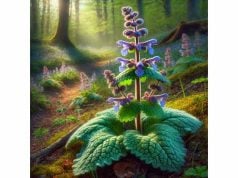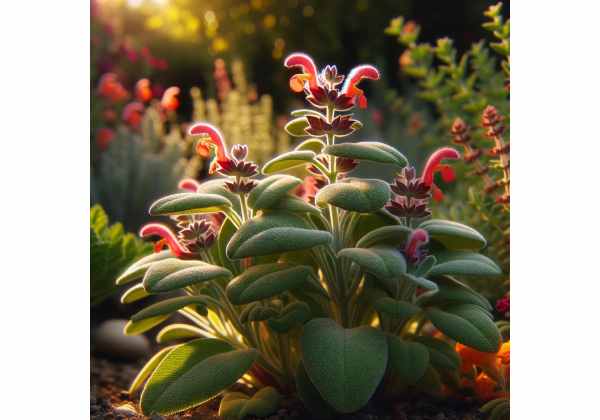
Lemon Sage is an aromatic southwestern sage best known for its vivid pink-red flowers, resinous foliage, and use as an ornamental tea herb rather than a mainstream medicinal plant. One important detail comes first: the name in the title, Salvia lemonii, is usually cataloged botanically as Salvia lemmonii, and some current authorities fold that name into Salvia microphylla. That taxonomic overlap matters because most of the available medicinal research tracks S. microphylla or broader Salvia chemistry, not direct human trials on Lemon Sage itself.
Even with that limitation, Lemon Sage is still worth attention. Published work tied to the S. microphylla complex suggests a meaningful mix of aromatic terpenes, polyphenols, diterpenes, and triterpenes, along with antioxidant, antimicrobial, enzyme-inhibiting, and neuroprotective activity in laboratory and animal studies. The catch is that the evidence remains early, species-confused, and not yet standardized into a proven clinical protocol. The most honest way to approach Lemon Sage is as a promising aromatic sage with traditional and preclinical potential, but with far less certainty than better-studied sages and calming herbs.
Essential Insights
- Lemon Sage is an aromatic sage with early antioxidant and antimicrobial promise, but strong human evidence is lacking.
- Most medicinal data linked to this plant come from Salvia microphylla research rather than direct clinical trials on Lemon Sage itself.
- A cautious home tea range is about 1 to 2 g dried leaf per 200 to 250 mL hot water, up to 1 to 2 times daily.
- Pregnant or breastfeeding people, children, and anyone using concentrated extracts with sedatives or diabetes medicines should avoid self-directed medicinal use.
Table of Contents
- What is Lemon Sage
- Key ingredients and actions
- What benefits are realistic
- How to use Lemon Sage
- How much per day
- Safety and who should avoid it
- What the evidence actually says
What is Lemon Sage
Lemon Sage is a shrubby, aromatic member of the mint family, Lamiaceae, native to the southwestern United States and Mexico. It is usually described as a leafy, somewhat woody sage with bright tubular flowers that attract hummingbirds and with foliage that releases a noticeable scent when touched. In gardens, it is valued for heat tolerance, pollinator appeal, and long flowering periods. In herbal conversations, however, it sits in a more uncertain place because its common name, taxonomy, and medicinal identity do not line up as neatly as they do for plants like garden sage or lavender.
That uncertainty begins with the name. Some North American botanical resources still list Salvia lemmonii as a distinct species, while some current taxonomic authorities treat Salvia lemmonii as a synonym of Salvia microphylla. The title you provided uses Salvia lemonii, which appears to be a misspelling of that botanical line. This matters because when people search for medicinal information on Lemon Sage, they often end up mixing horticultural descriptions of Lemmon’s sage with pharmacological studies on S. microphylla. A careful article has to acknowledge that overlap instead of pretending the evidence is species-pure.
Traditional use adds another layer. Broader ethnobotanical reviews of the Salvia genus show that many New World sages have been used for digestive discomfort, rheumatic pain, sleep issues, respiratory complaints, skin complaints, and ritual or ceremonial purposes. Within the S. microphylla literature specifically, researchers note folk use for memory loss and rheumatism. That gives Lemon Sage a plausible medicinal context, but it is still not the same as having a direct published monograph on Salvia lemmonii itself.
This is why Lemon Sage is best thought of as an aromatic medicinal candidate rather than a fully established medicinal herb. It likely shares much of the chemistry and some of the traditional logic of related sages, especially the microphylla complex, but its evidence base is indirect. Readers looking for a clean answer like “this herb is proven for anxiety” or “this tea treats memory loss” will not find that here honestly. What they will find is a plant with credible genus-level medicinal heritage, species-complex research that points to antioxidant and enzyme-related effects, and a clear need for more direct study before strong clinical claims can be made.
Key ingredients and actions
The chemistry of Lemon Sage is best described through the published work on Salvia microphylla, because that is where most of the direct phytochemical data sit. That research points to a layered profile rather than one dominant “active ingredient.” The plant appears to contain aromatic monoterpenes and sesquiterpenes in its essential oil, alongside polyphenols, flavonoids, diterpenes, triterpenes, and plant sterols in broader extracts. This is typical of medicinal sages, but the exact proportions vary by plant part, geography, and extraction method.
From the essential-oil side, published S. microphylla work highlights compounds such as 1,8-cineole, borneol, camphor, alpha-pinene, beta-pinene, beta-caryophyllene, aromadendrene, spathulenol, and alpha- and gamma-eudesmol. In the Algerian oil study, beta-caryophyllene and alpha-eudesmol were especially prominent across plant parts, while 1,8-cineole and borneol also appeared consistently. These are not trivial aroma chemicals. They help explain why the plant smells active rather than merely pleasant, and they offer a plausible basis for the antimicrobial, antioxidant, and enzyme-related effects reported in the literature.
From the non-volatile side, older and newer studies together show that S. microphylla also carries polyphenols, flavonoids, and structurally rich diterpenes. The 2021 oil paper cites prior work identifying phenolic esters, eudesmane-type sesquiterpenes, triterpenes, abietane, clerodane, neo-clerodane, microphyllane, and pimarane diterpenoids, along with beta-sitosterol, ursolic acid, and oleanolic acid. The 2025 leaf-extract paper then adds direct confirmation that solvent extracts contain meaningful total phenolic and flavonoid content and measurable antibacterial and antioxidant activity. In practical terms, Lemon Sage likely works as a chemistry-rich shrub rather than as a one-molecule herb.
These compounds suggest several plausible actions:
- antioxidant activity through polyphenols and flavonoids
- mild antimicrobial action through essential-oil terpenes and extract fractions
- anti-inflammatory potential through terpenoids and triterpenes
- enzyme-modulating effects relevant to carbohydrate digestion and cholinesterase pathways
- possible neuroprotective relevance in preclinical models
That said, “plausible” is the right word. The chemistry makes medicinal interest reasonable, but it does not by itself prove a clinical effect in humans. In this respect, Lemon Sage resembles other chemically interesting sages more than it resembles a standardized pharmaceutical herb. Readers who want a more established benchmark for how sage-family chemistry is usually discussed might compare it with rosemary’s more developed antioxidant and cognitive literature. Lemon Sage belongs in that wider aromatic-sage conversation, just with less direct evidence and more taxonomic ambiguity.
What benefits are realistic
The realistic benefits of Lemon Sage are narrower than the chemistry might tempt people to believe. Because there are no strong human trials specifically on this plant, the most defensible claims are supportive rather than therapeutic. That means the herb may fit into gentle tea use, aromatic routines, and exploratory herbal practice, but it should not be presented as a proven treatment for memory loss, diabetes, or chronic inflammatory disease.
The most believable benefit is antioxidant support. Both essential-oil and solvent-extract studies on S. microphylla show measurable antioxidant activity, though the strength depends a lot on the assay used. This suggests Lemon Sage may help as part of a phytochemical-rich herbal routine, especially when used as a modest aromatic tea rather than as a heroic dose. The effect is best understood as background support, not as a dramatic health event.
A second realistic area is mild antimicrobial potential. Laboratory work reports activity against a range of bacteria and some yeast, again depending on extract type and concentration. This helps explain why aromatic sages so often appear in traditional formulas for mouth, throat, or skin-related uses. But it would still be a mistake to jump from “in vitro antimicrobial activity” to “safe home treatment for infection.” The evidence supports curiosity, not self-directed antibiotic substitution.
The third area is cognitive and neurologic interest, but here extra caution is needed. The best data involve a rat memory-impairment model where Salvia microphylla extract showed beneficial effects alongside S. officinalis. That is an intriguing signal, especially when read alongside the 2021 cholinesterase findings, but it is still preclinical. It does not prove that Lemon Sage tea improves memory in people. Readers looking for a clearer culinary herb comparison on that question usually turn to rosemary’s more mature cognitive evidence base. Lemon Sage is still in the “interesting candidate” stage.
Traditional use also hints at rheumatic, digestive, and mild calming value, especially within the broader S. microphylla folk record. Those uses make sense in an aromatic sage. Warm infusions often feel soothing, and strongly scented leaves can be useful in relaxation rituals. But here again, the evidence is mostly ethnobotanical and mechanistic. The most honest conclusion is that Lemon Sage may be helpful for gentle, low-stakes wellness goals, especially where aroma and ritual matter, yet it remains under-studied enough that confident disease claims would go too far.
How to use Lemon Sage
Lemon Sage is easiest to use as a leaf herb, not as a concentrated medicinal extract. That fits both the available evidence and the plant’s likely real-world strengths. Since direct clinical trials are lacking, the most sensible preparations are mild infusion, culinary use, or simple aromatic applications rather than aggressive supplementation. In other words, this is a plant to work with gently.
The most practical form is tea. A small amount of dried or fresh leaf steeped in hot water is the traditional-style approach most consistent with how aromatic sages are commonly used. The tea will not taste like lemon juice. It is better described as resinous, herbal, and lightly citrus-toned. Because the plant sits in a taxonomically messy corner of the sage world, using a clearly identified garden or dried source matters more than it would for a mass-market herb.
You can also use Lemon Sage in small culinary amounts. Chopped leaves can be added to bean dishes, roasted vegetables, simple broths, or herb blends where you want an aromatic sage note without the heavier profile of some culinary sages. The point here is flavor-first use with possible wellness value in the background. This is a much more grounded approach than chasing a large medicinal dose.
A few good practices improve the experience:
- Use leaves, not improvised essential oil preparations.
- Start with a light infusion rather than a strong decoction.
- Keep early use occasional until you know your tolerance.
- Prefer short-term, intentional use over daily indefinite use.
- Stop if the plant feels irritating, too stimulating, or unhelpful.
For home use, these formats make the most sense:
- Tea or infusion: best for gentle exploratory use
- Culinary herb: good in small savory applications
- Aromatic bundle or sachet: reasonable for scent, though not a medical dose
- Diluted rinse: only cautiously and only if the plant is clearly identified and well tolerated
What does not make much sense is swallowing unknown essential oils or taking concentrated extracts without clear sourcing. The research literature on S. microphylla often involves carefully prepared extracts and essential oils under laboratory conditions. Home users do not have that level of control.
If what you really want is a softer, easier, lemon-scented evening herb with a much clearer usage tradition, many people prefer chamomile for gentler tea routines. Lemon Sage is better suited to curious herb users who understand that they are working with an aromatic sage of potential rather than a thoroughly standardized medicinal plant.
How much per day
There is no clinically established medicinal dose for Lemon Sage. That needs to be stated clearly before any practical range is suggested. Neither the published Salvia microphylla studies nor broader Salvia reviews provide a standard human dose for Salvia lemmonii tea, tincture, or capsules. Most of the direct evidence involves chemical assays, essential-oil testing, or animal work, not real-world dosing in people.
Because of that, any daily-use guidance has to be conservative and practical, not clinical. A reasonable home infusion range is about 1 to 2 g of dried leaf per 200 to 250 mL of hot water, steeped for roughly 5 to 10 minutes. For fresh leaf, the practical equivalent is a small pinch to a small handful depending on leaf size, but dried material is easier to use consistently. For most adults experimenting with the herb, 1 cup once daily is the sensible starting point. If it feels well tolerated and genuinely useful, some people may choose up to 2 cups daily for a short period. That is a cautious herbal-use range, not a proven therapeutic dose.
Culinary use needs even less precision. In food, Lemon Sage works more like a seasoning than a staple vegetable. A few chopped leaves in a shared dish is often enough. If the herb is used this way, daily limits matter less than tolerance. Flavor usually self-limits use before dosing does.
A few points can help keep dosage realistic:
- begin with the lightest preparation first
- avoid combining it immediately with other sedating or strongly aromatic herbs
- do not assume more leaf means more benefit
- keep trials short, such as several days to two weeks
- stop if there is no clear value
One important caution is extract form. The published S. microphylla studies used specialized extract conditions or essential-oil preparations with measured chemical profiles. Those studies do not provide a safe home dose for concentrated internal extracts. Without standardized products and clinical testing, concentrated self-dosing would be guesswork.
Timing can also matter. If you are trying the herb for gentle unwinding or digestion, evening use after food is often better tolerated than a strong infusion on an empty stomach. If your main goal is digestive comfort from an aromatic herb, a more established option is often peppermint for better-studied digestive support. Lemon Sage is more experimental, so dosing should stay modest.
The overall principle is simple: treat Lemon Sage as an under-studied aromatic herb. Use the smallest practical amount, stay close to tea-level use, and resist the urge to turn a mildly promising plant into a high-dose experiment.
Safety and who should avoid it
The safety story for Lemon Sage is defined more by uncertainty than by documented toxicity. There is no strong clinical literature showing that ordinary tea use is dangerous, but there is also no direct human evidence proving long-term safety, safety in pregnancy, or safety of concentrated extracts. In cases like this, the most responsible approach is moderate use and wide safety margins.
For most adults, the likely risks of tea-level use are the usual ones associated with aromatic mint-family herbs:
- stomach upset from a strong infusion
- mouth or throat irritation if the tea is too concentrated
- allergy or sensitivity in people reactive to mint-family plants
- headache or sensory overload from strong aromatic preparations
- skin irritation if concentrated oil or leaf mash is applied without care
The people who should be most cautious are:
- pregnant or breastfeeding people
- children
- people with known mint-family allergies
- anyone using concentrated extracts rather than mild tea
- people taking sedatives or multiple calming herbs
- people on diabetes medicines who are considering concentrated extracts because of the alpha-glucosidase findings
That last point deserves explanation. The 2021 S. microphylla essential-oil study reported strong alpha-glucosidase inhibition and meaningful cholinesterase activity in vitro. Those findings are interesting, but they are not dosing instructions. They simply mean concentrated preparations may not be pharmacologically neutral. Until direct safety work exists, stacking such extracts with sedatives, cognitive medicines, or glucose-lowering regimens is not a smart casual experiment.
Topical or aromatic use also needs perspective. Just because a sage smells pleasant does not mean its oil is automatically safe to swallow or apply neat to the skin. Species-specific essential-oil safety for Lemon Sage has not been established in the way it has for more commercial aromatic plants. If a person mainly wants calm, low-risk aromatic support, they are usually better off with lavender’s more clearly described aromatic use profile than with improvised Lemon Sage oil use.
A good stop list includes worsening heartburn, nausea, rash, dizziness, marked drowsiness when combined with other calming agents, or any unusual reaction that begins after starting the herb. Since the evidence base is thin, there is no prize for pushing through side effects.
So the safety rule is straightforward: use Lemon Sage gently, keep it close to food or light tea use, and avoid high-dose or concentrated internal use unless future research gives us a much clearer picture.
What the evidence actually says
The evidence for Lemon Sage itself is sparse. That is the single most important fact in the entire article. Once taxonomic ambiguity is taken into account, the published medicinal literature belongs mostly to Salvia microphylla and to broader Neotropical or global Salvia reviews. This does not make the evidence useless, but it does mean every claim should be read with a quiet asterisk: likely relevant, not directly confirmed in human Lemon Sage trials.
What looks strongest at the moment is the preclinical antioxidant and antimicrobial signal. The 2025 S. microphylla leaf-extract paper found notable phenolic and flavonoid content along with strong antioxidant and antibacterial activity across several solvents. The 2021 essential-oil paper also reported antibacterial and antifungal effects, plus interesting anticholinesterase and alpha-glucosidase inhibition results. In plain language, the species complex has real biological activity. It is not just an ornamental sage with folk claims attached.
The second strong point is mechanistic breadth. The 2022 Neotropical sage review makes clear that closely related Salvia species contain characteristic diterpenes, flavonoids, terpenoids, and triterpenes, and that pharmacological work across the group has turned up antinociceptive, anti-inflammatory, anxiolytic, antidiabetic, and cytotoxic properties. That kind of review supports cautious extrapolation. It also supports restraint, because corroborative studies remain scarce.
The most eye-catching paper is the 2022 neuroprotective rat study, which reported beneficial effects of Salvia microphylla and S. officinalis against a scopolamine-induced Alzheimer-like disorder model. This is meaningful because it moves beyond test tubes into a living system. Still, it remains an animal model, not a human memory trial. It is a reason to study the plant more, not a reason to present Lemon Sage tea as a cognitive treatment.
What is missing is exactly what readers usually want most:
- no strong human clinical trials
- no standardized medicinal product for this plant
- no agreed therapeutic dose
- no direct long-term safety studies
- no clean way to separate Salvia lemmonii from S. microphylla evidence in practical use
That leaves Lemon Sage in a scientifically honest middle ground. It is clearly medicinally plausible and supported by real phytochemical and preclinical work. But it is also still evidence-limited, taxonomically messy, and best used with modest expectations. If a plant can be described as promising without being proven, Lemon Sage is exactly that plant.
References
- Salvia lemmonii A.Gray | Plants of the World Online 2026 (Official Taxonomy Source)
- A Review on the Ethnopharmacology and Phytochemistry of the Neotropical Sages (Salvia Subgenus Calosphace; Lamiaceae) Emphasizing Mexican Species 2022 (Review)
- GC-MS Analysis and Biological Activities of Algerian Salvia microphylla Essential Oils 2021 (Preclinical Study)
- Insights into the neuroprotective effects of Salvia officinalis L. and Salvia microphylla Kunth in the memory impairment rat model 2022 (Animal Study)
- Phytochemical and biological investigations of Salvia microphylla leaf extracts using LC-MS/MS 2025 (Preclinical Study)
Disclaimer
This article is for educational purposes only and is not medical advice, diagnosis, or treatment. Lemon Sage is an under-studied aromatic sage, and most of the medicinal discussion around it relies on taxonomically related Salvia microphylla data and broader sage-family research rather than direct human clinical trials. It should not be used in place of care for memory problems, diabetes, chronic pain, infection, or inflammatory disease. If you are pregnant, breastfeeding, taking sedatives, or considering concentrated extracts for health purposes, seek professional guidance before using this plant medicinally.
Please share this article on Facebook, X, or your preferred platform if you found it useful.