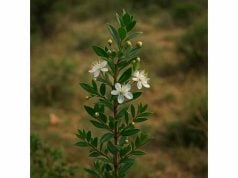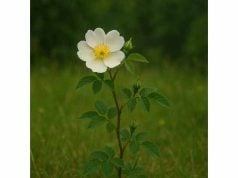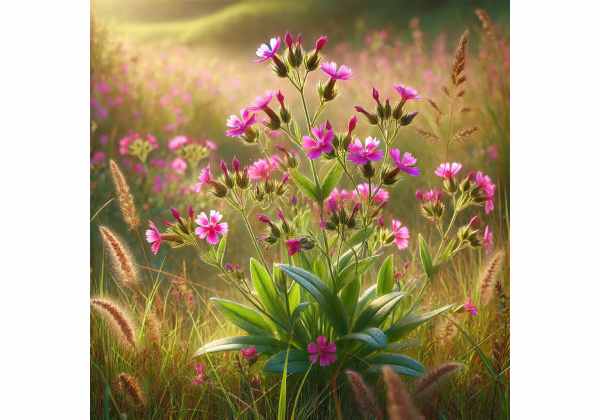
Maiden Pink, botanically known as Dianthus deltoides, is a low-growing flowering plant best known as an ornamental groundcover rather than a mainstream medicinal herb. Even so, it belongs to a genus with a long herbal history, and scattered folk records, older phytochemical papers, and newer genus-level research have kept interest alive. What makes Maiden Pink intriguing is not a large body of clinical evidence, but a mix of traditional use, distinctive flavonoids and saponins, and early laboratory findings that suggest antioxidant, soothing, and mild anti-inflammatory potential.
That said, this is not a herb to overstate. Modern human research on Maiden Pink itself is very limited, and much of what is discussed in herbal circles comes from related Dianthus species rather than Dianthus deltoides alone. The most responsible way to understand it is to separate what is known from what is merely repeated. Maiden Pink may have a modest place in cautious folk herbal practice, especially in light infusions, but it is better approached as a limited-evidence herb with a few plausible uses than as a proven remedy for major conditions.
Essential Insights
- Maiden Pink may offer mild antioxidant support based on its flavonoids and other polyphenolic compounds.
- Traditional use points to gentle support for minor digestive, urinary, and tissue-soothing needs, but human evidence is sparse.
- If used at all, a weak folk-style infusion is generally kept around 1 to 2 g dried herb per 250 mL water for short-term use.
- Avoid Maiden Pink during pregnancy, breastfeeding, in children, and in anyone with significant kidney, liver, or medication-related bleeding risk.
Table of Contents
- What Maiden Pink Is and Why Its Medicinal Reputation Is Complicated
- Key Ingredients and What Is Known From Maiden Pink and Related Dianthus Species
- Maiden Pink Benefits and What the Evidence Actually Supports
- Traditional Uses and How Maiden Pink Is Prepared
- Dosage, Timing, and Practical Limits
- Safety, Side Effects, and Who Should Avoid It
What Maiden Pink Is and Why Its Medicinal Reputation Is Complicated
Maiden Pink is a perennial flowering plant in the Caryophyllaceae family, the same broader family that includes other pinks, carnations, and several species with longer medicinal histories. In gardens, it is valued for its mat-forming habit, narrow leaves, and bright pink flowers that attract pollinators. In herbal medicine, however, it occupies a much less certain place. That uncertainty is important, because many readers searching for “Dianthus health benefits” are actually finding information that belongs to other species.
This is one of the main reasons Maiden Pink deserves a careful introduction. In East Asian medicine, the classic crude drug often called Dianthi herba usually comes from Dianthus superbus or Dianthus chinensis, not from Dianthus deltoides. Those better-known medicinal species have a clearer traditional role in urinary formulas and a larger research footprint. Maiden Pink, by contrast, shows up only occasionally in scattered folk records, regional herb lists, and older chemistry papers. In other words, it belongs to a medicinally interesting genus, but it is not the best-studied medicinal member of that genus.
That difference changes how the plant should be discussed. It is reasonable to describe Maiden Pink as a limited-evidence folk herb with some potentially relevant chemistry. It is not reasonable to present it as a clinically established treatment for urinary disease, inflammation, infection, or pain. A lot of online material blurs those lines, treating all Dianthus species as if they were interchangeable. They are not. Shared family traits and shared genus traits can make certain uses plausible, but they do not make them proven.
Historically, folk uses attributed to Maiden Pink or closely overlapping local “pink” species vary by region. Some sources place it in light teas for minor digestive or respiratory discomfort. Others mention use for headache, stomach pain, or mild urinary complaints. A few ethnobotanical notes point toward broader household use of the whole plant rather than any sharply defined medical tradition. What stands out is not one dominant medicinal identity, but a pattern of modest, practical folk use.
That modesty matters. Maiden Pink is not a classic daily tonic, not a standard pharmacopeial herb in modern Western practice, and not a replacement for better-studied plants when a safer or clearer option exists. Someone seeking gentle throat or digestive soothing, for example, will usually find more dependable guidance with demulcent herbs such as marshmallow than with Maiden Pink.
The best way to place Maiden Pink, then, is somewhere between ornamental and medicinal curiosity. It is a real plant with real bioactive constituents, and older traditions did assign it small therapeutic roles. But its medicinal reputation is complicated by species confusion, limited direct research, and the easy tendency to borrow evidence from better-known relatives. A good article about Maiden Pink should not hide that complexity. It should start with it.
Key Ingredients and What Is Known From Maiden Pink and Related Dianthus Species
The most useful place to begin with Maiden Pink chemistry is honesty: the plant has been chemically studied, but not nearly as extensively as many mainstream medicinal herbs. Older species-specific papers on Dianthus deltoides identified flavones, O-glycosides, and C-glycosides in the aerial parts. Those compounds matter because they fit a broader pattern seen across the Dianthus genus, where flavonoids, phenolic compounds, and saponin-like constituents help explain why several related species have shown antioxidant, anti-inflammatory, and antimicrobial potential in laboratory work.
Flavonoids are probably the easiest group to understand. These compounds often act as antioxidants, helping neutralize reactive oxygen species and limit oxidative stress in cell and tissue models. That does not automatically translate into a dramatic human effect, but it does give a plausible biochemical foundation for the plant’s reputation as a gentle “supportive” herb rather than a harsh stimulant or sedative. In practical terms, flavonoid-rich herbs are often explored for tissue comfort, recovery support, and protection against everyday inflammatory strain.
Glycosides are another important part of the picture. In Maiden Pink, the old phytochemical literature points to flavone glycosides rather than one famous, marketable compound. That matters because herbs often work through a pattern of related molecules rather than a single headline ingredient. Glycosides can affect how compounds dissolve, absorb, and interact with body tissues. They may also shape taste and influence how the herb behaves in water-based preparations such as infusions.
Then there are saponins, which are common enough in the Caryophyllaceae family to deserve mention even when a specific commercial monograph is lacking. Saponins can contribute mild expectorant, membrane-active, or circulation-shaping effects depending on the species and the dose. They are one reason plants in this family are often described as “active” even when they are not dramatic in taste or smell. But saponins are also a reason not to assume unlimited safety. In higher concentrations, they can irritate the digestive tract or interact unpredictably with sensitive tissues.
Modern research on related Dianthus species adds another layer. Recent work in Dianthus caryophyllus and Dianthus sylvestris subsp. aristidis has highlighted phenolic acids, flavonoids, and other metabolites linked with antioxidant, antimicrobial, enzyme-modulating, and topical-use potential. That does not prove Maiden Pink has the same profile in the same proportions. It does, however, support the idea that the genus is chemically capable of meaningful biological activity.
A practical summary of Maiden Pink’s likely active profile includes:
- flavones and flavonoid glycosides
- polyphenolic antioxidant compounds
- saponin-like constituents common to the family
- minor aromatic and supportive plant metabolites that may vary by growing conditions
The important caution is this: chemistry alone does not equal a finished herbal use. A plant may contain promising compounds and still be poorly suited to routine self-care because the dose is unclear, the human data are thin, or safer alternatives are available. That is exactly why Maiden Pink should be understood as a chemically interesting herb with limited clinical definition. Readers who want clearer, better-described antioxidant and soothing herb profiles often start with better-studied flowers such as chamomile before considering something this obscure.
Maiden Pink Benefits and What the Evidence Actually Supports
When people search for Maiden Pink benefits, they often want a clean list. The problem is that the evidence does not support a clean, confident list in the same way it might for peppermint, ginger, or calendula. Maiden Pink is better approached through a tiered view of evidence: traditional reports first, preclinical plausibility second, and human certainty a distant third.
The most reasonable benefit to discuss is mild antioxidant support. That claim rests on the plant’s flavonoids and the broader Dianthus literature, where several related species show meaningful free-radical scavenging activity and phenolic richness in laboratory settings. Antioxidant activity sounds abstract, but it often points toward a general capacity to reduce oxidative strain in tissues. This does not mean Maiden Pink is an anti-aging cure or a powerful systemic remedy. It simply means its chemistry supports cautious interest in low-level protective effects.
A second plausible area is mild anti-inflammatory support. Again, this is not a claim of proven treatment. It is a claim that the plant’s compound classes, combined with genus-level data, make a gentle anti-inflammatory role biologically plausible. Folk uses for small aches, digestive discomfort, or irritated tissues fit that pattern better than grand claims about chronic disease. If Maiden Pink helps at all, it is more likely to do so subtly than dramatically.
A third area is traditional soothing use in digestive and urinary discomfort. Historical and ethnobotanical mentions are inconsistent, but they tend to cluster around mild stomach upset, “warming” infusions, occasional respiratory use, or light urinary support. This is where users need the most restraint. A traditional mention is not proof. Still, when the same types of uses recur across folk records, they deserve respectful mention as long as the limitations stay clear.
What is not well supported is just as important:
- there is no strong human trial evidence for Maiden Pink in any major condition
- there is no clear clinical proof for pain treatment, infection treatment, or stone dissolution
- there is no well-established long-term wellness role
- there is no standardized extract with a widely accepted therapeutic range
That means the realistic benefit profile looks like this:
- Mild antioxidant support is plausible.
- Gentle anti-inflammatory or tissue-soothing effects are plausible.
- Traditional digestive, urinary, or household use exists, but is not standardized.
- Strong medical claims are not supported.
For readers who are mainly looking for urinary comfort rather than an obscure folk herb, a gentler and more practical comparison is corn silk for mild urinary support. That comparison helps show where Maiden Pink fits: not as the first-choice herb for a common problem, but as an under-studied botanical with a narrow, tentative, and largely traditional profile.
The central message is not that Maiden Pink has no value. It is that its value is small, conditional, and easy to exaggerate. Its likely strengths are modest. Its limitations are large. In modern herbal practice, that usually means it belongs on the “interesting but secondary” shelf rather than the “core remedy” shelf. Used in that spirit, it can be discussed honestly and usefully. Used as a miracle herb, it quickly leaves the evidence behind.
Traditional Uses and How Maiden Pink Is Prepared
Because Maiden Pink does not have a strong modern clinical tradition, the best guide to practical use comes from conservative folk-style preparation rather than aggressive extract use. In simple terms, that means weak infusions, light decoctions, and short courses matter far more here than capsules promising “maximum potency.” With an herb this lightly studied, gentleness is not just a style choice. It is a safety principle.
The aerial parts are the plant material most often associated with old chemistry papers and folk use, although some traditions refer more generally to the “whole herb.” In a household setting, that usually meant dried flowering tops and leaves prepared in hot water. This is different from the concentrated extracts often seen in modern supplement culture. Traditional use, when it existed, was usually modest and practical: a tea for a minor complaint, not a high-dose intervention for a serious illness.
A mild infusion is the most sensible form to discuss. It allows the plant’s water-soluble compounds to enter the preparation without forcing a heavy extraction of everything at once. Folk users often favored infusions when the aim was light digestive comfort, minor soothing, or general constitutional use. A decoction, which involves simmering, may extract a broader range of constituents, but it can also create a harsher preparation that is less predictable and less necessary for an herb with such limited evidence.
Topical use is less clearly documented for Maiden Pink than for better-known skin herbs, but a diluted wash or compress is sometimes discussed in regional herb traditions. Even there, caution is warranted. Just because a plant can be applied externally does not mean it is automatically skin-friendly for everyone. The Caryophyllaceae family contains active compounds, and sensitive skin can react unpredictably. For truly gentle topical support, calendula remains the clearer and more practical option.
In practical modern terms, the safest ways people might approach Maiden Pink are:
- as a weak, short-term infusion rather than a concentrated extract
- as a single-herb trial rather than part of a large homemade blend
- as an occasional folk preparation rather than a daily tonic
- as a minor-support herb, not a primary treatment
Just as important is what Maiden Pink should not be used for. It should not be used at home for severe pain, fever, suspected infection, persistent cough, visible blood in urine, or unexplained digestive symptoms that continue to return. It should also not be treated as a “natural substitute” for medicines that address clear medical problems. A weak herbal tea may have a place in comfort care. It does not have a place as a delay tactic when proper evaluation is needed.
Another practical point is identification. “Pink,” “clove pink,” and “dianthus” can refer to multiple species in gardening and folk language. If someone uses Maiden Pink medicinally, the exact botanical identity matters. Confusing Dianthus deltoides with carnation, clove, or medicinal Dianthus species from another herbal system is one of the easiest ways to turn a small herbal experiment into a poor one.
So the practical use of Maiden Pink is best described in narrow terms: light preparation, short duration, clear identification, and modest expectations. That is not glamorous, but it is responsible. For a herb with limited human data, careful use is more meaningful than bold claims.
Dosage, Timing, and Practical Limits
Dosage is the most uncertain part of any Maiden Pink article, and the most honest starting point is this: there is no well-established clinical dosage for Dianthus deltoides in modern herbal medicine. That absence matters. It means any dose guidance should be conservative, clearly framed as folk-style practice, and never presented as a proven therapeutic standard.
For whole-herb infusion, a cautious range is often kept weak, such as about 1 to 2 g of dried aerial parts in 250 mL of hot water, usually taken once or twice daily for a short period. This type of range is not a formal medical standard. It is a practical low-strength approach meant to reduce the chance of overuse while still allowing someone to observe whether the plant is tolerated. Stronger preparations are hard to justify when species-specific human data are so limited.
A sensible use pattern would look like this:
- Start with the lowest-strength infusion.
- Use one small serving rather than repeated cups throughout the day.
- Limit use to a short course, such as a few days.
- Stop immediately if any digestive upset, rash, unusual fatigue, or other unwanted effect appears.
Timing should stay simple. Earlier in the day is usually the better choice when trying an unfamiliar herb, because it makes it easier to observe how the body responds. Taking it late at night can hide mild adverse effects or make it harder to tell whether discomfort came from the herb or from something else. Taking it with food may improve tolerance for people with sensitive stomachs.
Concentrated extracts are where Maiden Pink becomes much harder to recommend. If the plant has meaningful saponin and phenolic activity, then stronger extracts could behave quite differently from a weak tea. Without good standardization and safety data, they increase uncertainty rather than usefulness. This is especially true for multi-herb products that do not clearly state the extraction ratio, plant part, or botanical verification.
Another important limit is duration. Maiden Pink is not a herb for continuous daily use. With limited human data, the safest assumption is that it belongs in the short-term category. If a person feels they need it for weeks, the real message is not “keep going.” The real message is “reassess the problem.” Repeated use without a clear reason is usually a sign that the herb is being asked to do more than it reliably can.
Product quality also matters. Anyone considering this herb should look for:
- clear botanical identification as Dianthus deltoides
- the plant part used
- a simple product without many added actives
- lot details or sourcing information from a reputable maker
The most practical dosing mindset is not “How much can I take?” It is “How little would I need to learn whether this plant suits me at all?” That is a much safer question for a limited-evidence herb.
People who want a more established soothing herb with clearer household preparation rules usually do better with simple, familiar options rather than forcing precision onto an obscure plant. Maiden Pink dosing works only when expectations stay modest, preparations stay weak, and duration stays short.
Safety, Side Effects, and Who Should Avoid It
Safety is where Maiden Pink needs the most restraint, not because it is known to be highly toxic in normal tiny amounts, but because so little direct human safety data exist. A lack of strong reports is not the same as proof of safety. With lightly studied herbs, the most responsible position is cautious uncertainty.
The first concern is irritation. Plants in the Caryophyllaceae family often contain saponins and active phenolic compounds that can be useful in small amounts but irritating in larger ones. In practical terms, that means Maiden Pink could potentially cause stomach upset, nausea, loose stool, throat irritation, or skin sensitivity in some users, especially if prepared too strongly or used repeatedly. A mild infusion is less likely to cause trouble than a concentrated extract, which is one reason aggressive forms are difficult to justify.
The second concern is unpredictability. Since Maiden Pink is not a standardized medicinal product, plant strength may vary with species purity, growing conditions, harvest timing, and processing. An ornamental garden plant is not automatically the same thing as a carefully sourced medicinal herb. This is especially important with home-dried material, where contamination, misidentification, or pesticide exposure can complicate the picture.
The third concern is interaction uncertainty. There is not enough direct interaction research on Maiden Pink to map it confidently. Still, cautious herbal practice suggests avoiding it with:
- anticoagulant or antiplatelet medication
- strong diuretic medication
- multiple herbs aimed at inflammation or bleeding balance
- pregnancy-related or fertility-focused formulas
- long-term self-treatment alongside prescription medicines without supervision
People who should generally avoid Maiden Pink include:
- pregnant or breastfeeding people
- children and teenagers
- anyone with significant kidney or liver disease
- people with unexplained abdominal pain
- people with a history of recurrent allergic reactions to herbs
- anyone taking a complicated medication regimen unless a clinician approves it
There is also a clinical judgment issue. Maiden Pink should never be used as a home response to symptoms that may signal something more serious. These include persistent vomiting, fever, strong urinary pain, blood in the urine or stool, worsening cough, chest pain, fainting, or severe headache. An obscure herb is the wrong tool when the body may be asking for diagnosis, not comfort care.
A final point about safety is emotional rather than chemical: rarity and obscurity can make a plant seem special. That feeling leads many people to trust herbs for the wrong reasons. Maiden Pink is interesting because it sits at the edge of ornamental and medicinal tradition. It is not safer because it is less common, and it is not more effective because it is harder to find.
The safest summary is simple. Maiden Pink may have a small place in conservative folk herbal practice, but it is not a routine wellness herb, not a long-term supplement, and not a substitute for clearer options. When there is a gentler, better-described alternative, that alternative usually deserves to come first. Maiden Pink is best reserved for informed, low-dose, short-term use, with a very low threshold for stopping.
References
- Dianthi herba: a comprehensive review of its botany, traditional use, phytochemistry, and pharmacology 2022 (Review)
- Phytochemical Profiling and Biological Evaluation of Dianthus sylvestris subsp. aristidis: A Chromatographic and Mass Spectrometry Approach to Uncovering Bioactive Metabolites for Dermatological and Metabolic Disorder Management 2025 (Preclinical Study)
- Study on chemical constituents and antioxidant activities of Dianthus caryophyllus L 2024 (Phytochemistry Study)
- Medicinal plants of the family Caryophyllaceae: a review of ethno-medicinal uses and pharmacological properties 2015 (Review)
- Flavones and their O-glycosides from the epigeal part of Dianthus deltoides 1976 (Phytochemistry Study)
Disclaimer
This article is for educational purposes only and is not medical advice. Maiden Pink is a limited-evidence herb, and much of the available discussion around medicinal use depends on traditional reports or research from related Dianthus species rather than strong human studies on Dianthus deltoides itself. Because dosing, long-term safety, and drug interactions are not well established, Maiden Pink should be approached cautiously and avoided in pregnancy, breastfeeding, childhood, and in people with significant medical conditions unless a qualified clinician advises otherwise. Seek professional care promptly for severe pain, fever, persistent digestive symptoms, urinary bleeding, breathing problems, or any symptom that worsens instead of improving.
If you found this article helpful, please consider sharing it on Facebook, X, or your preferred platform.