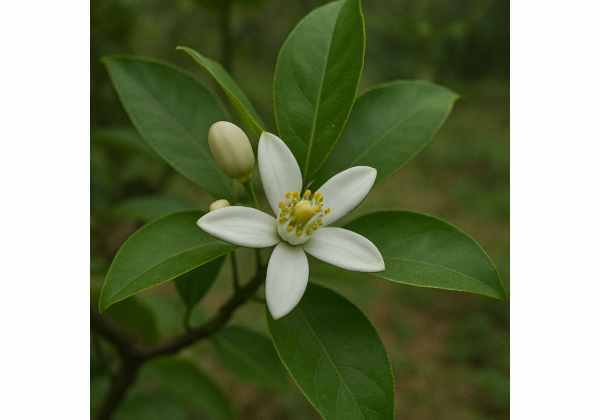
Neroli is the fragrant essential oil distilled from the fresh blossoms of bitter orange, Citrus aurantium. It is one of the most elegant plant extracts in herbal and aromatherapy practice: floral, green, slightly honeyed, and far gentler in character than the sharper oils made from citrus peel. For many people, neroli is best known as a perfume ingredient, but its reputation goes further. It is used for emotional calming, sleep support, skin care, and occasional digestive comfort, especially when tension and physical discomfort overlap.
What makes neroli especially interesting is that it sits at the intersection of traditional botanical use and modern aromatic research. The flower oil contains volatile compounds such as linalool, linalyl acetate, limonene, and related terpenes that help explain its relaxing scent, antioxidant activity, and mild antimicrobial action. Still, it is important to keep the evidence in proportion. Neroli shows promising benefits, especially in inhalation studies, but it is not a cure-all and it is not the same thing as bitter orange peel extracts. This guide explains where neroli truly shines, how to use it well, and where caution matters.
Core Points
- Neroli may help reduce short-term anxiety and support calmer sleep when used by inhalation.
- Its volatile compounds may offer antioxidant, mild antimicrobial, and skin-soothing effects.
- A practical diffuser range is 2 to 4 drops per session, or about 4 drops in 300 mL water in some study settings.
- Pregnant people, very young children, and anyone with fragrance allergy or highly reactive skin should avoid concentrated self-treatment.
Table of Contents
- What Neroli Is and How It Differs from Other Bitter Orange Products
- Key Ingredients and Medicinal Properties
- Neroli Potential Health Benefits
- Practical Uses in Aromatherapy, Skin Care, and Orange Blossom Water
- Dosage, Timing, and Best Preparations
- Safety, Side Effects, and Interactions
- What the Research Really Shows
What Neroli Is and How It Differs from Other Bitter Orange Products
Neroli is not the whole bitter orange plant, and it is not the same as every other citrus product made from Citrus aurantium. That distinction matters because many articles blur together the flower, the peel, the leaves, and the fruit extracts as if they were interchangeable. They are not. Neroli refers specifically to the essential oil obtained from the blossoms, usually by steam distillation. Orange blossom water, sometimes called neroli hydrosol, is the fragrant water left from distillation. Petitgrain comes from the leaves and young twigs. Bitter orange peel oil comes from the rind. The fruit peel and the flowers may come from the same species, but they do not behave the same way.
This difference is more than botanical housekeeping. It shapes safety, scent, and expected effects. Peel oils are often dominated by limonene and can be more stimulating, sharper, and in some cases more associated with phototoxicity when cold-pressed. Neroli, as a flower oil, is more floral, softer, and more often discussed for emotional calming, sleep support, and delicate skin care. That is why neroli belongs more naturally beside other floral aromatics than beside ordinary citrus peel oils.
The name itself carries a long cultural history. Neroli is traditionally linked with Italian perfumery and aristocratic use, but its modern role is broader. It is used in aromatherapy, perfumery, facial oils, room diffusion, bath blends, and orange blossom water preparations for both culinary and soothing purposes. In practical wellness terms, neroli is less about aggressive herbal action and more about sensory medicine: the kind of plant preparation that works through scent, ritual, and gentle physiological effects.
One useful way to understand neroli is to compare it with related calming botanicals. It can fill some of the same emotional territory as lavender for sleep and stress, but its tone is different. Lavender often feels cleaner and more herbal, while neroli feels rounder, more floral, and sometimes more comforting during emotional tension. That does not make it stronger. It makes it distinct.
For readers and buyers, the main lesson is simple: always know which bitter orange product you are using. A bottle labeled “orange,” “orange blossom,” “neroli,” or “bitter orange” may sound similar, but the plant part and extraction method can change the chemistry in important ways. When a guide is truly about neroli, it should stay focused on the flower oil and its related hydrosol, not on every citrus product in the same family.
Key Ingredients and Medicinal Properties
Neroli’s medicinal profile begins with its volatile chemistry. The oil is composed largely of aromatic terpenes and terpene-derived compounds, but one of the most important facts about neroli is that its exact composition can vary widely. Origin, climate, distillation style, blossom maturity, and storage all influence the final oil. That is why different studies report somewhat different dominant compounds. This variability is not a flaw. It is part of the nature of essential oils, especially expensive floral oils.
Still, several compounds appear repeatedly and help explain the oil’s main properties. The most important include:
- Linalool
- Linalyl acetate
- Limonene
- Alpha-terpineol
- Nerolidol
- Geranyl acetate
- Minor aromatic esters and alcohols
In many samples, linalool stands out as a leading component, often followed by limonene and linalyl acetate. Some studies have also found meaningful amounts of nerolidol, alpha-terpineol, geraniol, or farnesol. This matters because the therapeutic feel of an oil often follows its chemistry. Oils richer in linalool and linalyl acetate tend to be discussed for calming, mood support, and pleasant sensory effects. Oils richer in certain monoterpenes may lean more toward fresh scent, mild antimicrobial action, or skin activity.
From this chemistry come neroli’s main medicinal properties.
First, it has a nervine and relaxing aromatic profile. This is probably the property most people notice first. Neroli does not usually feel heavy or sedating in the way some resins or strong evening oils do. Instead, it tends to soften tension, reduce sensory harshness, and create a calmer mental state. That is why it is often chosen for stress, emotional reactivity, and bedtime blends.
Second, neroli has antioxidant potential. The oil and flower-related extracts contain compounds that can neutralize free radicals in laboratory models. This does not mean inhaling neroli is the same as taking an antioxidant supplement, but it does help explain why the oil is valued in skin formulations and protective aromatic blends.
Third, it shows mild antimicrobial activity. Neroli is not the most aggressive antimicrobial oil, and it is not a substitute for treatment, but it has shown activity against several bacteria and fungi in laboratory settings. That helps support its traditional use in fragrant cleansing and topical blends.
Fourth, it has skin-compatible aromatic properties when properly diluted. Because it is generally gentler in scent and feel than many sharper oils, it is frequently used in facial care and calming skin products. This puts it closer to delicate floral aromatics than to harsher cleansing oils.
Like bergamot orange aromatics, neroli is a citrus-family oil with a surprisingly nuanced profile. But unlike many peel oils, its medicinal identity is shaped less by brightness and more by calm, softness, and floral complexity. That balance is what makes it so versatile.
Neroli Potential Health Benefits
Neroli’s health benefits are strongest when described with restraint. It is a promising essential oil with a good emotional profile and a respectable early evidence base, especially for inhalation. It is not a proven disease treatment, and it should not be marketed as one. The most practical benefits are those that align with how people actually use it: through scent, atmosphere, and carefully diluted external applications.
The best-supported potential benefit is short-term anxiety reduction. Several studies involving Citrus aurantium aroma or neroli oil suggest that inhalation can reduce self-reported anxiety in stressful settings. Labor, sleep disturbance, and emotionally tense clinical environments are the contexts most often studied. This does not mean neroli treats anxiety disorders in the psychiatric sense. It means the oil may make stressful situations feel more manageable.
A second promising benefit is sleep support, particularly when sleep problems are driven by mental overstimulation or emotional unease rather than severe medical insomnia. Neroli seems most helpful as part of a calming nighttime routine, not as a stand-alone sedative. Readers often expect an essential oil either to knock them out or do nothing. Neroli works differently. It seems better suited to easing the edge off tension so sleep becomes more accessible.
A third likely benefit is perceived stress relief and emotional regulation. This is more subjective than sleep or anxiety scores, but it is one of the reasons neroli remains popular. Some oils feel stimulating, others clarifying, and others comforting. Neroli often falls into the comforting group. In real life, that can matter just as much as a lab measurement.
A fourth potential benefit is topical skin support when properly diluted. Because neroli is often included in facial oils, scar blends, and mature-skin formulas, it has a reputation for soothing and beautifying the skin. The most realistic reason is not that it dramatically remodels the skin, but that its aroma, mild antioxidant profile, and relative gentleness make it well suited to sensitive cosmetic use.
A fifth possible benefit is mild pain-related calming in stressful settings. Some labor studies suggest neroli inhalation may reduce both anxiety and the perceived intensity of pain. That is a meaningful finding, though it should be understood as supportive care rather than analgesia in the pharmaceutical sense.
One helpful comparison is with chamomile for gentle calming. Chamomile tends to work through tea, digestive warmth, and mild sedative tradition. Neroli works more through aroma, nervous-system softening, and emotionally restorative ritual. Both can be valuable, but they are not interchangeable.
Overall, neroli’s benefits are best understood as gentle but meaningful. It may help people feel calmer, sleep more comfortably, carry stress with less friction, and tolerate difficult moments more easily. That is a worthy set of benefits, even if it does not make flashy claims.
Practical Uses in Aromatherapy, Skin Care, and Orange Blossom Water
Neroli is one of the few essential oils that makes sense in several different wellness roles without feeling forced. Its uses are practical because they fit the character of the oil. It is aromatic, emotionally calming, elegant, and comparatively gentle, so it works best in preparations that take advantage of those strengths.
The most common use is aromatherapy by diffusion or direct inhalation. This is the clearest match between the oil and the evidence. A brief diffuser session in the evening, a single drop on an inhaler, or a short period of inhalation before a stressful event is a realistic and sensible use. People often reach for neroli during periods of emotional overwhelm, anticipatory stress, disrupted sleep, or a general sense of feeling “wound up.”
A second common use is topical skin care. In facial oils, creams, and diluted serums, neroli is often chosen for mature, reactive, or dull-looking skin. Part of its value is sensory. Skin care works better when people enjoy using it, and neroli’s scent can make a simple routine feel more restorative. But the oil also brings mild antioxidant and soothing properties that fit well in careful cosmetic formulations.
A third use is bath and body care. Neroli can be added to a properly dispersed bath blend or body oil to turn an ordinary evening wash into a relaxing ritual. This is one of the best examples of a medicinal property becoming practical. The benefit does not come from dramatic pharmacology. It comes from combining scent, warmth, quiet, and touch.
A fourth use is orange blossom water, also called neroli hydrosol in some contexts. This is a much gentler preparation than the essential oil. It can be used as a facial mist, linen spray, mood-lifting room spray, or culinary floral water in desserts and beverages. For people who find essential oils too strong, orange blossom water often gives the emotional and sensory pleasure of neroli in a softer form.
A fifth use is blending with other calming botanicals. Neroli pairs especially well with rose, sandalwood, frankincense, and lemon balm for gentle emotional support themes in broader herbal practice. The goal is not to create the strongest blend possible. It is to create one that feels coherent and easy to live with.
The least appropriate use is casual oral dosing of the essential oil. Unlike orange blossom water in food, essential oil ingestion is not a casual kitchen practice. Neroli’s best forms are aromatic and external. That is where the oil is both most convincing and most aligned with the evidence currently available.
Dosage, Timing, and Best Preparations
Neroli dosage depends heavily on the preparation. That is more important here than with many dried herbs because neroli is most often used as an essential oil or hydrosol, not as a tea made from the whole plant. A few drops can be enough. In fact, the most common mistake with neroli is not taking too little. It is using too much because the oil feels luxurious and expensive.
For diffusion, a conservative range is usually 2 to 4 drops per session in a standard room diffuser. In one labor study, the oil was diffused continuously at 4 drops per 300 mL of water, which is a useful reference point for a clinically studied inhalation setup. For everyday home use, shorter sessions often make more sense than continuous use. About 15 to 30 minutes is enough for many people.
For personal inhalation, many people do well with 1 to 2 drops on an inhaler wick, tissue, or diffuser jewelry, used intermittently rather than all day. In pregnancy-related sleep research using Citrus aurantium oil, a stronger routine was used in a supervised study setting, but that should not automatically become a default self-care dose.
For topical use, dilution matters more than drop count alone. Practical conservative ranges are:
- 0.5 to 1 percent dilution for facial products
- 1 to 2 percent dilution for body oils or pulse-point use
- lower than this for highly reactive skin
That means the oil should always be blended into a carrier unless a qualified professional gives a very specific reason not to. Patch testing is wise, especially for the face.
For orange blossom water or neroli hydrosol, use depends on the purpose. As a facial mist or linen spray, it can be used directly according to product directions. In culinary use, it is usually measured in drops to teaspoons, not in medicinal doses. More is rarely better because the floral note becomes overpowering quickly.
Timing should match the goal:
- Before stressful events for emotional steadiness
- In the evening for wind-down and sleep support
- During skin care when the goal is soothing ritual as much as cosmetic effect
- During short recovery breaks when you want calm without drowsiness
The best preparations for most people are, in order, hydrosol, diffuser use, and well-diluted topical blends. Oral essential oil use belongs at the very end of the list and is usually best avoided outside professional care. Neroli works most naturally when it is inhaled, diluted, and used with intention rather than force.
Safety, Side Effects, and Interactions
Neroli is often described as a gentle essential oil, and in relative terms that is fair. Still, “gentle” does not mean risk-free. The correct safety picture is that neroli is usually well tolerated when diluted and inhaled appropriately, but concentrated use can still irritate the skin, trigger fragrance sensitivity, or create problems in people with very reactive systems.
The most common side effects are straightforward:
- skin irritation from poor dilution
- fragrance-triggered headache or nausea
- mild dizziness or sensory fatigue from over-diffusing
- allergic or irritant dermatitis in fragrance-sensitive users
One of the most useful safety distinctions is that neroli is a flower-distilled citrus oil, not a cold-pressed peel oil. That means it is generally considered less associated with classic citrus phototoxicity than some expressed peel oils. Even so, blended products can still irritate, and quality matters. Oxidation, adulteration, or poor storage may increase the risk of skin reactions.
People who should be especially cautious include:
- pregnant people using concentrated oils without guidance
- breastfeeding people
- infants and very young children
- people with asthma or fragrance-triggered symptoms
- those with eczema, rosacea, or strong perfume sensitivity
- anyone with a history of allergic contact dermatitis
Potential interactions are less dramatic than with stimulant herbs or strong internal botanicals, but there are still sensible precautions. Because neroli is mainly used through aroma, its interaction risk is usually lower than that of swallowed extracts. Even so, if a person is already using sedating medicines, multiple relaxing essential oils, or topical products full of fragrance allergens, it makes sense to start low and keep exposure limited.
A few practical rules make neroli much safer:
- Do not apply it undiluted to the face
- Do not ingest the essential oil casually
- Avoid prolonged diffusion in small, poorly ventilated rooms
- Patch test before repeated skin use
- Stop if redness, itching, headache, or breathing discomfort develops
For people who want a softer entry point, hydrosol is often a better first step than the essential oil itself. It delivers some of the experience with far less concentration. Readers who are highly reactive to fragrance may also do better with non-oil calming approaches rather than assuming every beautiful-smelling oil will suit them.
Neroli is safest when it is treated as a concentrated aromatic extract, not as a harmless perfume. Respect that concentration, and the oil usually remains on the helpful side of the line.
What the Research Really Shows
The research on neroli is promising, but it needs careful interpretation. The strongest human findings cluster around aromatherapy, especially for anxiety, sleep quality, and perceived pain in stressful or highly specific settings. That means the best-supported use of neroli is not broad internal medicine. It is inhaled support during emotionally charged circumstances.
The evidence base includes three important layers.
The first is chemistry and composition research. These studies show that neroli is rich in biologically active volatile compounds, but they also show considerable variability from one sample to another. This matters because it explains why one oil may smell softer, greener, or more citrusy than another, and why effects can be subtle rather than uniform.
The second is preclinical and mechanistic research. Laboratory studies support antioxidant and antimicrobial activity, and they provide plausible explanations for calming effects through compounds such as linalool and related terpenes. That makes the traditional use of neroli more believable, but it still does not convert aroma into a universal treatment.
The third is human trial data, which is the most relevant for readers. Here, the most positive findings involve inhaled Citrus aurantium or neroli oil in labor, pregnancy-related sleep problems, and anxiety-related settings. Several trials report improved sleep scores, reduced anxiety, or reduced perceived pain. At the same time, these studies are often modest in size, highly context-specific, and not always easy to generalize to everyone.
That leads to the fairest conclusion: neroli probably does help in some short-term, supportive ways, but it is still best understood as an adjunct. It can make a difficult experience feel calmer. It may support better sleep in certain groups. It may improve the subjective quality of a self-care routine. Those are meaningful outcomes, but they are not the same as curing a disorder.
Compared with broader reviews of floral oils, including other floral essential oils, neroli performs well in the emotional and sensory category. Its weakness is not that it lacks promise. Its weakness is that the research is still too narrow to support sweeping medical claims.
So what should a reader do with that information? Use neroli where the evidence and the nature of the oil meet: inhalation, relaxation, bedtime routines, carefully diluted skin care, and stressful moments that may benefit from a calmer nervous system. That is where neroli has the clearest case. Outside that zone, stronger claims should be treated as marketing rather than certainty.
References
- Citrus aurantium Flowers: Overview of Chemistry, Functionality, and Technological Applications 2025 (Review)
- Essential oils for treating anxiety: a systematic review of randomized controlled trials and network meta-analysis 2023 (Systematic Review)
- The Impact of Aromatherapy with Citrus Aurantium Essential Oil on Sleep Quality in Pregnant Women with Sleep Disorders: A Randomized Controlled Clinical Trial 2022 (RCT)
- The Effectiveness of Neroli Essential Oil in Relieving Anxiety and Perceived Pain in Women during Labor: A Randomized Controlled Trial 2022 (RCT)
- Biological Activities and Safety of Citrus spp. Essential Oils 2018 (Review)
Disclaimer
This article is for educational purposes only and is not medical advice. Neroli is a concentrated essential oil, and even gentle oils can cause irritation, allergy, or unwanted effects when used improperly. Research on neroli is most supportive for inhalation-based use in limited settings, not for self-treating medical or mental health conditions. Speak with a qualified healthcare professional before using neroli therapeutically if you are pregnant, breastfeeding, have asthma or severe fragrance sensitivity, use prescription medicines, or plan to apply essential oils to compromised skin.
If this article helped you, please share it on Facebook, X, or your preferred platform so others can find a careful and practical guide to neroli.