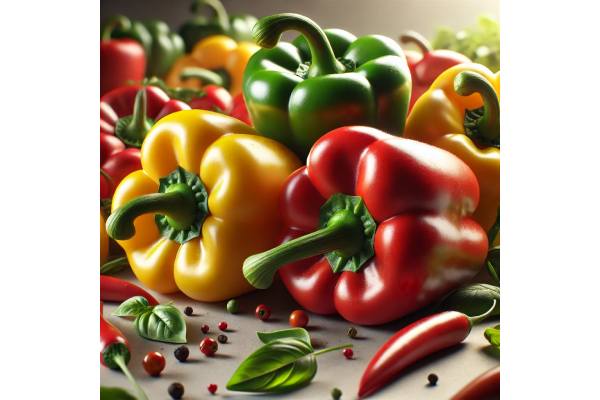
Bell peppers are the sweet, crunchy members of the Capsicum family that brighten meals without bringing heat. Available in green, red, yellow, orange, and even purple, they shift in flavor and nutrients as they ripen: green peppers are crisper and slightly bitter, while red peppers taste sweeter and deliver notably more vitamin C and carotenoids. With very few calories per 100 g, bell peppers add volume, color, and texture to salads, sautés, sheet-pan dinners, and snacks. They also play well in global cuisines—from Mediterranean and Latin dishes to Southeast Asian stir-fries—because their mild taste carries aromatics, herbs, and spices without overwhelming them. Beyond the plate, peppers are botanically fruits but culturally vegetables, with thin edible skins, juicy walls, and a hollow core filled with seeds. Their non-pungency comes from genetics: bell peppers lack the compounds that make chilies hot. Whether you eat them raw for crunch, blister them under a broiler, or roast and peel them for silky sauces, bell peppers are an easy, affordable way to raise produce intake and boost antioxidant variety in everyday meals.
Top Highlights
- Red bell peppers provide very high vitamin C and carotenoids per 100 g, supporting immune function and eye health.
- Typical serving is 1 cup raw (~90–100 g) or half a large pepper; enjoy most days of the week.
- Safety note: Rare cross-reactive allergies (pollen–food syndrome) and reflux symptoms can occur, especially with raw peppers.
- People with confirmed pepper allergy or severe oral allergy syndrome should limit or avoid and seek specialist guidance.
Table of Contents
- Bell pepper overview and uses
- Bell pepper nutrition profile
- Evidence-based bell pepper benefits
- Bell pepper risks, allergies and interactions
- Selecting quality, sustainability and storage
- Preparation, cooking and nutrient retention
- Portions, comparisons and FAQs
Bell pepper overview and uses
Bell peppers (Capsicum annuum) are sweet peppers bred to be non-pungent. They’re harvested at different ripeness stages, which is why color and flavor vary. Green peppers are simply unripe; as they ripen, chlorophyll fades and red, orange, or yellow pigments (carotenoids such as capsanthin, capsorubin, and beta-carotene) accumulate, making the flesh sweeter and often more aromatic. Red peppers are generally the sweetest, with bright, fruity notes; orange and yellow are mellow; green is firmer with grassy bitterness that softens when cooked.
Culinarily, bell peppers are multitaskers:
- Raw: Slice into matchsticks for dips, chop for salads, or layer into sandwiches and wraps for crunch.
- Charred/blistered: Place under a broiler or over open flame until blackened, then peel; the result is silky flesh for antipasti, sandwiches, and sauces.
- Roasted or sautéed: Toss on sheet pans with onions, eggplant, zucchini, or chicken sausage; quick-sauté with garlic and olive oil for pasta or grains.
- Stuffed: Fill halves with seasoned grains, legumes, or lean meat; bake until tender.
- Stir-fried: Add near the end for vivid color and crisp-tender texture.
- Purées and spreads: Blend roasted peppers with nuts or yogurt for a bright, smoky dip.
Bell peppers deliver flavor and moisture while contributing very few calories—a classic way to increase the volume of meals without adding heaviness. Their mildness makes them kid-friendly, lunchbox-ready, and a useful “bridge” vegetable for people building veggie habits.
A few practical notes elevate results:
- Slice with the grain (top-to-bottom) for firmer strips, or across the grain for rapid softening.
- Peel when roasting to remove char and concentrate sweetness.
- Pair with a little fat (olive oil, nuts, cheese, tahini) to enhance absorption of fat-soluble carotenoids.
- Season with acidity (vinegar, lemon) and salt to sharpen sweetness and balance bitterness, especially for green peppers.
From fajitas and shakshuka to piperade and stir-fries, bell peppers adapt to almost every cuisine. Because they’re non-spicy, they’re ideal for mixed households—those who want heat can add chili oil or flakes at the table while everyone else enjoys the base dish.
Bell pepper nutrition profile
Values below refer to raw red bell pepper, edible portion, per 100 g. Percent Daily Value (%DV) uses current U.S. labeling DVs. Other colors vary slightly (green typically lower in vitamin C and carotenoids).
Macros and electrolytes
| Nutrient | Amount per 100 g | %DV |
|---|---|---|
| Energy | 31 kcal | — |
| Water | ~92 g | — |
| Protein | 1.0 g | — |
| Total fat | 0.3 g | — |
| Carbohydrate | 6.0 g | — |
| Dietary fiber | 2.1 g | 7% |
| Total sugars | 4.2 g | — |
| Potassium | 211 mg | 4% |
| Sodium | 4 mg | 0% |
| Magnesium | 12 mg | 3% |
Carbohydrates
| Component | Amount per 100 g | Notes |
|---|---|---|
| Starch | ~0.1 g | Negligible in ripe red peppers |
| Free sugars (glucose, fructose, sucrose) | ~4.0–4.5 g | Drive sweetness as peppers ripen |
| Dietary fiber | 2.1 g | Mostly insoluble with some pectin |
Fats and fatty acids
| Fatty acid | Amount per 100 g |
|---|---|
| Saturated fatty acids | ~0.03 g |
| Monounsaturated fatty acids | ~0.02 g |
| Polyunsaturated fatty acids | ~0.05 g |
Protein and amino acids
Bell peppers provide small amounts of protein; no essential amino acid dominates. Combine with legumes, grains, or dairy for protein-rich meals.
Vitamins
| Vitamin | Amount per 100 g | %DV |
|---|---|---|
| Vitamin C (ascorbic acid) | ~127 mg | 141% |
| Vitamin A (RAE) | ~157 µg | 17% |
| Vitamin E (alpha-tocopherol) | ~1.6 mg | 11% |
| Vitamin B6 (pyridoxine) | ~0.29 mg | 17% |
| Folate (DFE) | ~46 µg | 12% |
| Niacin (Vitamin B3) | ~1.0 mg | 6% |
| Riboflavin (Vitamin B2) | ~0.09 mg | 7% |
| Thiamin (Vitamin B1) | ~0.06 mg | 5% |
| Vitamin K (phylloquinone) | ~7.4 µg | 6% |
Minerals
| Mineral | Amount per 100 g | %DV |
|---|---|---|
| Potassium | 211 mg | 4% |
| Magnesium | 12 mg | 3% |
| Manganese | 0.12 mg | 5% |
| Iron | 0.43 mg | 2% |
| Copper | 0.07 mg | 8% |
| Calcium | 7 mg | 1% |
| Phosphorus | 26 mg | 2% |
| Zinc | 0.25 mg | 2% |
| Selenium | 0.1 µg | 0% |
Bioactives / phytonutrients
- Carotenoids: Red peppers are rich in capsanthin and capsorubin, plus beta-carotene and lutein/zeaxanthin; these contribute color and antioxidant activity.
- Phenolics: Small amounts of flavonoids (e.g., quercetin).
- Capsaicinoids: Absent/negligible in bell peppers, which is why they aren’t spicy.
Allergens and intolerance markers
- Rare pepper allergy and pollen–food allergy syndrome (oral itching) can occur in sensitized individuals.
- Some people with reflux report symptoms from raw peppers; cooking often improves tolerance.
Anti-nutrients
- None of practical concern at typical serving sizes.
Additives and fortification
- Fresh peppers are not fortified and contain no additives; check labels on jarred roasted peppers for salt or acids (vinegar/citric acid).
Contaminants / residues
- Washing under running water and drying with a clean towel reduces residues and surface microbes. Peeling roasted peppers removes the skin, further reducing residues.
Glycemic and acid–base metrics
| Metric | Typical value | Context |
|---|---|---|
| Glycemic Index (GI) | Very low | Non-starchy vegetable |
| Glycemic Load (GL) per 100 g | ~1 | Minimal impact on blood glucose |
Note: Nutrient values vary by cultivar, ripeness, season, and storage. Cooking alters vitamin C (heat- and water-sensitive) more than minerals and fiber.
Evidence-based bell pepper benefits
1) Exceptional vitamin C for immune and skin support.
Red bell peppers are among the highest vitamin C foods per 100 g, often exceeding citrus. Vitamin C supports normal immune function and acts as a water-soluble antioxidant, helping neutralize oxidative stress from everyday metabolism and environmental exposures. It’s also required to form collagen—the protein scaffolding for skin, blood vessels, and gums—which explains why vitamin C-rich produce aligns with healthy skin integrity and wound healing. Because peppers are usually eaten raw or lightly cooked, they can be a reliable daily source.
2) Carotenoids that support eye and cardiometabolic health.
When green peppers ripen to red, they accumulate carotenoids—including capsanthin, capsorubin, beta-carotene, and small amounts of lutein and zeaxanthin. Carotenoids are fat-soluble pigments with antioxidant properties; they help quench singlet oxygen and free radicals in tissues. Observational and mechanistic evidence links higher carotenoid intake to markers of eye health (macula-protective pigments), and to diets associated with lower cardiometabolic risk. Pairing peppers with a bit of fat (olive oil, nuts, yogurt) enhances carotenoid absorption.
3) Plant volume with very low energy density.
Peppers deliver crunch and bulk for minimal calories. Swapping part of a starch with generous peppers—in pasta, grain bowls, omelets, and sheet-pan dinners—reduces dish energy density without losing satisfaction. This “volume strategy” helps many people feel full with fewer calories and more fiber, a hallmark of Mediterranean-style and DASH-style eating patterns.
4) Potassium and polyphenol support.
Though not a high-potassium food, peppers contribute to overall potassium intake, which helps maintain fluid balance and normal blood pressure within a balanced, lower-sodium diet. Their polyphenols and vitamin E, while modest in quantity, add to an overall antioxidant mix when you vary colors and produce types through the week.
5) Culinary flexibility increases vegetable adherence.
Real-world health benefits depend on foods people actually like and cook. Bell peppers accept many formats—raw sticks with hummus, roasted for sandwiches, diced into eggs or tofu scrambles, folded into tacos or stir-fries. That flexibility makes it easier to hit the often-recommended goal of multiple vegetable servings per day. The more diverse the colors you eat (greens, reds, oranges, purples), the broader the phytonutrient spectrum you get.
How much helps?
Aiming for 1–2 cups of vegetables per meal is a practical target; including ~1 cup (90–100 g) of bell pepper most days can meaningfully raise vitamin C and carotenoid intake. Rotating colors provides variety: red for maximum vitamin C/carotenoids; orange/yellow for sweetness; green for crisp texture in savory dishes.
Simple pairings to amplify benefits
- Add olive oil or nuts to raw or roasted peppers to boost carotenoid uptake.
- Combine with iron-rich legumes or lean meats; vitamin C enhances non-heme iron absorption from beans and grains when eaten together.
- Use peppers as a high-volume substitute: add an extra pepper and reduce refined starch by ¼ cup in pasta and rice dishes.
Bell pepper risks, allergies and interactions
Allergy and oral symptoms.
Allergy to Capsicum (the pepper genus) is uncommon but documented. Some individuals experience pollen–food allergy syndrome (PFAS), where cross-reactive proteins in plants (often linked to birch or mugwort pollen) trigger oral allergy symptoms after eating raw peppers—itching or tingling in the mouth, lips, or throat, usually mild and short-lived. Rarely, more pronounced reactions can occur. If you suspect PFAS or pepper allergy, consult an allergist. Often, cooking peppers denatures the trigger proteins and improves tolerance, but this must be individualized.
Reflux and digestive comfort.
Raw peppers can cause heartburn or bloating in some people with gastroesophageal reflux or sensitive digestion. Strategies that may help include slicing thinly, cooking until tender, peeling roasted peppers, and keeping portions modest. If symptoms persist, reduce frequency or choose other vegetables.
Medication interactions and medical conditions.
Bell peppers contain very little vitamin K, so they do not usually interfere with vitamin-K-sensitive medications the way leafy greens can. Potassium content is moderate; people on potassium-restricted diets rarely need to avoid peppers but should follow individualized renal or cardiology advice. There are no known clinically relevant interactions with common medications at typical intakes.
Contaminants and food safety.
As with all produce, handling matters. Rinse whole peppers under running water before cutting; dry with a clean towel. Use a clean knife and cutting board, and refrigerate cut peppers promptly. Jarred roasted peppers are safe when unopened and stored as directed; after opening, keep refrigerated and use within a week, following the label. Discard any peppers with soft, leaking spots or mold on the edible flesh.
Nightshade concerns.
Peppers are nightshades (Solanaceae), a family that also includes tomatoes and eggplant. Some people report symptom flares with certain autoimmune or functional gut conditions. Evidence is limited; an individualized elimination and re-challenge approach under professional guidance is the most reliable way to assess personal tolerance.
Choking risk for young children.
For toddlers, serve thin strips or well-cooked pieces; avoid large, round pieces that could be difficult to chew.
Bottom line: For most people, bell peppers are safe and beneficial as part of a varied diet. Those with confirmed pepper allergy, significant PFAS, or specific medical restrictions should personalize intake with their clinicians.
Selecting quality, sustainability and storage
How to choose good peppers
- Look and feel: Choose peppers that feel heavy for their size, with taut, glossy skin and a firm stem. Avoid wrinkling, soft spots, slumping shoulders, or sunken areas—signs of age or damage.
- Color cues:
- Green: firm, snappy, slightly bitter; great for sautés, stir-fries, and long-cooked dishes.
- Red: sweetest; best for raw snacking, roasting, or blending into sauces and dips.
- Orange/yellow: milder, juicy, child-friendly; perfect for salads and sheet-pan meals.
- Seeds and walls: Thick-walled peppers hold up to stuffing and roasting; thinner-walled peppers cook faster in stir-fries.
Sustainability notes
- Season and source: Field-grown peppers in season are often more flavorful and may carry a lower footprint than long-distance or energy-intensive greenhouse crops. Local or regional options, when available, typically arrive fresher and last longer at home.
- Waste reduction: Peppers have an excellent edible yield. Use trimmings (minus the bitter white pith) in stocks, sofritos, or mince into omelets. Roast and peel surplus peppers, then freeze in flat layers for later sauces or sandwiches.
- Packaging: Choose loose peppers or minimal packaging when possible; store properly to extend shelf life and reduce waste.
Storage for freshness and nutrient preservation
- Whole, unwashed peppers: Refrigerate in the crisper drawer at ~4°C, ideally in a breathable bag or produce container. They usually keep 5–10 days (greens often last longer than reds).
- Cut peppers: Store in a sealed container with a paper towel to absorb moisture; use within 3–5 days.
- Roasted/peeled peppers: Cover and refrigerate; use within 3–4 days (or freeze up to 3 months).
- Freezing raw: Slice or dice, spread on a tray to freeze, then bag; frozen peppers work best in cooked dishes, not raw salads.
- Ethylene sensitivity: Peppers are moderately sensitive to ethylene; keep away from high-ethylene fruits (e.g., apples, bananas) to prevent premature softening.
Quality tips
- Peel for tenderness: For those sensitive to skins, roast or broil until charred, then peel; the flesh becomes sweet and silky.
- Mix colors: Buying a combination of green and ripe peppers lets you balance budget (greens are often cheaper) and nutrition (reds are richer in vitamin C and carotenoids).
- Check the stem end: A fresh, green stem suggests recent harvest and better shelf life.
Preparation, cooking and nutrient retention
Bell peppers excel raw or lightly cooked, which helps preserve delicate nutrients—especially vitamin C, a heat- and water-sensitive vitamin. Sensible techniques maintain color, texture, and nutrition while fitting real kitchens.
Maximize vitamins and flavor
- Prefer brief, low-water methods.
- Microwaving, quick sautéing, or stir-frying can retain more vitamin C than boiling because there’s less contact with water and often shorter cooking times.
- Roasting or broiling develops sweetness through caramelization and Maillard reactions; keep times moderate to limit excessive vitamin C losses.
- Cut for the goal.
- Thin strips cook in minutes for fajitas and stir-fries.
- Large pieces blister well under a broiler for peeling.
- Small dice integrate into grain salads, eggs, and sauces without overpowering texture.
- Use a little fat wisely.
- Carotenoids in red/orange peppers are fat-soluble. A teaspoon of olive oil, a handful of nuts, or yogurt-based sauces can improve absorption and increase satisfaction.
- Balance acidity and salt.
- Add vinegar, lemon, or wine plus pinches of salt to sharpen flavors and counter any bitterness, especially with green peppers.
- Batch and freeze.
- Roast trays of peppers until skins char, peel, then freeze flat in single layers. These “flats” defrost quickly for sauces, sandwiches, and stews.
Simple, nutrient-savvy ideas
- Five-minute skillet peppers: Toss sliced peppers in a hot pan with olive oil and a pinch of salt; cook 2–4 minutes just to crisp-tender. Finish with lemon.
- Sheet-pan peppers with chicken or chickpeas: Roast mixed peppers, onions, and protein at 220°C for ~18–22 minutes. Toss with herbs.
- Classic roasted-and-peeled: Broil whole peppers, turning until skins blacken. Steam under an inverted bowl 10 minutes; peel, seed, and slice.
- Pepper yogurt dip: Blend roasted peppers with Greek yogurt, garlic, lemon, smoked paprika, and olive oil for a high-protein spread.
Food safety and texture
- Refrigerate cooked peppers within 2 hours.
- For stuffed peppers, heat fillings safely; if using meat, cook to safe internal temperatures.
- If skins bother you, peel roasted peppers or dice very small for sauces and salads.
What about boiling?
Boiling can cause greater vitamin C loss due to leaching into water. If boiling is preferred for a recipe, cook briefly in minimal water, use the cooking liquid in the dish when possible, or pivot to steaming.
Portions, comparisons and FAQs
What counts as a serving?
A practical serving is 1 cup raw bell pepper (~90–100 g) or ½ large pepper. This portion supplies roughly 31 kcal, ~2 g fiber, and more vitamin C than an average orange when using red peppers.
How often can I have them?
Most adults benefit from including bell peppers most days, rotating colors to broaden nutrients. Aim for several cups of vegetables daily across meals; peppers can be one of the easiest contributors because they’re versatile raw or cooked.
Which color is “best”?
- Red: Highest vitamin C and carotenoids; sweetest flavor; great raw or roasted.
- Orange/yellow: Milder sweetness; good for kids and salads.
- Green: Budget-friendly, crisper, slightly bitter; excels in sautés, stir-fries, and long-cooked dishes.
Choose by recipe and preference; diversity matters more than “best.”
Are bell peppers spicy?
No. Bell peppers are bred to be non-pungent; they lack the heat-producing compounds found in chili peppers. If you want heat, add chili flakes or hot sauce at the table.
Do I need to peel them?
No. The skin is edible and supplies fiber. If you’re sensitive to skins, roast and peel or chop finely.
Seeds and pith: edible or not?
They’re edible but bitter. Remove for better flavor and texture.
How do peppers compare with other vegetables per 100 g?
- Red bell pepper: ~31 kcal, ~127 mg vitamin C, ~157 µg vitamin A (RAE).
- Tomato: ~18 kcal, lower vitamin C than red pepper, notable lycopene when cooked.
- Broccoli: ~34 kcal, high vitamin C, provides folate and vitamin K.
- Carrot: ~41 kcal, high beta-carotene; vitamin C is lower than in red pepper.
Any issues for diabetes or blood sugar?
Bell peppers have very low glycemic load and fit well in carbohydrate-controlled eating. They’re useful for adding volume and micronutrients without significantly affecting blood glucose.
Tips for kids and picky eaters
Offer strips with hummus, bake into sheet-pan dinners, or blend roasted peppers into tomato sauce for sweetness without added sugar.
Budget strategy
Buy mixed ripeness (greens for cooking, reds for raw) to control cost. Use frozen sliced peppers for convenience; they’re picked ripe and work well in hot dishes.
Can I eat bell peppers with reflux?
Many people can, especially cooked and in moderate portions. If symptoms flare, reduce serving size, choose peeled roasted peppers, or select alternative vegetables.
References
- FoodData Central 2025 (Database).
- Carotenoids of Capsicum Fruits: Pigment Profile and Health-Promoting Functional Attributes 2019 (Review).
- Effect of different cooking methods on the content of vitamins and true retention in selected vegetables 2017 (Study).
- Capsicum Allergy: Involvement of Cap a 7, a New Clinically Relevant Allergen 2022 (Review).
- Evidence of capsaicin synthase activity of the Pun1-encoded enzyme in pungent pepper fruit 2015 (Study).
Medical Disclaimer
This article shares general information about bell peppers for educational purposes and is not a substitute for personalized medical advice, diagnosis, or treatment. Nutrition and tolerance vary by individual health status, medications, and allergies. Always consult your healthcare professional or a registered dietitian for guidance tailored to you.
If you found this guide useful, please consider sharing it on Facebook, X (formerly Twitter), or any platform you prefer. Your support helps us keep producing clear, evidence-based nutrition content.