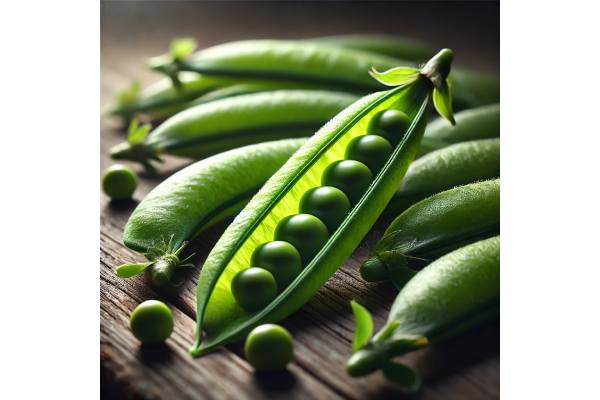
Sugar snap peas bring together the best of two worlds: the edible pod of snow peas and the sweet, crisp bite of garden peas. In season, their pods are thick, juicy, and satisfyingly crunchy, with an earthy sweetness that holds up whether you eat them raw by the handful, toss them into a weeknight stir-fry, or blanch them for composed salads. Beyond flavor, sugar snap peas are an efficient nutrition package—low in calories yet rich in vitamin C, fiber, and several B vitamins that support energy metabolism. They supply modest vitamin K and plant compounds that contribute color and antioxidant activity. Because the entire pod is edible, there’s almost no prep waste, and quick cooking helps preserve texture and nutrients. You’ll find them fresh, pre-trimmed, and even frozen; all versions are versatile. This guide walks through what’s in sugar snap peas, who benefits most from adding them to the plate, potential cautions (including legume allergies and FODMAP sensitivity), and the best ways to select, store, and cook them for maximum crunch and nutrition.
Quick Overview
- Rich source of vitamin C (about 60 mg per 100 g) and a good source of fiber (≈2.5 g per 100 g).
- Main caveats: legume allergy risk and possible FODMAP symptoms in sensitive individuals.
- Typical serving: 1 cup raw (≈100–120 g), enjoy 3–4 times per week as part of varied vegetables.
- People who should limit or monitor: those with pea/legume allergies, IBS during FODMAP elimination, and individuals on warfarin who must keep vitamin K intake consistent.
Table of Contents
- Sugar Snap Peas: Detailed Overview
- Sugar Snap Peas Nutrition Profile
- Evidence-Based Health Benefits of Sugar Snap Peas
- Sugar Snap Peas Risks, Allergies and Interactions
- Selecting Sugar Snap Peas: Quality, Sustainability and Storage
- Preparation, Cooking and Nutrient Retention for Sugar Snap Peas
- Portions, Comparisons and FAQs on Sugar Snap Peas
Sugar Snap Peas: Detailed Overview
Sugar snap peas (also called snap peas or edible-pod peas) are a modern cross between snow peas and garden peas. Unlike shelling peas, the whole pod is eaten: a tender, glossy green sheath encasing small, sweet peas. That design gives them a signature snap and a high ratio of edible portion to weight, which is useful for quick meals and minimizing prep waste.
Botanically, sugar snap peas belong to the legume family (Fabaceae), the same broad family as lentils, chickpeas, peanuts, and soybeans. Nutritionally, though, they behave more like non-starchy vegetables than dry pulses. Their carbohydrate content is modest per serving, with meaningful fiber and notable vitamin C. Compared with shelled green peas, sugar snaps contain fewer starches and cook in a fraction of the time.
Culinary versatility is a major draw. Raw snap peas add crunch to snack boards, slaws, and grain bowls. Light heat—brief stir-frying, quick sautéing, or 1–2 minutes of blanching in salted water—preserves color and bite while softening the pod’s thin membrane. Their naturally sweet flavor pairs well with citrus, sesame, mint, basil, tahini, miso, and toasted nuts or seeds. In protein-forward dishes, they complement shrimp, chicken, tofu, and tempeh without turning soggy.
From a practical standpoint, sugar snap peas are available most of the year. Peak quality usually arrives in spring and early summer, though greenhouse production and imported supply now stretch that window. Fresh pods should be firm, bright green, and unblemished. Strings—fibers that run along the edges of some varieties—are often pre-removed in bagged products, but you can also pull them off quickly by snapping the tip and peeling downward.
Sustainability-wise, peas can be climate-friendly compared to many other crops because legumes help fix nitrogen in soil, potentially reducing synthetic fertilizer inputs in rotation systems. Packaging and transport distance still matter; buying local in season lowers travel emissions and often improves flavor. When fresh options lag, frozen snap peas are a strong alternative because they’re blanched at harvest and quickly frozen to lock in nutrients and texture.
In short, sugar snap peas offer a crisp, sweet path to meeting vegetable goals with little effort. The sections that follow detail their nutrient profile, health impacts, safety notes, and kitchen tactics to get the most from every pod.
Sugar Snap Peas Nutrition Profile
How to use this section: Values below describe raw sugar snap peas per 100 g (about 1 cup). Percentage Daily Values (%DV) use standard adult DVs: Energy 2,000 kcal; Total carbohydrate 275 g; Fiber 28 g; Protein 50 g; Fat 78 g; Saturated fat 20 g; Sodium 2,300 mg; Potassium 4,700 mg; Vitamin C 90 mg; Vitamin K 120 µg; Folate 400 µg DFE; Vitamin A 900 µg RAE; Iron 18 mg; Calcium 1,300 mg; Magnesium 420 mg.
Macros & Electrolytes (per 100 g)
| Nutrient | Amount | %DV |
|---|---|---|
| Energy | 42 kcal | — |
| Protein | 2.8 g | 6% |
| Total fat | 0.2 g | <1% |
| Saturated fat | 0.0–0.1 g | <1% |
| Carbohydrate | 7.5 g | 3% |
| Dietary fiber | 2.6 g | 9% |
| Total sugars | ~4.0 g | — |
| Sodium | 2–5 mg | <1% |
| Potassium | ~200–250 mg | 4–5% |
| Water | ~89 g | — |
Carbohydrates (quality metrics)
| Metric | Value | Notes |
|---|---|---|
| Net carbs (approx.) | ~5 g | Carbs minus fiber; varies by cultivar and maturity. |
| Glycemic load (per 100 g) | Low | Mainly simple sugars and fiber; modest starch. |
| Acid–base (PRAL, estimate) | Slightly alkaline | Typical of many green vegetables. |
Vitamins (per 100 g)
| Vitamin | Amount | %DV |
|---|---|---|
| Vitamin C (ascorbic acid) | ~60 mg | 67% |
| Vitamin K | ~25 µg | 21% |
| Folate (B9, DFE) | ~42 µg | 11% |
| Vitamin A (as RAE) | ~54 µg | 6% |
| Thiamin (B1) | ~0.15 mg | 13% |
| Vitamin B6 | ~0.16 mg | 9% |
Minerals (per 100 g)
| Mineral | Amount | %DV |
|---|---|---|
| Iron | ~1.0 mg | 6% |
| Calcium | ~40–45 mg | 3% |
| Magnesium | ~24–30 mg | 6–7% |
| Phosphorus | ~50–60 mg | 4–5% |
| Zinc | ~0.5 mg | 5% |
Fats & Fatty Acids (per 100 g)
| Component | Amount |
|---|---|
| Total omega-3 (ALA) | trace |
| Total omega-6 (LA) | trace |
| Cholesterol | 0 mg |
Bioactives/Phytonutrients
- Chlorophylls and carotenoids (including lutein/zeaxanthin) contribute to the bright green color and antioxidant capacity.
- Polyphenols occur at modest levels typical of green vegetables and are sensitive to heat and storage.
Allergens & Intolerance Markers
- Legume proteins can provoke reactions in susceptible individuals.
- Oligosaccharides (FODMAPs) may cause bloating for some people.
Anti-nutrients
- Like other legumes, raw snap peas contain trypsin inhibitors and small amounts of phytic acid; brief cooking reduces these.
Additives & Fortification
- Fresh and frozen vegetables are typically unfortified; check labels on prepared or sauced products for added sodium or sugars.
Notes: Nutrient levels vary by variety, growing conditions, and freshness. Light cooking often preserves vitamin C better than prolonged boiling; freezing stabilizes vitamin C measured at harvest.
Evidence-Based Health Benefits of Sugar Snap Peas
Supports immune function and skin health. A 100 g portion of sugar snap peas delivers roughly two-thirds of the Daily Value for vitamin C, a water-soluble antioxidant that helps maintain epithelial barriers, supports normal immune cell function, and assists collagen synthesis for healthy skin and connective tissue. Because vitamin C is not stored in large amounts, frequent small doses from foods like snap peas help maintain circulating levels.
Contributes to heart-smart patterns. Sugar snap peas fit neatly into vegetable-forward eating patterns associated with a lower risk of cardiovascular disease. Observational syntheses consistently find that higher fruit and vegetable intake—and especially greater variety within the vegetable group—is linked with improved cardiometabolic outcomes and reduced mortality over time. Snap peas add diversity within the “other vegetables” and “legume vegetables” subgroups, bringing fiber, potassium, and polyphenols that collectively support vascular function.
Digestive health and weight management. Each 100 g serving provides about 2.6 g of fiber in a low-calorie package. Insoluble fiber adds volume and helps keep you regular, while soluble fractions aid in forming soft, gel-like stools and can modestly support healthy cholesterol levels over the long term when part of an overall high-fiber diet. The high water content (nearly 90%) and satisfying crunch have a satiety effect, making snap peas a smart swap for refined, energy-dense snacks.
Glycemic friendliness. With low total sugars, minimal starch, and modest fiber, sugar snap peas have a low glycemic load. When eaten alongside carbohydrate-rich foods, they can slightly dilute the meal’s overall glycemic impact, especially if the pods are cooked al dente and paired with a source of protein or fat (e.g., tofu, chicken, tahini).
Micronutrient insurance. Beyond vitamin C, snap peas contribute vitamin K, folate, thiamin, and vitamin B6—nutrients involved in blood clotting, red blood cell formation, and energy metabolism. Vitamin K intake consistency also matters for those on certain anticoagulants; see the safety section for more.
Practical benefits that drive consistency. Because the entire pod is edible and delicious raw, sugar snap peas reduce preparation friction—a key behavior factor in sticking to vegetable goals. Pre-trimmed bags or crisp frozen packs make it easy to reach for vegetables during busy weeks, and their sweetness plays well with children’s palates.
How snap peas fit into weekly plans. Think of them as a “bridge” vegetable: perfect for snacks, lunch boxes, and quick side dishes. Combine raw snap peas with hummus or yogurt-tahini dip, toss halved pods into lemon-garlic pasta with extra greens, or add them last minute to a coconut curry. Eating vegetables you enjoy—reliably and often—is one of the strongest predictors of long-term adherence and benefits.
Sugar Snap Peas Risks, Allergies and Interactions
Allergy and cross-reactivity. Pea allergy exists, albeit less commonly reported than peanut or soy. Because peas, peanuts, lupin, chickpeas, and lentils are all legumes, cross-reactivity is possible. Symptoms can include oral itching, hives, gastrointestinal upset, or, rarely, anaphylaxis. Anyone with a diagnosed legume allergy should speak with an allergist about whether sugar snap peas are appropriate.
FODMAP sensitivity. Snap peas naturally contain oligosaccharides (a type of FODMAP). For people with irritable bowel syndrome (IBS), these poorly absorbed carbohydrates can trigger gas, bloating, and discomfort when eaten in larger portions. If you’re following a low-FODMAP elimination plan, limit or avoid snap peas during that phase; many people can reintroduce small portions later without symptoms. Cooking and portion control (e.g., 30–50 g at a time) may help tolerance for some individuals.
Vitamin K and anticoagulants. Sugar snap peas provide moderate vitamin K. For people taking warfarin, the key is not to avoid vitamin K entirely but to keep intake consistent from week to week. If you add snap peas regularly, maintain a similar pattern so your healthcare team can keep dosing stable.
Pesticide residues and washing. Like other tender-pod vegetables, surface residues can occur. Reduce exposure by rinsing under running water just before eating or cooking, agitating the pods with your hands, and drying well. Trimming stringy seams also removes a small portion of surface area. When budgets and availability allow, consider buying organic during peak season; otherwise, choose the freshest local produce and wash thoroughly.
Choking risk for young children. Whole pods can be a choking hazard for toddlers. For children under four, slice pods lengthwise into thin strips and cook briefly until tender-crisp. Always supervise young eaters.
Medication interactions beyond warfarin. There are no widely documented interactions between snap peas and common medications outside vitamin K considerations. If you have advanced kidney disease requiring potassium restriction, the modest potassium in snap peas contributes to your daily allowance—work with your renal dietitian on portions.
Food safety. As with any ready-to-eat produce, keep snap peas refrigerated and observe use-by dates. Discard pods that are slimy, sticky, or have off-odors. If blanching and freezing at home, cool rapidly in ice water, drain thoroughly, and freeze in a single layer before transferring to containers to limit ice crystal formation and quality loss.
Bottom line: most people can enjoy sugar snap peas frequently with minimal risk. Those with legume allergy, IBS during the low-FODMAP phase, or warfarin therapy should take the specific precautions noted.
Selecting Sugar Snap Peas: Quality, Sustainability and Storage
How to choose the best pods.
- Color and sheen: Look for vivid, uniform green with a natural satin sheen. Avoid yellowing, wrinkling, or dull spots, which signal age.
- Firmness and snap: Pods should feel heavy for their size and snap cleanly when bent. Limp pods indicate moisture loss.
- Seeds inside: Slight pea bulges are fine; oversized, swollen pods can be starchy and less sweet.
- Strings: If present, they should peel cleanly when you snap the tip; many modern varieties are “stringless.”
Seasonality and sourcing. Peak flavor arrives in spring. Farmers’ markets and local grocers often carry varieties harvested within 24–72 hours, which improves sweetness and vitamin retention. Off-season, high-quality greenhouse or imported pods can still be excellent; just prioritize freshness and turnover. Frozen snap peas are a strong plan B, especially for stir-fries and sautés.
Sustainability pointers.
- Legume advantage: Peas, like other legumes, can fix atmospheric nitrogen in symbiosis with soil bacteria, reducing the need for synthetic nitrogen fertilizers in rotations.
- Packaging: Choose loose or minimally packaged produce when possible. If buying bagged for convenience, reuse or recycle the bag where facilities exist.
- Food waste: Because the whole pod is edible, snap peas generate little trim waste. Use what you buy within a week to avoid spoilage.
Storage for quality and safety.
- Refrigeration: Store unwashed pods in a breathable produce bag or perforated container in the crisper drawer (32–40°F / 0–4°C). They keep best at high humidity with airflow.
- Shelf life: 4–7 days fresh; quality declines as sugars convert to starch and moisture is lost.
- Do not wash before storing: Moisture accelerates spoilage. Wash right before eating or cooking.
- Freezing: For longer storage, blanch 1–2 minutes in boiling water, shock in ice, drain very well, and freeze in a single layer. Properly packed, frozen snap peas keep quality for 8–10 months.
- Leftovers: Cooked snap peas keep 3–4 days refrigerated in a covered container. Reheat gently to avoid mushiness.
Simple quality test at home. Snap a pod: if it breaks sharply and releases a fresh, grassy aroma with a hint of sweetness, it’s at its peak. A bend without a crisp snap usually means it’s past prime.
Buying with intention—seasonal, fresh, and properly stored—pays off with better flavor and nutrient retention while minimizing waste and cost.
Preparation, Cooking and Nutrient Retention for Sugar Snap Peas
Minimal prep, maximum payoff.
- Rinse just before use under cool running water, agitating with your hands.
- Trim the stem end. If your variety has strings, snap the tip and pull the string down one side; repeat on the other side.
- Leave whole for snacking and sautés, or slice on the bias for salads and quick pastas.
Cooking methods that protect crunch and nutrients. Vitamin C is heat- and water-sensitive; short cook times and lower water contact help. Aim for bright green, tender-crisp pods.
- Blanch and shock (1–2 minutes): Ideal for salads, crudité platters, and meal prep. Salt the water like pasta water to season lightly. Immediately plunge into ice water to stop cooking and lock color.
- Stir-fry or sauté (2–3 minutes): High heat with minimal oil and frequent tossing. Add snap peas near the end so they stay crisp. Aromatics (ginger, garlic) and a splash of citrus or vinegar brighten flavors.
- Steam (3–4 minutes): Gentle and effective for even cooking without leaching nutrients. Finish with olive oil, lemon zest, and flaky salt.
- Roast (8–10 minutes at 220°C / 425°F): More flavor depth but a bit more vitamin C loss. Toss with olive oil and roast until edges blister; finish with sesame seeds and a squeeze of lime.
- Microwave (1–2 minutes with a tablespoon of water): Fast and convenient for small portions; vent the container to avoid overcooking.
Pairing for complete meals. Combine snap peas with protein and healthy fats to create satisfying plates: tofu and cashew stir-fry; lemony chicken piccata with sautéed snap peas; soba noodles, snap peas, edamame, and miso-ginger dressing; or farro salad with snap peas, shaved fennel, and pistachios. The gentle sweetness of the pods balances salty, tart, and umami elements.
Flavor builders that love snap peas.
- Citrus & acid: Lemon, lime, rice vinegar, or sherry vinegar sharpen the sweet profile.
- Seeds & nuts: Toasted sesame, almonds, hazelnuts, or peanuts add texture and fat-soluble flavor carriers.
- Herbs & aromatics: Mint, basil, dill, tarragon, scallions, garlic, and ginger add lift without heavy sauces.
- Spices: Chili flakes, Sichuan pepper, coriander, and cumin create contrast.
Smart retention tips.
- Cut after cooking (or cut large on the bias) to reduce cut-surface nutrient losses.
- Avoid holding cooked snap peas hot for long periods; reheat quickly or serve at room temperature.
- For frozen snap peas, cook straight from frozen; do not thaw, which softens texture and leaks nutrients into thaw water.
Food safety while meal-prepping. Keep blanched pods refrigerated and dry. Pack dressings separately for salads to preserve crunch, and use within 3–4 days.
With fast techniques and thoughtful pairings, sugar snap peas go from market to plate in minutes, keeping their hallmark snap and much of their vitamin C.
Portions, Comparisons and FAQs on Sugar Snap Peas
Reasonable portions and frequency. A common serving is 1 cup raw (≈100–120 g), which delivers about 42 kcal, ~2.6 g fiber, and ~60 mg vitamin C. Most adults benefit from 2–3 cups of vegetables daily spread across the week; rotating snap peas with leafy greens, crucifers, orange vegetables, and beans balances nutrients and flavors. Practical target: enjoy snap peas 3–4 times weekly when in season and as desired off-season.
How do snap peas compare to snow peas and green peas?
- Snow peas: Flatter pods with smaller seeds and a more delicate, grassy flavor. Slightly less sweet; similar calories. Vitamin C is comparable, though snap peas often edge ahead.
- Green peas (shelled): Denser and starchier with more protein and fiber per cup, but also higher calories. They behave more like a starchy vegetable, while snap peas sit in the non-starchy camp.
- Textural differences: Snap peas are crisp and juicy; snow peas are tender; green peas are soft and creamy when cooked.
Are sugar snap peas low carb? They’re low in net carbs per 100 g (~5 g), making them a good choice for moderate-carb diets. For very low-carb patterns, they can fit in small portions while contributing color and crunch.
Can people with diabetes eat them? Yes—snap peas have a low glycemic load. Pair them with protein and healthy fats to form meals that stabilize post-meal glucose.
What about IBS and FODMAPs? During strict low-FODMAP elimination, snap peas are best limited or avoided. Many people can reintroduce them later in small portions without symptoms. Work with a dietitian to find a personal tolerance.
Are snap peas good for kids? The sweetness and crunch make them kid-friendly. For toddlers, slice lengthwise and cook until tender-crisp to reduce choking risk. Serve with dips to increase acceptance.
Do I need to buy organic? Freshness and handling matter more than the organic label alone. Wash thoroughly, use quickly, and prioritize peak-season local produce when possible. Choose organic if it’s accessible and aligns with your values.
Can I eat the strings? Some varieties are “stringless.” If strings are present and bothersome, remove them by snapping the stem end and pulling down both seams.
Can I eat them raw daily? Yes, within a varied vegetable pattern. Rotating raw and lightly cooked preparations maximizes both palatability and nutrient diversity.
Quick meal ideas (no recipe needed).
- Lemon-garlic sautéed snap peas with shaved Parmesan and black pepper.
- Cold soba bowl with snap peas, edamame, cucumber, and sesame-ginger dressing.
- Spring salad: arugula, snap peas, radishes, feta, and mint with a citrus vinaigrette.
- Sheet-pan shrimp, snap peas, and peppers with chili-lime butter (10 minutes at high heat).
References
- FoodData Central 2025.
- Dietary Guidelines for Americans, 2020-2025 2020 (Guideline).
- Vitamin C – Health Professional Fact Sheet 2025.
- Intake of legumes and cardiovascular disease: A systematic review and dose-response meta-analysis 2023 (Systematic Review).
- Vegetable and Fruit Intake Variety and Cardiovascular Health and Mortality: A Systematic Review and Meta-Analysis of Observational Studies 2023 (Systematic Review).
Disclaimer
This article is for general education and is not a substitute for personalized medical advice, diagnosis, or treatment. Always consult your healthcare professional or a registered dietitian about your individual needs, especially if you have food allergies, digestive disorders, are pregnant or breastfeeding, or take medications such as warfarin.
If you found this guide helpful, please consider sharing it on Facebook, X (formerly Twitter), or your favorite platform to support our work in creating reliable, reader-first nutrition guides. Thank you.