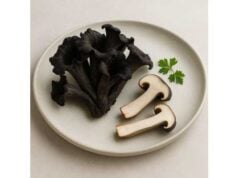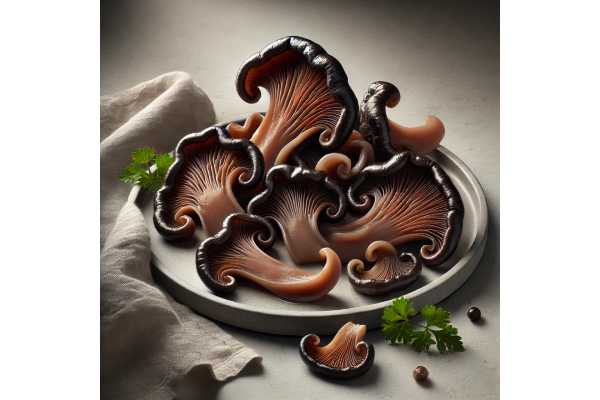
Wood ear mushroom—sold as black fungus, cloud ear, or by its scientific names Auricularia heimuer (commonly cultivated in East Asia) and Auricularia auricula-judae (more common fresh in Europe)—is prized for its crisp, springy bite and neutral flavor that carries sauces beautifully. Rehydrated from dried, the ear-shaped fronds swell several times their size, adding texture to stir-fries, hot-and-sour soups, salads, and braises without weighing dishes down. Nutritionally, wood ear is low in calories and fat but contributes fiber (including beta-glucans), potassium, and trace minerals; it also contains distinctive fungal polysaccharides studied for antioxidant and immunomodulatory properties. Because it is almost always sold dried, quality and handling matter: rinse well, soak until fully pliable, trim woody bases, and cook through for best texture and digestibility. This guide takes a practical, evidence-aware approach: a clear nutrition profile per 100 g, realistic serving sizes, what the science suggests (and what it doesn’t), safety notes including interactions and additives, how to select and store with minimal waste, and kitchen methods that keep the signature crunch while protecting nutrients.
Top Highlights
- Typical serving is 60–100 g cooked (about 10–20 g dried) once or twice per week.
- Key upsides: very low calories with fiber and beta-glucans; great for adding volume and crunch to lighter meals.
- Safety caveat: some dried products are treated with sulfites; cook thoroughly and avoid if you have sulfite sensitivity.
- Limit or avoid if you take anticoagulant or antiplatelet drugs unless cleared with your clinician.
Table of Contents
- Detailed Overview
- Nutrition Profile
- Evidence-Based Health Benefits
- Risks, Allergies and Interactions
- Selecting, Quality, Sustainability and Storage
- Preparation, Cooking and Nutrient Retention
- Portions, Comparisons and FAQs
Detailed Overview
Wood ear mushrooms belong to the jelly fungi group and are widely cultivated on sterilized hardwood sawdust blocks or logs. When fresh, the fronds are thin, ear-like, and gelatinous, drying to a papery chip that rehydrates to a slippery-crisp texture. You’ll see two names in kitchens and markets: the cultivated East Asian “black wood ear” (Auricularia heimuer, often labeled A. auricula or A. polytricha in older sources) and the European “jelly ear” (A. auricula-judae). Both are edible and used similarly; most packaged, dried “wood ear” sold internationally is A. heimuer.
Culinarily, wood ear is a texture specialist. It absorbs sauces while staying snappy, so it complements tender foods—silken tofu, eggs, rice noodles, shredded chicken—without competing for flavor. Thin strips deliver crunch to brothy soups, cold salads with sesame and vinegar, and quick sautés with ginger, garlic, and scallion. Because it is low in fat and sugars, it plays well in calorie-conscious cooking; the satisfaction comes from volume and chew rather than richness.
From a nutrition lens, wood ear is mostly water once rehydrated, with modest protein and valuable soluble and insoluble fibers; the beta-glucans and other polysaccharides have been explored for cardiometabolic and immune effects in preclinical and human in-vitro studies. Potassium is the standout mineral, with small amounts of copper and selenium depending on substrate. As with all mushrooms, numbers vary by strain, substrate, and processing; and cooking changes weight by water uptake or loss.
Plan to treat dried wood ear like dried pasta: it must be fully rehydrated before cooking. Cover in plenty of cool water (15–30 minutes), agitate to release grit, rinse well, and trim any tough, darker attachment points. Then slice or leave whole depending on the dish. The sections ahead translate these characteristics into a per-100-gram profile, real-world benefits, sensible cautions, and techniques that reliably deliver the trademark bite.
Nutrition Profile
How to use this profile. Values below describe wood ear mushroom per 100 g (cooked from rehydrated dried) to reflect common serving conditions; ranges account for cultivar and processing differences. Where a U.S. Daily Value (DV) exists, %DV is shown. For dried-weight figures, see the footnote.
Macros and Electrolytes (per 100 g, cooked from rehydrated dried)
| Nutrient | Amount | %DV |
|---|---|---|
| Energy | 25–40 kcal | — |
| Water | 88–92 g | — |
| Protein | 1.5–2.5 g | 3–5% |
| Total fat | 0.1–0.4 g | 0% |
| Carbohydrate | 5–7 g | 2% |
| Dietary fiber | 2.5–4.5 g | 9–16% |
| Sodium | 5–15 mg | 0% |
| Potassium | 250–400 mg | 5–9% |
Carbohydrates (detail)
| Component | Amount | Notes |
|---|---|---|
| Total sugars | ≤1.0 g | mainly glucose and mannitol traces |
| Beta-glucans (soluble fiber) | ~0.5–1.5 g | varies by strain and processing |
| Chitin and chitosan (insoluble) | ~0.5–1.5 g | contributes to firmness and stool bulk |
Fats and Fatty Acids
| Class | Typical profile |
|---|---|
| Total fat is very low; linoleic acid predominates among polyunsaturates; small oleic and palmitic fractions present. |
Protein and Amino Acids
| Item | Amount / Notes |
|---|---|
| Protein | 1.5–2.5 g per 100 g cooked; glutamic and aspartic acids support umami. |
| Limiting amino acids | Methionine and sometimes lysine; combine with eggs, soy, or grains for balance. |
Vitamins (per 100 g, cooked)
| Vitamin | Amount | %DV |
|---|---|---|
| Thiamin (B1) | 0.03–0.06 mg | 3–5% |
| Riboflavin (B2) | 0.1–0.2 mg | 8–15% |
| Niacin (B3) | 1.5–3.0 mg | 9–19% |
| Folate (B9) | 15–30 µg | 4–8% |
| Vitamin D | 0–2 µg* | 0–10% |
Minerals (per 100 g, cooked)
| Mineral | Amount | %DV |
|---|---|---|
| Phosphorus | 60–120 mg | 5–10% |
| Iron | 0.4–1.2 mg | 2–7% |
| Zinc | 0.4–0.9 mg | 4–8% |
| Copper | 0.08–0.25 mg | 9–28% |
| Selenium | 1–6 µg | 2–11% |
| Calcium | 10–20 mg | 1–2% |
Bioactives / Phytonutrients
- Beta-glucans and heteropolysaccharides (e.g., AAP): studied for antioxidant, immunomodulatory, and antiplatelet properties in vitro and animal models.
- Phenolic compounds and ergosterol: contribute to antioxidant capacity; ergosterol can convert to vitamin D2 under UV exposure.
Allergens and Intolerance Markers
- Fungal proteins may cross-react in individuals sensitive to molds; mannitol can provoke GI symptoms in people sensitive to polyols.
Contaminants / Residues
- Dried products may contain sulfites as preservatives—check labels if sensitive. As with other mushrooms, heavy metal uptake depends on substrate quality; reputable producers test inputs.
Additives and Fortification
- Plain dried wood ear is unfortified. Flavored or seasoned packs may add sugar, salt, or acids; review labels.
Footnote (dried vs cooked): Per 10 g dried, expect ~30–50 kcal, ~1–2 g protein, ~0.1 g fat, ~6–8 g carbohydrate, and 3–6 g fiber. Ten grams dried typically yields 40–60 g cooked, depending on slice thickness.
Evidence-Based Health Benefits
1) Texture-driven calorie control.
Because wood ear is mostly water and fiber once cooked, 60–100 g adds satisfying bulk for 25–40 kcal. Swapping 50–75 g of wood ear into stir-fries or soups in place of an equal portion of fatty meat, cheese, or noodles trims calories and saturated fat while preserving mouthfeel and visual volume. The crisp bite also slows eating, which can help portions feel more satisfying.
2) Beta-glucans and fungal polysaccharides.
Wood ear supplies beta-glucans and related polysaccharides (often grouped as AAP), which have been characterized for antioxidant capacity and immune modulation in preclinical models. While these compounds don’t translate directly into disease claims, a diet that regularly includes mushrooms is a practical way to increase beta-glucan intake from whole foods rather than supplements.
3) Potassium with minimal sodium.
A typical cooked portion provides ~250–400 mg potassium and negligible sodium, supporting heart-conscious cooking. Because wood ear boosts perceived savoriness and texture, many cooks can reduce added salt and still produce satisfying dishes, especially when pairing with aromatics (ginger, garlic) and acids (rice vinegar).
4) Possible antiplatelet activity (context matters).
Hot-water extracts and isolated polysaccharides from Auricularia have shown antiplatelet and anticoagulant activity in vitro and in animal experiments. This doesn’t establish clinical benefit from everyday food portions, but it’s an important safety lens for people on blood-thinning therapy (see the next section). For most healthy adults, culinary amounts are considered safe when cooked properly.
5) High culinary utility for dietary patterns.
Wood ear works across cuisines and dietary needs: plant-forward, low-calorie, low-fat, and even low-sodium cooking, because it carries flavors well and keeps structure under heat. It complements lean proteins and whole grains, adding fiber and texture where many “light” dishes otherwise feel sparse.
What wood ear does not do.
It isn’t a stand-alone protein source or a treatment for medical conditions. Health support from mushrooms comes from consistent, moderate intake in place of less healthy alternatives, not from megadoses or raw consumption.
Risks, Allergies and Interactions
Sulfites and additives.
Many commercial dried wood ear packs include sulfur dioxide or related sulfites to preserve color and deter microbes. Sensitive individuals can experience wheeze, flushing, or hives. Choose “unsulfured” products when needed, and always rinse and soak thoroughly.
Allergy and intolerance.
People allergic to edible mushrooms or sensitized to molds may react to wood ear. Symptoms include oral itching, hives, or gastrointestinal upset. Sugar alcohols like mannitol can also trigger bloating or loose stools in sensitive people (especially with large portions). Cooking well and starting with smaller amounts can improve tolerance.
Raw or undercooked consumption.
Avoid eating wood ear raw. Cooking softens the chitinous cell wall, improves digestibility, and reduces surface microbes. Fully hydrate before cooking to ensure even heating.
Drug and condition interactions.
Because extracts of Auricularia show antiplatelet/anticoagulant activity in vitro, use caution if you take warfarin, DOACs (e.g., apixaban), or daily antiplatelet therapy (e.g., aspirin, clopidogrel), or if you have bleeding disorders. Culinary portions in mixed dishes are unlikely to be clinically significant for most people, but consult your clinician before increasing intake, and avoid large, frequent portions if you’re close-monitored for coagulation.
Food safety.
Rehydrate only what you need. Once soaked and cooked, refrigerate leftovers promptly and consume within 2–3 days. Discard any product with off-odors, visible mold, or persistent grit after soaking.
When to seek care.
If unusually easy bruising, nosebleeds, or other bleeding occurs after heavy intake, or if allergic symptoms appear, stop consumption and seek medical advice.
Selecting, Quality, Sustainability and Storage
Selecting dried wood ear.
- Color & integrity: choose uniformly dark brown to black fronds with minimal broken bits. Excess powder suggests old stock.
- Labeling: look for the species name (Auricularia heimuer is common on high-quality packs), harvest or pack date, and “unsulfured” if you avoid sulfites.
- Aroma: clean, woody, slightly sweet; sour or chemical odors are red flags.
- Cut style: whole fronds rehydrate with the best texture; pre-sliced is convenient but can trap grit.
Sustainability notes.
Wood ear is saprotrophic and widely cultivated on agricultural wood waste, making it a generally low-impact choice when growers use clean substrates and responsible energy practices. Favor producers that disclose substrate sources and testing.
Storage.
- Dried: keep in an airtight container away from light and moisture; shelf life 12–18 months if sealed well.
- After opening: add a desiccant packet or store in a jar with tight lid; if humidity intrudes, spread on a tray and gently dry at low oven temperature to restore crispness before re-jarring.
- Rehydrated: keep soaked, drained mushrooms refrigerated and cook within 24 hours.
Quality troubleshooting.
- Grit after soaking: agitate in multiple changes of water; trim the dark, woody base where debris collects.
- Rubbery centers: under-soaked; extend soaking to full pliability before cooking.
- Faded color or stale smell: age or light exposure; use for stocks rather than salads.
Preparation, Cooking and Nutrient Retention
Hydrate properly.
- Rinse briefly to remove dust. 2) Soak in plenty of cool water 15–30 minutes (hot water can over-soften edges before the center hydrates). 3) Swish to lift grit and drain. 4) Trim any tough basal attachment points. 5) Slice to bite-size strips if desired.
Blanch for purity (optional but helpful).
After soaking and trimming, blanch 1–2 minutes in boiling water, then drain well. This removes last traces of grit and sets texture for salads and quick sautés.
Core cooking methods (retain crunch, build flavor).
- Wok sauté: high heat with a small amount of neutral oil; add ginger, garlic, and scallion; toss 2–4 minutes; finish with light soy or tamari, rice vinegar, and sesame oil.
- Brothy speed-simmer: add sliced wood ear to a seasoned broth (e.g., chicken, vegetable, dashi) and simmer 3–5 minutes; finish with white pepper and a splash of vinegar.
- Cold sesame salad: after blanching, chill and dress with black vinegar, soy, chili crisp, smashed cucumber, and cilantro.
- Stir-fry mix-ins: combine with shredded carrots, snow peas, and tofu for color and texture without extra calories.
Season for lower sodium.
Build layers with aromatics, toasted sesame, peppercorns, citrus zest, and vinegars. Because wood ear’s crunch amplifies perceived freshness, you can often reduce salt by 20–30% compared with the same dish without it.
Nutrient retention tips.
- Avoid prolonged soaking or boiling: water-soluble B-vitamins and potassium can leach; short blanching is enough.
- Cook through but briefly: 3–6 minutes in hot dishes preserves snap and minimizes vitamin loss.
- Use the blanch liquid wisely: strain to remove grit and use as part of a sauce or broth base if not bitter.
Food safety checkpoints.
- Always cook after soaking.
- Keep hot foods above 60 °C until served; chill leftovers promptly.
- Reheat until steaming.
Portions, Comparisons and FAQs
How much is a serving?
- Standard cooked portion: 60–100 g (about 10–20 g dried before soaking).
- In mixed dishes: 40–60 g cooked adds crunch without dominating.
- Frequency: 1–2 times weekly fits well for most diets; there’s no official “dose.”
How does wood ear compare to other mushrooms?
- Versus shiitake: wood ear has far more crunch and less aroma; shiitake contributes stronger umami and a meatier chew.
- Versus oyster mushrooms: oysters are tender and sauce-soaking; wood ear stays snappy and adds volume with minimal calories.
- Versus enoki: enoki brings delicate strands and mild sweetness; wood ear provides the firm bite many salads and stir-fries need.
Can wood ear lower cholesterol or thin blood?
Certain extracts and isolated polysaccharides from Auricularia inhibit platelet aggregation and show anticoagulant effects in lab settings. That does not prove clinical effects from normal food portions. If you take blood thinners or have a bleeding disorder, discuss habitual intake with your clinician and avoid large, frequent portions without medical guidance.
Do I need to worry about sulfites?
If you’re sensitive or asthmatic, choose unsulfured products. Rinse and soak—even unsulfured mushrooms benefit from debris removal and improved texture.
Best budget and meal-prep uses?
- Keep a jar of dried wood ear in the pantry; 10 g dried can transform a pot of soup or a vegetable stir-fry.
- Blanch a large batch, chill, and store up to 2–3 days for quick salads and noodle bowls.
- Stir thin strips into eggs or tofu scrambles for volume and texture without changing flavor balance.
Quick pairing ideas (texture-first).
- Hot-and-sour soup with tofu, bamboo shoots, and wood ear.
- Cucumber and wood ear salad with black vinegar, chili oil, and sesame.
- Garlic-ginger chicken stir-fry with wood ear and snap peas over rice.
References
- The Current State and Future Prospects of Auricularia auricula-judae 2023 (Review)
- The nontoxic mushroom Auricularia auricula contains a polysaccharide with anticoagulant activity mediated by antithrombin 2003 (Study)
- The Effect of Mushroom Extracts on Human Platelet and Blood Coagulation: In vitro Screening of Eight Edible Species 2019 (Study)
- Enhancing the Nutritional and Functional Properties of Auricularia auricular through the Exploitation of Walnut Branch Waste 2022 (Study)
- Nutritional Quality and Biological Application of Mushroom Protein as a Novel Protein Alternative 2023 (Review)
Disclaimer
This guide is informational and culinary in nature and is not a substitute for professional medical advice, diagnosis, or treatment. Only consume wood ear mushrooms from reputable sources, soak and cook them thoroughly, and avoid products containing ingredients you are sensitive to (such as sulfites). If you have a bleeding disorder, take anticoagulant or antiplatelet medications, are pregnant, or have a known mushroom allergy, seek personalized advice from a qualified healthcare professional before making dietary changes. If adverse symptoms occur after eating mushrooms, stop consumption and seek medical care.
If you found this helpful, please consider sharing it on Facebook, X (formerly Twitter), or any platform you prefer. Your support helps us continue producing careful, evidence-aware food guides.