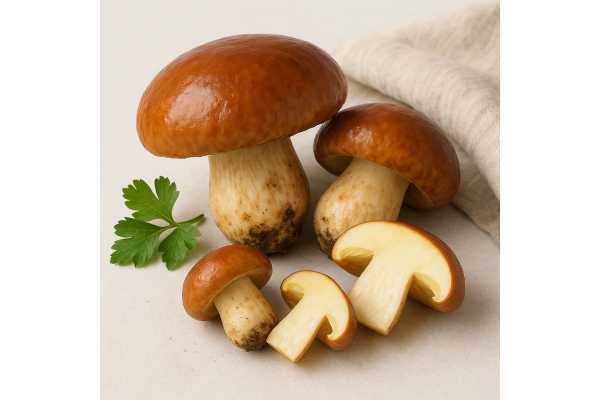
Slippery jack (Suillus luteus) is a classic wild bolete with a glossy, mucilaginous cap, pale pores instead of gills, and a tidy ring on the stem—easy markers for foragers who learn the basics. It partners with pines across the Northern and Southern Hemispheres, and in many regions it is one of the first boletes beginners learn to harvest. In the kitchen, slippery jack is mild, woodsy, and more tender than many boletes once you peel the cap skin and trim the spongy pore layer on older specimens. It sautés quickly, holds its shape in stews, and dries well for broth. Nutritionally, it is lean and fiber-containing, with useful B vitamins, potassium, selenium, copper, and mushroom-specific compounds like ergothioneine and beta-glucans. Like other wild fungi, it can concentrate minerals from soil—one reason to choose clean sites and handle your harvest with care. Treated as a seasonal ingredient and cooked thoughtfully, slippery jack delivers weeknight-friendly umami while fitting neatly into plant-forward, heart-smart meals.
Nutrition Snapshot
- Typical serving: 150–200 g fresh (about 1–1½ cups sliced), cooked, 1–3 times weekly.
- Benefits: low-calorie source of fiber, B vitamins, potassium, copper, selenium, beta-glucans, and ergothioneine.
- Safety: always cook; source from clean sites; peel cap skin on older specimens to reduce slime and off-flavors.
- Who should limit: people with mushroom allergy, severe FODMAP sensitivity, gout flares, or on potassium-restricted diets.
- Practical tip: strain and use cooking or soaking liquid to keep water-soluble B vitamins and umami in the dish.
Table of Contents
- Slippery Jack Basics and Uses
- Slippery Jack Nutrition Profile
- Evidence-Based Benefits of Slippery Jack
- Risks, Allergies and Interactions
- Selecting, Quality, Sustainability and Storage
- Preparation, Cooking and Nutrient Retention
- Portions, Comparisons and FAQs
Slippery Jack Basics and Uses
Slippery jack (Suillus luteus) is a mycorrhizal bolete that fruits with pines in sunny edges, grassy openings, and sandy soils. Look for a shiny brown cap that becomes distinctly tacky in wet weather, yellow pores under the cap (no gills), and a partial veil that leaves a ring on the stem. Young mushrooms have tight, dry pores and firm flesh; older ones develop larger, spongier pores that are best trimmed away for better texture.
In the kitchen, slippery jack is a “clean prep, quick cook” mushroom. Peel the cap cuticle on older or very slimy caps to reduce stickiness and any residual bitterness; younger caps often need only a quick wipe. Slice 5–7 mm thick for sautés, or quarter larger caps for stews. The flavor is gentle—woodsy and slightly nutty—so it plays well with thyme, parsley, garlic, shallots, black pepper, and a squeeze of lemon. Butter highlights its sweetness; olive oil or neutral oils work when you plan to layer other flavors (soy sauce, miso, black vinegar). Because it browns readily without dumping water into the pan, slippery jack fits into weeknight meals: pan sauces over polenta, creamy pastas, poultry or trout with mushrooms, or grain bowls with greens and beans.
Dried slippery jack is an underrated pantry tool. Thin slices dry quickly, store for months, and deliver deep broth when soaked and simmered with aromatics. Strain the soaking liquid to remove fine grit and use it as stock for risotto, noodle soup, or pan reductions. The pores of older mushrooms can be dehydrated separately and reserved for stock, while firm caps go into sautés or quick braises.
Culturally, slippery jack has long been valued in Central and Eastern Europe and in the Southern Hemisphere where pines are planted—showing up in pickles, dumpling fillings, and rustic stews. Its approachable ID traits, abundant patches, and forgiving cooking behavior make it a solid entry point for new foragers under the guidance of experienced mentors. For shoppers, many specialty markets sell cleaned, trimmed caps in season or dried slices year-round.
Slippery Jack Nutrition Profile
Notes: Values below are typical for raw slippery jack (Suillus luteus) per 100 g. Composition varies with age, habitat, soil chemistry, and processing (fresh vs dried; UV exposure). Use these numbers as practical kitchen guidance; % Daily Values (%DV) follow U.S. adult DVs.
Macros and Electrolytes (per 100 g raw)
| Nutrient | Amount | % Daily Value |
|---|---|---|
| Energy | 30 kcal | — |
| Water | 89 g | — |
| Protein | 2.8 g | — |
| Total carbohydrate | 6.0 g | — |
| Dietary fiber | 2.3 g | — |
| Total sugars | 2.0 g | — |
| Total fat | 0.4 g | — |
| Sodium | 7 mg | 0% |
| Potassium | 340 mg | 7% |
Carbohydrates
| Component | Amount | Practical note |
|---|---|---|
| Starch | ~0.2 g | Most carbs are free sugars and fiber. |
| Trehalose and mannitol | ~1–2 g | May trigger GI symptoms in FODMAP-sensitive individuals. |
| Beta-glucans (soluble fiber) | ~0.5–1.5 g | Varies by specimen and processing; contributes to viscosity and satiety. |
Fats and Fatty Acids
| Component | Amount | Notes |
|---|---|---|
| Total fat | 0.4 g | Naturally low-fat. |
| Saturated fat | ~0.06 g | Minimal. |
| Polyunsaturated fat | ~0.2 g | Mostly linoleic acid (omega-6). |
| Cholesterol | 0 mg | Ergosterol present (pro-vitamin D form). |
Protein and Amino Acids
| Component | Amount | Notes |
|---|---|---|
| Protein | 2.8 g | Complements cereals/legumes in mixed meals. |
| Glutamate & aspartate | — | Amino acids that amplify umami. |
Vitamins
| Vitamin | Amount | % Daily Value |
|---|---|---|
| Riboflavin (B2) | 0.28 mg | 22% |
| Niacin (B3) | 4.0 mg | 25% |
| Pantothenic acid (B5) | 1.4 mg | 28% |
| Thiamin (B1) | 0.1 mg | 8% |
| Vitamin B6 | 0.1 mg | 6% |
| Folate (DFE) | 15 µg | 4% |
| Vitamin D (variable) | ~0–0.5 µg | 0–2% (higher if UV-exposed) |
Minerals
| Mineral | Amount | % Daily Value |
|---|---|---|
| Copper | 0.30 mg | 33% |
| Selenium | 6 µg | 11% |
| Zinc | 0.8 mg | 7% |
| Phosphorus | 95 mg | 8% |
| Iron | 0.6 mg | 3% |
| Magnesium | 18 mg | 4% |
| Calcium | 3 mg | 0% |
Bioactives / Phytonutrients
| Compound | Typical range | Notes |
|---|---|---|
| Ergothioneine | ~2–10 mg | Sulfur-containing antioxidant concentrated in fungi. |
| Beta-glucans | ~0.5–1.5 g | Structural polysaccharides with immune-modulating research. |
| Suillin and related prenylphenols | trace–mg range | Identified in S. luteus; studied for enzyme inhibition in vitro. |
| Phenolic compounds | variable | Contribute to measured antioxidant activity. |
Allergens & Intolerance Markers
| Marker | Relevance |
|---|---|
| Trehalose | Symptoms in trehalase deficiency; keep portions modest. |
| Mannitol | Can aggravate FODMAP sensitivity when portions are large. |
Contaminants/Residues
| Item | Guidance |
|---|---|
| Heavy metals (e.g., Hg, Cd, Pb) | Wild boletes can bioaccumulate; harvest from clean sites far from roads and industrial soils. |
| Environmental dust/soil | Brush clean; avoid soaking; rinse quickly only if gritty, then dry and cook well. |
Glycemic & Acid–Base Metrics
| Metric | Value | Meaning |
|---|---|---|
| Net carbohydrates | ~3.7 g | Low per 100 g. |
| Estimated glycemic load | <2 | Minimal effect when cooked without sugar. |
| PRAL (estimated) | Slightly alkaline | Helps balance acid-forming meals. |
Fortification & additives: Fresh slippery jack is unfortified. Dried or powdered products may be UV-treated to increase vitamin D or include anti-caking agents—check labels.
Evidence-Based Benefits of Slippery Jack
Cardiometabolic meal building. Slippery jack is very low in calories and fat yet contributes fiber, potassium, and savory depth. In practice, using it to replace part of the meat in sauces, stews, or dumpling fillings lowers saturated fat and energy density while preserving satisfaction—one of the most reliable ways mushrooms support heart-smart plates. Potassium helps with blood pressure management when the overall diet is balanced.
Antioxidant capacity and cellular defenses. Like many edible mushrooms, slippery jack contains ergothioneine, glutathione (smaller amounts), phenolics, and peptides that contribute to antioxidant measures in laboratory assays. Diets that include ergothioneine-rich foods (mushrooms are the standout source) are being studied for roles in maintaining redox balance and healthy aging. In kitchen terms, combining mushrooms with alliums (garlic, shallots) and leafy greens is a simple way to layer these compounds.
Immune tone signals. Beta-glucans in fungal cell walls have been researched for their ability to engage pattern-recognition receptors on immune cells, nudging cytokine signaling toward balance. Culinary portions of whole, cooked mushrooms provide gentler effects than isolated extracts; the real-world benefit is most likely steady inclusion in varied, plant-forward meals rather than a dramatic supplement-like response.
Bioactive molecules of interest. S. luteus produces suillin, a prenylated phenolic investigated in vitro for enzyme inhibition relevant to neural signaling. These studies are exploratory and do not translate to medical claims for everyday cooking, but they underscore the biochemical richness of boletes and the potential synergy among mushroom compounds when eaten as food.
Lower-sodium cooking through umami. Because slippery jack is naturally savory, it helps reduce reliance on salt or heavy sauces. Re-using strained soaking liquid from dried slices concentrates 5′-nucleotides (like guanylate) and glutamate—classic umami boosters—allowing flavorful meals with less sodium.
Practical bottom line. The strongest evidence for health benefits comes from how mushrooms improve meals: more fiber, fewer refined ingredients, better potassium-to-sodium balance, and satisfying textures that make plant-forward eating enjoyable. Limited human trials exist specifically for slippery jack, so treat it as a nutrient-dense food that complements—not replaces—medical care.
Risks, Allergies and Interactions
Misidentification and lookalikes. Slippery jack is one of the more approachable boletes, but accurate identification still matters. Key traits include a slimy brown cap, yellow pores (not gills), and a stem ring. Avoid boletes with red pores, a bitter taste, or a blue-black bruising reaction until you are confident in your ID skills; some are inedible or unpleasant. When in doubt, consult a local expert and skip consumption.
Allergy and intolerance. True mushroom allergies are uncommon but documented, ranging from oral itching to hives. Slippery jack also contains trehalose and mannitol; people with trehalase deficiency or FODMAP sensitivity may experience bloating or diarrhea with large portions. Start with small servings (2–3 tablespoons cooked) and increase as tolerated.
Purines and gout. Mushrooms carry moderate purine levels. For people with recurrent gout or hyperuricemia, moderate mushroom portions typically fit when overall diet, weight, and hydration are well managed; personal limits should be discussed with a clinician.
Environmental contaminants. Wild fungi can concentrate metals (e.g., mercury, cadmium, lead) depending on soil history. Choose sites far from roads, old orchards with legacy sprays, industrial soils, mining areas, or dumps. Young, firm mushrooms from clean sites are the best culinary choice.
Food safety and storage. Because wild mushrooms carry environmental microbes, refrigerate promptly in a breathable container and cook to steaming hot throughout. Avoid eating raw; heat improves digestibility and flavor. If a mushroom smells sour, feels slimy after storage, or is already decomposing, discard it.
Medication and condition notes.
- Anticoagulants/antiplatelets: no specific interaction is established at culinary portions.
- Pregnancy/lactation: stick to confidently identified, well-cooked mushrooms from clean sources; avoid concentrated extracts unless advised by a clinician.
- Kidney disease with potassium restriction: count mushroom potassium toward daily totals.
Selecting, Quality, Sustainability and Storage
Selecting in the field or market.
- Look: glossy brown cap; young pores are pale yellow and tight.
- Feel: firm, elastic flesh; avoid waterlogged or bug-riddled specimens.
- Smell: clean, woodsy; never sour or fishy.
- Trim: remove forest debris; for older specimens, peel cap skin and trim spongy pores for better texture.
Sourcing and sustainability. Slippery jack fruits abundantly with pines, a widespread symbiosis that limits ecological pressure when harvested responsibly. Follow local regulations, forage only from robust patches, cut or carefully twist to minimize substrate damage, and leave older mushrooms to sporulate. Many regions sell cleaned caps through seasonal markets; reputable vendors will specify species and origin.
Cleaning. Avoid soaking; the pores can act like sponges. Brush and wipe caps and stems; rinse quickly only if gritty, then pat dry immediately. Peel the cap skin when it is very slimy or if bitterness is a concern; this step is optional on young, dry caps.
Storage.
- Fresh: unwashed in a paper bag or vented container, 3–5 days refrigerated. Use the firmest first.
- Dried: thin slices dehydrate well; store in an airtight jar in a cool, dark place for up to a year.
- Rehydrated: keep soaked mushrooms and strained liquid refrigerated 3–4 days, or freeze in ice-cube trays.
- Cooked: 3–4 days refrigerated in an airtight container.
Zero-waste ideas. Older pores, once trimmed and dried, make excellent stock material; stems add body to broths. The strained soaking liquid brings concentrated umami to risotto, gravies, and noodle soups.
Quality troubleshooting.
- Mushrooms won’t brown: pan too crowded or heat too low—use a wide skillet, preheat until shimmering, and leave undisturbed for the first 2–3 minutes.
- Slick texture: peel cap skin or cook a little longer; finish with acid (lemon, vinegar) to brighten.
- Bitter notes: often from older caps, environmental stress, or over-reduced soaking liquid—peel caps, trim pores, and dilute/reduce thoughtfully.
Preparation, Cooking and Nutrient Retention
Quick prep (5 minutes).
- Brush clean; brief rinse only if gritty, then dry thoroughly.
- Trim the stem base; peel cap skin on very slimy or mature caps.
- Slice 5–7 mm or quarter; remove large, spongy pores on older mushrooms.
High-yield cooking methods
- Hot sauté (6–8 minutes): Preheat oil or butter, add mushrooms in a single layer, salt lightly, and let brown before tossing. Deglaze with stock or wine; finish with herbs and lemon.
- Roast (200–220°C, 12–15 minutes): Toss with oil, salt, and pepper; roast until edges crisp; finish with parsley and garlic.
- Braised ragù (20 minutes): Sauté aromatics, add mushrooms, tomato paste, and strained soaking liquid; simmer to a glossy sauce for polenta or pasta.
- Soup or stew (10–20 minutes): Add toward the middle of cooking to keep texture; use the broth to capture soluble nutrients.
Retention tips for vitamins and minerals
- Use the liquid: Reuse pan juices and strained soaking liquid to keep water-soluble B vitamins and potassium in the dish.
- Short, hot cooking: Browning quickly minimizes nutrient losses and keeps texture lively.
- Pair with healthy fats: Olive oil or a little butter improves mouthfeel and helps carry fat-soluble aromas.
- Add acid late: A squeeze of lemon or splash of vinegar at the end brightens flavor without prolonged heat exposure.
Flavor pairings
- Aromatics: shallot, garlic, thyme, bay, black pepper.
- Vegetables: leeks, spinach, kale, carrots, celery root.
- Proteins: beans, lentils, eggs, poultry, pork loin, trout.
- Condiments: soy sauce or tamari, mustard, miso, sherry vinegar.
- Finishes: lemon zest, parsley, chives, toasted hazelnuts.
Batch-cooking plan. Sauté a double pan on day one; use some as a toast topper, fold some into omelets, and freeze a portion for stews. Keep a jar of dried slices for instant broth when time is short.
What not to do. Don’t soak for long (mushy pores). Don’t crowd the pan if you want browning. Don’t store rehydrated mushrooms at room temperature.
Portions, Comparisons and FAQs
Portion guidance and frequency
- Standard serving: 150–200 g fresh (yields ~75–120 g cooked) or 8–10 g dried, cooked.
- Frequency: 1–3 times per week fits well in balanced dietary patterns.
- Who benefits most: cooks seeking low-calorie umami, foragers learning boletes, and eaters aiming for more fiber and potassium without heavy sauces.
- Who should limit/avoid: people with mushroom allergies, severe FODMAP sensitivity, potassium-restricted diets, or those unable to identify wild mushrooms confidently.
How slippery jack compares (per 100 g raw, typical values)
| Feature | Slippery jack | Porcini (B. edulis) | Oyster |
|---|---|---|---|
| Energy (kcal) | ~30 | ~25–30 | ~33 |
| Protein (g) | ~2.8 | ~3.1 | ~3.3 |
| Fiber (g) | ~2.3 | ~2.0 | ~2.3 |
| Notable vitamins | B2, B3, B5 | B2, B3 | B3, B2 |
| Notable minerals | Potassium, copper, selenium | Potassium, selenium | Iron, potassium |
| Texture/flavor | Tender, woodsy, mild | Firm, nutty, intense (dried) | Silky, savory |
| Prep notes | Peel slimy cap skin on older caps; trim pores | Slice thick; great dried | Shreds and browns fast |
FAQs
Do I have to peel the cap? Not always. On fresh, dry caps, a thorough wipe is enough. On very slimy or mature caps, peeling improves mouthfeel and reduces bitterness.
Are the pores edible? Yes for young mushrooms. On older ones, the pore layer becomes spongy and can break down the texture of sauces—trim and save it for stock or drying.
Can I eat slippery jack raw? It is best cooked. Heat improves digestibility, softens texture, and enhances flavor.
What about heavy metals? Site matters. Harvest far from roads and polluted soils, and avoid unknown industrial areas. When in doubt, choose cultivated mushrooms for frequent use and treat wild harvests as periodic seasonal food.
Is drying worthwhile? Absolutely. Dried slices concentrate flavor and make quick, clean broth. Always strain the soaking liquid before use.
References
- Suillin: A mixed-type acetylcholinesterase inhibitor from Suillus luteus which is used by Saraguros indigenous, southern Ecuador 2022 (Experimental Study)
- Accumulation and distribution of mercury in fruiting bodies of Suillus luteus 2015 (Environmental Study)
- Mineral composition variation in Boletales mushrooms—indication of soil properties and taxonomic influence 2024 (Comparative Study)
- A review of the therapeutic and biological effects of edible and medicinal mushrooms 2021 (Systematic Review)
- Nutritional Composition and Bioactive Properties of Wild Edible Mushrooms from Native Nothofagus Patagonian Forests 2022 (Review)
Medical Disclaimer
This guide offers general nutrition, safety, and cooking information. It is not a substitute for personalized medical advice, diagnosis, or treatment. Always consult a qualified healthcare professional about your health conditions, medications, allergies, or dietary needs—especially before using concentrated mushroom extracts or eating wild mushrooms. If you are unsure of identification, do not consume the mushroom.
If this article was useful, please consider sharing it on Facebook, X (formerly Twitter), or your preferred platform. Your support helps us continue producing careful, practical food and nutrition resources.