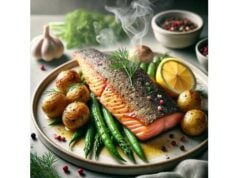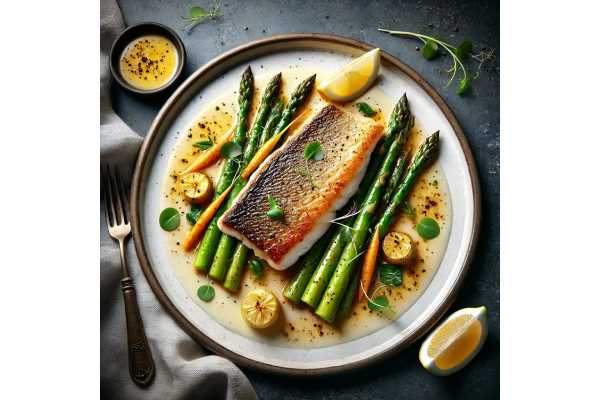
Zander (Sander lucioperca), also called pike-perch, is a lean, mild-tasting freshwater fish prized across Central and Northern Europe. Its delicate white flesh cooks quickly, holds together well in the pan, and pairs with bright herbs and citrus. Beyond the plate, zander offers high-quality protein with very little fat, meaningful minerals like selenium, iodine, and phosphorus, and a small but useful contribution of heart-friendly omega-3s. Because it is a lean species, zander suits lighter cooking methods—poaching, steaming, grilling—or classic European treatments like pan-searing with brown butter and capers. It is also a practical choice for people who want seafood’s benefits without a “fishy” flavor. This guide covers what zander brings nutritionally, where it shines for health, how to shop and store it, the best ways to cook it while protecting nutrients, and how much to eat—plus key safety notes for families and people who are pregnant.
Quick Overview
- A 100 g raw serving provides ~19 g complete protein with minimal fat (≈0.7 g) and meaningful selenium and iodine.
- Enjoy 1–2 palm-size portions (90–150 g each) once or twice weekly as part of varied seafood intake.
- Freshwater fish can harbor parasites if eaten raw; cook to 63 °C (145 °F) or freeze per safety guidance.
- People who are pregnant, nursing, or feeding young children should choose lower-mercury fish and keep weekly totals within official advice.
Table of Contents
- What Makes Zander Unique
- Zander Nutrition Profile (per 100 g)
- Research-Backed Benefits of Zander
- Risks, Allergies and Interactions
- Buying, Sustainability and Storage
- Cooking Zander and Nutrient Retention
- Portions, Comparisons and FAQs
What Makes Zander Unique
Zander is a freshwater predator native to European lakes and rivers. If you enjoy mild white fish like cod, walleye, or perch, you will likely appreciate zander’s clean taste and firm, flaky texture. Culinary pros value its versatility: it browns beautifully in a skillet, roasts evenly, and stays moist under gentle heat. Because the flavor is subtle, zander works as a “canvas” for aromatics—lemon, parsley, dill, tarragon, chives—and for light sauces based on butter, olive oil, or yogurt. It also takes on smoke readily, so it performs well on the grill or over hardwood.
From a nutrition perspective, zander is classically “lean”: high in protein, very low in fat—especially saturated fat—and virtually free of carbohydrates. A standard raw 100 g cut (about the size of your palm) supplies roughly 19 g of complete protein with only ~0.7 g fat. That makes zander a good fit when you want to raise protein without adding many calories. The mineral profile is quietly impressive, with meaningful amounts of selenium (a key antioxidant cofactor), iodine (supporting thyroid hormone production), phosphorus (bone and energy metabolism), and potassium (fluid balance and blood pressure support). While not in the league of salmon or mackerel, zander contributes modest omega-3 polyunsaturated fatty acids—part of why regular fish intake is linked with better cardiometabolic outcomes.
Zander also stands out for kitchen predictability. The fillets are typically boned and skin-on or skinless; the skin crisps nicely and helps keep moisture in the flesh. The muscle fibers are fine and cohesive, so the fish doesn’t fall apart during turning. That reliability matters for weeknight dinners and for home cooks still gaining confidence with seafood.
Sustainability varies by source. Wild European stocks are often managed regionally; farmed zander appears more frequently in some markets. Look for transparent labeling on catch or farm origin. As with all freshwater fish intended for raw dishes, zander should be handled with strict parasite control (freezing protocols) or cooked through.
In short, zander fills a helpful niche: a light, versatile fish that delivers high-quality protein, a clean flavor, and supportive micronutrients with very few calories—ideal for heart-smart, weight-conscious, or simply balanced everyday cooking.
Zander Nutrition Profile (per 100 g)
Scope and units: Values below are for raw zander/pike-perch per 100 g. Energy in kcal; macronutrients in g; vitamins in mg or µg; minerals in mg or µg. %DV uses current adult Daily Values for labeling; where no DV exists, “—” is shown. Natural variation occurs by habitat, season, and diet; ranges are noted where appropriate.
Macros and Electrolytes
| Component | Amount (per 100 g) | %DV |
|---|---|---|
| Energy | 85–90 kcal | — |
| Protein | 19.2 g | 38% |
| Total fat | 0.7 g | 1% |
| Carbohydrate | 0.0–0.9 g | 0% |
| Sodium | 57 mg | 3% |
| Potassium | 340 mg | 7% |
| Water | ~78 g | — |
Notes: Zander is a lean, high-moisture fish with very little total fat and carbohydrate, which helps keep calories low for the protein delivered.
Fats and Fatty Acids
| Component | Amount (per 100 g) | %DV |
|---|---|---|
| Saturated fatty acids (total) | ~0.40 g | 2% |
| Monounsaturated fatty acids (total) | ~0.23 g | — |
| Polyunsaturated fatty acids (total) | ~0.03 g | — |
| Cholesterol | ~62 mg | — |
Omega-3, habitat-dependent (indicative):
| Omega-3 category | Typical amount (per 100 g) |
|---|---|
| Total long-chain omega-3 PUFA (EPA+DHA, modeled median) | ~0.50 g |
| Observed range in datasets | ~0.19–0.97 g |
Notes: As a lean freshwater species, zander’s omega-3 levels are lower and more variable than fatty marine fish, but can still make a useful contribution within a varied seafood pattern.
Vitamins
| Vitamin | Amount (per 100 g) | %DV |
|---|---|---|
| Vitamin D (cholecalciferol) | 0.7 µg | 4% |
| Vitamin E (alpha-tocopherol) | 1.35 mg | 9% |
| Thiamin (B1) | 0.16 mg | 13% |
| Riboflavin (B2) | 0.25 mg | 19% |
| Niacin (B3) | 2.31 mg | 14% |
| Vitamin C | 1 mg | 1% |
Notes: Fat-soluble vitamin D is modest in zander compared with oily fish. Water-soluble B-vitamins are present in meaningful amounts that support energy metabolism.
Minerals
| Mineral | Amount (per 100 g) | %DV |
|---|---|---|
| Phosphorus | 220 mg | 18% |
| Selenium | 20 µg | 36% |
| Iodine | 35 µg | 23% |
| Calcium | 54 mg | 4% |
| Magnesium | 29 mg | 7% |
| Iron | 0.3 mg | 2% |
| Zinc | 0.4 mg | 4% |
| Potassium | 340 mg | 7% |
Notes: Selenium and iodine are stand-outs for a lean fish, supporting antioxidant defenses and thyroid function.
Contaminants and Residues (screening data)
| Analyte | Typical level (per 100 g) |
|---|---|
| Mercury | ~14 µg (0.014 mg/kg) |
| Lead | ~4 µg |
| Cadmium | ~0.2 µg |
| Arsenic (total) | ~6.8 µg |
Notes: Reported mercury levels for zander are generally low in available food composition datasets, though levels vary by water body. Follow universal fish intake guidance for people who are pregnant and young children.
Footnotes
- Nutrient values compiled from national food composition databases and fish nutrient datasets; omega-3 values incorporate model-based and measured ranges to reflect habitat variation.
- %DV used: Protein 50 g; Fat 78 g; Carbohydrate 275 g; Sodium 2,300 mg; Potassium 4,700 mg; Calcium 1,300 mg; Magnesium 420 mg; Iron 18 mg; Zinc 11 mg; Phosphorus 1,250 mg; Iodine 150 µg; Selenium 55 µg; Vitamin C 90 mg; Vitamin E 15 mg; Thiamin 1.2 mg; Riboflavin 1.3 mg; Niacin 16 mg; Vitamin D 20 µg.
Research-Backed Benefits of Zander
1) High-quality protein for muscle and metabolic health.
Zander provides about 19 g complete protein per 100 g serving, with a very favorable protein-to-calorie ratio. High-quality protein supports muscle protein synthesis after exercise or during weight management. Because zander is so lean, it allows you to add protein without much saturated fat—useful for cardiometabolic goals and for meal planning in calorie-controlled contexts.
2) Heart-friendly seafood pattern contributor.
Regular seafood intake is consistently associated with a lower risk of cardiovascular disease. While fatty fish deliver the most EPA and DHA per bite, rotating in lean fish like zander keeps variety high and saturated fat low. The modest omega-3 contribution from zander (and its displacement of higher-saturated-fat proteins) can help nudge an overall dietary pattern in a heart-smart direction when combined with routine consumption of higher-omega-3 species.
3) Selenium and iodine for antioxidant and thyroid support.
At about 20 µg selenium per 100 g and ~35 µg iodine, zander helps fill common micronutrient gaps. Selenium supports glutathione peroxidase activity, part of the body’s endogenous antioxidant network. Adequate iodine is required to produce thyroid hormones that govern energy use, thermogenesis, and neurodevelopment. These advantages matter most when dietary variety is limited or when avoiding iodized salt.
4) Blood pressure and fluid balance.
A 100 g serving supplies around 340 mg potassium with very little sodium (≈57 mg). Replacing some red or processed meat with fish like zander can improve the meal’s overall sodium-potassium ratio. That ratio is one factor associated with blood pressure control in population research.
5) Calorie-savvy substitution.
Swapping a 150 g portion of zander for a fatty cut of meat can reduce meal calories by 150–300 kcal while preserving satiety through protein. Over time, these substitutions support weight-management efforts without rigid restriction.
6) Digestibility and gentle flavor for sensitive eaters.
Zander’s mild taste and fine flake suit children and adults who find stronger fish off-putting. For parents trying to meet weekly seafood targets, a neutral fish can make family acceptance easier.
Practical way to harness these benefits:
Aim for two seafood meals per week, mixing one higher-omega-3 fish (e.g., salmon, sardine, mackerel) with one lean fish such as zander. Use olive oil, herbs, and vegetables to create a heart-healthy plate; consider yogurt-based sauces instead of cream.
Risks, Allergies and Interactions
Fish allergy:
Fish is a top food allergen. Reactions to zander can include hives, wheeze, vomiting, or, rarely, anaphylaxis. People with known fin-fish allergy should avoid zander unless cleared by an allergist. Cross-contact at markets and restaurants is common.
Parasites in freshwater fish:
Wild freshwater fish can carry tapeworms and other parasites. The safest option is to cook zander to an internal temperature of 63 °C (145 °F) until the flesh is opaque and flakes. If serving raw or undercooked preparations (sushi-style, ceviche, cold-smoked), parasite control requires deep-freezing under time-temperature protocols validated for fish (for example, −20 °C for 7 days, or −35 °C for 15 hours, followed by controlled storage). Salting, cold-smoking, or pickling alone does not reliably kill parasites.
Mercury and other contaminants:
Available compositional data suggest relatively low typical mercury in zander compared with many marine predators, though levels vary by water body. Sensitive groups—people who are pregnant or nursing and young children—should still follow national fish intake guidance and favor lower-mercury species overall. If your local authority posts advisories for specific lakes or rivers, follow them when sourcing wild fish.
Medication and nutrient interactions:
- Thyroid conditions: Iodine in fish supports normal thyroid hormone production. People on thyroid medication do not need to avoid fish; consistency in iodine intake is usually more important than restriction.
- Anticoagulants: Normal dietary omega-3 intake from fish is compatible with anticoagulant therapy; clinically meaningful interactions are associated with high-dose fish-oil supplements, not food portions.
- Histamine intolerance and scombroid poisoning: Zander is not a typical scombroid species, but any fish improperly stored can accumulate histamine. Buy from reliable suppliers, keep cold (≤4 °C), and use promptly.
Food safety at home:
- Keep zander refrigerated at 0–2 °C and use within 24 hours of purchase.
- Cook to 63 °C (145 °F).
- If frozen, thaw in the refrigerator (not on the counter) and cook within 24 hours of thawing.
- Avoid cross-contamination with ready-to-eat foods.
Who should limit or avoid:
- Individuals with confirmed fish allergy.
- People who are pregnant, nursing, or feeding young children should follow official weekly limits and choose lower-mercury fish, prioritizing variety.
- Anyone without access to parasite control (freezing) who plans to serve zander raw should not do so; cook instead.
Buying, Sustainability and Storage
How to choose high-quality zander at the market:
- Look and smell: Flesh should be moist and translucent with a clean, mild marine aroma—never sour, fishy, or ammonia-like. Skin (if present) should be taut and shiny.
- Fillet integrity: Edges should not be ragged or browning. Press gently; fresh fillets spring back.
- Ice and temperature: Fish should be fully surrounded by ice in the case. Ask for a pack with ice for the trip home, especially in warm weather.
- Labeling: Prefer products that specify species (zander/pike-perch), catch area or farm origin, and whether previously frozen. Transparent labeling correlates with better handling.
Sustainability snapshot:
- Zander populations are regionally managed; status varies by watershed and fishing pressure. In many areas the species is not considered threatened, but habitat changes and overfishing can stress local stocks. Farmed zander is emerging in some markets; look for operations that disclose feed sources and water stewardship. When possible, consult regional seafood guides for local advice and consider certifications that audit environmental practices.
Storage and handling best practices:
- Refrigeration: Store at 0–2 °C and use within 24 hours. Keep on ice in a shallow tray to drain meltwater.
- Freezing: For best quality, freeze at −18 °C or colder. Wrap fillets tightly (plastic wrap plus freezer bag, or vacuum-seal) to prevent freezer burn. Label with the date and use within 3–5 months for optimal texture.
- Thawing: Thaw overnight in the refrigerator or under cold running water in a sealed bag. Do not refreeze raw fish once thawed; instead, cook and then freeze leftovers if needed.
- Pre-portioning: If buying a large quantity, portion into meal-size packs before freezing to reduce thaw-refreeze cycles.
Shopping tips to avoid waste:
- Purchase close to when you plan to cook.
- If your week is unpredictable, buy frozen fillets; modern blast-frozen fish can be excellent and gives you flexibility.
- Choose skin-on fillets if you like crispy-skin presentations; the skin also protects moisture during cooking.
Cooking Zander and Nutrient Retention
General goal: Heat just enough to make the flesh turn opaque and flake, while preserving moisture and water-soluble vitamins (B-vitamins) and protecting delicate fatty acids. Zander cooks quickly because it is lean.
Best everyday methods (and why they work):
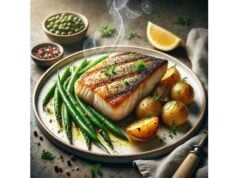
- Pan-searing (skin-on or skinless): Preheat a heavy skillet until hot, add a thin film of oil, and sear 2–3 minutes per side (thickness-dependent). Browning drives flavor via Maillard reactions; finishing with a knob of butter and lemon balances richness without large calories.
- Oven-roasting: Roast at 200–220 °C for 8–12 minutes to an internal 63 °C. This even, high-heat method reduces handling and preserves fillet structure.
- Steam or en papillote: Steam over gently simmering water or bake in parchment with herbs, citrus, and a teaspoon of olive oil. Moist-heat methods limit evaporation and preserve B-vitamins.
- Poaching: Simmer in court-bouillon (water, aromatics, a splash of wine) at just below a boil. Gentle poaching minimizes nutrient losses to the cooking liquid; reserve the liquid for a sauce to recapture soluble nutrients.
Techniques to maximize nutrients:
- Avoid overcooking. Pull the fish at 63 °C (145 °F) or when the thickest part just turns opaque and flakes. Overcooking squeezes out moisture and can reduce B-vitamins.
- Use sauces smartly. Yogurt-herb, lemon-capers, or light pan sauces add flavor while keeping saturated fat low.
- Capture juices. Serve with the pan juices or parchment juices to keep water-soluble vitamins on the plate.
- Pair with plants. Serve alongside potassium- and fiber-rich vegetables or whole grains to balance the meal.
Flavor pairings that complement zander’s mildness:
- Citrus (lemon, orange), capers, Dijon mustard
- Herbs (dill, parsley, chives, tarragon)
- Light aromatics (shallot, fennel, leek)
- Gentle spice (paprika, white pepper, coriander)
- Nuts and seeds (toasted almonds or hazelnuts) for texture
Recipe framework (pan-seared zander with lemon-herb pan sauce):
- Pat fillets dry; season with ¼ tsp salt per 450 g fish.
- Heat 1 tsp neutral oil per fillet in a hot skillet.
- Sear first side 2–3 minutes until golden; flip and cook 1–2 minutes more.
- Add 1 tbsp butter, 1 tbsp chopped capers, and the juice of ½ lemon; swirl 30 seconds.
- Off heat, toss in chopped parsley or dill. Serve immediately.
For crispy skin: Score the skin lightly, cook skin-side down most of the time, and finish briefly on the second side.
Grilling pointers: Oil the grate, use a fish spatula, and consider a perforated grill tray to prevent sticking. Pull a minute earlier than you think; carryover heat finishes the center.
Portions, Comparisons and FAQs
How much zander should I eat?
For most adults, aim for seafood twice weekly. Practical serving sizes are 90–150 g (3–5 oz) cooked per meal. Because zander is lean and mild, it’s easy to pair with vegetables and whole grains to build satisfying, balanced plates.
How does zander compare with salmon, cod, and trout?
- Versus salmon: Salmon offers far more omega-3s (often 1.5–2.5 g EPA+DHA per 100 g) and more fat-soluble vitamin D, while zander is much leaner and lower in calories. If your goal is maximizing omega-3 intake, keep salmon or other oily fish in rotation.
- Versus cod: Both are lean. Zander’s texture is a bit firmer and flakier; flavor is similarly delicate.
- Versus trout: Trout sits between zander and salmon in fat and omega-3s. Zander remains the lightest in calories but contributes fewer omega-3s.
Is zander suitable for low-carb or diabetes-friendly eating?
Yes. It has essentially no carbohydrate and pairs well with non-starchy vegetables and legumes. Mind sauces and sides if tracking carbohydrates or sodium.
Can I eat zander during pregnancy?
People who are pregnant or breastfeeding can include lower-mercury fish in amounts that meet weekly targets (typically 2–3 servings, portion-size adjusted). Choose a variety across the week and ensure thorough cooking or validated freezing if serving raw-style dishes. When in doubt, opt for cooked preparations.
What about kids?
Introduce fish in age-appropriate portions (generally 1–4 oz depending on age). Zander’s mild flavor often makes it acceptable to children. Check carefully for bones, cook until opaque and flaky, and serve in manageable textures (flaked into pasta or tacos).
Any cooking mistakes to avoid?
Overcooking dries lean fish quickly. Use medium-high heat for searing, or gentle moist heat for poaching/steaming, and pull as soon as the center flakes. Avoid heavy breading that masks the delicate flavor and adds unnecessary calories; use a light dusting of flour if you want extra browning.
Budget and availability tips:
Frozen fillets are often more affordable and can be excellent when blast-frozen at peak freshness. Thaw overnight in the refrigerator and pat dry before cooking. If zander isn’t available, walleye, perch, or firm cod are reasonable stand-ins.
Bottom line:
Zander is a lean, versatile fish that helps you meet seafood goals without overpowering flavors. Use it as a protein anchor in simple, fresh meals; pair it with a weekly serving of oily fish to cover your omega-3 bases.
References
- Food ID: 601 2025 (Food composition database)
- Nutrients List 2025 (Fish nutrient dataset/model)
- Fish and Omega-3 Fatty Acids 2024 (Guideline)
- Advice about Eating Fish 2024 (Consumer guidance)
- About Diphyllobothrium 2023 (Prevention and safety)
Disclaimer
This article provides general nutrition and safety information about zander for educational purposes. It is not a substitute for personalized medical advice, diagnosis, or treatment. Always consult a qualified healthcare professional regarding your specific health needs, food allergies, pregnancy-related questions, or dietary changes. If local advisories exist for wild-caught fish from specific waters, follow them.
If you found this guide helpful, please consider sharing it on Facebook, X (formerly Twitter), or your favorite platform to support our work in creating reliable, reader-focused nutrition content. Thank you.