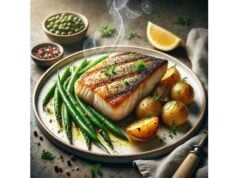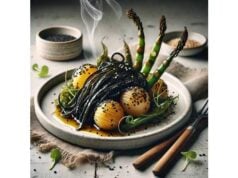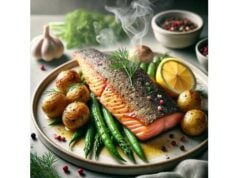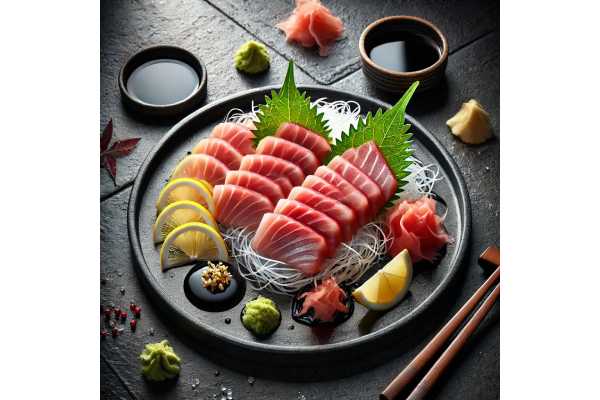
Yellowtail (most often Japanese amberjack, Seriola quinqueradiata, and its close cousins in the Seriola family) is a prized sushi and sashimi fish with rich, buttery flesh and a clean, slightly sweet taste. In the kitchen it’s versatile—delicious raw, pan-seared with a quick miso glaze, or roasted with citrus and herbs. Nutritionally, yellowtail delivers high-quality protein, a meaningful amount of omega-3 fatty acids (EPA and DHA), and key micronutrients such as selenium, vitamin B12, niacin, and phosphorus. Compared with very oily fish like salmon, it’s moderately fatty, so it satisfies without feeling heavy. Most retail fish is farmed; wild “greater amberjack” appears seasonally and tends to be leaner but can carry more mercury depending on size and waters. If you love sushi, yellowtail is a staple; if you’re cooking at home, it rewards simple methods and careful heat. This guide covers benefits, full nutrition facts, safety, buying, storage, and evidence-based cooking practices.
Nutrition Snapshot
- A 100 g raw serving typically provides ~146 kcal, ~23 g complete protein, and ~5 g fat with omega-3s (EPA+DHA).
- Enjoy 90–150 g (3–5 oz) per serving, 1–2 times weekly within a varied seafood routine.
- As a fin-fish allergen and a raw fish staple, yellowtail requires strict handling; freeze for parasite control or cook to 63 °C (145 °F).
- People who are pregnant, breastfeeding, or feeding young children should choose lower-mercury fish and follow official weekly limits; large wild amberjack should be limited.
Table of Contents
- What Sets Yellowtail Apart
- Yellowtail Nutrition (per 100 g)
- Evidence-Based Benefits of Yellowtail
- Safety, Allergies and Interactions
- Buying Quality, Sustainability and Storage
- Cooking Yellowtail and Retaining Nutrients
- Portions, Comparisons and FAQs
What Sets Yellowtail Apart
Yellowtail is the culinary name for several Seriola species; the most common in markets and sushi bars is Japanese amberjack (hamachi/buri), a fast-growing pelagic fish often farmed in Japan. Closely related “amberjacks” (like greater amberjack, Seriola dumerili) appear in wild fisheries. These species share a firm, silky texture that slices cleanly for sashimi and holds together during searing or grilling. The flavor is richer than cod but milder than salmon, with a gentle sweetness that pairs well with citrus, soy, ginger, miso, and spring herbs.
From a nutrition standpoint, yellowtail balances substantial protein with moderate fat and valuable long-chain omega-3s. While fat content varies by species, season, and feed, a typical raw 100 g portion provides roughly 23 g protein and ~5 g fat—enough for satiety and mouthfeel without the heaviness of very oily fish. It’s also a notable source of selenium (an antioxidant trace mineral), vitamin B12 (for red blood cells and nerve health), niacin (energy metabolism), and phosphorus (bone and cellular energy).
For diners who enjoy raw fish, yellowtail is a favorite because the flesh has a fine grain and consistent structure that takes a clean edge at cool temperatures. For cooks, it’s reliable: it browns beautifully, resists drying when handled properly, and adapts to quick weeknight recipes and refined plating alike. The main caveats are the usual seafood concerns—proper cold chain, parasite control for raw service, and species-appropriate mercury awareness—each addressed in later sections with practical tips.
Taste profile in brief: buttery, slightly sweet, and umami-rich, with a delicate marine aroma. Texture: firm yet yielding; sashimi feels plush, seared fillets are juicy with a light flake. If you’re building a heart-smart weekly menu, yellowtail can rotate with higher-omega-3 fish like salmon or sardines and leaner white fish like cod, giving you flavor variety and a balanced nutrient spread across the week.
Yellowtail Nutrition (per 100 g)
Scope and units: Raw yellowtail, per 100 g. Energy in kcal; macronutrients in g; vitamins and minerals in mg or µg. %DV based on adult Daily Values. Natural variation occurs by species (e.g., Japanese amberjack vs. greater amberjack), season, feed, and cut. Where a DV does not exist or labeling no longer assigns one (e.g., cholesterol), “—” is shown.
Macros and Electrolytes
| Component | Amount (per 100 g) | %DV |
|---|---|---|
| Energy | ~146 kcal | — |
| Protein | 23.2 g | 46% |
| Total fat | 5.3 g | 7% |
| Saturated fat | 1.3 g | 6% |
| Carbohydrate | 0.0 g | 0% |
| Sodium | 39 mg | 2% |
| Potassium | 420 mg | 9% |
| Water | ~72 g | — |
| Cholesterol | 55 mg | — |
Notes: Values reflect typical raw “yellowtail, mixed species.” Farmed hamachi can be slightly higher in fat; wild greater amberjack is often a bit leaner.
Fats and Fatty Acids
| Component | Amount (per 100 g) | %DV |
|---|---|---|
| Monounsaturated fatty acids (total) | ~1.9 g | — |
| Polyunsaturated fatty acids (total) | ~1.2 g | — |
| Long-chain omega-3 (EPA + DHA), indicative | ~0.9–1.0 g | — |
| EPA (eicosapentaenoic acid) | ~0.19 g | — |
| DHA (docosahexaenoic acid) | ~0.73 g | — |
Notes: EPA and DHA vary with diet and habitat; yellowtail typically has more DHA than EPA, supporting vision and neural function.
Protein and Amino Acids (selected)
| Amino acid | Amount (per 100 g) |
|---|---|
| Leucine | ~1.88 g |
| Lysine | ~2.12 g |
| Valine | ~1.17 g |
| Methionine | ~0.69 g |
| Histidine | ~0.68 g |
Notes: Yellowtail provides all essential amino acids in proportions compatible with human protein needs.
Vitamins
| Vitamin | Amount (per 100 g) | %DV |
|---|---|---|
| Vitamin B12 (cobalamin) | ~1.3 µg | 54% |
| Niacin (vitamin B3) | ~6.8 mg | 43% |
| Thiamin (vitamin B1) | ~0.14 mg | 12% |
| Riboflavin (vitamin B2) | ~0.04 mg | 3% |
| Vitamin C | ~2.8 mg | 3% |
| Vitamin D | data variable; often low in raw cut | 0% |
Minerals
| Mineral | Amount (per 100 g) | %DV |
|---|---|---|
| Selenium | ~36 µg | 66% |
| Phosphorus | ~157 mg | 13% |
| Magnesium | ~30 mg | 7% |
| Potassium | 420 mg | 9% |
| Calcium | ~23 mg | 2% |
| Iron | ~0.49 mg | 3% |
| Zinc | ~0.52 mg | 5% |
Allergens & Intolerance Markers
- Fin-fish allergen: Yellowtail is a major allergen for some individuals; reactions can be severe.
- Histamine risk: Not a classic “scombroid” species, but any fish held warm can accumulate histamine; strict refrigeration is essential.
Contaminants/Residues (context)
- Mercury: Levels vary by species and size; large wild amberjack can be higher. Choose a variety of lower-mercury seafood and follow official weekly limits for pregnancy and early childhood.
- Aquaculture inputs: Farmed yellowtail quality depends on feed and husbandry; reputable producers monitor contaminants and antibiotic stewardship.
Footnotes
- %DV used: Protein 50 g; Fat 78 g; Saturated Fat 20 g; Carbohydrate 275 g; Sodium 2,300 mg; Potassium 4,700 mg; Calcium 1,300 mg; Magnesium 420 mg; Iron 18 mg; Zinc 11 mg; Phosphorus 1,250 mg; Selenium 55 µg; Thiamin 1.2 mg; Riboflavin 1.3 mg; Niacin 16 mg; Vitamin C 90 mg; Vitamin D 20 µg.
- Nutrient values reflect composite food composition data; omega-3 values include measured and reference ranges for Seriola species.
Evidence-Based Benefits of Yellowtail
1) Heart-supportive seafood choice.
Yellowtail contributes long-chain omega-3 fatty acids (EPA and DHA) that support cardiovascular health. Compared with land animal proteins, a 100 g portion supplies roughly 0.9–1.0 g EPA+DHA—less than salmon but still meaningful, especially when eaten regularly and in rotation with higher-omega-3 fish. Replacing some red or processed meats with fish like yellowtail can improve diet quality by lowering saturated fat and delivering cardioprotective nutrients.
2) High-quality protein with strong amino acid balance.
At ~23 g protein per 100 g, yellowtail provides “complete” protein that supports muscle maintenance, repair after training, and satiety during weight management. Its favorable protein-to-calorie ratio (about 16 kcal per gram of protein in raw fish) makes it a smart anchor for balanced meals.
3) Micronutrient advantages: selenium, vitamin B12, and niacin.
Selenium (≈36 µg/100 g) supports antioxidant enzymes that protect cell membranes from oxidative stress. Vitamin B12 (≈1.3 µg/100 g) is essential for red blood cell formation and neurological function, and niacin (~6.8 mg/100 g) participates in energy metabolism. These nutrients are especially helpful for people limiting red meat, as fish can fill B-vitamin gaps while remaining comparatively light.
4) Brain and eye support via DHA.
DHA is the predominant omega-3 in retinal and neural membranes. Yellowtail’s DHA-dominant omega-3 profile complements plant sources of ALA (which convert inefficiently to DHA in humans). Regular fish intake, including moderate-fat species like yellowtail, helps meet weekly omega-3 targets without supplements for many adults.
5) Flexible for diverse dietary patterns.
Yellowtail fits Mediterranean-style, high-protein, lower-carbohydrate, and pescatarian diets. Because its flavor is clean and the texture is forgiving, it works in meals that rely on herbs, citrus, olive oil, whole grains, and a high proportion of vegetables. This culinary flexibility makes adherence to heart-healthy patterns easier.
6) Practical satiety and menu rotation.
Swapping a 150 g portion of yellowtail for a higher-fat meat cut can trim saturated fat while maintaining satiety, especially when served with fiber-rich sides (lentils, farro, vegetables). For families, rotating yellowtail with salmon, trout, sardines, and cod distributes benefits, cost, and availability across the month.
How to get the most benefit:
Plan two fish meals weekly. Combine one higher-omega-3 fish (salmon or sardines) with one moderate-fat fish (yellowtail). Keep seasoning bright but simple—citrus, miso, ginger, scallion, dill, chives—and favor cooking methods that avoid excessive added saturated fat.
Safety, Allergies and Interactions
Fish allergy
Yellowtail is a fin-fish allergen. Reactions range from hives and vomiting to anaphylaxis. Anyone with a diagnosed fish allergy should avoid yellowtail unless cleared by an allergist. Cross-contact at sushi bars and seafood counters is common; communicate clearly about allergies when dining out.
Parasites and raw service
Marine fish can carry parasites such as Anisakis. Cooking to 63 °C (145 °F) until opaque and flaky kills parasites. For raw or undercooked dishes (sushi, sashimi, crudo, ceviche), use fish that has been frozen under validated time–temperature protocols for parasite destruction (e.g., −20 °C for 7 days, or equivalent deep-freeze conditions), and keep documentation when applicable. Home freezers may not reliably reach or hold the required temperatures; buying sushi-grade, previously frozen fish from reputable suppliers is safest.
Histamine (scombroid) risk
Improper storage at warm temperatures can lead to bacterial formation of histamine in fish. While yellowtail isn’t among the highest-risk species, any fish can cause issues if mishandled. Buy from vendors who keep fish on ample ice, transport it cold, and refrigerate promptly at home (0–2 °C).
Mercury and contaminants
Mercury varies by species, size, and waters. Large wild amberjack may be higher; farmed Japanese amberjack typically shows moderate levels. People who are pregnant or breastfeeding and young children should follow national guidance: choose a variety of lower-mercury fish, keep weekly portions within recommended ranges, and favor smaller fish. If local advisories exist for specific fisheries, follow them.
Medication and nutrient interactions
- Anticoagulants: Normal dietary EPA+DHA from fish is compatible with anticoagulants; clinically significant interactions are more relevant to high-dose fish-oil supplements.
- Thyroid disease: Yellowtail provides little iodine compared with some marine fish; consistency in iodine intake matters more than restriction.
- Gout/hyperuricemia: Fish is a source of purines. People with gout should manage portions and overall purine intake per clinician guidance.
Food handling basics at home
- Keep fish cold (0–2 °C) and use within 24 hours of purchase.
- If frozen, thaw in the refrigerator or under cold running water in a sealed bag; cook within 24 hours after thawing.
- Cook to 63 °C (145 °F) or freeze per parasite-control guidance if serving raw-style.
- Prevent cross-contamination: separate cutting boards and knives for raw fish and ready-to-eat foods.
Who should limit or avoid
- Individuals with confirmed fin-fish allergy.
- Those who are pregnant, breastfeeding, or feeding young children should select lower-mercury options and limit large wild amberjack.
- Anyone lacking access to validated freezing for raw service—choose cooked preparations instead.
Buying Quality, Sustainability and Storage
Choosing high-quality yellowtail
- Appearance: Fillets should look moist and translucent with a fine, even grain. Avoid browning or drying at the edges.
- Aroma: Clean and marine; never sour, ammonia-like, or “fishy.”
- Skin-on cues: If present, skin should be glossy and tight with a yellow stripe; scales should be smooth and adherent.
- Cut and trim: For sashimi, ask for center-cut loins and request previously frozen fish intended for raw service. For cooking, evenly thick fillets promote even doneness.
- Labeling: Prefer packages that specify species (e.g., Japanese amberjack), farm or wild origin, and whether previously frozen.
Sustainability snapshot
- Farmed hamachi: Quality varies by producer. Look for operations disclosing feed composition (inclusion of fish oil for EPA/DHA), stocking density, water stewardship, and third-party audits.
- Wild greater amberjack: Availability is seasonal and regional. Choose fisheries with science-based management; mind size (larger fish tend to be higher in mercury).
- How to vote with your fork: Rotate species across the month to spread demand, favor transparent labeling, and consult regional seafood guides when possible.
Storage and handling
- Refrigeration: Keep at 0–2 °C; store on ice in a shallow tray to drain meltwater; use within 24 hours.
- Freezing: For best texture, vacuum-seal or wrap tightly (plastic wrap plus freezer bag), freeze at −18 °C or below, and enjoy within 2–3 months.
- Thawing: Overnight in the refrigerator is best. For quick thaw, use cold running water in a sealed bag; pat very dry before cooking.
- Pre-portioning: Divide bulk purchases into meal-size packs before freezing to prevent quality loss from repeated thawing.
Smart shopping to reduce waste
- Plan meals and buy close to cooking day.
- If schedules change, choose frozen fillets; modern blast-frozen fish can be excellent for sashimi (when frozen to parasite-control standards) and cooked dishes alike.
- Save trim for fish cakes or miso soup; use bones for a light stock if available and food-safe.
Cooking Yellowtail and Retaining Nutrients
Yellowtail’s moderate fat keeps it juicy, but it still cooks quickly. Your goal is a just-opaque center that flakes under gentle pressure. Overcooking squeezes out moisture and dulls flavor; undercooking is fine for sashimi-grade fish but requires validated freezing and strict hygiene.
Best everyday methods (and why they work)
- Pan-sear then baste: Heat a stainless or cast-iron skillet until hot. Film with neutral oil. Sear 2–3 minutes to a deep golden crust, flip, add a knob of butter, a splash of citrus, and aromatics (garlic slice, ginger, scallion). Baste 30–60 seconds; rest 1 minute. This locks in juices, adds browning notes, and keeps added fat modest.
- Miso-glazed broil: Whisk 1 tbsp white miso, 1 tsp mirin, 1 tsp rice vinegar, and 1 tsp honey per fillet. Brush and broil 4–6 minutes, watching carefully. Glazing adds savory depth with minimal oil.
- Roast on citrus: Lay fillets on lemon or orange slices, drizzle with 1 tsp olive oil, and roast at 200–220 °C for 8–10 minutes (thickness-dependent) to ~63 °C internal. The citrus bed buffers heat and perfumes the fish.
- En papillote (parchment): Wrap with fennel, leek, dill, and a teaspoon of olive oil. Bake 10–12 minutes. Steam inside the packet preserves B-vitamins and collects flavorful juices—serve them over the fish to “recapture” soluble nutrients.
- Sashimi/crudo: Use only fish frozen under parasite-control standards. Slice across the grain with a very sharp knife; serve cool (not icy) to bloom aroma.
Techniques to maximize nutrient retention
- Pull the fish as soon as the thickest part reaches 63 °C or turns just opaque.
- Keep sauces light and bright—citrus, herbs, and yogurt-based dressings add flavor without overshadowing the fish.
- Serve cooking juices on the plate to retain water-soluble vitamins.
- Pair with potassium- and fiber-rich sides (roasted vegetables, whole grains, legumes) to balance sodium and promote fullness.
Flavor pairings that flatter yellowtail
- Citrus (lemon, yuzu, orange), ginger, scallion, chives, dill
- Miso, soy sauce, mirin, rice vinegar, toasted sesame
- Light heat: shichimi togarashi, white pepper
- Textural accents: cucumbers, radishes, avocado, toasted nori, and sesame seeds
Quick recipe: Pan-seared Yellowtail with Miso-Citrus Butter
- Pat fillets very dry; season with ¼ tsp salt per 450 g fish.
- Sear in 1 tsp neutral oil per fillet, 2–3 minutes until golden.
- Flip; add 1 tsp butter, 1 tsp white miso, and the juice of ¼ lemon per fillet; baste 30–45 seconds.
- Rest briefly; scatter chives and serve with steamed rice and charred snap peas.
Grilling note: Oil the grates and the fish lightly, preheat well, and use a fish spatula. Grill skin-side down most of the time; finish briefly flesh-side to avoid overcooking.
Portions, Comparisons and FAQs
How much should I eat?
Most adults can include fish twice weekly. For yellowtail, a practical serving is 90–150 g (3–5 oz) cooked weight per meal. If you regularly eat raw preparations, keep weekly totals within official guidance and balance with lower-mercury species.
How does yellowtail compare with salmon, tuna, and cod?
- Versus salmon: Salmon is higher in fat-soluble vitamin D and typically delivers 1.5–2.5 g EPA+DHA per 100 g—more than yellowtail. Yellowtail is lighter but still provides meaningful omega-3s.
- Versus tuna: Yellowfin tuna is leaner and lower in fat than yellowtail; both are excellent protein sources. Yellowtail often tastes richer and stays juicier when cooked.
- Versus cod: Cod is very lean, with fewer omega-3s. Yellowtail offers a silkier texture and more flavor, with moderate fat.
- Versus trout: Trout sits between yellowtail and salmon for fat and omega-3 content; all are solid choices in rotation.
Is yellowtail good for weight management?
Yes. It’s protein-dense, satisfying, and easy to pair with vegetables and whole grains. Keep an eye on sauces—miso glazes and pan sauces are flavorful with minimal added calories when portioned sensibly.
Can I eat yellowtail during pregnancy?
Yes, within official advice: choose lower-mercury fish most often, keep portions within recommended weekly totals, and avoid raw preparations unless the fish has been properly frozen for parasite control and handled impeccably. When in doubt, choose cooked options.
What should I watch for at sushi bars?
Ask whether the yellowtail has been previously frozen for parasite control. If you’re pregnant, have a weakened immune system, or are serving young children, choose cooked fish. If you have a fish allergy, avoid cross-contact by discussing your needs or choosing a non-fish entrée.
Budget and availability tips
Frozen, sashimi-grade yellowtail loins can be excellent and often cost less than fresh. Thaw in the refrigerator, pat very dry before slicing or searing, and trim for neat, even portions.
Bottom line
Yellowtail is a flavorful, nutrient-dense fish that fits easily into a heart-smart weekly rotation. Enjoy it raw only when properly frozen and handled; otherwise, cook it just to opaque and pair with bright, simple sides.
References
- Nutrition Facts for Raw Yellowtail 2025
- Advice about Eating Fish 2024 (Guideline)
- Fish and Omega-3 Fatty Acids 2024 (Guideline)
- About Anisakiasis 2024
- Fish – Know it, cook it, eat it – FAO Knowledge Repository 2022
Disclaimer
This guide provides general nutrition, culinary, and safety information for yellowtail and related amberjack species. It is not a substitute for individualized medical advice, diagnosis, or treatment. Always consult a qualified health professional about allergies, pregnancy and breastfeeding nutrition, medication interactions, or dietary changes. Follow national fish-consumption guidance and any local advisories, and use validated freezing or thorough cooking for raw-style preparations.
If you found this article useful, please consider sharing it on Facebook, X (formerly Twitter), or your preferred platform to support our work in creating clear, trustworthy food and nutrition resources. Thank you.