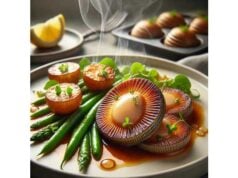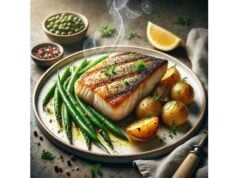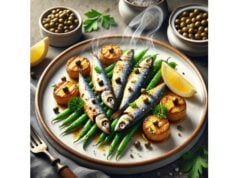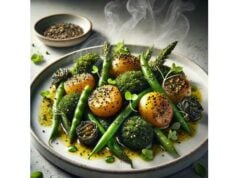
Tripletail (Lobotes surinamensis) is a warm-water, surface-lurking fish named for its rounded dorsal and anal fins that visually “triple” the tail. Anglers love it for challenging fights around buoys and flotsam; cooks prize its firm, pearly white flesh and clean, slightly sweet flavor that invites simple grilling, pan-searing, or roasting. As food, tripletail behaves like a premium white fish—think a cross between grouper and snapper—with large flakes that stay juicy if you avoid overcooking. Nutritionally, it’s a lean, high-protein choice that contributes long-chain omega-3 fats (EPA and DHA) and useful minerals like selenium and phosphorus, with naturally low carbohydrate and modest total fat. Because it’s a mid-trophic predator, mercury risk is usually lower than in large pelagic fish, but portion planning and local advisories still matter. This guide brings together what you need: clear numbers per 100 g, evidence-based benefits, safety considerations, smart buying and storage, kitchen techniques, and right-sized portions.
Top Highlights
- Lean, high-protein white fish with ~20–21 g protein and ~0.3 g EPA+DHA per 100 g.
- Typical cooked serving: 4–6 oz (113–170 g) once or twice weekly within an 8–12 oz seafood plan.
- Fish allergy applies; mercury is generally low to moderate—follow regional advisories and rotate species.
- Pregnant and breastfeeding individuals and young children should prefer lower-mercury fish most often; tripletail can fit occasionally when local guidance allows.
Table of Contents
- Tripletail detailed overview
- Tripletail nutrition profile
- Evidence-based health benefits
- Risks, allergies and interactions
- Selecting, quality, sustainability and storage
- Preparation, cooking and nutrient retention
- Portions, comparisons and FAQs
Tripletail detailed overview
Tripletail is a semi-pelagic species found in tropical and subtropical waters worldwide, often near weed lines, crab-pot buoys, and drifting debris where it ambushes small fish and crustaceans. The nickname comes from the way its rounded, extended dorsal and anal fins line up with the tail, creating a three-lobed silhouette. In markets it’s usually sold as skin-off fillets or thick loins. Expect a mild, slightly sweet flavor and a large-flaked, firm texture that stands up to grilling and searing. Compared with snapper, tripletail is a touch meatier; compared with grouper, it’s a bit lighter and more delicate.
Culinary strengths:
- Versatility: Equally comfortable in Mediterranean lemon-herb treatments, Creole blackening, or Asian soy-ginger glazes.
- Texture insurance: Big, moist flakes that resist drying if you cook just to opaque.
- Sauce-friendly: Takes well to pan sauces (caper-lemon, brown-butter citrus, tomato-olive) without being overshadowed.
Nutrition in a nutshell: Tripletail is a lean protein with modest omega-3s and useful micronutrients. While not an omega-3 powerhouse like salmon or sardines, it contributes EPA and DHA and fits neatly into calorie-conscious meal planning. Because it’s a mid-sized predator, mercury levels are generally lower than large pelagics (swordfish, some tuna), but frequency planning and local advisories remain smart practice.
Sourcing overview: In the U.S., tripletail is harvested primarily by small-scale fisheries in the Gulf and along the Southeast, often as bycatch in trap and hook-and-line fisheries. Availability is seasonal and regional; frozen fillets extend the window. As with most fish, cold-chain integrity—from bleeding and icing at sea through retail display—determines eating quality at least as much as “wild” or “fresh” labels.
When to choose tripletail:
- You want a mild, premium white fish with larger flakes than snapper and cleaner flavor than some groupers.
- You’re planning high-heat searing, grilling, or roasting and need a fillet that won’t fall apart.
- You’re rotating species to diversify nutrients and manage mercury exposure.
Tripletail nutrition profile
Basis: raw, edible portion, per 100 g (about 3.5 oz). Values reflect typical composition for lean white fish similar to tripletail with sensible rounding. Percent Daily Values (%DV) use adult references: protein 50 g; total fat 78 g; saturated fat 20 g; sodium 2,300 mg; potassium 4,700 mg; phosphorus 1,250 mg; selenium 55 µg; vitamin D 20 µg; vitamin B12 2.4 µg; niacin 16 mg; vitamin B6 1.7 mg. EPA+DHA has no established %DV.
Macros & Electrolytes (per 100 g)
| Nutrient | Amount | %DV |
|---|---|---|
| Energy (kcal) | ~100 | — |
| Protein (g) | ~20.8 | 42% |
| Total Fat (g) | ~1.5 | 2% |
| Saturated Fat (g) | ~0.4 | 2% |
| Carbohydrate (g) | 0.0 | 0% |
| Sodium (mg) | ~60 | 3% |
| Potassium (mg) | ~360 | 8% |
| Cholesterol (mg) | ~55 | — |
Fats & Fatty Acids (per 100 g)
| Component | Amount | Notes |
|---|---|---|
| Total Fat (g) | ~1.5 | Lean profile. |
| Polyunsaturated Fat (g) | ~0.5 | Includes marine omega-3s. |
| EPA + DHA (g) | ~0.25–0.35 | Varies by habitat/diet. |
| DHA (g) | ~0.15–0.25 | Structural omega-3. |
| EPA (g) | ~0.10–0.15 | Cardiometabolic relevance. |
| Trans Fat (g) | 0 | Naturally negligible. |
Protein & Amino Acids
Tripletail provides complete, high-biological-value protein. A 170 g cooked portion typically supplies ~32–36 g protein after moisture loss—enough to anchor a balanced meal and support satiety, recovery, and lean-mass maintenance.
Vitamins (per 100 g)
| Vitamin | Amount | %DV | Role |
|---|---|---|---|
| Vitamin B12 (µg) | ~1.8 | 75% | Red blood cells, nerve function. |
| Niacin (Vitamin B3) (mg) | ~6.0 | 38% | Energy metabolism, skin. |
| Vitamin B6 (mg) | ~0.4 | 24% | Amino-acid metabolism. |
| Vitamin D (µg) | ~1.5 | 8% | Calcium balance; varies. |
| Riboflavin (mg) | ~0.1–0.2 | 8–15% | Energy metabolism. |
Minerals (per 100 g)
| Mineral | Amount | %DV |
|---|---|---|
| Selenium (µg) | ~35–45 | 64–82% |
| Phosphorus (mg) | ~220–260 | 18–21% |
| Magnesium (mg) | ~25 | 6% |
| Calcium (mg) | ~15–20 | 1–2% |
| Zinc (mg) | ~0.5–0.8 | 5–7% |
| Iron (mg) | ~0.2–0.4 | 1–2% |
| Iodine (µg) | variable | contributes to DV; habitat-dependent |
Allergens & Intolerance Markers
- Fish is a major allergen. Tripletail contains parvalbumins and other muscle proteins that can provoke IgE-mediated reactions in sensitized individuals.
- Histamine (scombroid) is uncommon in properly handled tripletail but can occur in any fish subjected to temperature abuse; strict cold-chain control prevents it.
Contaminants/Residues
- Methylmercury: typically low to moderate for mid-trophic white fish; varies with region and fish size.
- Sodium: naturally low in raw fillet; processed forms (smoked, cured, heavily seasoned) may raise sodium.
Interpretation: Per 100 g, tripletail delivers lean protein, modest omega-3s, and strong B-vitamin and selenium support within a low-calorie package—ideal when you want a premium white fish that remains light on total fat.
Evidence-based health benefits
1) Cardio-friendly seafood choice
Long-chain omega-3s from fish (EPA and DHA) are associated with lower triglycerides and favorable cardiovascular risk profiles within diverse eating patterns. Tripletail isn’t as omega-3-dense as salmon, but its contributions are additive—especially for people who rarely eat oily fish. Rotating tripletail with richer species across the week helps you meet seafood targets while keeping menus varied.
2) High-quality protein with modest calories
Around 20–21 g protein per 100 g and minimal carbohydrate make tripletail an efficient way to hit protein goals without overshooting calories. Replacing some higher-fat meats with tripletail can trim saturated fat while keeping meals satisfying—useful for weight management and active lifestyles.
3) Selenium and B-vitamin support
A single 100 g portion commonly provides ~65–80% DV of selenium along with meaningful niacin and vitamin B6, plus ~75% DV of vitamin B12. Selenium supports antioxidant enzymes and thyroid hormone metabolism; niacin and B6 support energy and amino-acid metabolism. These “quiet contributors” add up when fish appears on the plate one to two times per week.
4) Family-friendly mercury profile
Compared with large pelagic predators, tripletail’s mercury is usually lower, making it easier to include in family menus—especially when you emphasize diverse species and heed local advisories. This helps households capture seafood benefits without leaning on a single fish.
5) Culinary versatility improves adherence
Healthy eating sticks when meals taste great. Tripletail tolerates high heat, carries grill char, and pairs beautifully with citrus, herbs, and umami accents. Because it holds together, it’s forgiving for weeknight cooks and impressive for guests—encouraging regular seafood intake over time.
Bottom line: Tripletail delivers lean protein, helpful micronutrients, and modest omega-3s in a cook-friendly package. Use it to diversify your seafood rotation, then round out the week with oily fish to boost total EPA+DHA.
Risks, allergies and interactions
Allergy
Fish allergy can be severe. If you have a diagnosed fish allergy, avoid tripletail unless an allergist confirms tolerance. In markets and restaurants, cross-contact with other fish or shellfish is possible—communicate your needs clearly.
Mercury and advisories
Tripletail generally falls into a low-to-moderate mercury band, with variation by region and fish size. Practical guardrails:
- Keep total weekly seafood at 8–12 oz (225–340 g) from a variety of species.
- If pregnant, breastfeeding, or feeding young children, favor consistently lower-mercury fish most often (e.g., salmon, sardines, trout, pollock, shrimp). Include tripletail occasionally if local guidance allows.
- Observe local advisories for nearshore harvests where contaminants can vary.
Foodborne safety
- Store at ≤4 °C (≤40 °F) and cook within 1–2 days of purchase.
- For general households, cook to 63 °C (145 °F) internal temperature. If serving lightly seared or raw preparations, use trusted sashimi-grade suppliers and validated freezing protocols.
- Reject fish with sour, ammonia, or “peppery” smell/taste (histamine risk).
Medication and health conditions
- Anticoagulants/antiplatelets: Food-level omega-3s are not usually a bleeding concern; coordinate with your clinician if you also take high-dose omega-3 prescriptions.
- Kidney disease: Tripletail contributes phosphorus and potassium; plan portions with your renal dietitian.
- Hypertension: Fresh fillet is low in sodium; smoked, cured, or heavily seasoned forms may not be.
Who should limit or avoid
- Individuals with confirmed fish allergy.
- People in pregnancy/early childhood windows should stick mainly to lower-mercury species, adding tripletail in modest portions if advised locally.
- Anyone lacking access to traceable product or current advisories for local catch.
Selecting, quality, sustainability and storage
Selecting quality tripletail
- Appearance: Fillets should be moist and glossy with tight muscle fibers and no browning at the edges.
- Aroma: Clean, ocean-fresh—never sour or “fishy.”
- Texture: Firm, resilient flesh that springs back when pressed.
- Frozen: Prefer vacuum-sealed packs with minimal frost and intact seals; uniform, tiny ice crystals indicate good handling.
Farmed vs. wild
Tripletail in markets is predominantly wild-caught by small-scale fisheries; aquaculture is limited. Ask for catch area and method (hook-and-line is selective with low habitat impact; some trap and net fisheries can be selective but vary—ask retailers).
Sustainability pointers
- Favor traceable supply chains that disclose catch location and gear type.
- Choose retailers who publish sourcing standards and avoid unidentified “mixed origin” fish.
- Rotate species weekly to spread demand across fisheries and diversify nutrients.
Storage and shelf life
- Refrigerate (≤4 °C / ≤40 °F): Use within 1–2 days. Store on ice in the coldest part of the fridge; keep well-wrapped to prevent odor transfer.
- Freeze (≤−18 °C / 0 °F): For best quality, use within 2–3 months. Remove air (vacuum seal or double-wrap).
- Thawing: Overnight in the refrigerator; or keep sealed and submerge in cold water, changing water every 30 minutes—then cook immediately.
- Leftovers: Chill promptly and consume within 3 days.
Waste-minimizing moves
- Portion large loins before freezing so you defrost only what you need.
- Turn cooked leftovers into fish cakes, tacos, grain bowls, or chilled salads.
- Save bones/skin (if purchased whole) to make a quick fish stock for sauces or soups.
Preparation, cooking and nutrient retention
Tripletail’s strengths are firm texture and mild flavor. The culinary goal is gentle doneness so the large flakes stay juicy. Overcooking dries it out; finishing fats and brief rest help.
Core technique principles
- Season in advance: Salt lightly 20–30 minutes before cooking for even seasoning (a quick dry-brine); add pepper and aromatics just before heat.
- High-heat sear, moderate finish: Sear 1–2 minutes per side to develop color, then finish over lower heat or in a 190–205 °C (375–400 °F) oven until just opaque.
- Grill with confidence: Oil grates well; start over direct heat to mark, then move to indirect until a fork just slips into the thickest point.
- Poach for tenderness: Simmer at 75–85 °C (not boiling) in court-bouillon, coconut-lime broth, or olive-oil confit for a silky result.
- Rest 2–3 minutes: Carryover heat finishes the center and retains juices.
Flavor pairings that shine
- Bright/herbal: Lemon, lime, orange; parsley, chive, dill, cilantro.
- Umami/acid: Caper-lemon butter, tomato-olive pan sauce, salsa verde, miso-ginger glaze.
- Warm spice: Smoked paprika, coriander, cumin; brush with chili-lime oil for the grill.
Nutrient-retention tips
- Short cook times preserve heat-sensitive B-vitamins (B6, niacin).
- Moist heat or gentle oven finishes protect delicate fats better than prolonged high, dry heat.
- Use the pan juices: Deglaze with lemon and white wine to capture minerals and flavor.
- Balance the plate: Add fiber- and potassium-rich sides (leafy greens, beans, whole grains) to round out the fish’s lean profile.
Quick templates
- Pan-seared tripletail with lemon-caper pan sauce: Sear, then deglaze with lemon and stock; finish with capers and parsley.
- Roasted tripletail with tomato-olive relish: Roast on a hot sheet; spoon over chopped tomatoes, olives, garlic, and herbs.
- Coconut-lime poached tripletail: Gently poach in coconut milk with ginger and lime; finish with cilantro and a squeeze of fresh juice.
Food safety temperatures
- General guidance: cook to 63 °C (145 °F) internal temperature unless using validated raw/undercooked protocols with trusted suppliers.
Portions, comparisons and FAQs
Portion guidance
- Standard adult portion: 4–6 oz (113–170 g) cooked tripletail as a meal centerpiece.
- Weekly frequency: Include tripletail up to 1–2 times per week within an overall seafood plan of 8–12 oz (225–340 g), rotating species to diversify nutrients and manage mercury.
How tripletail compares (per 100 g, typical raw values)
| Feature | Tripletail | Snapper | Grouper | Salmon (Atlantic) |
|---|---|---|---|---|
| Energy (kcal) | ~100 | ~100–110 | ~120 | ~208 |
| Protein (g) | ~20.8 | ~20–22 | ~20–22 | ~20 |
| Total Fat (g) | ~1.5 | ~1–2 | ~2–3 | ~13 |
| EPA + DHA (g) | ~0.25–0.35 | ~0.2–0.3 | ~0.2–0.4 | ~1.8–2.0 |
| Texture | Firm, large-flaked | Firm, mildly flaky | Firm, meaty | Tender-rich |
| Mercury tendency | Low–moderate | Low–moderate* | Low–moderate* | Low–moderate |
| Best uses | Sear, grill, roast | Sear, roast | Grill, roast | Roast, pan-sear, poach |
*Varies by species complex and size; follow local advisories.
FAQs
Is tripletail a “white fish”?
Yes. It’s a mild, white-fleshed fish with firm, large flakes that resemble grouper and out-hold snapper on the grill.
Can I serve tripletail rare?
For general households, cook to 63 °C (145 °F). Restaurants may serve it lightly undercooked when sourced and handled for raw consumption. If doing so at home, use trusted suppliers and validated freezing/handling protocols.
Does tripletail have many bones?
Fillets are typically well-trimmed with few pin bones. Run fingers along the center line and remove any remaining bones with tweezers before cooking.
What sauces pair best?
Caper-lemon butter, citrus-herb vinaigrettes, tomato-olive relishes, and miso-ginger glazes complement its delicacy without overpowering it.
Is tripletail sustainable?
Sustainability varies by region and fishery. Favor traceable, small-scale, hook-and-line sources and retailers who disclose catch method and origin.
References
- Advice about Eating Fish 2024 (Guideline)
- Fish consumption in multiple health outcomes: an umbrella review of meta-analyses of observational and clinical studies 2023 (Systematic Review)
- Effect of omega-3 fatty acids on cardiovascular outcomes: A systematic review and meta-analysis 2021 (Systematic Review)
- Atlantic Tripletail 2025
Disclaimer
This guide is for general education and is not a substitute for personalized medical advice, diagnosis, or treatment. Seafood choices, portion sizes, and preparation methods should reflect your health status, medications, and life stage. If you are pregnant or breastfeeding, managing cardiovascular or kidney disease, taking anticoagulants, or have food allergies, consult a qualified healthcare professional for individualized guidance. If you suspect food-borne illness or an allergic reaction, seek medical care promptly.
If you found this article helpful, please consider sharing it on Facebook, X (formerly Twitter), or any platform you prefer. Your support helps us continue producing clear, practical nutrition resources.