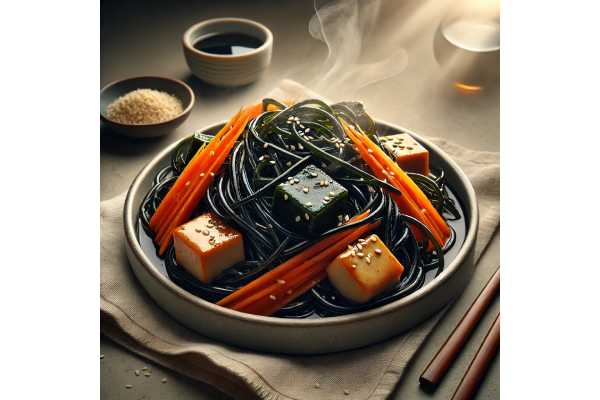
Hijiki (Sargassum fusiforme) is a tender, earthy-tasting brown seaweed long used in Japanese home cooking, often simmered with soy, root vegetables, and tofu. It is prized for its dense dietary fiber, minerals like calcium and iron, and marine phytonutrients found in brown algae—most notably fucoidan and fucoxanthin. A little goes a long way: dried hijiki expands dramatically when soaked and cooked, yielding a savory, umami-rich side for rice bowls, salads, and grain dishes. At the same time, hijiki raises important safety questions. Compared with other seaweeds, it tends to accumulate higher levels of inorganic arsenic, and like many sea vegetables, it can be extremely high in iodine—two reasons several agencies advise limiting or avoiding it. This guide walks you through the trade-offs: how hijiki is used, what nutrients it actually delivers, the best evidence on health effects, the specific risks to weigh, and practical tips for buying, preparing, and serving it safely and deliciously.
Fast Facts
- Typical serving is 5–10 g dried (about 30–60 g cooked), up to once weekly; many authorities advise avoiding hijiki due to inorganic arsenic.
- Rich in dietary fiber (largely insoluble) and provides minerals like calcium and iron per 100 g dried.
- Brown-seaweed bioactives (fucoidan, fucoxanthin) are under study for metabolic and immune effects; results are promising but not definitive.
- Safety caveat: hijiki often contains elevated inorganic arsenic and can be very high in iodine; preparation in excess water reduces but does not eliminate these.
- People with thyroid disease, pregnant or breastfeeding individuals, and children should limit or avoid hijiki; check local advisories.
Table of Contents
- Detailed Overview
- Nutrition Profile
- Evidence-Based Health Benefits
- Risks, Allergies and Interactions
- Selecting, Quality, Sustainability and Storage
- Preparation, Cooking and Nutrient Retention
- Portions, Comparisons and FAQs
Detailed Overview
Hijiki is a brown macroalga traditionally harvested from rocky shorelines in East Asia. After collection, it is typically parboiled, dried, and sold as small, black, twig-like strands that rehydrate to a pleasantly toothsome texture. In home cooking, hijiki is often simmered in dashi with soy sauce, mirin, and julienned vegetables (like carrot or burdock), then finished with tofu, abura-age (thin fried tofu), or edamame. Its role is usually as a side dish or a flavor-boosting mix-in for rice, grains, and salads rather than a centerpiece.
Nutritionally, seaweeds are not interchangeable. Compared with green (nori) or some brown kelps (wakame, kombu), hijiki is unusually high in dietary fiber per 100 g dried, and it can provide meaningful amounts of minerals. Yet these “per 100 g dried” numbers can mislead: a normal portion is only a few grams dried, and both nutrient density and contaminants vary by species, origin, and processing. That variability matters for iodine—useful in small amounts, harmful in excess—and for inorganic arsenic, a toxic contaminant that hijiki accumulates more than many other seaweeds.
Modern interest in hijiki also reflects research on brown-seaweed compounds, especially fucoidan (a sulfated polysaccharide) and fucoxanthin (a marine carotenoid). Early evidence points to support for immune signaling, inflammation balance, and metabolic health. However, these data come from lab work, animal studies, and small early human trials; they do not override food safety guidance.
Bottom line: hijiki can be a flavorful way to add sea-vegetable character and fiber to meals, but it warrants a cautious, informed approach. If you choose to use it, treat it as an occasional accent, prepare it properly in excess water, and consider safer seaweed alternatives for frequent use.
Nutrition Profile
Notes on interpretation: Values below reflect dried hijiki unless stated and represent typical figures from national and laboratory datasets; actual content varies by species, harvest area, season, and processing. Household portions are much smaller (5–10 g dried), and rehydration dilutes per-gram nutrient and contaminant levels. %DV uses adult Daily Values (U.S.) and is approximate.
Macros and Fiber (per 100 g, dried)
| Nutrient | Amount | %DV |
|---|---|---|
| Energy | 176 kcal | — |
| Protein | 8.4 g | 17% |
| Total fat | 1.3 g | 2% |
| Carbohydrate (total) | 61.8 g | 22% |
| Available carbohydrate | 3.3 g | 1% |
| Dietary fiber (mostly insoluble) | 58.5 g | 209% |
| Sodium | 1,000–2,500 mg (varies) | 43–109% |
Minerals (per 100 g, dried)
| Mineral | Amount (typical range) | %DV (range) |
|---|---|---|
| Calcium | 1,000–1,400 mg | 77–108% |
| Iron | 30–60 mg | 167–333% |
| Magnesium | 400–700 mg | 95–167% |
| Potassium | 2,000–3,000 mg | 43–64% |
| Iodine | 2,000–20,000 µg (highly variable) | 1,333–13,333% |
Vitamins and Bioactives
- Vitamin K: present in many seaweeds; amounts vary (relevance for anticoagulants—see Safety).
- Marine carotenoids: fucoxanthin occurs in brown algae; amounts depend on species, season, and processing.
- Sulfated polysaccharides: fucoidan contributes to viscosity and some observed bioactivities (immunomodulatory, anti-inflammatory in experimental models).
Contaminants and Residues (context for hijiki)
- Inorganic arsenic: hijiki has repeatedly tested higher than many other seaweeds. Levels vary widely but can exceed risk thresholds in modest portions.
- Heavy metals: cadmium, lead, mercury occur in seaweeds at low-to-moderate background levels; contribution depends on species and intake.
- Iodine: nutritious yet potentially excessive—especially with frequent or large kelp-type servings.
Footnote: Nutrient and contaminant content can shift substantially with washing, soaking, boiling, and discarding the cooking water; these preparation steps typically reduce both iodine and inorganic arsenic, but not uniformly.
Evidence-Based Health Benefits
1) High dietary fiber supports digestion and glycemic control
Per 100 g dried, hijiki supplies very high fiber, mostly insoluble. In the context of normal portions (5–10 g dried), that still translates to a meaningful fiber boost for a small amount of food. Insoluble fiber adds bulk and speeds intestinal transit, while soluble fractions contribute to viscosity and may modestly slow glucose absorption. This can help with post-meal glycemic responses when hijiki replaces refined sides or adds bulk to grain bowls and salads.
2) Mineral contribution in small volumes
Dried hijiki can be rich in calcium, iron, magnesium, and potassium. Because you eat only a few grams dried (once rehydrated), the absolute intake per serving is moderate. Even so, a 5–10 g dried portion may add a meaningful top-up of iron or calcium to plant-forward meals. As always, bioavailability depends on your overall diet (e.g., vitamin C enhances nonheme iron absorption; phytate can inhibit it).
3) Brown-seaweed phytonutrients under study
- Fucoidan, a sulfated polysaccharide found in brown algae, has been investigated for immunomodulatory and anti-inflammatory actions in experimental models. It appears to interact with innate and adaptive immune signaling, with early clinical and translational interest.
- Fucoxanthin, a marine carotenoid, has shown metabolic effects in preclinical studies and small human trials, including signals for support of weight management and lipid metabolism. These findings are encouraging but not a license to overconsume hijiki, particularly given safety concerns. They do suggest that properly prepared small servings can bring useful bioactives to otherwise balanced meals.
4) Culinary and dietary pattern benefits
Hijiki’s umami allows you to reduce added sodium in some dishes without sacrificing flavor. Used with tofu, edamame, mushrooms, and vegetables, it can nudge meals toward a more plant-forward pattern. If you limit animal foods, occasional hijiki can provide a unique blend of marine micronutrients and fibers that are scarce in land plants.
What this does not mean
No seaweed—including hijiki—should be treated as a cure or sole source of key nutrients. The research on fucoidan and fucoxanthin remains preliminary; effects are adjunctive, not a replacement for medical care or a balanced diet. Given hijiki’s contaminant profile, the net value depends on moderation, careful preparation, and—if possible—choosing lower-risk seaweeds for routine use, keeping hijiki as an occasional accent.
Risks, Allergies and Interactions
1) Inorganic arsenic: the central safety issue
Multiple national food agencies have advised avoiding hijiki because it often contains elevated inorganic arsenic compared with other seaweeds. Even small amounts may push intake above conservative risk thresholds, especially with frequent consumption. Soaking and boiling in excess water, then discarding the liquid, reduces but does not reliably eliminate inorganic arsenic. If you live in a region with explicit guidance, follow it; when in doubt, choose alternative seaweeds lower in inorganic arsenic for routine use.
2) Iodine: useful, but excess is harmful
Iodine is essential for thyroid hormones. Seaweeds, including hijiki, can contain very high iodine. Regularly exceeding upper limits can impair thyroid function (either hypo- or hyperthyroid patterns), particularly in susceptible individuals. Preparation in excess water reduces iodine substantially, yet variability remains high between batches and brands. People with thyroid disease, on thyroid medications, pregnant or breastfeeding individuals, and young children should limit or avoid hijiki.
3) Heavy metals and other contaminants
Cadmium, lead, and mercury appear in seaweeds at low-to-moderate levels; overall exposure depends on species, origin, and intake. Keeping portions small and frequency low mitigates risk.
4) Allergies and intolerances
- Seafood allergy is distinct from seaweed exposure; however, cross-contact in kitchens that prepare fish/shellfish is possible.
- Iodine allergy is a misconception (iodine is essential), but people may react to seaweed proteins or to contaminants. Introduce in very small amounts if you are new to seaweed and have a history of food sensitivities.
5) Drug and condition interactions
- Thyroid medications: erratic iodine intake can interfere with dosing stability; consult your clinician.
- Anticoagulants (e.g., warfarin): some seaweeds contain vitamin K; keep intake consistent and modest if you use vitamin K–sensitive anticoagulants.
- Renal conditions: seaweed can contribute sodium and potassium; monitor per medical advice.
Practical risk management
- Prefer seaweeds with lower inorganic arsenic (e.g., nori, wakame) for regular use; keep hijiki occasional or skip it.
- If you choose to eat hijiki: rinse, soak, and boil in a large volume of water; discard the soaking and cooking liquids.
- Keep portions small (see Portions section) and avoid daily or frequent intake.
- Children, pregnant or breastfeeding individuals, and people with thyroid disease are best served by avoiding hijiki.
Selecting, Quality, Sustainability and Storage
Selecting and buying
- Look for clear species labeling (Sargassum fusiforme / hijiki). Vague terms like “seaweed” or “kelp” do not help you assess safety.
- Choose brands that disclose origin and suggest preparation methods (soaking/boiling and discarding water).
- Prefer whole, recognizable strands over powders for home use; powders are harder to rinse thoroughly and can concentrate contaminants.
Quality checks
- Appearance: dry, jet-black to deep brown strands; no musty or chemical odor.
- Freshness: avoid packages with moisture, clumping, or visible contamination.
Sustainability notes
- Seaweed cultivation can be environmentally positive—absorbing carbon and nitrogen and offering low-input protein and fiber. However, wild harvest of sensitive beds should be managed to prevent habitat disruption. Favor suppliers who disclose sustainable farming or managed harvest practices.
Storage
- Keep dried hijiki in an airtight container, cool, dark, and dry. Once opened, use within 6–12 months for best flavor.
- Store cooked hijiki (nimono-style) in the refrigerator for 3–4 days or freeze in small portions for up to 2 months.
Safer routine alternatives
For frequent seaweed use, consider nori (roasted sheets), wakame (soups/salads), or sea lettuce—species that, on average, show lower inorganic arsenic and more predictable iodine. Use hijiki sparingly, for variety rather than as a staple.
Preparation, Cooking and Nutrient Retention
Goal: maximize flavor and texture while minimizing inorganic arsenic and iodine.
Step-by-step (standard simmered hijiki)
- Sort and rinse
- Place dried hijiki in a fine-mesh sieve. Rinse under running water 30–60 seconds, tossing to remove surface particles.
- Soak
- Transfer to a bowl with 10–15× its volume in cool water. Soak 20–30 minutes, stirring once or twice. Drain and discard soak water.
- Pre-boil (optional but recommended)
- Cover hydrated hijiki with fresh water (at least 10:1 water to hijiki by weight). Bring to a boil and cook 2–3 minutes. Drain and discard water. This step can further reduce soluble iodine and some arsenic forms.
- Simmer for flavor
- Sauté aromatics (e.g., onion, carrot). Add hijiki, fresh water or low-sodium dashi, and seasonings (light soy or tamari, mirin).
- Simmer 10–15 minutes until tender. Finish with tofu, edamame, or toasted sesame. Keep final sodium modest.
Retention and reductions
- Soaking and boiling in excess water reduces iodine markedly and can lower inorganic arsenic; reduction magnitude varies by batch and method.
- Discarding cooking liquid sacrifices some water-soluble nutrients along with contaminants—a worthwhile trade-off for hijiki.
- Acidic ingredients (a splash of rice vinegar at the end) can brighten flavor without extra salt.
Five easy uses
- Mix a spoonful of prepared hijiki into brown rice or quinoa for a mineral-savory note.
- Toss with cucumber and sesame for a quick salad.
- Fold into okara (soy pulp) or tofu crumbles for onigiri fillings.
- Add to miso soup in the last minute of cooking.
- Combine with edamame and carrots as a fiber-rich bento side.
What to avoid
- Do not drink soaking or simmering liquids.
- Do not treat hijiki as a daily “iodine supplement.”
- Avoid large servings or frequent use, especially in vulnerable groups (see Safety).
Portions, Comparisons and FAQs
Practical portions and frequency
- Serving size (home cooking): 5–10 g dried hijiki (about 30–60 g cooked) as a side or mix-in.
- Frequency: For most adults choosing to consume hijiki, keep it occasional—for example, no more than once weekly—and prefer other seaweeds for routine use. In regions where public health agencies advise avoiding hijiki, follow that guidance.
How hijiki compares to other seaweeds
- Nori (red/green algae): lower inorganic arsenic on average; typically lower iodine; great for frequent use (sushi, snacks).
- Wakame (brown): moderate iodine; commonly used in soups/salads; a safer frequent option than hijiki for most people.
- Kombu (brown kelp): very high iodine; best kept occasional, and boil in excess water with discarding for soups and stocks.
- Hijiki (brown, Sargassum): fiber-dense; most concerning for inorganic arsenic; keep occasional or avoid.
FAQs
Is hijiki safe during pregnancy or breastfeeding?
Given the combination of potentially high inorganic arsenic and iodine, hijiki is not recommended during pregnancy or breastfeeding. Choose lower-risk seaweeds (e.g., nori) if desired, and keep portions small.
Can children eat hijiki?
It is prudent to avoid hijiki for young children because their body weight is low and exposure per kilogram is higher. If seaweed is desired, use lower-risk species in tiny portions.
What if I have thyroid disease or take thyroid medication?
Large or erratic iodine intake can destabilize thyroid management. Most people with thyroid conditions should avoid hijiki. Discuss any seaweed use with your clinician.
How much iodine is too much?
Upper limits for adults are commonly set around 600–1,100 µg/day depending on the authority. Because seaweed iodine content is highly variable, portions should be small and infrequent—especially with kombu and hijiki.
Does soaking really help?
Yes—soaking and boiling in excess water with discarded liquid can substantially reduce iodine and can lower inorganic arsenic, but reductions are inconsistent. Treat these steps as risk reduction, not a guarantee.
I am vegan—should I use seaweed for iron or B12?
Hijiki can contribute iron, but rely on a variety of plant sources (legumes, seeds, fortified foods) plus vitamin C for absorption. Seaweed is not a reliable source of vitamin B12; use fortified foods or supplements as advised.
References
- Inorganic arsenic and hijiki seaweed consumption (2019)
- Hijiki seaweed and inorganic arsenic (2016; document hosted 2023)
- Dietary exposure to heavy metals and iodine intake via the consumption of seaweed and halophytes (2023)
- Iodine – Dietary Reference Intakes for Vitamin A, Vitamin K, Arsenic, Boron, Chromium, Copper, Iodine, Iron, Manganese, Molybdenum, Nickel, Silicon, Vanadium, and Zinc – NCBI Bookshelf (2001; current reference compilation)
- Immunomodulatory and Anti-Inflammatory Effects of Fucoidan (2020)
Disclaimer
This guide is for general information and education only. It does not substitute for personalized medical advice, diagnosis, or treatment. Seaweed composition varies widely by species, source, and processing. If you are pregnant or breastfeeding, have thyroid disease, take anticoagulants or thyroid medications, or plan to serve seaweed to children, consult a qualified health professional before consuming hijiki.
If you found this helpful, consider sharing it on Facebook, X (formerly Twitter), or your favorite platform to support our work in creating clear, evidence-based nutrition guides.