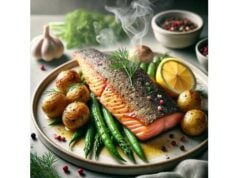
Haddock is a North Atlantic white fish prized for its clean, mildly sweet flavor and snow-white flakes. Whether baked with herbs, steamed with lemon, or battered for classic fish-and-chips, its firm texture and reliable cooking behavior make it a weeknight favorite and a restaurant staple. Nutritionally, haddock is lean—high in complete protein with very little fat—and offers a helpful mix of micronutrients, notably vitamin B12, selenium, phosphorus, and iodine. Its low natural sodium suits heart-conscious meal plans, and its neutral taste adapts to light, bright seasonings or richer sauces. When sourced from well-managed fisheries, haddock can be a sustainability-minded choice too. This guide brings together everything you need to know: a detailed per-100-gram nutrition profile with % Daily Value, evidence-based health benefits, clear safety notes (including mercury and allergens), how to buy and store top-quality fish, cooking methods that protect texture and nutrients, and practical portion guidance with quick comparisons.
Nutrition Snapshot
- Lean, high-protein fish (≈20 g protein per 100 g) with vitamin B12, selenium, and iodine.
- Finfish allergen; follow standard fish allergy precautions and cook promptly after purchase.
- Typical serving: 150–170 g cooked fillet, enjoyed 1–2 times weekly within varied seafood intake.
- People who are pregnant or serving young children should follow national fish advisories and favor lower-mercury, responsibly sourced haddock.
Table of Contents
- Detailed Overview
- Nutrition Profile
- Evidence-Based Health Benefits
- Risks, Allergies and Interactions
- Selecting, Quality, Sustainability and Storage
- Preparation, Cooking and Nutrient Retention
- Portions, Comparisons and FAQs
Detailed Overview
What haddock is.
Haddock (Melanogrammus aeglefinus) is a cold-water species in the cod family (Gadidae). It inhabits the North Atlantic—from the Gulf of Maine and Georges Bank to the Barents Sea—favoring cooler, deeper waters. In markets, you’ll encounter boneless fillets (skin-on or skinless), loins (thicker, center cuts), and whole, headed-and-gutted fish.
Taste and texture.
Haddock is mild and slightly sweet with a clean ocean aroma. The flesh is bright white, firm when raw, and cooks to large, delicate flakes that hold together better than some lean fish. That balance—tender yet cohesive—explains its popularity for baking, roasting, pan-searing, steaming, and traditional smoking (finnan haddie).
Why cooks like it.
- Versatility: It takes well to citrus, herbs, garlic, mustard, capers, smoked paprika, miso, or coconut curry.
- Consistency: Even thick loins cook evenly; thin tail pieces suit quick sautés or fish cakes.
- Speed: Most fillets cook in under 10 minutes.
Nutrition at a glance.
Per 100 g, haddock provides about 90–95 kcal, ~20 g complete protein, ~0.6–0.7 g fat, and negligible carbohydrates. Minerals include selenium, phosphorus, potassium, and iodine; vitamins include B12 and B6. Omega-3s are present but modest compared with oily fish.
Sustainability snapshot.
Many haddock fisheries are actively managed with science-based quotas, seasonal measures, and gear rules. Choosing well-managed sources helps support healthy stocks and responsible fishing communities.
Who it suits.
Haddock fits protein-forward, heart-conscious eating patterns and is ideal for those who prefer mild fish. Sensitive groups (pregnancy, breastfeeding, young children) can include haddock as part of varied, lower-mercury seafood choices.
Nutrition Profile
Reference basis: 100 g edible portion, plain cooked (no breading or added fats).
% Daily Value (%DV): Based on standard adult DVs (energy in kcal; sodium 2,300 mg; potassium 4,700 mg; calcium 1,300 mg; iron 18 mg; magnesium 420 mg; phosphorus 1,250 mg; zinc 11 mg; selenium 55 µg; iodine 150 µg; thiamin 1.2 mg; riboflavin 1.3 mg; niacin 16 mg; vitamin B6 1.7 mg; folate 400 µg DFE; vitamin B12 2.4 µg; vitamin A 900 µg RAE; vitamin D 20 µg; vitamin E 15 mg). Natural variation by season, habitat, and cut is expected.
Macros & Electrolytes (per 100 g)
| Nutrient | Amount | %DV |
|---|---|---|
| Energy | 90–95 kcal | — |
| Protein | 19.8 g | — |
| Total fat | 0.6–0.7 g | — |
| Saturated fat | 0.1 g | — |
| Carbohydrate | 0 g | — |
| Fiber | 0 g | — |
| Sodium | 60 mg | 3% |
| Potassium | 340 mg | 7% |
| Water | 78–80 g | — |
Fats & Fatty Acids
| Component | Amount | Notes |
|---|---|---|
| Total omega-3 (EPA+DHA) | ~0.20 g | Modest; complement with oily fish weekly. |
| Monounsaturated fat | ~0.1–0.2 g | Minor share of calories. |
| Polyunsaturated fat | ~0.2 g | Includes long-chain omega-3s. |
| Cholesterol | ~60 mg | Dietary cholesterol impact is smaller than saturated fat for most people. |
Protein & Amino Acids
- Complete, highly digestible protein with all essential amino acids.
- Typical 150–170 g cooked portion delivers ~30–34 g protein—an effective mealtime dose for muscle maintenance.
Vitamins (per 100 g)
| Vitamin | Amount | %DV |
|---|---|---|
| Thiamin (B1) | 0.05 mg | 4% |
| Riboflavin (B2) | 0.08 mg | 6% |
| Niacin (B3) | 3.0 mg | 19% |
| Vitamin B6 | 0.30 mg | 18% |
| Folate | 10 µg | 3% |
| Vitamin B12 | 1.2–1.8 µg | 50–75% |
| Vitamin D | 0.5–1.0 µg | 3–5% |
| Vitamin A (RAE) | 5–10 µg | 1% |
| Vitamin E (α-tocopherol) | 0.4 mg | 3% |
Minerals (per 100 g)
| Mineral | Amount | %DV |
|---|---|---|
| Selenium | 30–40 µg | 55–73% |
| Phosphorus | 200 mg | 16% |
| Potassium | 340 mg | 7% |
| Magnesium | 25 mg | 6% |
| Zinc | 0.4 mg | 4% |
| Iron | 0.2–0.3 mg | 1–2% |
| Calcium | 15–25 mg | 1–2% |
| Iodine | 90–150 µg | 60–100% |
| Sodium | 60 mg | 3% |
Allergens & Intolerance Markers
- Finfish allergen (parvalbumin): May provoke IgE-mediated reactions; cross-reactivity across finfish is common.
- Histamine: Fresh haddock handled cold has low histamine risk; time-temperature abuse can increase biogenic amines in any fish.
Contaminants/Residues
- Mercury: Generally low relative to large predators; follow national fish advisories for sensitive groups.
- Environmental residues: Levels vary by harvest area; reputable suppliers operate within legal limits.
Footnote on additives & fortification
Values reflect plain fish. Breaded, brined, or smoked products can raise sodium and fat; check labels for processed forms.
Evidence-Based Health Benefits
1) High-quality protein that fits calorie goals
Haddock offers about 20 g of complete protein for under 100 kcal per 100 g—protein density that supports satiety and muscle maintenance without pushing calories or saturated fat. For older adults and active people, a 150–170 g cooked portion (≈30–34 g protein) is a practical target to stimulate muscle protein synthesis at meals, especially when paired with resistance activity.
2) Selenium for cellular protection and thyroid function
Selenium (often ≥55% DV per 100 g) supports antioxidant enzymes that limit oxidative stress and assists enzymes that activate thyroid hormone. A regular seafood rotation that includes haddock can help maintain adequate selenium without relying on supplements.
3) Iodine to support thyroid hormones
White fish, including haddock, contribute iodine, a structural component of thyroid hormones. Because iodine varies by region and dietary patterns, haddock can be a useful, low-calorie way to help meet daily needs—particularly where iodized salt intake is inconsistent.
4) B vitamins for energy metabolism and nerves
Haddock supplies vitamin B12 and vitamin B6, which help convert food to energy and maintain neurologic function. B12 insufficiency becomes more common with age; routine fish intake helps maintain a healthy buffer.
5) Heart-conscious profile
Haddock is naturally low in saturated fat and sodium. While its omega-3 content is modest compared with oily fish, including haddock as one of two or more weekly seafood meals still supports the positive diet patterns associated with better cardiometabolic outcomes—especially if the other seafood meals are omega-3-rich (e.g., salmon, sardines, mackerel, trout).
6) Practicality that supports adherence
Nutrition only helps if you cook and enjoy the food. Haddock’s neutral flavor, short cook times, and forgiving texture encourage at-home seafood meals. That convenience—combined with simple seasoning—makes it easier to hit weekly seafood targets without complicated recipes.
7) Weight-management friendly
Lean fish like haddock slot into calorie-controlled plans. Pair it with fiber-rich sides (vegetables, legumes, whole grains) to increase fullness, improve overall nutrient density, and keep sodium in check by seasoning with citrus, herbs, and spices instead of heavy sauces.
Putting it together
Build a weekly plan with two seafood meals: one lean (haddock, cod, pollock) and one oily (salmon, sardines, mackerel). This combination balances protein, selenium, iodine, and long-chain omega-3s across the week.
Risks, Allergies and Interactions
Fish allergy
Haddock is a finfish allergen. Reactions can include hives, swelling, wheeze, gastrointestinal symptoms, or anaphylaxis. Cross-reactivity among finfish is common; people with diagnosed finfish allergy should avoid haddock unless cleared by an allergy specialist. If a reaction history exists, follow your emergency action plan.
Mercury and sensitive groups
Haddock generally carries lower mercury than large, long-lived predators (e.g., swordfish, shark). Sensitive groups—people who are or may become pregnant, those who are breastfeeding, and young children—should still follow national seafood guidance for portions and frequency. Vary species across the month to diversify nutrients and minimize exposure to any single contaminant.
Microbial safety and spoilage
As with all seafood, time-temperature control is critical. Keep raw fish at ≤4 °C (≤40 °F), minimize time in the danger zone (5–60 °C / 41–140 °F), and cook soon after purchase. Fish should smell clean and oceany, not sour or ammonia-like; the flesh should be moist and bouncy, not mushy or dry.
Parasites
Wild fish can harbor parasites. Thorough cooking until the flesh turns opaque and flakes easily is a dependable control step. For raw or lightly cured preparations, use fish that has been properly frozen to parasite-kill standards from a reputable supplier.
Sodium, processing, and smoked products
Plain haddock is naturally low in sodium. Breaded, brined, or smoked forms can be substantially higher—those on sodium-restricted diets should check labels and prefer plain fillets with seasoning added at the table.
Medication and health considerations
- Gout: Finfish contain purines; people with gout should spread seafood portions across the week and monitor personal tolerance.
- Anticoagulants: Normal seafood intake is generally compatible; high-dose omega-3 supplements, not haddock itself, are the common concern—discuss supplements with your clinician.
Who should limit or avoid
- Individuals with confirmed finfish allergy.
- Those who cannot ensure proper handling or thorough cooking (e.g., high-risk immunocompromised groups) should avoid raw or undercooked fish.
- Anyone advised by a clinician to limit specific nutrients (e.g., strict low-sodium regimens) should favor plain, fresh fillets over processed products.
Selecting, Quality, Sustainability and Storage
Choosing quality haddock
- Appearance: Fillets should be bright white to translucent with no browning; muscle fibers tight, not gaping.
- Smell: Clean and oceany. Avoid sour, “fishy,” or ammonia odors.
- Texture: Press gently—fresh fish springs back.
- Whole fish: Eyes bright and convex; gills moist and red; skin glossy and intact.
Fresh vs. frozen
Individually quick-frozen (IQF) fillets can match “fresh” quality, especially far from ports. Choose vacuum-sealed packages with no ice crystals or drying. Thaw overnight in the refrigerator on a rack over a tray for best texture.
Sustainability cues
- Managed stocks: Many haddock fisheries are managed with quotas, size limits, and seasonal closures. Favor sellers who identify catch area (e.g., Gulf of Maine, Northeast Atlantic) and method (e.g., longline, trawl with bycatch mitigation).
- Traceability: Ask for species, catch area, and whether previously frozen. Transparent vendors are a positive sign.
- Diversity: Rotating seafood species supports resilient oceans by spreading demand.
Storage and handling
- Refrigeration: Keep at 0–4 °C (32–40 °F). Cook within 24 hours of purchase for best texture; up to 48 hours if very fresh.
- Freezing: Tightly wrap to exclude air and freeze at −18 °C (0 °F). For best quality, use within 2–3 months.
- Thawing: Thaw slowly under refrigeration; for speed, submerge sealed fish in cold water, changing water every 30 minutes until pliable.
- Leftovers: Cool rapidly and refrigerate within 2 hours; eat within 1–2 days.
Yield and planning
- Boneless fillets are efficient: minimal trimming. Whole fish yields roughly 45–55% edible portion, depending on size and cut. Plan ~180–220 g raw per person to yield a 150–170 g cooked portion.
Budget and substitutions
- If haddock is scarce or costly, try pollock, Alaska cod, or hake for similar mild flavor and lean profile. Cooking methods and seasonings transfer well across these species.
Preparation, Cooking and Nutrient Retention
Core principles
Pat fish dry, season simply, and cook hot and just to done. Overcooking squeezes out moisture and toughens protein without improving safety.
Reliable methods
- Oven-roast (hands-off): Heat oven to 220 °C (425 °F). Brush fillets with olive oil; season with salt, pepper, lemon zest, and herbs. Roast 8–12 minutes depending on thickness, until the thickest part turns opaque and flakes easily.
- Pan-sear (crisp edges): Salt fillets 15–30 minutes ahead, then pat dry. Sear in a hot, lightly oiled skillet 3–4 minutes on the first side, 1–3 minutes after flipping. Finish with a squeeze of lemon.
- Steam (maximum moisture): Place on aromatics (ginger, scallion, dill) and steam 6–10 minutes. Spoon over a little hot oil and herbs at the end.
- Poach (delicate): Simmer fillets in court bouillon (water, onion, bay, peppercorns, lemon) for 5–7 minutes. Chill for salads or serve warm with mustard-dill sauce.
- Batter-and-fry (treat): For classic fish-and-chips, fry at 175–180 °C (347–356 °F) for 4–6 minutes. Drain well and pair with a big salad to balance the meal.
Nutrient-savvy tweaks
- Fat quality: Cook mainly with olive oil; reserve deep-frying for occasional meals.
- Sodium control: Season with citrus, herbs, garlic, chili, or vinegar; salt at the table.
- Omega-3 balance: Because haddock is lean, include one or two oily-fish meals weekly to raise EPA+DHA intake.
- Iron synergy: Serve with vitamin C–rich sides (tomatoes, peppers, citrus slaw) to boost iron absorption from plant foods on the plate.
Food-safety temperatures
- Doneness arrives fast: thick fillets usually reach ideal texture near 60 °C (140 °F). Visual cues—opaque center and easy flaking—are reliable.
- Keep raw fish separate from ready-to-eat foods, sanitize cutting boards, and wash hands thoroughly.
Flavor pairings
- Mediterranean: Lemon, capers, parsley, garlic, cherry tomatoes, olives.
- Nordic: Mustard-dill sauce, new potatoes, steamed greens.
- Asian: Miso, ginger, scallions, sesame; or coconut milk, lime, and cilantro.
- Pantry-fast: Paprika, onion powder, and lemon pepper; finish with olive oil and herbs.
Portions, Comparisons and FAQs
How much is a portion?
A practical adult portion is 150–170 g cooked (about a palm-sized fillet), providing ~30–34 g protein. For children, scale to appetite and age—roughly half to two-thirds of an adult portion.
How often should I eat haddock?
As part of a varied seafood pattern, aim for two seafood meals per week. Use haddock as a lean option and pair it with one oily-fish meal (e.g., salmon, sardines, mackerel) to raise omega-3 intake.
Haddock vs. cod vs. pollock
- Haddock: Slightly sweeter, delicate yet cohesive flakes; excellent baked or smoked.
- Cod: Very mild with large, pearly flakes; a touch firmer in thick loins.
- Pollock: Mild with a softer texture; great value and versatile for tacos or fish cakes.
Is haddock good for pregnancy?
Yes—when part of a varied, lower-mercury seafood plan. Choose reputable sources, cook thoroughly, and rotate species through the month.
Does smoked haddock count the same nutritionally?
Smoked haddock retains protein and many minerals but typically has much higher sodium. Enjoy it occasionally and balance the day’s salt elsewhere.
Can I cook from frozen?
Yes. Roast or steam from frozen if fillets are individually quick frozen. Increase time by ~50% and season mid-way. For the best sear, thaw overnight under refrigeration.
Any simple weeknight ideas?
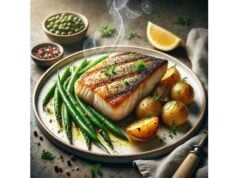
- Sheet-pan lemon herb haddock: Roast with asparagus, cherry tomatoes, and small potatoes.
- Steamed haddock with ginger-scallion: Serve over rice with sautéed greens.
- Mediterranean bake: Tomatoes, olives, capers, and a splash of white wine, finished with parsley.
References
- Advice about Eating Fish 2024 (Guideline)
- Haddock 2024 (Species Profile)
- Fish consumption in multiple health outcomes: an umbrella review of meta-analyses of observational and clinical studies 2023 (Systematic Review)
- Haddock, raw 2024 (Food Composition Table)
Disclaimer
This article provides general nutrition and safety information and is not a substitute for personalized medical advice, diagnosis, or treatment. Your needs may differ based on age, health status, medications, pregnancy, or local advisories. Consult a qualified healthcare professional or registered dietitian for individual guidance. If you have a known fish allergy or experience symptoms after eating fish, seek medical care promptly.
If you found this guide useful, please consider sharing it—on Facebook, X (formerly Twitter), or anywhere you connect. Your support helps us continue producing clear, trustworthy nutrition content.