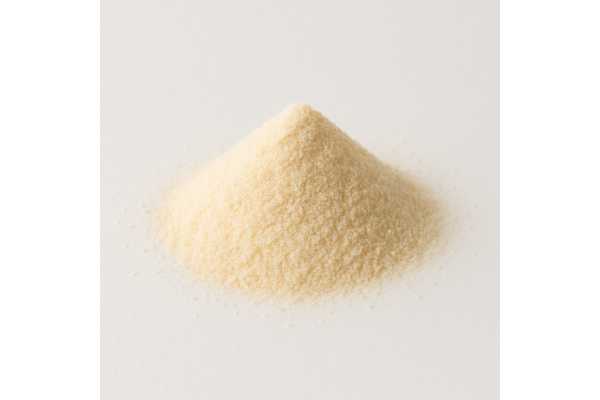
Onion powder is one of the most useful “shortcut” seasonings in a modern kitchen. It concentrates the flavor of fresh onions into a dry, shelf-stable form that you can sprinkle into soups, rubs, dressings, and marinades in seconds. Because it dissolves smoothly and distributes evenly, onion powder often gives a more consistent savory base than irregularly chopped onions, especially in dry blends and packaged foods.
Nutritionally, onion powder condenses the carbohydrate, fiber, and mineral content of onions into a much smaller volume. It is particularly rich in carbohydrates, including naturally occurring sugars and prebiotic fibers, and it provides meaningful amounts of potassium, calcium, and magnesium per 100 g, even if typical serving sizes are quite small. Like fresh onions, onion powder is also a source of sulfur compounds and flavonoids such as quercetin, which are being studied for potential cardiovascular and metabolic benefits. At the same time, its concentrated nature raises practical questions about portion size, tolerance, and use within low-FODMAP or allergy-aware diets. This guide walks through what onion powder is, how it compares to fresh onions, and how to use it safely and effectively.
Onion Powder Quick Overview
- Onion powder provides concentrated onion flavor plus carbohydrates, fiber, and minerals like potassium and calcium in very small amounts per typical serving.
- Dehydration preserves many plant compounds from fresh onions, including sulfur compounds and flavonoids, which may support heart and metabolic health when eaten as part of an overall balanced diet.
- A practical culinary portion is about ¼–½ teaspoon (roughly 0.7–1.5 g) per serving, with occasional use to several times per week depending on overall onion intake and digestive tolerance.
- People with onion allergy or strong intolerance, and many following the strict elimination phase of a low-FODMAP diet, may need to avoid onion powder or use it only in carefully tested, very small amounts.
Table of Contents
- Onion Powder Origins and Everyday Roles
- Onion Powder Nutrients and Key Compounds
- Research on Onion Powder Health Effects
- Onion Powder Sensitivities and Safety Issues
- Buying Onion Powder, Quality and Storage
- Cooking with Onion Powder for Best Flavor
- Onion Powder Servings, Comparisons and FAQs
Onion Powder Origins and Everyday Roles
Onion powder is simply dehydrated onion that has been finely ground into a uniform seasoning. Commercially, the process usually starts with white or yellow onions, chosen for their relatively balanced sweetness and sulfur notes. The onions are peeled, sliced or chopped, then dried at controlled temperatures until their moisture content is reduced to a small fraction of the original. The dried pieces are then milled to a fine powder or a slightly coarser granulated form.
Drying dramatically concentrates both flavor and nutrients by removing water. Several methods can be used, including hot-air dehydration, vacuum drying, or freeze-drying, each leaving a slightly different impact on color, aroma, and nutrient retention. Some products are made from toasted onion, which adds a deeper, roasted flavor and a darker color. Others may blend different onion types to create a particular flavor profile.
In everyday cooking, onion powder fills several roles:
- A quick substitute for chopped onions when you do not have fresh onions on hand.
- A foundational aromatic in dry rubs for meat, poultry, and plant-based proteins.
- A reliable flavor base in packaged soups, sauces, snack seasonings, and bouillon.
- A way to add onion flavor without changing the texture or moisture level of a dish.
It is especially valuable in recipes where visible onion pieces would be unwelcome, such as smooth sauces, certain dips, burger patties, or delicate batters. Because it disperses so easily, it also blends well with other spices to build complex savory profiles.
From a practical standpoint, onion powder solves several challenges that come with fresh onions: storage losses, preparation time, and eye irritation. A small jar can replace many fresh bulbs in terms of flavor potential, needs no refrigeration, and is far less likely to spoil quickly. For people cooking in small spaces, traveling, camping, or working in institutional kitchens, these advantages can be significant.
At the same time, onion powder is not a complete replacement for fresh onions. It lacks the crisp texture and moisture of fresh onion pieces, and its sweetness and sharpness are somewhat altered by drying. Many recipes benefit from a mix of both: fresh onions for texture and bulk, supported by onion powder for an extra layer of savory depth.
Onion Powder Nutrients and Key Compounds
Onion powder takes the composition of raw onion and condenses it. Standard nutrient databases generally report around 340–345 kcal per 100 g of onion powder, with approximately 79 g of carbohydrate, just over 10 g of protein, about 1 g of fat, and around 15 g of dietary fiber per 100 g. That carbohydrate includes naturally occurring sugars as well as longer-chain carbohydrates such as fructans, which act as prebiotic fibers in the gut.
Because onion powder is so concentrated, even a tablespoon (about 7 g) can supply roughly 20–25 kcal, 5 g of carbohydrate, about 1 g of fiber, and around 0.7 g of protein. Typical teaspoon-level servings (around 2 g) contribute closer to 8 kcal and 2 g of carbohydrate. These numbers are small compared with the energy and macronutrients in the main components of a meal, but they are not negligible when onion powder is used liberally in many dishes throughout the day.
Micronutrient content is also condensed. Per 100 g, onion powder can provide several hundred milligrams of calcium, nearly 1 g of potassium, and over 100 mg of magnesium, along with meaningful iron and trace elements like zinc and manganese. At culinary dose sizes, these translate to modest but tangible contributions that help support overall mineral intake, particularly in diets that already emphasize plant foods.
The most interesting aspects of onion powder’s composition, however, are its sulfur compounds and flavonoids. Like fresh onions, onion powder contains sulfur-containing molecules derived from the amino acid cysteine. When onions are cut or processed, enzymes transform these precursors into various thiosulfinates and related compounds, which give onions their characteristic sharp aroma. Some of these compounds are sensitive to heat and air, so their exact profile changes during dehydration, but many remain present in dried products.
Onions are also known for their flavonoid content, especially quercetin and related compounds. While some loss occurs during processing, studies on dried and powdered onion products show that these flavonoids can remain at appreciable levels. Quercetin in particular has been examined for potential roles in modulating inflammation, supporting cardiovascular health, and influencing lipid and fat metabolism. Onion powder made from quercetin-rich varieties or outer layers tends to contain more of these compounds.
Another group of compounds to consider are the prebiotic fibers, mainly fructans (fructo-oligosaccharides and inulin-type carbohydrates). These are not digested in the small intestine but are fermented by gut bacteria in the colon, selectively stimulating growth of certain beneficial species. In many people, this can support gut health and bowel regularity. In others, especially those with irritable bowel syndrome or FODMAP sensitivity, these same fibers can trigger gas, bloating, and discomfort.
Taken together, onion powder is a compact source of:
- Carbohydrate and fiber, including fermentable prebiotics.
- Minerals such as potassium, calcium, magnesium, and iron.
- Sulfur compounds that contribute to aroma and may influence antioxidant defenses.
- Flavonoids like quercetin with potential cardiometabolic roles.
Because serving sizes are small, onion powder is not a primary nutrient source on its own, but it can meaningfully “top up” certain nutrients and phytonutrients when used regularly within diverse meals.
Research on Onion Powder Health Effects
Most of the health research involving onions has focused on fresh onions, onion extracts, or onion fractions standardized for specific compounds such as quercetin or sulfur derivatives. However, some studies have examined dried onion powder directly, and many findings from onion research are at least partly relevant to onion powder because it shares key phytochemicals.
One human trial evaluated a quercetin-rich onion powder given daily to adults with elevated body mass index over several weeks. Participants who consumed the enriched onion powder showed reductions in visceral fat area compared with a control group, along with trends toward improved lipid profiles. While this does not mean that ordinary retail onion powder will have the same impact, it suggests that concentrated onion-derived flavonoids can influence body composition and cardiometabolic markers under controlled conditions.
Animal research has explored how onion powder affects lipid metabolism and liver health when added to high-fat or high-cholesterol diets. In several rodent models, diets supplemented with onion powder have been associated with lower total cholesterol, improved ratios of blood lipids, and favorable changes in liver enzymes and tissue structure. These effects are thought to involve both antioxidant mechanisms and direct influences on enzymes involved in lipid synthesis and breakdown.
More broadly, observational and experimental work on onions as a food group suggests several potential benefit areas:
- Cardiovascular health: Onions have been linked to improved blood lipid patterns, modest blood pressure reductions, and improved endothelial function, partly due to their flavonoids and sulfur compounds.
- Metabolic health: Onion intake has been associated in some studies with better blood sugar control and insulin sensitivity, particularly when combined with an overall healthy eating pattern.
- Gut health: The prebiotic fibers in onions may support a more diverse and resilient gut microbiota, which in turn can influence immune regulation and metabolic signaling.
- Antioxidant and anti-inflammatory effects: Onion-derived compounds can help neutralize reactive oxygen species and modulate inflammatory pathways in experimental systems.
Because onion powder concentrates many of the same compounds, it is reasonable to think that it can contribute to these potential benefits when used regularly in modest culinary amounts. However, there are some nuances. Vitamin C, which is present in fresh onions, is largely degraded in the drying process, so onion powder is not a significant vitamin C source. On the other hand, some drying methods may concentrate certain flavonoids in the dry matter, especially if outer layers of the onion are included.
It is also important to emphasize the difference between using onion powder as a seasoning and taking very high doses as if it were a supplement. Most of the reassuring safety data and real-world experience involve onion powder used at kitchen-level doses. High intake of onion powder or concentrated extracts in capsules or “detox” regimens has not been as thoroughly studied and may pose digestive or other risks for some individuals.
In practice, the most evidence-aligned way to use onion powder for health is simple: let it help you cook more often and enjoy dishes rich in vegetables, legumes, whole grains, and lean proteins. Using onion powder to make homemade soups, stews, beans, and roasted vegetables more appealing may be more impactful than focusing on its isolated bioactive compounds.
Onion Powder Sensitivities and Safety Issues
For most people, onion powder is safe when used as a seasoning in typical amounts. However, there are several important exceptions and nuances.
First, onion allergy and intolerance are real, although less common than some other food allergies. People with true onion allergy can react to very small amounts of onion in any form, including onion powder hidden in spice mixes, bouillon cubes, and processed snacks. Symptoms can range from oral itching and hives to gastrointestinal distress and, in severe cases, breathing difficulty or anaphylaxis. Anyone with suspected onion allergy should seek professional evaluation and guidance; onion powder is not a safer alternative in this scenario, because it typically contains the same proteins that trigger reactions in whole onion.
Second, many people report digestive discomfort from onions due to their content of FODMAPs (fermentable carbohydrates such as fructans). Because onion powder is simply a concentrated form of onion, it can be even higher in FODMAPs by weight. A small pinch in a large batch of food may be tolerated, but even modest teaspoon amounts can provoke bloating, gas, or cramps in sensitive individuals, particularly those with irritable bowel syndrome.
For those following a structured low-FODMAP diet, onion powder is usually restricted during the elimination phase. Some specialty products may contain tiny amounts of onion powder that have been tested and found to fall within low-FODMAP thresholds on a per-serving basis, but this depends on both formulation and portion size. People in this situation should rely on clear labeling and, ideally, evidence-based low-FODMAP certifications rather than assumptions.
A third consideration is sulfite sensitivity. Some commercially produced dried onion products may include sulfites as preservatives or antioxidants, although many do not. For people with sulfite sensitivity, accidental exposure can cause symptoms such as flushing, wheezing, or hives. Reading ingredient lists carefully and choosing products labeled “no sulfites” is prudent if this is a concern. It is worth noting that sulfites are not FODMAPs; they are a separate category of compounds and present a different type of intolerance.
There are also special population groups to keep in mind:
- Individuals with reflux or severe heartburn may find that onion, including onion powder, worsens their symptoms. In such cases, reducing onion load from all sources, including powders and blends, can be helpful.
- People on very restricted sodium diets should be aware that some “onion seasoning” blends are combined with salt. Pure onion powder is naturally very low in sodium, but “onion salt” can be mostly salt with only a small amount of onion.
- Pets, especially dogs and cats, are much more sensitive to onion compounds than humans are. Onion powder in gravies, sauces, or table scraps can contribute to oxidative damage to red blood cells in pets, leading to anemia. Even small amounts on a repeated basis may be harmful, so it is best to keep onion-seasoned foods away from animals.
Finally, as with any dried herb or spice, contamination is a theoretical risk. Poorly processed or stored onion powder can harbor mold or bacteria, although reputable producers use drying, cleaning, and sometimes irradiation steps to reduce contamination. Stored at home, onion powder should be kept dry and sealed; caking, off-odors, or visible clumps may signal moisture damage and are reasons to discard the product.
Overall, onion powder is safe for the majority of people when used thoughtfully. Those with known onion allergy or serious intolerance, sulfite sensitivity, specific digestive conditions, or pets in the household need to pay closer attention to labels, portion sizes, and where onion powder shows up in their food environment.
Buying Onion Powder, Quality and Storage
Not all onion powder is identical. Quality varies by onion variety, drying method, grind size, additives, and storage conditions. Paying attention to a few details can help you choose products that deliver the best flavor and reliability.
When you look at a label, the simplest ingredient list is often the best: ideally just “onion” or “dehydrated onion.” Some products may contain anti-caking agents to keep the powder free-flowing; these are common in many spices and usually present in very small amounts. If you are trying to minimize additives, you can seek out brands without anti-caking agents or choose granulated onion instead of very fine powder, since coarser products may clump less.
Be cautious with “onion salt” or seasoning blends that list salt as a primary ingredient. These can be useful in moderation but can also be a significant hidden source of sodium. If you want full control over salt intake, buying pure onion powder and adding salt separately is usually preferable. Some blends also include sugar, flavor enhancers, or artificial flavors, which may or may not match your preferences.
Organic vs. conventional onion powder is largely a personal choice. Organic options may appeal to those wanting to reduce pesticide exposure or support certain farming practices, but they are not fundamentally different in nutrient profile. For sustainability, consider buying from producers that emphasize responsible sourcing, long-term relationships with growers, and attention to drying efficiency and waste reduction.
Storage is crucial for both flavor and safety. Onion powder is hygroscopic, meaning it readily absorbs moisture from the air. Once it takes up water, it can cake, lose aroma, and in worst cases support microbial growth. To keep onion powder in good condition:
- Store it in a tightly sealed container, ideally glass or high-quality plastic with a tight-fitting lid.
- Keep it in a cool, dark, dry place away from heat sources such as the stove, oven, or dishwasher.
- Avoid sprinkling it directly over steaming pots, which can drive moisture into the jar. Instead, measure it into a spoon or your hand away from the steam.
Under good storage conditions, unopened commercial onion powder can maintain reasonable quality for up to a couple of years from its packing date. After opening, most manufacturers suggest using it within 6–12 months for best flavor. It may remain safe for longer, but aroma and potency will gradually fade. If the powder smells musty, sour, or simply “off” instead of pleasantly onion-like, it is time to replace it.
Buying smaller quantities more frequently can actually be more economical than large bulk containers that lose flavor before you can finish them. If you cook for a large household or often prepare big batches of spice blends, larger packages can make sense, but they should still be well sealed and possibly divided into smaller jars for regular use.
From a sustainability standpoint, onion powder can help reduce waste by providing onion flavor without the spoilage risk of fresh bulbs that sit unused. However, it does not replace the roles of whole onions in all dishes. Combining both forms—fresh onions for recipes that need texture and volume, onion powder for precise seasoning and backups—often provides the best balance of taste, convenience, and resource use.
Cooking with Onion Powder for Best Flavor
Using onion powder well is partly about timing, partly about technique, and very much about restraint. Because it is more concentrated than fresh onion, it is easy to overdo and end up with a harsh or slightly bitter undertone.
A general guideline for substitution is that about 1 tablespoon of onion powder can stand in for one medium fresh onion in cooked dishes. Many cooks prefer a slightly lower ratio and adjust to taste, but this equivalence is a helpful starting point when adapting recipes. For smaller amounts, 1 teaspoon of onion powder can replace roughly ⅓ to ½ cup of chopped onion.
Onion powder performs best in recipes where you need consistent background flavor rather than visible pieces and moisture. Examples include:
- Dry rubs for grilled or roasted meats, poultry, tofu, or tempeh.
- Seasoning mixes for roasted potatoes or vegetables.
- Burgers, meatballs, or plant-based patties where visible onion pieces might compromise texture or binding.
- Creamy dips, dressings, and sauces where a smooth texture is important.
Because onion powder dissolves readily, it can be added at different stages of cooking:
- Early in cooking, when sweating aromatics or starting a soup or sauce base, to allow its flavor to bloom and meld with other ingredients.
- Midway through cooking, in stews or casseroles, if you taste and find that onion notes are lacking.
- Near the end, in small amounts, to “lift” the savory profile without noticeably altering texture.
A simple way to incorporate onion powder into your routine is to build a versatile all-purpose seasoning mix. For example, combining onion powder with garlic powder, black pepper, dried herbs, and a modest amount of salt can create a one-shaker blend you can sprinkle over vegetables, chicken, or beans before roasting or sautéing. This approach helps you use onion powder consistently while keeping total sodium and spice strength in check.
To avoid common pitfalls:
- Measure, do not shake directly from the jar into hot food. This prevents both moisture damage and unintentional excess.
- Start with less than you think you need—perhaps ¼ teaspoon per serving—and taste after a few minutes of cooking before adding more.
- Be cautious in dishes that already contain fresh onion, garlic, leeks, or shallots; their combined sulfur notes can quickly become overpowering.
Onion powder also pairs well with acids, such as vinegar or lemon juice, and with umami-rich ingredients such as soy sauce, miso, or tomato paste. These combinations can create deeply savory sauces and marinades without reliance on heavy cream or large amounts of added fat.
For people who cannot tolerate fresh onion texture or who have limited time for chopping, onion powder can be a genuine enabler of home cooking. Used in modest amounts, it helps build depth in soups, stews, eggs, grain bowls, and roasted dishes, making them more appealing and satisfying.
Onion Powder Servings, Comparisons and FAQs
Because onion powder is more concentrated than fresh onion, serving size and frequency matter. There is no official daily allowance for onion powder, but practical ranges can be drawn from typical recipe use and considerations of FODMAPs and tolerance.
In home cooking, recipes often use 1–2 teaspoons of onion powder for entire dishes that serve four or more people. That works out to roughly ¼–½ teaspoon (about 0.7–1.5 g) per serving. Many people will consume even less when onion powder is one of many seasonings applied lightly or intermittently across meals.
For generally healthy adults with no known onion intolerance or allergy, using onion powder in this way—small amounts, a few times per week or even daily in modest quantities—is considered reasonable. The main limiting factors are overall onion intake (from fresh, dried, and processed sources), digestive comfort, and personal taste. People who also eat a lot of fresh onion, garlic, and other high-FODMAP foods may reach their digestive comfort threshold sooner.
Compared with other onion forms:
- Fresh onions provide bulk, moisture, texture, vitamin C, and a broader profile of volatile compounds, but they take more time to prepare and may not store as well once cut.
- Dried onion flakes or minced dried onion offer texture and a slower release of flavor and are often used in soups and slow-cooked dishes. They are less concentrated than onion powder by volume.
- Granulated onion sits between flakes and powder in texture, flowing more easily than flakes but not as fine as powder, and can be easier to handle without caking.
Other allium-based seasonings, such as garlic powder or asafoetida blends, can provide related flavor notes but are not interchangeable in all recipes. Garlic powder is sharper and more pungent, while asafoetida has its own distinctive profile and is often used in very tiny amounts.
Common questions include:
- Is onion powder healthier than fresh onion?
Not inherently. Fresh onions and onion powder share many compounds but differ in water, vitamin C, and texture. Fresh onions may be preferable when you want volume, crunch, and hydration, while onion powder is better when you want concentrated flavor without bulk. Both can be part of a healthy diet. - Is onion powder suitable for a low-FODMAP diet?
In general, onion powder is high in FODMAPs and is avoided during the strict elimination phase. In later phases, small amounts may be tested under dietitian guidance to determine personal tolerance. Some manufactured foods containing very small amounts of onion powder per serving may still test as low FODMAP, but this depends on precise formulation. - Does onion powder contain sodium?
Pure onion powder is naturally very low in sodium; typical values are only a few milligrams per teaspoon. Onion salt and mixed seasonings can be much higher in sodium, so checking labels is important if you are limiting salt. - Is onion powder safe for children?
For children without onion allergy or digestive sensitivity, small amounts of onion powder in family meals are usually well tolerated and can help them accept a wider range of savory flavors. However, very spicy or heavily seasoned foods may be less suitable for younger children, and any signs of intolerance should be discussed with a healthcare professional.
Overall, onion powder is best viewed as a flexible ingredient rather than a superfood. It will not transform health on its own, but it can make it easier to cook at home, season vegetables and proteins effectively, and build meals that support long-term well-being.
References
- Spices, onion powder – Nutrition Facts 2024 (Data resource)
- Onion powder nutrition: calories, carbs, protein, fiber, fats 2023 (Data resource)
- Effect of daily ingestion of quercetin-rich onion powder on visceral fat in overweight subjects: a randomized, double-blind, placebo-controlled study 2019 (RCT)
- Effects of different levels of dried onion powder on nutrient digestibility and serum biochemical indices in animal models 2023 (Experimental study)
- What happens to your body when you eat onions regularly 2025 (Evidence summary)
Disclaimer
The information in this article is intended for general educational purposes only and is not a substitute for personalized medical advice, diagnosis, or treatment. Individual needs and tolerances vary, especially for people with food allergies, irritable bowel syndrome, other digestive disorders, cardiovascular disease, or complex medication regimens. Always consult a qualified healthcare professional or registered dietitian before making major changes to your diet, using onion powder or other seasonings to manage a health condition, or reintroducing high-FODMAP foods after an elimination phase.
If you found this article helpful, you are warmly invited to share it on Facebook, X (formerly Twitter), or any platform you prefer. Your respectful sharing helps others find reliable nutrition information and supports continued work on clear, evidence-informed health content.