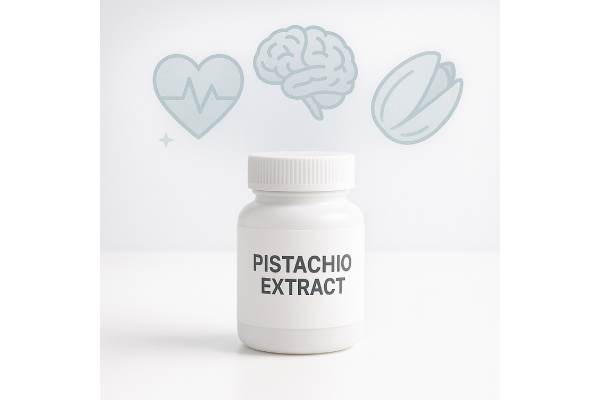
Pistachio extract takes the nutrition and bioactive compounds of pistachio nuts and concentrates them into capsules, powders, liquids, or cosmetic ingredients. Instead of eating a full handful of nuts, you get a standardized dose of polyphenols, antioxidants, and sometimes naturally occurring melatonin in a small serving. Research on pistachio nuts suggests potential support for heart health, blood sugar control, oxidative stress, and even skin protection, largely thanks to their unique mix of phenolic compounds, healthy fats, and carotenoids.
Pistachio extracts are newer on the market, and most clinical data still comes from whole-nut studies. However, laboratory and animal research on hulls, skins, and kernel extracts shows strong antioxidant and anti-inflammatory effects, plus early signals for cosmetic and metabolic applications. Many supplements now use pistachio extract as a natural melatonin or antioxidant source, especially for sleep formulas and “beauty from within” products.
Used thoughtfully, pistachio extract can be a useful adjunct to a healthy diet, but it is not a replacement for whole foods or medical care. This guide explains what it is, how it might help, how to use it safely, and who should avoid it.
Pistachio Extract Key Insights
- Pistachio extract concentrates pistachio polyphenols, antioxidants, and sometimes melatonin to support cardiometabolic health, oxidative balance, and sleep.
- Early research suggests benefits for blood lipids, blood sugar, and inflammation, but most robust data still comes from whole pistachio nut studies rather than isolated extracts.
- Common supplement intakes range roughly from 50–100 mg of standardized pistachio extract for sleep to around 200–500 mg per day in broader antioxidant formulas, following product labels.
- People with pistachio or tree nut allergy, those who are pregnant, on strong sedatives, or on complex medication regimens should avoid pistachio extract unless specifically cleared by a clinician.
Table of Contents
- What is pistachio extract and how does it work?
- What are the main benefits of pistachio extract?
- How to use pistachio extract day to day?
- Pistachio extract dosage guidelines and timing
- Possible side effects, allergies and interactions
- Who should avoid pistachio extract or use caution?
- What does research say about pistachio extract?
What is pistachio extract and how does it work?
Pistachio extract is a concentrated preparation derived from parts of the Pistacia vera plant, most commonly the nut kernel, the green or purple skins around the kernel, or the outer hulls that surround the shell. Manufacturers use water, ethanol, or hydroalcoholic solvents to pull out bioactive compounds, then dry or standardize the result into powders or liquids that can be used in supplements, functional foods, or cosmetics.
Unlike plain pistachio nuts, which provide fats, fiber, protein, and micronutrients, pistachio extracts are usually standardized for particular components, such as:
- Polyphenols (flavonoids like quercetin and kaempferol, and anthocyanins)
- Proanthocyanidins and tannins
- Carotenoids and chlorophyll derivatives
- Vitamin E forms (notably gamma-tocopherol)
- Melatonin and tryptophan in some sleep-focused extracts
These molecules appear to act through several main mechanisms:
- Antioxidant action: Polyphenols and vitamin E can neutralize free radicals and up-regulate endogenous antioxidant enzymes, potentially protecting lipids, proteins, and DNA from oxidative stress.
- Anti-inflammatory effects: Pistachio hull and kernel extracts can dampen pro-inflammatory signaling pathways and reduce inflammatory cytokines in cell and animal models, often via effects on NF-kappaB and related pathways.
- Cardio-metabolic support: Nut and extract studies indicate improved lipid oxidation resistance, modest improvements in blood lipid profiles, and better glycaemic control, likely through combined effects on endothelial function, oxidative stress, and digestive enzymes related to carbohydrate metabolism.
- Sleep and circadian rhythm: Some patented pistachio extracts are standardized for naturally occurring melatonin, designed to act as a plant-based alternative to synthetic melatonin by supporting normal sleep onset and sleep quality.
It is important to note that most human evidence relates to eating pistachio nuts, not to taking pistachio extract capsules. Extracts likely preserve many of the same compounds, sometimes at higher concentrations, but their long-term effects, ideal dose, and safety still need more direct human research.
What are the main benefits of pistachio extract?
Because pistachio extract is relatively new, its benefits are best understood by combining data from whole-nut clinical trials with mechanistic studies on pistachio hulls, skins, kernels, and gum. Overall, the most plausible areas of benefit are cardiometabolic health, antioxidant and anti-inflammatory support, sleep, and cosmetic applications.
Potential benefits include:
- Cardiovascular and metabolic support
Randomized controlled trials of pistachio consumption in humans have shown improvements in LDL and total cholesterol, increases in HDL, reduced markers of oxidative stress, and better endothelial function. Systematic reviews and meta-analyses report modest reductions in fasting blood glucose and fasting insulin in individuals with elevated cardiometabolic risk when pistachios are exchanged isocalorically for other foods. Extracts that concentrate polyphenols and other antioxidants likely contribute to similar mechanisms, but there are few direct head-to-head trials of extract versus whole nuts. - Antioxidant and anti-inflammatory defence
Pistachio hull and kernel extracts show strong radical-scavenging activity in standard assays and can reduce lipid peroxidation and oxidative damage in animal models. Some studies report improved tissue antioxidant enzyme activity (such as superoxide dismutase and glutathione peroxidase) and lower inflammatory markers, suggesting potential help in states of chronic low-grade inflammation. - Glycaemic control and insulin sensitivity
Meta-analysis of human trials indicates that pistachio intake can reduce fasting blood sugar and fasting insulin in adults at high cardiovascular risk, which implies better insulin sensitivity. In vitro, pistachio polyphenol extracts may modulate enzymes that digest carbohydrates, although this has not been robustly tested as an isolated extract in large human trials. - Sleep and relaxation
Pistachios are unusual among foods for their relatively high natural melatonin content. Specialized pistachio extracts standardized for melatonin (often around 1% melatonin by weight) are marketed for sleep, providing 50–200 mg of extract per dose, equivalent to a small but physiologically relevant melatonin intake. Early preclinical work with pistachio extracts has shown strong activity at melatonin receptors, which supports their biological plausibility as sleep aids. - Skin and cosmetic support
Pistachio hull extracts have demonstrated antioxidant, cytoprotective, and melanogenesis-modulating activity in laboratory and skin-model studies, which has led to their use in topical formulations aimed at brightening skin tone and protecting against environmental stressors. These findings are promising but remain early stage and do not replace routine sun protection or dermatologic care.
In summary, pistachio extract appears most promising as an adjunct for oxidative stress, mild metabolic support, and potentially sleep or cosmetic regimens. However, it should be viewed as a complementary tool, not as a stand-alone treatment for medical conditions.
How to use pistachio extract day to day?
Pistachio extract is available in several practical forms, each suited to different goals:
- Capsules and tablets
Many supplements contain 50–100 mg of concentrated pistachio kernel extract per capsule, often with extraction ratios such as 15:1 (meaning 100 mg of extract may correspond to about 1500 mg of raw kernel). These products are often marketed for sleep and relaxation or as general antioxidant support. - Melatonin-standardized sleep formulas
Some formulations combine pistachio extract with other ingredients (like magnesium, GABA, or lemon balm) to provide a plant-based melatonin source. Typical suggested intakes range from 50 mg to 500 mg of pistachio extract per dose, taken 30–60 minutes before bedtime. - Powders and bulk extracts
Bulk pistachio extract powders (from kernels, hulls, or flowers) are used in custom capsules, smoothies, or functional foods. Extraction ratios (such as 10:1 or 30:1) indicate how concentrated they are relative to raw plant material. It is important to follow supplier instructions and, ideally, to work with a practitioner if you are using bulk powders. - Topical products
Pistacia vera seed, hull, or flower extracts appear in serums, creams, and masks, where they are intended to support skin barrier function, elasticity, and antioxidant protection. For these, the key is consistent use as directed on the label rather than a specific “mg” target.
Practical ways to incorporate pistachio extract include:
- Taking a single capsule in the evening for sleep support, if this aligns with medical advice and other medications.
- Using a moderate-dose antioxidant supplement containing pistachio extract as part of a broader heart-healthy lifestyle that also includes whole nuts, fruits, and vegetables.
- Applying a topical product with Pistacia vera extract once or twice daily for skin support, alongside sunscreen and basic skincare.
No matter which form you use, choose products from reputable companies with clear labeling, standardized extract information, and preferably third-party testing. Remember that simply eating a small handful of whole pistachios regularly is still the best-studied approach for most health outcomes.
Pistachio extract dosage guidelines and timing
There is currently no official recommended daily intake for pistachio extract. Most guidance comes from product labels, existing human trials on pistachio nuts, and early research on specialized extracts. Because formulations differ, always defer to the specific product instructions and your clinician’s advice.
Based on existing products and early research:
- For sleep and relaxation
- Common labeled intakes: 50–100 mg of pistachio extract (often standardized and sometimes equivalent to 1500 mg of pistachios) taken once daily, about 30–60 minutes before bedtime.
- Some complex formulas provide up to around 200–500 mg extract per dose, especially when targeting sleep with added ingredients.
- For general antioxidant or metabolic support
- Dedicated pistachio extract products aimed at oxidative stress or cardiometabolic support often suggest daily intakes in the 200–500 mg range, usually divided into one or two doses with meals.
- Because direct clinical evidence on extract doses is limited, staying at the lower end of the supplement’s suggested range—and not exceeding the maximum daily dose on the label—is prudent.
- Topical use
- For creams or serums containing Pistacia vera extract, follow the brand’s directions, usually once or twice daily on clean skin. Amounts are measured in drops or a pea-sized quantity rather than in milligrams.
- Special populations
- Some sleep supplements indicate use for adults and children over 12 years, but safety data in adolescents is still limited; paediatric use should always be supervised by a healthcare professional.
General timing suggestions:
- Take sleep-oriented pistachio extracts in the evening, rather than throughout the day, to avoid unwanted drowsiness.
- When using extracts for general antioxidant or metabolic purposes, taking them with or shortly after meals may improve tolerance and align with how pistachios are consumed in human trials.
Because pistachio extracts can interact with blood sugar, blood pressure, and possibly sleep–wake rhythms, anyone with diabetes, cardiovascular disease, sleep disorders, or multiple medications should confirm the dose and timing with their clinician before starting.
Possible side effects, allergies and interactions
For most healthy adults without nut allergies, pistachio consumption is considered safe, and small doses of pistachio extract are generally well tolerated. However, concentrated extracts change the exposure profile and can introduce new issues. Documented and plausible side effects include:
- Digestive symptoms
- Mild nausea
- Bloating or stomach discomfort
- Occasional loose stools, especially if taken on an empty stomach or at high doses
- Neurological or sleep-related effects (mainly in melatonin-standardized products)
- Next-day drowsiness or grogginess
- Vivid dreams
- Headache in sensitive individuals
- Allergic reactions
- Pistachio is a tree nut; anyone with a pistachio or tree-nut allergy must avoid pistachio extract completely.
- Reactions may include itching, hives, facial swelling, wheezing, or in severe cases, anaphylaxis.
- Allergic responses can occur even with topical use of Pistacia vera extracts in skincare products.
- Metabolic and cardiovascular effects
- Human studies on pistachio nuts show improvements in blood lipids and modest reductions in fasting blood glucose and insulin.
- In people taking antihypertensives or glucose-lowering medications, there is a theoretical risk of additive effects leading to low blood pressure or hypoglycaemia, especially if dietary changes and supplements are introduced at the same time.
Potential interactions to consider:
- Sedatives and sleep medications
- Pistachio extracts that deliver meaningful amounts of melatonin may interact with prescription sleep medicines, sedating antihistamines, benzodiazepines, or alcohol, increasing drowsiness and accident risk.
- Anticoagulants and antiplatelet drugs
- While pistachios are not especially high in vitamin K, changes in diet and supplement use can still influence coagulation or platelet function indirectly. Anyone on warfarin, DOACs, or dual antiplatelet therapy should discuss new supplements with their prescriber.
- Drugs metabolized by liver enzymes
- Many polyphenol-rich extracts can affect cytochrome P450 activity in vitro. There is not yet clear evidence for pistachio extract specifically, but caution is wise with medications that have narrow therapeutic windows.
Stop using pistachio extract and seek medical attention promptly if you experience signs of allergy (swelling, difficulty breathing), severe dizziness, chest pain, or symptoms of very low blood sugar (confusion, shaking, sweating) or blood pressure (faintness, vision changes).
Who should avoid pistachio extract or use caution?
Even though pistachio extract is derived from a familiar food, it is not appropriate for everyone. The following groups should generally avoid pistachio extract unless a qualified health professional gives specific, individualized approval:
- Anyone with a pistachio or tree-nut allergy
- This includes people with past reactions to pistachios, cashews, or other Anacardiaceae family members.
- Avoid both oral and topical products containing Pistacia vera extracts, oils, or shell powders.
- People with a history of severe food anaphylaxis
- Even without a documented pistachio allergy, those with multiple severe food allergies should be cautious with new nut-based supplements.
- Pregnant or breastfeeding individuals
- There are no high-quality safety data on concentrated pistachio extracts in pregnancy or lactation, especially those standardised for melatonin or novel polysaccharide fractions.
The following groups should use caution and seek medical advice before trying pistachio extract:
- People with diabetes or metabolic syndrome on medication
- Because pistachios can modestly improve fasting blood sugar and insulin, adding extracts on top of diet and medications could unpredictably change glucose control. Close monitoring and dose adjustments may be needed.
- Individuals with cardiovascular disease or on blood pressure medication
- If extracts are used along with pistachio-rich diets and multiple heart medications, blood pressure or lipid responses should be monitored.
- People taking sedatives, antidepressants, or sleep medications
- Melatonin-standardized pistachio extracts may intensify drowsiness or alter sleep architecture when combined with other agents that affect the central nervous system.
- Patients with autoimmune conditions or seizure disorders
- Because melatonin and certain immune-active polysaccharides can modulate immune or neurological activity, individuals with complex neurologic or autoimmune conditions should only use pistachio extracts under specialist supervision.
- Children and adolescents
- Apart from carefully chosen products under professional guidance, concentrated pistachio extracts are not routinely recommended for younger people, especially for long-term daily use.
In all these cases, discussing pistachio extract with a clinician who knows your full medical history and medication list is far safer than self-experimenting with high doses. Often, simply incorporating a moderate amount of whole pistachios into an overall healthy diet is a more conservative and evidence-supported option.
What does research say about pistachio extract?
The evidence base for pistachio extract can be thought of in three layers: human trials on pistachio nuts, preclinical studies on pistachio extracts, and very early work on specialized, standardized extract ingredients.
- Human trials on pistachio nuts
- Multiple randomized controlled trials show that including pistachios (often 40–90 g per day) in an isocaloric diet can improve blood lipids, reduce oxidized LDL, and enhance some markers of endothelial function.
- Systematic reviews and meta-analyses conclude that pistachio intake can modestly reduce fasting blood sugar and insulin in people at high cardiovascular risk, and may improve some anthropometric and inflammatory markers.
- Preclinical work on pistachio extracts
- Hydrophilic extracts of pistachio kernels, hulls, and skins show strong antioxidant and anti-inflammatory activities in vitro and in animal models, including reductions in reactive oxygen species and tissue inflammation in experimental injury settings.
- Pistachio hull polysaccharides and polyphenol fractions have been studied as natural preservatives and functional ingredients in food systems, where they help delay lipid oxidation and microbial spoilage, suggesting robust antioxidant capacity.
- Emerging research explores anticancer and cytoprotective effects of Pistacia species phenolic compounds in cell lines, but these findings are preliminary and not directly translatable to human cancer treatment.
- Specialized extracts and melatonin-focused products
- Proprietary pistachio extracts enriched for melatonin or specific phenolic profiles have shown strong binding and activity at melatonin receptors in cell models, supporting their role as potential natural sleep aids.
- Commercial supplements using pistachio extract for sleep commonly rely on these mechanistic and pharmacokinetic data, but large independent clinical trials comparing pistachio extract to standard melatonin are still limited.
Taken together, current research supports the idea that compounds concentrated in pistachio extract—polyphenols, melatonin, vitamin E, and others—have biologically relevant effects that may complement a healthy lifestyle. However:
- Most robust evidence is still for whole pistachio nuts, not isolated extracts.
- Optimal dose, duration, and formulation of pistachio extract remain uncertain.
- Long-term safety, especially in vulnerable groups and at higher doses, has not been fully characterized.
For now, pistachio extract is best viewed as a promising adjunct for specific goals (particularly sleep support and antioxidant defence), used cautiously and under professional guidance rather than as a primary treatment for medical conditions.
References
- Pistachio Nuts (Pistacia vera L.): Production, Nutrients, Bioactives and Novel Health Effects 2021 (Systematic Review)
- Effects of pistachios on glycaemic control: a systematic review and meta-analysis of randomised controlled trials 2023 (Systematic Review)
- Polysaccharides extracted from pistachio external hull: Characterization, antioxidant activity and potential application on meat as preservative 2020 (Experimental Study)
- An Analysis of Three Pistacia Species’ Phenolic Compounds and Their Potential Anticancer and Cytotoxic Activities on Cancer Cells—A Review 2025 (Systematic Review)
Disclaimer
The information in this article is for general educational purposes only and is not intended to provide medical advice, diagnose any condition, or replace individualized guidance from a licensed healthcare professional. Pistachio extract, like all supplements, may not be appropriate for everyone and should not be used to start, stop, or change any medication or treatment plan without professional supervision. Always consult your doctor, pharmacist, or qualified health practitioner before using pistachio extract, especially if you are pregnant or breastfeeding, have any medical condition, or take prescription or over-the-counter medicines.
If you found this guide helpful, you are warmly invited to share it with others on Facebook, X (formerly Twitter), or any platform you prefer, and to follow us on social media. Your thoughtful support through sharing helps our team continue to create careful, evidence-informed content for readers like you.