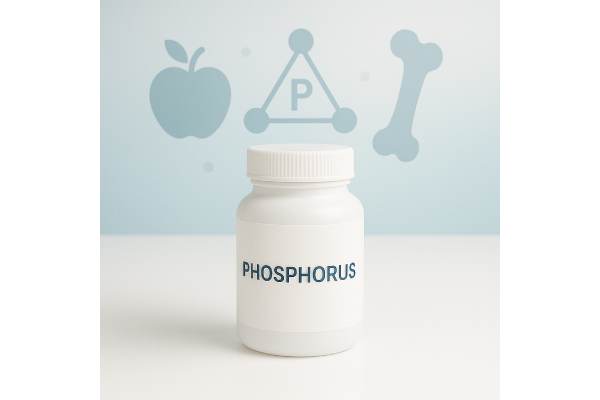
Phosphorus is an essential mineral that quietly supports almost every cell in your body. It teams up with calcium to build and maintain strong bones and teeth, helps generate and store energy as ATP, and forms part of your DNA and cell membranes. Because it is present in many everyday foods—especially protein-rich and processed products—most people get more than enough without thinking about it.
At the same time, phosphorus has moved into the spotlight because consistently high intakes may stress the kidneys, disrupt mineral balance, and increase cardiovascular risk in some people. This has led many readers to ask whether phosphorus supplements are useful or risky, how much is safe, and who should avoid extra intake.
This guide walks you through how phosphorus works, realistic benefits, dietary and supplemental intake ranges, potential side effects, and practical safety rules so you can make informed, medically responsible decisions.
Key Insights
- Phosphorus is vital for bone strength, energy production, and cell membranes, and most people already consume adequate amounts from food.
- Very high phosphorus intake, especially with low calcium or reduced kidney function, may contribute to bone loss and cardiovascular problems over time.
- Typical supplemental doses, when prescribed, range from about 100 to 500 mg elemental phosphorus per day, usually in divided doses and under medical supervision.
- People with chronic kidney disease, significant cardiovascular disease, or a history of high blood phosphorus should not take phosphorus supplements unless their clinician specifically recommends and monitors them.
Table of Contents
- What is phosphorus and what does it do?
- Key health benefits of phosphorus
- Daily phosphorus needs and food sources
- How to use phosphorus supplements safely
- Side effects, risks, and who should avoid phosphorus
- Research summary and practical takeaways
What is phosphorus and what does it do?
When health professionals talk about “phosphorus,” they usually mean phosphate, the form of the mineral that circulates in your blood and is stored in tissues. About 85% of the phosphorus in your body is locked into bone and teeth in the form of hydroxyapatite, where it works with calcium to give your skeleton structure and strength. The rest is mainly inside cells, where it plays central roles in energy metabolism and signaling.
Phosphorus is part of ATP (adenosine triphosphate), the molecule your cells use as an energy currency. Every time a muscle contracts, a nerve fires, or a cell pumps ions across a membrane, ATP is involved—and ATP cannot exist without phosphorus. Phosphorus is also built into DNA and RNA, so it literally helps hold your genetic material together.
Another major role is in cell membranes. Phospholipids, which form the outer layer of every cell, contain phosphorus. This structure allows membranes to be flexible yet selectively permeable, helping cells control what enters and leaves.
You will often see the word “phosphate” on lab tests and ingredient lists. In practical terms:
- Serum phosphate is what blood tests measure to assess your phosphorus status and kidney handling of the mineral.
- Food phosphates include naturally occurring phosphorus in proteins and added phosphates used as preservatives, leavening agents, and texture enhancers in processed foods.
In supplements and medications, phosphorus commonly appears as:
- Calcium phosphate
- Potassium phosphate
- Sodium phosphate
- Combinations in multi-mineral formulas
Each of these delivers phosphorus plus another mineral, which can matter if you also need to limit sodium, potassium, or calcium.
Key health benefits of phosphorus
Phosphorus is essential, but its benefits come from staying in a healthy range rather than loading up on more. Understanding what it does well can help you focus on adequacy instead of excess.
1. Bone and tooth health
Phosphorus and calcium together form the mineral backbone of bone and teeth. Adequate phosphorus intake supports:
- Peak bone mass in adolescence and early adulthood
- Ongoing bone remodeling in adults
- Maintenance of tooth enamel and dentin
If phosphorus is too low for long periods, bones can become weak. However, chronically high phosphorus, especially when calcium and vitamin D are low, may also disturb bone metabolism and contribute to bone loss.
2. Energy production and physical performance
Every time your body generates ATP, it relies on phosphate groups being added and removed. Phosphorus is involved in:
- Glycolysis and oxidative phosphorylation (the main energy pathways in cells)
- Creatine phosphate buffering in muscle during intense activity
- Recovery and restoration of energy stores after exercise
Some sports supplements have combined phosphates with other ingredients to try to improve performance or reduce fatigue. Evidence is mixed, and any small performance benefits need to be weighed against the possibility of excessive phosphorus intake, especially if your baseline diet is already high in phosphate additives.
3. Cell structure and signaling
Phosphorus is integrated into:
- Phospholipids, which form cell membranes and organelle membranes
- Second messengers, such as inositol phosphates, which transmit signals inside cells
- Protein phosphorylation, a crucial on–off switch in cellular signaling pathways
These roles explain why phosphorus status affects many systems at once, from brain function and muscle activity to hormone responses.
4. Acid–base balance and oxygen delivery
Phosphate acts as a buffer to help maintain the body’s acid–base balance. Inside red blood cells, phosphorus participates in the production of 2,3-bisphosphoglycerate (2,3-BPG), a molecule that helps hemoglobin release oxygen to tissues. Altered phosphate levels can subtly shift how easily oxygen is delivered where it is needed.
Taken together, these functions show why phosphorus is indispensable—but also why both deficiency and overload can have far-reaching consequences.
Daily phosphorus needs and food sources
For most healthy people, diet alone easily meets or exceeds phosphorus needs. The challenge is often avoiding long-term excess rather than achieving adequacy.
Recommended intakes
For adults, many expert groups set a recommended intake (often called an RDA or RNI) around:
- Adults 19+ years: about 700 mg phosphorus per day
- Pregnancy and lactation: similar to adult values, with small variations depending on the guideline used
- Adolescents (14–18 years): higher needs, often in the 1,250 mg/day range to support growth
Tolerable upper intake levels (ULs) for adults are typically in the 3,000–4,000 mg/day range, depending on age and authority. These ULs reflect total intake from food and supplements combined and are mainly intended for healthy individuals with normal kidney function.
How much do people actually consume?
Modern diets, especially in industrialized countries, commonly provide:
- 1,000–1,600 mg/day or more of phosphorus
- Significantly higher intakes in people who consume large amounts of processed meats, cheese, fast food, and cola beverages with phosphate additives
This means many adults are above the recommended intake before even considering supplements.
Main food sources
Natural sources with well-absorbed phosphorus include:
- Dairy products: milk, yogurt, cheese
- Meat, poultry, and fish
- Eggs
Plant sources also contribute:
- Legumes (beans, lentils, chickpeas)
- Nuts and seeds
- Whole grains
However, a significant portion of phosphorus in plant foods is bound as phytate, which humans absorb less efficiently. Fermentation (such as sourdough bread) and soaking or sprouting can improve availability.
Phosphate additives in processed foods are a major factor:
- Processed cheeses and cheese spreads
- Cured meats, sausages, and deli products
- Some baked goods and fast foods
- Many colas and flavored soft drinks
Additive phosphates are highly bioavailable and can drive phosphorus intake well above recommended levels without providing other nutrients.
Who is at risk of low intake?
True dietary deficiency is rare but can occur in:
- Severe protein–energy malnutrition
- Chronic alcohol misuse
- Prolonged use of phosphate-binding antacids or medications
- Certain genetic disorders affecting phosphate handling
Even in these cases, treatment usually involves medical supervision rather than self-directed supplementation.
How to use phosphorus supplements safely
Because phosphorus is so abundant in food, dedicated phosphorus supplements are less common than calcium, magnesium, or iron products. When they are used, it is usually for specific medical reasons, not general wellness.
When supplements may be considered
Clinicians might prescribe phosphorus-containing supplements when:
- Blood tests show low serum phosphate with symptoms such as muscle weakness, bone pain, or confusion
- There is increased demand or loss, such as during refeeding after severe malnutrition, certain endocrine conditions, or specific kidney tubular disorders
- Medications or long-term use of phosphate binders have lowered phosphorus too much
In these situations, the form, dose, and schedule are tailored individually and monitored with repeat blood tests.
Typical supplemental doses
When used in otherwise healthy adults under guidance, phosphorus supplements often provide in the range of:
- About 100–500 mg elemental phosphorus per day, sometimes divided into two or three doses with meals
“Elemental phosphorus” refers to the actual amount of phosphorus, not the total weight of the compound (such as potassium phosphate). Labels may list either the elemental amount or the compound amount, so checking how the manufacturer declares content is important.
Combination products may supply phosphorus along with calcium, magnesium, or potassium. If you use such a product, you need to account for all minerals from supplements and diet together.
Practical tips if your clinician suggests supplementation
- Confirm the goal. Understand whether the aim is to correct a deficiency, support refeeding, or address another specific condition.
- Align dose with diet. Your healthcare professional may adjust your supplement dose based on how much phosphorus you already get from food, especially if your diet is rich in dairy, meat, or processed foods.
- Take with food unless told otherwise. This often improves absorption and reduces stomach upset.
- Avoid self-escalation. Do not raise the dose on your own because phosphorus is tightly regulated; overshooting can cause real harm, particularly for bone and cardiovascular health.
- Monitor labs if recommended. Serum phosphate, calcium, kidney function, and sometimes parathyroid hormone are part of safe long-term use.
For most generally healthy people eating a varied diet, focusing on balanced meals and limiting processed foods is safer and more effective than adding phosphorus supplements.
Side effects, risks, and who should avoid phosphorus
Because phosphorus is essential, short-term side effects from modest supplemental doses are usually mild. The main concerns involve longer-term excess, especially in people with underlying kidney or cardiovascular problems.
Short-term side effects
At higher doses, or when taken on an empty stomach, phosphorus supplements can cause:
- Nausea or stomach discomfort
- Diarrhea or loose stools
- Abdominal cramping
These effects are more common with sodium or potassium phosphate salts and with doses at the upper end of medical treatment ranges. Taking supplements with food and splitting the dose can reduce these symptoms.
Long-term risks of high intake
Chronically high phosphorus intake, particularly from highly absorbable additives and large supplements, may contribute to:
- Hyperphosphatemia (raised blood phosphate), especially when kidney function is reduced
- Lower blood calcium, as phosphorus binds calcium and stimulates parathyroid hormone
- Secondary hyperparathyroidism, which increases bone turnover and can weaken bones over time
- Soft tissue and vascular calcification, where calcium–phosphate deposits form in arteries and other tissues, potentially increasing cardiovascular risk
These risks are best documented in people with chronic kidney disease, but some studies link higher serum phosphorus within the normal range to cardiovascular events in the general population.
Medication interactions
Phosphorus supplements and high-phosphate diets can interact with:
- Calcium and magnesium supplements or antacids, which can bind phosphate and reduce absorption, or vice versa
- Phosphate-binding medications used in kidney disease, which are designed to lower phosphorus levels
- High-dose vitamin D therapy, which increases intestinal phosphate absorption, raising the risk of hyperphosphatemia if combined with extra phosphorus
Always tell your healthcare professional about any supplements you take, especially if you are on chronic medications.
Who should avoid phosphorus supplements unless specifically prescribed
- People with chronic kidney disease or significantly reduced kidney function
- Those with a history of hyperphosphatemia, severe vascular calcification, or calciphylaxis
- Individuals with uncontrolled hyperparathyroidism or certain rare disorders of phosphate metabolism
- Anyone on phosphate-containing bowel preparations or frequent phosphate enemas, which already supply large amounts of phosphorus
In these groups, phosphorus balance is delicate, and the risks of self-supplementation usually outweigh potential benefits.
Research summary and practical takeaways
Scientific interest in phosphorus has grown over the last decade, shifting from concern about deficiency to concern about the health impact of chronic excess. Several key themes emerge from recent research.
1. U-shaped risk pattern
Studies examining health outcomes often suggest that both low and high phosphorus intakes or serum levels are problematic:
- Too little can impair bone mineralization, weaken muscles, and disrupt energy metabolism.
- Too much, even within laboratory “normal” ranges, has been linked to increased risk of cardiovascular events, vascular calcification, and faster progression of kidney disease in susceptible individuals.
This U-shaped pattern supports the idea of aiming for a healthy middle, not pursuing high intake as a performance or wellness strategy.
2. Processed foods and additive phosphates
Research shows that:
- Phosphate additives in processed foods are highly absorbable and can significantly raise total phosphorus intake.
- These additives often appear in ingredient lists as words containing “phos” (for example, phosphate, polyphosphate, phosphoric acid).
- Individuals with kidney disease or high baseline intakes may benefit from limiting such foods to reduce phosphorus load.
This means that food quality matters as much as quantity. Two diets with similar phosphorus numbers on paper can have different physiological impacts depending on the sources.
3. Bone and cardiovascular outcomes
Clinical and observational studies indicate:
- High phosphorus intake without sufficient calcium and vitamin D may negatively affect bone turnover and bone density.
- Elevated serum phosphate is associated with greater arterial stiffness, coronary artery calcification, and cardiovascular mortality, especially in chronic kidney disease.
These findings support guidelines that advise against unnecessary phosphorus supplementation and encourage moderation of phosphorus-rich processed foods.
4. Evidence for supplementation in healthy people is limited
For generally healthy individuals:
- There is little high-quality evidence that phosphorus supplements improve performance, energy, or cognition when dietary intake is already adequate.
- Potential benefits of minor intake increases are small compared with the potential downside of pushing total intake toward higher-risk ranges, especially over many years.
As a result, most expert groups focus on ensuring adequacy through diet and on avoiding long-term high intakes rather than recommending routine supplementation.
Practical takeaways for everyday use
- Rely on whole foods—dairy, meat, fish, legumes, whole grains, nuts—for phosphorus, rather than supplements.
- If you have kidney disease or cardiovascular disease, ask your healthcare team whether you should limit phosphate additives and have your phosphorus levels monitored.
- Avoid self-prescribing phosphorus supplements for general wellness or energy; the evidence is weak, and potential long-term risks are not trivial.
- If a clinician recommends phosphorus supplements, follow their dose, timing, and lab monitoring plan carefully.
In short, phosphorus is essential but not a “more is better” nutrient. Aim for enough, not excess, and prioritize dietary quality over pills.
References
- Phosphorus – Health Professional Fact Sheet 2022 (Guideline)
- Phosphorus – a scoping review for Nordic Nutrition Recommendations 2023 2023 (Systematic Review)
- Hyperphosphatemia in Chronic Kidney Disease: The Search for New Treatment Paradigms and the Role of Tenapanor 2022 (Review)
- Dietary phosphorus in bone health and quality of life 2012 (Review)
Disclaimer
The information in this article is for general educational purposes only and is not a substitute for professional medical advice, diagnosis, or treatment. Phosphorus requirements and risks vary widely based on age, diet, kidney function, medications, and underlying health conditions. Always consult a qualified healthcare professional before starting, stopping, or changing any supplement, including phosphorus or phosphate-containing products, or before making major changes to your diet if you have medical conditions such as chronic kidney disease, heart disease, or bone disorders. Never ignore or delay seeking professional medical advice because of something you have read here.
If you found this guide helpful, you are warmly invited to share it on Facebook, X (formerly Twitter), or any platform you prefer, and to follow our work on social media. Your support by sharing our content helps our team continue creating clear, evidence-informed health articles for readers like you.