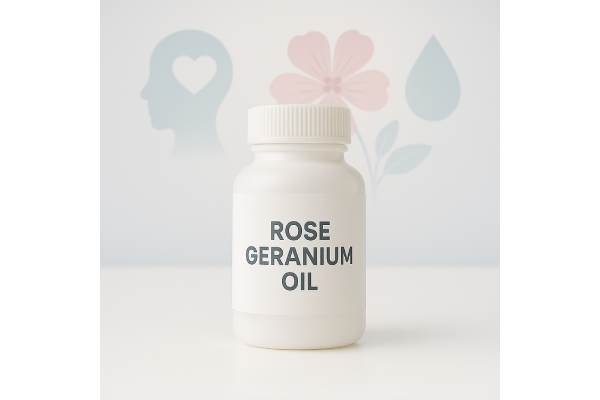
Rose geranium oil is a fragrant essential oil distilled from the leaves and flowers of Pelargonium graveolens, a geranium species prized for its soft, rosy, green aroma. Beyond its pleasant scent, this oil is rich in plant compounds that may support skin health, mood balance, and everyday comfort when used correctly. It has been explored for calming effects during stress, soothing irritated skin, and supporting wound care, thanks to its antioxidant, antimicrobial, and anti-inflammatory actions.
In practice, rose geranium oil shows up in face oils, body lotions, massage blends, and aromatherapy diffusers, and sometimes in targeted gels or creams for sensitive or inflamed skin. Because it is highly concentrated, it must always be diluted properly and handled with care, especially for children, pregnant individuals, and anyone with allergies or chronic illness. This guide walks you through what rose geranium oil is, how it works, who it may help, and how to use it safely and effectively.
Key Insights for Using Rose Geranium Oil
- Rose geranium oil contains aromatic compounds that may support mood, skin barrier function, and local comfort when properly diluted.
- Lab and early clinical studies suggest antioxidant, antimicrobial, and anti-inflammatory activity, especially for skin-focused uses.
- Typical topical dilution is about 0.5–2% (around 3–12 drops per 30 ml of carrier oil) for generally healthy adults.
- Undiluted essential oil can irritate the skin and should not be ingested without direct guidance from a qualified clinician.
- People who are pregnant, have hormone-sensitive conditions, severe allergies, epilepsy, or chronic illness should consult a professional before using rose geranium oil.
Table of Contents
- What is rose geranium oil?
- Evidence based benefits of rose geranium oil
- How to use rose geranium oil safely
- Rose geranium oil dosage and dilution
- Side effects, risks, and who should avoid
- What to look for when buying rose geranium oil
What is rose geranium oil?
Rose geranium oil is an essential oil obtained mostly by steam distillation of the aerial parts (leaves, stems, and flowers) of Pelargonium graveolens. Although sometimes simply called “geranium oil,” it is distinct from true rose oil and from other geranium species, but it shares a soft floral, slightly minty scent reminiscent of rose, citrus, and fresh herbs.
Chemically, rose geranium oil is complex. Its main constituents typically include citronellol, geraniol, linalool, isomenthone, and various esters such as citronellyl formate. These molecules belong largely to the monoterpene and monoterpenoid families, which are associated with fragrance, antimicrobial effects, and local anti-inflammatory activity. The exact profile varies with cultivar (Egyptian, Bourbon, Moroccan types), climate, soil, and distillation method, which is why reputable brands often provide a chemical analysis.
From a physiological perspective, rose geranium oil is thought to act in several ways:
- Aromatically: Inhaled vapors travel through the nose to the limbic system, the brain area involved in emotion, memory, and the stress response. This may partly explain reported calming and mood-supporting effects.
- Topically: On the skin, its constituents can interact with cell membranes and inflammatory pathways, potentially modulating redness, swelling, and discomfort while supporting local microcirculation.
- Antimicrobial barrier: In lab conditions, the oil has shown activity against selected bacteria and fungi, suggesting a possible supportive role in managing minor skin colonization when used within an appropriate formula.
It is important to remember that rose geranium oil is not a conventional medicine. It is a highly concentrated plant extract that can complement, but not replace, standard medical care. Its best use is usually as part of a broader routine that includes good skincare, stress management, and healthy lifestyle choices.
Evidence based benefits of rose geranium oil
Research on rose geranium oil is growing but still relatively early. Most data come from lab and animal studies, with a smaller number of human trials. That said, several potential benefit areas are emerging.
1. Skin health and barrier support
Rose geranium oil appears particularly promising for skin-focused uses. In experimental models, formulations containing Pelargonium graveolens essential oil have shown antioxidant and anti-inflammatory activity, as well as protection against microbes commonly associated with skin irritation. These actions may help calm redness, reduce local discomfort, and support the skin barrier when the oil is correctly diluted into creams or gels.
Some work has also looked at its ability to inhibit enzymes like elastase and collagenase, which are involved in collagen breakdown and skin aging processes. This does not mean rose geranium oil can replace established dermatologic treatments, but it helps explain why it is popular in face oils and serums aimed at supporting elasticity and tone.
2. Antimicrobial and oral health support
In vitro studies show that rose geranium oil can inhibit growth of several bacteria and fungi, including species that contribute to dental plaque and oral infections. In clinical settings, mouth rinses or gels containing Pelargonium graveolens oil have been explored for use in denture-related inflammation, with promising but preliminary results.
For everyday use, this translates into a possible supportive role in carefully formulated mouthwashes or gels. Because essential oils can irritate mucous membranes, any oral use should rely on professionally designed products rather than home-made mixtures.
3. Pain, inflammation, and local comfort
Topical gels containing rose geranium oil have been tested in animal models of inflammatory pain, such as paw swelling and thermal sensitivity. These formulations showed reductions in swelling and improved comfort compared with control gels, suggesting local anti-inflammatory and analgesic potential.
In human contexts, this may support its use as part of massage blends or spot treatments for minor aches, premenstrual discomfort, or tension in muscles and joints, always within safe dilution limits.
4. Stress, mood, and emotional balance
Aromatherapy trials using geranium essence inhalation during stressful experiences, such as labor, have reported reductions in anxiety scores and improvements in selected vital signs compared with control conditions. While sample sizes are small and methods vary, the pattern aligns with traditional use of rose geranium for calming and stabilizing mood.
At home, many people diffuse rose geranium oil, add a few drops to a personal inhaler, or blend it with other oils such as lavender or bergamot to create a grounding, emotionally balancing aroma.
5. Insect-repellent potential
Citronellol and related compounds in rose geranium oil are structurally similar to those used in some mosquito-repellent products. Laboratory work supports mild repellent activity. As a result, the oil often appears in natural insect sprays or candles, typically blended with citronella, eucalyptus, or lemongrass. It should still not be the sole protection in settings where insect-borne disease risk is high.
Overall, the evidence suggests that rose geranium oil is most promising for skin-focused, local comfort and mood-supportive uses, with additional potential for oral and household applications when formulated correctly.
How to use rose geranium oil safely
Because rose geranium oil is highly concentrated, technique matters as much as the oil itself. Safe use comes down to three principles: dilute properly, apply appropriately, and respect individual sensitivity.
1. Aromatic use (inhalation)
Common approaches include:
- Ultrasonic diffuser: Add 3–6 drops of rose geranium oil per 100 ml of water. Run for 15–30 minutes, one to three times per day, in a well-ventilated room.
- Personal inhaler: Place 5–10 drops on an inhaler wick, assemble, and inhale gently for a few breaths when needed for grounding or emotional balance.
- Steam inhalation (with caution): For adults, 1–2 drops in a bowl of hot (not boiling) water, then inhale vapors with eyes closed. This method is more intense and not suitable for children or people with asthma without professional guidance.
Avoid continuous, all-day diffusion. Intermittent use allows your senses and nervous system to reset and reduces the risk of headaches or irritation.
2. Topical use on skin
Rose geranium oil should almost always be diluted in a carrier oil (such as jojoba, sweet almond, or fractionated coconut) or in a finished product like a cream, gel, or lotion. Common applications include:
- Facial oil or serum: For most adults, a 0.5–1% dilution is often sufficient (about 3–6 drops per 30 ml carrier). This is suitable for general complexion support, not for application around eyes or on broken skin.
- Body oil or massage blend: A 1–2% dilution (6–12 drops per 30 ml carrier) is a typical range for healthy adults. It can be used for general relaxation, tension release, or premenstrual abdominal massage.
- Bath use: Mix 3–6 drops of rose geranium oil into a tablespoon of carrier oil or an emulsifier (like fragrance-free bath base or full-fat milk) before adding to the bath. Never drop essential oil directly into the water; undiluted droplets can cling to skin and cause irritation.
Always perform a patch test: apply a small amount of diluted blend to a small area on the inner forearm once daily for several days and monitor for redness, itching, or burning.
3. Uses to avoid without professional guidance
- Undiluted (neat) application: This greatly increases the risk of irritation and sensitization over time.
- Home-made oral preparations: Swallowing rose geranium oil in capsules, drinks, or drops is not recommended unless specifically supervised by a clinician experienced in essential oil prescribing.
- Use near eyes, inside ears, or on mucous membranes: These tissues are particularly sensitive and easily damaged.
If you have chronic conditions, take multiple medications, or are pregnant or breastfeeding, treat rose geranium oil as you would any active product: discuss it with a qualified healthcare professional before regular use.
Rose geranium oil dosage and dilution
Unlike vitamins or oral supplements, essential oils are usually measured in drops and dilution percentages rather than milligrams. Because drop size varies, the following guidelines use standard aromatherapy conventions (about 20 drops per milliliter).
A practical way to think about dosage is the percentage of essential oil in the total blend:
- 0.25–0.5%: Very mild dilution, often used for the face, elderly individuals, and those with sensitive skin.
- 0.5–1%: Gentle everyday facial or body care for most adults.
- 1–2%: Common range for body oils, massage blends, and short-term use over limited areas.
- Up to 3%: Higher end for otherwise healthy adults, short-term, localized applications (for example, a small area of discomfort), if well tolerated.
Using a 30 ml bottle of carrier oil (about one fluid ounce), this translates to approximately:
- 0.5% dilution: 3 drops of rose geranium oil
- 1% dilution: 6 drops
- 2% dilution: 12 drops
- 3% dilution: 18 drops
For diffusers, dose is based on water volume and room size:
- Small room (bedroom or workspace): 3–4 drops per 100 ml of water
- Larger spaces: 5–8 drops per 200–300 ml of water, adjusting down if anyone experiences headaches or sensitivity
Limit active diffusion to 15–30 minutes, followed by at least an equal period with the diffuser off.
Special populations
- Children (over 2 years): Use only very low dilutions (0.25–0.5%) and short-term, targeted applications, with pediatric approval. For toddlers and infants, aromatic use in the room (with very few drops and plenty of ventilation) is generally preferred over direct skin application.
- Pregnancy: Many practitioners recommend limiting total essential oil exposure, especially in the first trimester. If used at all, keep topical dilution at or below 1%, and focus more on gentle diffusion rather than frequent application.
- Older adults and people with chronic illness or sensitive skin: Start at 0.25–0.5%, monitor closely, and increase only if well tolerated.
Because formal dosing standards for essential oils are less established than for medications, it is safer to start below these upper ranges and adjust gradually while observing your individual response.
Side effects, risks, and who should avoid
Rose geranium oil is generally well tolerated when properly diluted, but it is not risk free. Understanding its potential downsides helps you use it more confidently.
1. Skin irritation and sensitization
The most common adverse reactions are local:
- Redness, stinging, or itching where the oil has been applied
- Dry or flaky patches after repeated use
- Delayed reactions that appear hours to days later (contact dermatitis)
These problems are more likely with:
- High dilutions or undiluted (neat) use
- Already damaged or inflamed skin
- Frequent application over large areas
- A personal history of fragrance or cosmetic allergies
If you notice burning, persistent redness, or worsening irritation, stop using the product, wash the area with mild soap and vegetable oil or full-fat milk (to help disperse residual oil), and seek medical advice if symptoms are severe or spreading.
2. Respiratory or neurological effects
Inhalation of strong essential oil vapors can trigger:
- Headache or dizziness
- Nausea
- Coughing or breathing discomfort, particularly in people with asthma or reactive airways
Avoid diffusing in small, unventilated spaces, and stop diffusion if anyone in the room feels unwell.
3. Allergic reactions
Some individuals may be allergic to components like citronellol, geraniol, or linalool. Signs may include hives, facial swelling, difficulty breathing, or severe dizziness. These symptoms require immediate emergency medical evaluation.
4. Possible hormonal and medication interactions
Plant compounds in rose geranium oil may interact with hormone-sensitive tissues in experimental settings, although human data are limited. As a precaution:
- People with hormone-sensitive cancers, unexplained vaginal bleeding, or being treated with hormone therapies should consult their specialist before topical or regular aromatic use.
- Those taking multiple medications, especially for blood clotting, epilepsy, or severe cardiovascular disease, should discuss essential oil use with their prescribing clinician.
5. Populations who should be particularly cautious or avoid use
- Pregnant individuals, especially in the first trimester (unless approved by a healthcare professional).
- People with severe asthma or frequent bronchospasm.
- Anyone with a history of severe contact allergy or fragrance intolerance.
- Infants and very young children, where simpler options may be safer.
If rose geranium oil or any essential oil is accidentally swallowed in more than a trace amount, contact a poison information center or emergency services for region-appropriate guidance, even if no symptoms are present.
What to look for when buying rose geranium oil
Not all rose geranium oils are equivalent. Quality and authenticity can vary widely, and these differences affect both safety and effectiveness.
1. Clear botanical and product information
A trustworthy label should show:
- The Latin name: typically Pelargonium graveolens (sometimes with variety names such as “Bourbon” or “Egyptian”).
- The plant part used: leaves and/or flowers.
- The extraction method: usually steam distillation.
- Country or region of origin, which can influence scent and composition.
Vague labels that say only “geranium oil” or “fragrance oil” without botanical detail may indicate synthetic fragrance blends rather than true essential oil.
2. Evidence of quality control
High-quality brands often provide or mention:
- GC–MS reports (gas chromatography–mass spectrometry): These analyses show the relative amounts of key constituents and can help confirm authenticity and screen for adulteration.
- Batch numbers and best-before dates: Essential oils oxidize over time; a shelf life of about three to five years for rose geranium oil is common when stored properly.
- Third-party testing: Independent verification of purity and absence of contaminants such as solvents or heavy metals is a plus.
3. Packaging and storage
Look for:
- Dark glass bottles (amber, cobalt, or miron) to reduce light exposure.
- Secure dropper or orifice reducer to dispense drops accurately.
- Storage recommendations (cool, dry place away from direct sunlight and heat).
At home, keep the bottle tightly closed, upright, and out of reach of children and pets. Oxidized oil (smelling harsh, sharp, or “off”) is more likely to irritate skin and should be discarded.
4. Ethical and sustainability considerations
Rose geranium is cultivated in several regions, including North Africa, the Mediterranean, and parts of Asia. If possible, choose companies that:
- Support sustainable agriculture and fair wages for growers.
- Provide transparent information about environmental practices.
- Avoid unnecessary packaging and clearly label allergens.
5. Price realism
Because steam distillation requires significant plant material, very cheap “rose geranium oil” from unknown sources may be diluted with synthetic fragrance chemicals. While good quality oil does not have to be the most expensive option, prices far below the general market range warrant extra caution.
Investing in a reputable brand, using the oil at appropriate dilutions, and respecting your own tolerance level helps you gain the potential benefits of rose geranium oil while minimizing risks.
References
- Assessment of Pelargonium graveolens flower essential oil: Antimicrobial, antioxidant, enzyme inhibition and in vivo topical analgesic and anti-inflammatory efficacy as treatment for atopic dermatitis 2024 (Experimental study and dermatologic application).
- Rose-scented geranium essential oil from Algeria (Pelargonium graveolens L’Hérit.): Assessment of antioxidant, anti-inflammatory and anticancer properties against different metastatic cancer cell lines 2021 (Experimental study).
- Rose geranium essential oil as a source of new and safe anti-inflammatory drugs 2013 (Experimental and safety-focused study).
- Effect of inhalation of aroma of geranium essence on anxiety and physiological parameters during first stage of labor in nulliparous women: A randomized clinical trial 2015 (RCT on anxiety and aromatherapy).
- Antioxidant Activity and Chemical Composition of Geranium Oil and Its Synergistic Potential against Pneumococci with Various Antibiotic Combinations 2023 (Chemical composition and antimicrobial activity).
Disclaimer
The information in this article is for general educational purposes only and does not replace personalized advice from a physician, pharmacist, or other qualified healthcare professional. Rose geranium oil and other essential oils are not intended to diagnose, treat, cure, or prevent any disease, and they should not be used as a substitute for prescribed medications or recommended medical treatments. Always consult a healthcare professional before starting, stopping, or changing any therapy, especially if you are pregnant, breastfeeding, have existing medical conditions, or take regular medications. In case of suspected poisoning, severe reaction, or medical emergency, seek immediate in-person care.
If you found this guide helpful, you are warmly invited to share it with others on Facebook, X (formerly Twitter), or any platform you prefer, and to follow our work on social media. Your thoughtful support helps our team continue creating clear, evidence-informed resources for readers around the world.