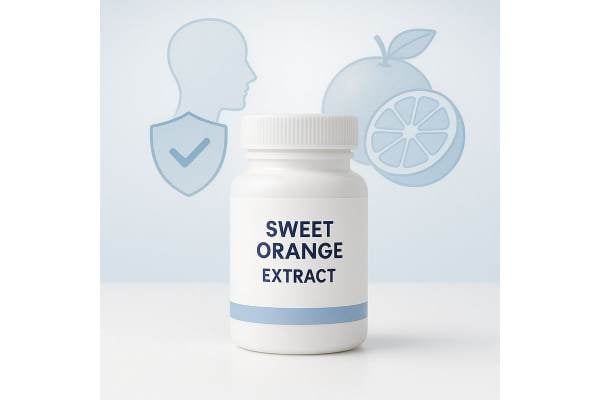
Sweet orange extract comes from the peel and sometimes the fruit of Citrus sinensis, the same oranges used for juice. When you concentrate the peel and active compounds instead of the sugar and water, you get a supplement rich in plant chemicals such as hesperidin, other citrus flavonoids, and the aromatic terpene d limonene. These compounds are being studied for their potential to support blood vessel function, circulation, immune defenses, digestive comfort, and mood.
Compared with the more stimulating bitter orange, sweet orange extract is generally gentler and is not designed as a stimulant or weight loss aid. But because it is more concentrated than food, it should be treated as a real supplement, not just “orange in a capsule.”
This guide explains what sweet orange extract is, how it is made, where it may offer benefits, realistic dosage ranges, and the side effects and cautions you need to know so you can discuss it confidently with a healthcare professional.
Key Insights
- Sweet orange extract concentrates citrus flavonoids such as hesperidin that may support vascular health, antioxidant status, and metabolic balance.
- Typical supplemental use is around 250 to 1,000 mg sweet orange extract per day, often providing roughly 100 to 500 mg hesperidin.
- Concentrated extracts and essential oils can cause digestive upset, headaches, or skin reactions and may interact with medications in sensitive people.
- Those with citrus allergy, complex medication regimens, kidney or liver disease, or who are pregnant or breastfeeding should avoid self directed use and seek medical guidance first.
Table of Contents
- What is sweet orange extract and how is it made?
- Sweet orange extract benefits and how it works
- Ways to use sweet orange extract safely
- How much sweet orange extract per day?
- Side effects, interactions, and who should avoid it
- What the research says about sweet orange extract
What is sweet orange extract and how is it made?
Sweet orange extract is a concentrated preparation obtained from the peel, fruit, or both of the sweet orange plant, Citrus sinensis. In everyday life, most people consume oranges as whole fruit or juice, which provide vitamin C, fiber, and modest levels of flavonoids. Sweet orange extract, in contrast, focuses on the bioactive compounds from the peel and internal membranes and removes most of the sugar and bulk.
Several forms exist:
- Flavonoid rich peel extract, usually standardized to hesperidin or “citrus bioflavonoids.” These are typically made with water or ethanol and sold as powders in capsules or tablets.
- Sweet orange essential oil, obtained by cold pressing or steam distilling the peel. It is rich in d limonene and used mostly in aromatherapy or in specialized enteric coated capsules.
- Whole fruit or peel powders, which are less concentrated and closer to a food ingredient, sometimes used in functional foods.
- Blends that combine sweet orange extract with other citrus extracts, grape polyphenols, or herbal components in circulation, antioxidant, or “immune” formulas.
The main constituents of interest are:
- Flavonoids such as hesperidin, hesperetin, naringenin, and related compounds.
- Volatile terpenes, especially d limonene, which give orange its characteristic aroma.
- Smaller amounts of carotenoids, vitamin C, and pectin in less refined products.
It is also important to distinguish sweet orange from bitter orange. Bitter orange (Citrus aurantium) extracts are often standardized for synephrine and marketed as metabolic or weight loss aids with stimulant properties. Sweet orange extracts used for vascular or general wellness support are not intended to provide those stimulant effects and are typically low in synephrine.
Manufacturing usually follows these steps:
- Selection of ripe, food grade peel or fruit, often as a by product of juice production.
- Extraction with water, ethanol, or a mixture to pull out flavonoids, or mechanical pressing to obtain essential oil.
- Concentration and standardization to reach a defined percentage of hesperidin or other marker compounds.
- Drying the extract and blending it into capsules, tablets, powders, or beverages.
Because extraction methods and standardization targets vary, two products with the same “mg of sweet orange extract” can deliver different actual amounts of flavonoids or terpenes. Checking labels for standardization details helps you compare options more accurately.
Sweet orange extract benefits and how it works
Sweet orange extract is being explored for several areas of potential benefit. Most of the research focuses on hesperidin and other citrus flavonoids and on d limonene from the peel oil. While not a medicine, these compounds interact with key systems in the body in ways that may support long term health.
Vascular and cardiovascular support
Citrus flavonoids appear to support the health of the endothelium, the thin cell layer lining blood vessels. In human studies, hesperidin rich orange products have improved measures of endothelial function such as flow mediated dilation and have modestly influenced blood pressure and markers of inflammation. Mechanisms that may explain these effects include:
- Supporting nitric oxide production, which helps blood vessels relax and respond more flexibly.
- Reducing oxidative stress in vessel walls, protecting lipids and proteins from damage.
- Modulating adhesion molecules and inflammatory signals that affect how blood cells interact with the vessel lining.
These changes are subtle and work best alongside lifestyle measures like exercise, a plant rich diet, and not smoking. Sweet orange extract should be seen as one supportive tool rather than a standalone cardiovascular treatment.
Antioxidant and anti inflammatory actions
Flavonoids in sweet orange extract are well known as antioxidants. They can neutralize reactive oxygen species directly and may stimulate the body’s own antioxidant enzymes. In some human and animal studies, citrus flavonoid intake has been associated with lower levels of oxidative stress markers and certain inflammatory mediators, particularly in people with metabolic risk factors.
In daily life, this may translate into:
- Additional antioxidant support for people whose diets are low in whole fruits and vegetables.
- A small contribution to managing chronic low grade inflammation when combined with diet and lifestyle improvements.
- Possible support for healthy aging by protecting tissues from cumulative oxidative damage.
Metabolic support
Citrus flavonoids have been studied for effects on cholesterol, triglycerides, blood sugar handling, and waist circumference. Results vary between studies, but several report:
- Modest improvements in endothelial function and lipid profiles.
- Small favorable changes in weight related measures when combined with dietary changes and exercise.
These are not dramatic effects but can be meaningful over time as part of a broader risk reduction strategy.
Mood and stress relief through aroma
Orange essential oil is a popular aromatherapy choice, especially in dental and medical settings where anxiety is high. When diffused in a room, sweet orange scent has been associated with:
- Lower reported anxiety in children during dental work.
- Better subjective mood and comfort in some adult settings.
These effects likely involve the limbic system, which links smell, memory, and emotional responses. While aromatherapy is not a substitute for psychological or medical treatment, it can be a gentle supportive measure for short term stress.
Digestive comfort with d limonene
D limonene, the main terpene in orange peel oil, has been studied for its potential to relieve mild heartburn and reflux symptoms. Enteric coated d limonene capsules taken at defined intervals have helped many participants in small studies report less upper digestive discomfort. The proposed mechanisms include promoting normal peristalsis, supporting mucosal defenses, and helping dissolve troublesome components of gastric contents. Persistent reflux, however, still requires proper medical evaluation.
Overall, sweet orange extract has a broad but mild action profile: it seems to support circulation, antioxidant defenses, and digestive comfort while also offering a pleasant sensory effect through its aroma.
Ways to use sweet orange extract safely
Safe and effective use of sweet orange extract depends on matching the form to your goal and respecting the different strengths of flavonoid extracts, essential oils, and food like powders.
Flavonoid rich capsules or tablets
These preparations focus on hesperidin and related flavonoids. They are typically used for:
- General cardiovascular and vascular support.
- Antioxidant and metabolic support in people with lifestyle related risk factors.
- Complementing diets low in fruit or polyphenol rich foods.
Practical tips:
- Prefer products that clearly state the amount of sweet orange extract and the percentage of hesperidin or citrus bioflavonoids.
- Start at the lower end of the suggested dose range and increase only if needed and tolerated.
- Take with meals to improve absorption and minimize digestive upset.
- Combine with a generally heart healthy lifestyle rather than expecting the extract to offset a poor diet or inactivity.
Sweet orange essential oil for aromatherapy
Essential oil is highly concentrated and is best suited to inhaled and properly diluted topical uses.
For room diffusion:
- Add a few drops of sweet orange essential oil to a diffuser filled with water, following the manufacturer’s instructions.
- Use for short sessions, for example 20 to 40 minutes, especially before or during a potentially stressful event such as a dental appointment at home.
- Ensure the room is ventilated and avoid direct inhalation right next to the diffuser outlet.
For topical blends:
- Dilute orange essential oil in a carrier oil such as jojoba or fractionated coconut oil. A 1 to 2 percent dilution (about 1 to 2 drops essential oil per teaspoon of carrier) is common.
- Apply to a small area first to check for skin sensitivity.
- Because citrus oils can increase sun sensitivity in some people, avoid strong UV exposure on the area afterward unless your practitioner confirms the specific oil has low phototoxic risk.
Enteric coated d limonene capsules
These are sometimes used for short term support of mild heartburn.
General guidelines include:
- Using doses within the common range given by manufacturers, often once daily or every other day for a limited period.
- Taking capsules before meals if directed, so that they reach the intestines intact and are then absorbed.
- Monitoring symptoms and seeking medical evaluation if heartburn is frequent, severe, or associated with alarm signs such as swallowing difficulty or unintentional weight loss.
Functional foods and beverages
Sweet orange extract may also appear in:
- Fortified juices with extra citrus bioflavonoids.
- Powder mixes for drinks or smoothies.
- Snack bars or sports products emphasizing antioxidant and vascular support.
These usually provide lower doses than supplement capsules but contribute to overall flavonoid intake in a food based format.
Whatever form you choose, introduce sweet orange products gradually and observe how your body responds. If you are on prescription medicines or managing a chronic condition, involve your healthcare provider in the decision.
How much sweet orange extract per day?
There is no official daily requirement for sweet orange extract, and optimal amounts are still being studied. However, supplement labels and clinical research offer practical ranges that can serve as starting points for discussion with a health professional.
Flavonoid rich sweet orange extract
Many studies and products use amounts that provide roughly 100 to 500 mg hesperidin per day. Depending on standardization, this might look like:
- 250 to 1,000 mg sweet orange extract per day, standardized to a defined percentage of hesperidin or citrus bioflavonoids.
For example, a supplement might contain:
- 250 mg extract standardized to 40 percent hesperidin (about 100 mg hesperidin).
- 500 mg extract standardized to a higher percentage, reaching 250 to 300 mg hesperidin.
A cautious, typical approach:
- Start with 250 to 500 mg sweet orange extract once daily with a meal.
- If use is well tolerated and a practitioner agrees, some adults may increase to up to 1,000 mg per day, often split into two doses.
It is generally unnecessary to go beyond this range for wellness purposes, and higher doses have less supporting evidence.
Sweet orange essential oil and d limonene
For aromatherapy:
- Use only a few drops in a diffuser at a time, observing how you feel. In many cases, less is more.
For d limonene capsules:
- Supplements may provide 250 to 1,000 mg d limonene in enteric coated form, taken once daily or less frequently, usually for a few weeks rather than indefinitely.
Because essential oils are very concentrated and long term high dose use has not been thoroughly studied, it is wise to keep d limonene supplementation time limited, especially without medical supervision.
Adjusting for individual factors
Several factors influence what is appropriate for a given person:
- Body size and age: smaller or older individuals may need lower doses.
- Coexisting conditions: cardiovascular disease, kidney or liver issues, and gastrointestinal problems all affect risk and benefit.
- Medication use: any supplement that influences blood vessels, metabolism, or liver enzymes may interact with prescribed drugs.
- Diet: a person who already eats several servings of fruits and vegetables daily may need less supplemental flavonoid support than someone whose intake is low.
As a general rule, it is safer to use a moderate dose consistently, in conjunction with a healthy lifestyle, than to rely on high doses of any single extract.
Side effects, interactions, and who should avoid it
Sweet orange as a food is well tolerated by most people. Concentrated extracts and essential oils, however, are stronger and come with real side effects and interaction risks that should not be overlooked.
Common side effects
At typical supplement doses, some people experience:
- Stomach discomfort, nausea, or loose stools, particularly if products are taken on an empty stomach.
- Headache or a sense of pressure when starting a higher dose.
- Mild heartburn or reflux, especially if essential oil products are not properly enteric coated.
- Skin irritation, redness, or itching when essential oil is applied undiluted or at high concentration.
These effects are usually reversible when the dose is lowered or the product is discontinued. Taking capsules with food often reduces stomach related issues.
Allergic reactions
People with known citrus allergies should avoid sweet orange extracts and essential oils. Signs of an allergic reaction can include:
- Rash, hives, or itching.
- Swelling of lips, tongue, or face.
- Tightness in the chest, difficulty breathing, or feeling faint.
Any suspected allergic reaction requires immediate medical attention.
Interaction concerns
Sweet orange extract can interact with medicines and other supplements in several ways:
- Flavonoids and terpenes are processed by liver enzymes. In some people they may speed or slow the breakdown of certain medications, potentially changing their levels.
- Vascular effects, even if modest, may add to the effects of blood pressure medications or other vascular active supplements.
- Changes in platelet function or blood flow characteristics, while usually mild at typical doses, could matter in people taking anticoagulants or antiplatelet drugs.
Because it is difficult to predict who will be sensitive, people on critical medications such as blood thinners, heart rhythm drugs, strong blood pressure medications, or chemotherapy should not start sweet orange extract without medical approval.
Who should avoid self directed use
It is generally best to avoid sweet orange extract or d limonene supplements, or to use them only under specialist supervision, if you:
- Are pregnant or breastfeeding.
- Are giving supplements to children.
- Have chronic liver or kidney disease.
- Have a history of recurrent kidney stones, unless your specialist confirms it is safe.
- Take multiple prescription medicines, especially for heart disease, clotting disorders, seizures, or cancer.
- Have had severe reactions to citrus fruits or essential oils in the past.
Warning signs that require urgent care
Stop using sweet orange products and seek medical help immediately if you notice:
- Chest pain, severe shortness of breath, or sudden changes in heart rate.
- Severe abdominal pain, persistent vomiting, or blood in the stool or vomit.
- Yellowing of the skin or eyes, dark urine, or very pale stools.
- Swelling of the face or throat, wheezing, or difficulty breathing.
These symptoms may or may not be related to a supplement, but they always require prompt evaluation.
What the research says about sweet orange extract
Research on sweet orange extract is still developing, but several themes emerge when looking at hesperidin rich preparations, citrus flavonoid mixes, and d limonene.
Cardiovascular and endothelial effects
Clinical trials in adults with elevated blood pressure or metabolic risk have tested hesperidin rich orange juice and purified hesperidin supplements. These studies have reported:
- Improvements in endothelial function, assessed by how well arteries relax in response to increased blood flow.
- Reductions in some inflammatory markers, suggesting a more favorable vascular environment.
- In some cases, modest changes in blood pressure and other cardiovascular risk markers.
The improvements are generally small to moderate in size but point in a helpful direction, especially when combined with broader lifestyle changes.
Metabolic and exercise related outcomes
Citrus flavonoids have been studied for roles in:
- Supporting healthy lipid profiles.
- Improving aspects of glucose handling and insulin sensitivity.
- Enhancing some measures of exercise performance or recovery, possibly by improving blood flow and reducing exercise induced oxidative stress.
Not all studies find the same results, and many involve relatively short durations, but they collectively support the idea that sweet orange flavonoids can be one part of a metabolic health strategy.
Aromatherapy and mood
Trials in children undergoing dental procedures and in adults in stressful situations have found that diffusing sweet orange oil in the room can:
- Lower reported anxiety scores.
- Improve perceived comfort and sometimes reduce reported pain levels.
These effects appear without serious side effects when oils are used properly. They are likely due to a combination of direct neural effects of pleasant scents and psychological associations.
Digestive health and d limonene
D limonene first attracted interest for its ability to dissolve certain types of gallstones. Later work explored its use for heartburn and reflux, with several small series of adults taking enteric coated d limonene over a few weeks. Many reported meaningful reductions in symptoms, and long term toxicology studies have supported its general safety when used appropriately. Larger and more independent trials would help clarify its exact role in digestive care.
Limitations of current evidence
Even where results are promising, there are important limitations:
- Many trials involve small groups, short durations, or specific subpopulations.
- Preparations differ in exact composition, so results from one extract may not apply to all products.
- Long term safety and efficacy at high doses for general wellness are less well documented than short term use in specific conditions.
For now, the most balanced way to interpret this evidence is to see sweet orange extract as a useful supportive ingredient in targeted situations, chosen carefully and used alongside, not instead of, established medical and lifestyle measures.
References
- Hesperidin: A Review on Extraction Methods, Stability and Biological Activities 2022 (Systematic Review)
- Beneficial Effects of Citrus Flavonoids on Cardiovascular and Metabolic Health 2019 (Systematic Review)
- Hesperidin in orange juice improves human endothelial function in subjects with elevated blood pressure and stage 1 hypertension: A randomized, controlled trial (Citrus study) 2021 (RCT)
- Citrus Polyphenol Hesperidin Stimulates Production of Nitric Oxide in Endothelial Cells while Improving Endothelial Function and Reducing Inflammatory Markers in Patients with Metabolic Syndrome 2011 (RCT)
- Effect of Aromatherapy on Dental Anxiety and Pain in Children Undergoing Local Anesthetic Administrations: A Randomized Clinical Trial 2021 (RCT)
Disclaimer
This article is intended for general informational purposes only and does not replace personalized medical advice, diagnosis, or treatment. Sweet orange extract, hesperidin, and d limonene can interact with health conditions and medications, and their effects vary from person to person. Always consult a qualified healthcare professional before starting, changing, or stopping any supplement, especially if you are pregnant or breastfeeding, have chronic health problems, or take prescription or over the counter medicines. If you experience alarming symptoms such as chest pain, difficulty breathing, severe abdominal pain, signs of an allergic reaction, or jaundice, seek urgent medical care.
If you found this guide helpful, please consider sharing it on Facebook, X (formerly Twitter), or any platform you prefer, and follow us on social media. Your support through sharing helps our team continue creating careful, evidence informed content for readers who want clear and balanced health information.