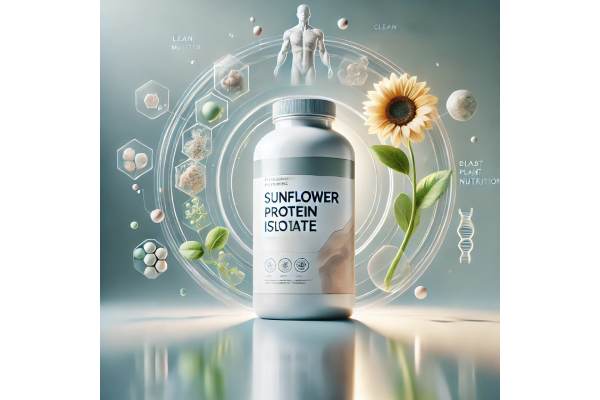
Sunflower protein isolate is emerging as a versatile plant-based protein ingredient made from dehulled, defatted sunflower seeds. Once the oil is removed, the remaining meal is processed to concentrate and purify the protein, usually to 80–90% protein by weight. Because it is free from soy and dairy, it attracts people seeking hypoallergenic, vegan, or more sustainable options.
Unlike basic seed flours, sunflower protein isolate is engineered for better digestibility, solubility, and functionality in foods. It can be used in shakes, baked products, meat alternatives, and high-protein snacks. Early research suggests high true digestibility, a favorable amino acid profile with some limitations, and the potential for bioactive peptides with antioxidant and anti-inflammatory activity.
This guide walks you through what sunflower protein isolate is, how it is produced, its nutritional and functional properties, potential health benefits, realistic dosage ranges, and possible side effects so you can decide how (or whether) it fits into your diet and lifestyle.
Key Insights
- Sunflower protein isolate is a highly concentrated, dairy-free and soy-free plant protein derived from defatted sunflower seeds.
- It offers high digestibility and a balanced amino acid profile, though lysine is relatively low and may need complementing from other foods.
- Typical supplement servings range from 20–30 g of sunflower protein isolate, within a daily protein intake of about 0.8–2.0 g/kg body weight.
- People with known sunflower seed allergy, severe seed or nut allergies, or significant kidney or liver disease should avoid or use sunflower protein isolate only under medical supervision.
Table of Contents
- What is sunflower protein isolate and how is it made?
- Sunflower protein isolate nutrition and amino acids
- Benefits and uses of sunflower protein isolate
- How to use sunflower protein isolate day to day
- How much sunflower protein isolate per day?
- Side effects, risks, and who should avoid it
- What current science says about sunflower protein isolate
What is sunflower protein isolate and how is it made?
Sunflower protein isolate is a refined protein ingredient produced from sunflower seeds (Helianthus annuus). After the oil is pressed out, the remaining “sunflower meal” still contains a high proportion of protein alongside fiber, residual fat, and plant compounds. Through additional processing, this meal can be transformed into a high-protein powder suitable for foods and supplements.
In most industrial processes, sunflower meal is first defatted more thoroughly and often dehulled to reduce fiber and improve taste. The proteins are then extracted in water at alkaline pH, where they become soluble. At this stage, the extract contains protein, minerals, and various plant compounds such as chlorogenic acid and other phenolics. To obtain an isolate, manufacturers separate the protein from this mixture, usually by:
- Adjusting the pH to the isoelectric point so the proteins precipitate out.
- Using filtration or centrifugation to collect the protein-rich fraction.
- Washing and neutralizing it to remove excess salts and off-tasting compounds.
- Drying (commonly by spray-drying) to produce a fine, light-colored powder.
Traditional processes often produced a dark green or brown powder because chlorogenic acid reacts with proteins. Newer methods focus on removing or reducing these phenolics, leading to better taste, color, and digestibility while maintaining functional properties like emulsifying and foaming.
The resulting isolate typically contains more than 80–90% protein on a dry basis, with very little carbohydrate and fat. Because it is naturally free of lactose and does not involve soy, it is attractive for people with milk or soy sensitivity, as well as those interested in diversifying their protein sources beyond pea or rice.
Sunflower protein isolate nutrition and amino acids
A typical sunflower protein isolate powder provides roughly 80–90 g of protein per 100 g, depending on the brand and specific process. The remaining weight includes residual fat (often around 5–8 g), small amounts of carbohydrate and fiber, and minerals such as magnesium, phosphorus, and potassium. Sodium content varies by processing method, so low-sodium formulations are preferable for frequent use.
From an amino acid standpoint, sunflower protein is built mainly from two storage protein families: 11S globulins (helianthinin) and 2S albumins. This structure gives sunflower protein a relatively balanced pattern of essential amino acids overall, but one important detail stands out: lysine is the limiting amino acid. In practice, that means sunflower protein alone does not fully meet the standard amino acid pattern used to evaluate protein quality, even though total essential amino acids are abundant.
True ileal digestibility of sunflower protein isolate appears to be high. In a controlled human study using biscuits containing 15N-labeled sunflower protein isolate, essential amino acid digestibility was close to 90%, and overall protein digestibility was only slightly lower than whey protein. However, because lysine is comparatively low, the calculated DIAAS (a modern metric for protein quality) was around 0.8–0.85, placing sunflower isolate in the category of “good but not optimal” for supporting all amino acid needs on its own.
On the positive side, sunflower protein is rich in sulfur-containing amino acids such as methionine and cysteine, and it tends to be high in arginine. Arginine is involved in nitric oxide production and vascular health, while sulfur amino acids support antioxidant systems and methylation reactions. This makes sunflower protein a useful complement to lysine-rich but sulfur-poor proteins such as legume proteins from peas, lentils, or chickpeas.
For most people using sunflower protein isolate as one of several protein sources, these limitations are practical rather than restrictive. When combined across a day with other plant or animal proteins, sunflower isolate can contribute meaningfully to total high-quality protein intake, with the added benefit of being free from lactose and soy.
Benefits and uses of sunflower protein isolate
Sunflower protein isolate offers two broad categories of potential benefits: general benefits of high-quality dietary protein, and more specific advantages tied to its unique composition and bioactive peptides.
Like other concentrated protein sources, sunflower protein isolate can help:
- Support maintenance and growth of lean body mass when consumed with resistance training.
- Improve satiety, which may help with appetite management and reduced overall energy intake.
- Contribute to adequate protein intake in vegan or vegetarian diets that might otherwise be low in certain amino acids.
Because sunflower protein is largely free of common allergens like milk, egg, and soy, it may be easier to incorporate into diets for people with those particular sensitivities, provided they are not allergic to sunflower seeds themselves. Its relatively low level of typical plant anti-nutritional factors compared to some legumes also makes it attractive from a digestive standpoint, although individual tolerance still varies.
Beyond basic protein nutrition, sunflower protein and its hydrolysates (protein that has been enzymatically broken into smaller peptides) are being studied for functional health effects. In laboratory and animal studies, sunflower-derived peptides have shown:
- Antioxidant activity, helping neutralize free radicals and reduce oxidative stress markers.
- Anti-inflammatory effects, including modulation of inflammatory signaling pathways.
- Potential blood pressure–modulating effects via inhibition of angiotensin-converting enzyme (ACE).
- Possible benefits for lipid metabolism and metabolic health.
These findings are promising, but most evidence so far comes from in vitro experiments and animal models, not long-term human clinical trials focused specifically on sunflower protein isolate. For now, it is more accurate to say that sunflower protein has the potential to deliver these benefits, particularly when processed into specific peptide fractions, rather than to claim these effects are proven outcomes of regular supplementation in humans.
In everyday use, sunflower protein isolate’s functional properties—such as emulsification, water-holding capacity, and foaming—make it valuable not only as a supplement powder but also as a “building block” in plant-based meat analogues, baked goods, high-protein snacks, and dairy alternatives. It can help improve texture, moisture retention, and protein content while keeping products free of major allergens like dairy and soy.
How to use sunflower protein isolate day to day
Sunflower protein isolate can be used much like other protein powders, but it has some quirks that are worth understanding so you can get better results in your kitchen.
First, solubility and mouthfeel. Unmodified sunflower protein isolates often have moderate solubility and can feel slightly grainy or chalky in water. Many modern products are processed or partially hydrolyzed to improve solubility and reduce sediment, but you may still notice a difference compared to whey. Blending rather than stirring, and using slightly warmer liquid, usually improves dispersion.
Common ways to use sunflower protein isolate include:
- Shakes and smoothies: Mix 20–30 g of powder in 250–350 ml of water, plant milk, or a mix of both. Adding fruit, cocoa, or spices like cinnamon can balance any residual seed-like flavor.
- Baking: Replace 10–30% of flour by weight with sunflower protein isolate in muffins, pancakes, or bread to increase protein content. You may need additional moisture or binding (for example, a little extra oil, applesauce, or ground flax) to keep texture soft.
- Plant-based meat alternatives: Combine sunflower protein isolate with textured vegetable protein, mushrooms, or legumes plus oil and seasonings to form high-protein patties, meatballs, or crumbles. Its emulsifying properties help bind fat and water in these mixtures.
- Dairy alternatives: Use moderate amounts in vegan yogurts, puddings, or cheese-style spreads to boost protein and improve body, while adjusting acids and gums to maintain a creamy texture.
- Savory sauces and soups: Whisk small amounts into sauces or soups at the end of cooking to enrich protein without relying on cream or cheese.
If you are trying sunflower protein isolate for the first time, start with a half serving (around 10–15 g) to gauge taste and digestive tolerance. You can then adjust the amount, recipes, and combinations with other proteins such as pea or rice protein.
Because sunflower protein isolate is relatively low in lysine, pairing it with lysine-rich foods (legumes, pea protein, soy products if tolerated, or animal proteins for non-vegans) throughout the day helps balance the overall amino acid profile. This does not require precise mixing at each meal; it is the daily pattern that matters most.
How much sunflower protein isolate per day?
There is no single “official” dosage for sunflower protein isolate. Instead, it should be viewed as one of the tools you can use to reach your overall daily protein target, which depends on body size, age, activity, and health status.
General daily protein intake guidelines often fall in these ranges:
- Around 0.8 g of protein per kg of body weight per day as a minimum to prevent deficiency in healthy adults with low activity.
- Approximately 1.0–1.2 g/kg per day for older adults or people recovering from illness or surgery, to help preserve muscle mass.
- About 1.2–2.0 g/kg per day for physically active individuals and those engaging in regular resistance training, depending on training volume and energy intake.
Within those totals, sunflower protein isolate can reasonably contribute anywhere from one small serving to several servings per day, provided total protein and energy intake remain appropriate and you tolerate it well.
Practical serving suggestions for sunflower protein isolate include:
- 20–30 g (roughly one standard scoop) once daily for people who already meet most of their protein needs from food and simply want a convenient boost.
- 20–30 g, one to two times daily, for athletes or very active people who struggle to reach higher protein targets with whole foods alone.
- Smaller servings of 10–15 g added to meals (for example, into breakfast porridge or an afternoon smoothie) for those who prefer to distribute protein evenly across the day.
For most healthy adults, using sunflower protein isolate to supply 20–60 g of their daily protein intake is reasonable, as long as the remainder comes from a variety of protein sources. Exceedingly high intakes of any isolated protein, especially in people with underlying kidney or liver disease, should be avoided unless guided by a healthcare professional.
When reading labels, pay attention to:
- Protein content per serving (aim for products providing at least 20 g of protein per 30 g scoop).
- Added ingredients such as sugars, sweeteners, flavorings, or gums if you prefer a simpler formulation.
- Sodium content, especially if you use multiple servings or have blood pressure concerns.
If you take medications or have chronic health conditions, discuss your planned protein target and supplement use with your doctor or dietitian. They can help you determine whether your kidneys and liver can comfortably handle higher protein intakes.
Side effects, risks, and who should avoid it
Sunflower protein isolate is generally considered safe for most healthy adults when used in moderation as part of a balanced diet. However, as with any concentrated food ingredient, it is not risk-free. Being aware of potential side effects and contraindications is important before making it a regular habit.
The most common side effects are digestive:
- Bloating, gas, or mild cramps, particularly if you introduce large servings quickly or if you are sensitive to concentrated proteins.
- Changes in stool consistency when you suddenly increase total protein intake or change fiber patterns in your diet.
These issues often improve when you start with smaller servings, take the powder with meals rather than on an empty stomach, and ensure adequate hydration.
Allergy is a more serious concern, though sunflower seed allergy appears to be relatively rare compared with peanut, tree nut, or soy allergy. Identified sunflower seed allergens include 2S albumins and a non-specific lipid transfer protein known as Hel a 3. Research in animal models suggests some sunflower seed storage proteins have sensitization potential, and case reports describe occupational asthma and food-induced anaphylaxis related to sunflower seeds.
Because sunflower protein isolate is derived from sunflower seeds, anyone with a known sunflower seed allergy, unexplained reactions to sunflower oil or seed-containing products, or a history of severe reactions to multiple seeds and nuts should avoid sunflower protein isolate unless specifically cleared by an allergist.
Other groups who should exercise caution include:
- People with moderate to severe chronic kidney disease, where very high protein intakes can worsen kidney workload.
- Those with advanced liver disease, where protein tolerance and ammonia handling may be impaired.
- Individuals on protein-restricted diets prescribed for specific metabolic or renal conditions.
- Children, pregnant women, or breastfeeding women considering frequent or high-dose use, where professional guidance is particularly important.
Quality-related risks are another consideration. Poorly controlled production can lead to residual solvents, contaminants, or off-flavors. Some sunflower protein ingredients have historically struggled with “greening” and bitterness due to chlorogenic acid interactions. Reputable producers use refined processing to reduce these components and test for contaminants such as heavy metals and mycotoxins.
Whenever possible, choose products from manufacturers that:
- Provide third-party testing results or certifications.
- Disclose the origin of raw materials.
- Clearly state allergen handling and cross-contact procedures.
If you experience symptoms such as hives, swelling, breathing difficulty, chest tightness, or severe gastrointestinal distress after consuming sunflower protein, stop using it immediately and seek urgent medical evaluation.
What current science says about sunflower protein isolate
Scientific interest in sunflower protein has increased significantly in recent years as food systems look for alternatives to soy and animal proteins. Several lines of research are particularly relevant if you are deciding whether sunflower protein isolate is a good choice for you.
First, there are compositional and functional studies. Detailed reviews of sunflower protein isolates describe their high protein purity, relatively low levels of common plant anti-nutrients, and functional traits such as good emulsifying capacity but often weaker foaming and gelling, which can be improved through enzymatic or physical modification. These traits explain why sunflower protein isolate works so well in plant-based meats, baked goods, and emulsified foods.
Second, digestibility and protein quality have been directly measured. In a carefully controlled human trial, biscuits made with sunflower protein isolate labeled with a stable isotope were fed to healthy adults. Researchers measured ileal amino acid digestibility and calculated modern protein quality metrics. They found:
- True ileal digestibility of indispensable amino acids close to 90%.
- Overall protein digestibility only slightly lower than whey.
- A DIAAS score under 1.0, primarily because of limited lysine relative to the reference pattern.
This means sunflower protein isolate is efficiently digested and absorbed, but it is somewhat limited by its amino acid pattern when used as the sole protein source. In real-world diets that combine different proteins, this limitation can be offset by variety.
Third, a growing body of work examines bioactive peptides derived from sunflower protein. Controlled hydrolysis of sunflower protein isolate with specific enzymes produces peptide mixtures that show in vitro and animal-model benefits including:
- Scavenging free radicals and reducing markers of oxidative stress.
- Modulating inflammatory pathways and immune cell behavior.
- Inhibiting enzymes involved in blood pressure regulation and possibly supporting cardiovascular health.
One advantage here is that sunflower protein is relatively rich in certain amino acids that lend themselves to forming antioxidant and ACE-inhibitory peptides. Researchers have also explored applications ranging from functional beverages to nutraceuticals and medical nutrition formulas.
Fourth, allergenicity is being mapped at the molecular level. Detailed analyses of 2S albumins and lipid transfer proteins in sunflower seeds aim to identify which structures carry the highest risk for sensitization. These studies confirm that while sunflower seed allergy is uncommon, it is real and mediated by specific seed proteins that may or may not be fully captured in all industrial isolates, depending on processing.
Finally, safety and contaminant profiles have been examined in modern production settings. Recent work on protein extraction from sunflower meal highlights improved nutritional quality, good amino acid profiles, and low levels of contaminants such as polycyclic aromatic hydrocarbons and mycotoxins when appropriate quality controls are in place.
Taken together, current evidence suggests that sunflower protein isolate is:
- A highly digestible, effective plant protein with a slightly imperfect amino acid profile.
- Functionally versatile in food applications, especially when processes are optimized.
- A promising source of bioactive peptides with antioxidant and anti-inflammatory potential, though human trials are still limited.
- Generally safe for the majority of people, with clear but relatively rare allergenic risks in susceptible individuals.
Future research will likely focus on long-term human outcomes (for example, effects on muscle mass, metabolic health, and cardiovascular markers) and on refining processing to further improve taste, solubility, and allergen management.
References
- The True Amino Acid Digestibility of 15N-Labelled Sunflower Biscuits Determined with Ileal Balance and Dual Isotope Methods in Healthy Humans 2022 (Human Digestibility Study)
- Sunflower protein isolates-composition, extraction and functional properties 2022 (Review)
- A Rational Approach for the Production of Highly Soluble and Functional Sunflower Protein Hydrolysates 2021 (Experimental Study)
- Health Benefits of Sunflower Seed Byproducts-Sunflower Seed Protein and its Hydrolysates 2025 (Systematic Review)
- Sensitization Potency of Sunflower Seed Protein in a Mouse Model: Identification of 2S-Albumins More Allergenic Than SFA-8 2021 (Allergenicity Study)
Disclaimer
The information in this article is for general educational purposes only and is not a substitute for personalized medical or nutritional advice. Sunflower protein isolate may not be appropriate for everyone, especially individuals with sunflower seed allergy, kidney or liver disease, or other medical conditions that require specific dietary restrictions. Always consult a qualified healthcare professional or registered dietitian before making significant changes to your diet, adding new supplements, or adjusting prescribed treatment plans. Never ignore professional medical advice or delay seeking it because of something you have read here.
If you found this guide helpful, you are warmly encouraged to share it with friends, family, or colleagues on Facebook, X (formerly Twitter), or any platform you prefer, and to follow our work on social media. Your support in sharing our content helps our team continue to research, write, and publish high-quality, evidence-informed health and nutrition articles.