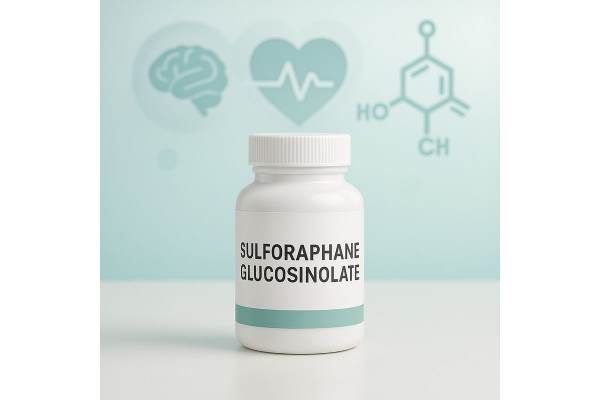
Sulforaphane glucosinolate, more commonly known as glucoraphanin, is the stable plant precursor of sulforaphane, a bioactive compound concentrated in broccoli sprouts and other cruciferous vegetables. When glucoraphanin meets the enzyme myrosinase—either from the plant or your gut bacteria—it is converted into sulforaphane, which activates powerful cellular defense pathways involved in antioxidant protection, detoxification, and inflammation control.
Because of these properties, sulforaphane glucosinolate has become a popular ingredient in broccoli sprout extracts and “SGS” supplements marketed for metabolic support, cellular protection, and healthy aging. Human studies suggest potential roles in supporting blood sugar balance, liver function, respiratory health, and protection against environmental pollutants, although research is still evolving and doses are not yet standardized.
This guide explains what sulforaphane glucosinolate is, how it works in the body, its evidence-based benefits, how to use food and supplements effectively, realistic dosage ranges, and safety considerations, including who should avoid high-dose use.
Key Insights for Sulforaphane Glucosinolate
- Sulforaphane glucosinolate (glucoraphanin) is a stable precursor that your body converts to sulforaphane, a potent activator of cellular antioxidant and detoxification pathways.
- Human trials with broccoli sprout and seed extracts show benefits for detoxification enzymes, metabolic markers, and responses to environmental pollutants at carefully standardized doses.
- Typical supplemental intakes in studies range roughly from the equivalent of 10–40 mg sulforaphane per day, often delivered as 30–200 mg glucoraphanin, depending on formulation and myrosinase content.
- Most reported side effects are mild and digestive (gas, loose stools, nausea), but very high doses have produced sedation and motor changes in animal studies, so long-term megadoses are not advisable.
- People who are pregnant, breastfeeding, taking medications with narrow therapeutic windows (such as anticoagulants, strong antidiabetics, or chemotherapy), or who have significant liver or kidney disease should avoid unsupervised high-dose sulforaphane glucosinolate supplements and seek medical advice first.
Table of Contents
- What is sulforaphane glucosinolate and how does it work?
- Evidence based benefits of sulforaphane glucosinolate
- How to take sulforaphane glucosinolate for best effect
- Sulforaphane glucosinolate dosage how much per day
- Side effects and safety of sulforaphane glucosinolate
- Who should avoid sulforaphane glucosinolate and what to use instead
What is sulforaphane glucosinolate and how does it work?
Sulforaphane glucosinolate is the chemical name for glucoraphanin, a member of the glucosinolate family found in cruciferous vegetables. It is especially concentrated in broccoli seeds and three-day-old broccoli sprouts, but it also appears in mature broccoli, kale, Brussels sprouts, and related plants.
On its own, glucoraphanin is relatively inert. The real activity appears when it is converted into sulforaphane, an isothiocyanate. This conversion requires an enzyme called myrosinase. Plants supply myrosinase in their own tissues, but it is separated from glucosinolates until the plant is chewed, chopped, or otherwise damaged. At that moment, myrosinase and glucoraphanin come into contact and sulforaphane is formed. Human gut microbes can also provide myrosinase-like activity, but the efficiency is highly variable between individuals.
Once formed, sulforaphane quickly enters cells and reacts with sensor proteins involved in redox and detoxification control. One of its best-characterized effects is activation of the Nrf2 pathway (nuclear factor erythroid 2–related factor 2). When Nrf2 is activated, it moves into the cell nucleus and switches on a large set of “phase 2” and antioxidant genes. These include enzymes such as glutathione S-transferases, NAD(P)H:quinone oxidoreductase 1, and heme oxygenase-1, which help neutralize reactive oxygen species and assist with the conjugation and elimination of electrophilic toxins.
In addition to Nrf2 activation, sulforaphane appears to modulate inflammatory pathways (for example, by influencing NF-κB signaling), affect histone deacetylase activity (an epigenetic mechanism), and influence mitochondrial function. These properties explain why sulforaphane glucosinolate is investigated across many conditions, from cardiovascular and metabolic diseases to neurodegenerative disorders and cancer prevention.
Because glucoraphanin is more stable than sulforaphane, supplement manufacturers often standardize products in “sulforaphane glucosinolate” (or SGS) rather than free sulforaphane. The actual sulforaphane exposure you receive then depends on how effectively the product (or your gut microbiota) can supply active myrosinase to convert glucoraphanin into sulforaphane.
Evidence based benefits of sulforaphane glucosinolate
Most of what we know about sulforaphane glucosinolate benefits comes from trials using broccoli sprout or seed extracts standardized in glucoraphanin, often with or without added myrosinase. These studies do not support miracle claims, but they do suggest a consistent pattern of modest, multi-system support when dosing and formulation are well controlled.
1. Detoxification and protection from pollutants
Several human trials using broccoli sprout beverages or extracts rich in glucoraphanin have demonstrated increased excretion of air pollutants such as benzene and acrolein, suggesting enhanced detoxification capacity. Participants consuming these preparations showed higher urinary levels of detoxified metabolites and activation of phase 2 enzymes, consistent with sulforaphane’s Nrf2-driven effects.
2. Metabolic health and blood sugar
Randomized studies in people with impaired glucose control have evaluated sulforaphane-rich broccoli sprout extracts as add-on therapy. These trials have reported reductions in fasting glucose and improvements in insulin sensitivity, with the greatest benefits often observed in those starting with higher baseline glucose levels. While these results are promising, they are not a substitute for standard diabetes care and require more confirmatory research before routine clinical use.
3. Liver function and detox support
In a clinical trial involving men with fatty liver–type abnormalities, glucoraphanin-rich broccoli sprout extract improved certain liver enzymes and markers of hepatic function over several months. This supports the idea that sustained Nrf2 activation and enhanced detoxification may relieve some oxidative and inflammatory stress on the liver, particularly in lifestyle-related liver dysfunction.
4. Respiratory and airway support
A smaller human study using sulforaphane-rich preparations showed increased expression of antioxidant enzymes in the upper airway, with exploratory evidence of improved responses to oxidant exposure. This aligns with Nrf2’s known role in protecting respiratory epithelium against air pollutants and inflammation, though clinical symptom outcomes remain less well established.
5. Neuroprotective and cognitive research
Preclinical work suggests sulforaphane may support neuronal resilience, reduce oxidative and inflammatory stress in the brain, and modulate pathways involved in synaptic plasticity. Limited human data, including pilot studies in conditions like autism spectrum disorder and schizophrenia, indicate potential improvements in specific symptom domains, but sample sizes are small and formulations vary widely. At present, these uses remain exploratory rather than established indications.
Altogether, current evidence suggests sulforaphane glucosinolate–based preparations may provide broad, low-intensity support across detoxification, metabolic, hepatic, and possibly neurological systems when used as part of a comprehensive lifestyle approach. They should be viewed as adjuncts, not replacements, for standard medical care.
How to take sulforaphane glucosinolate for best effect
Using sulforaphane glucosinolate effectively is less about “more is better” and more about maximizing conversion to sulforaphane while keeping doses sensible. Several practical strategies can improve real-world benefits.
1. Choose formulations that address myrosinase
Because glucoraphanin requires myrosinase to form sulforaphane, products that include active plant myrosinase (for example, from broccoli or radish extracts) usually produce higher and more consistent sulforaphane levels than glucoraphanin-only capsules. Human pharmacokinetic studies show substantially higher sulforaphane bioavailability when glucoraphanin is co-delivered with active myrosinase compared with glucoraphanin alone.
If you use a glucoraphanin-only supplement, you can potentially enhance conversion by:
- Taking it with a small amount of raw cruciferous vegetable (such as a bite of raw broccoli, radish, or mustard greens) to supply additional myrosinase.
- Ensuring that you chew food thoroughly rather than swallowing capsules with a large, very hot drink, which could inactivate enzyme activity.
2. Combine with broccoli foods for layering
Many people prefer a “food-first plus supplement” strategy:
- Include cruciferous vegetables (broccoli, Brussels sprouts, cauliflower, kale, cabbage) several times per week.
- Add broccoli sprouts or microgreens when available, since these are especially rich in glucoraphanin.
- Use a standardized sulforaphane glucosinolate supplement intermittently or daily, depending on your goals and practitioner guidance.
This layered approach spreads intake across the day and may better mimic dietary patterns used in some observational studies.
3. Pay attention to cooking methods
If you rely heavily on food sources:
- Light steaming generally preserves more glucoraphanin and plant myrosinase than prolonged boiling or microwaving.
- Very high heat and long cooking times can denature myrosinase, leaving more of the conversion work to gut microbes, which is less predictable.
One practical compromise is to add a small amount of raw crucifer (such as finely chopped raw broccoli or radish) to cooked dishes just before serving. This can reintroduce some myrosinase to cooked vegetables.
4. Timing and pairing
Sulforaphane glucosinolate supplements are typically taken once or twice daily, with or without food. Some people tolerate them better with a small meal or snack, especially at higher doses. Because sulforaphane influences detoxification enzymes, avoid taking large doses at the same time as medication without medical advice, in order to reduce potential interactions.
5. Start low, adjust gradually
If you are new to crucifer-rich foods or sulforaphane glucosinolate supplements, begin with a low dose to assess digestive tolerance, then increase slowly over one to two weeks. This is especially important if you have a sensitive digestive system or a history of irritable bowel–type symptoms.
Sulforaphane glucosinolate dosage how much per day
There is currently no universally accepted “ideal” dose of sulforaphane glucosinolate. Studies vary widely in how they express dose (micromoles versus milligrams, glucoraphanin versus sulforaphane, with or without myrosinase), which makes direct comparisons challenging. However, some practical ranges have emerged from human research and post-market experience.
1. Typical research-level intakes
Clinical trials using stabilized sulforaphane or broccoli sprout extracts have used:
- Free sulforaphane in the range of about 10–60 mg per day for several months in specific clinical contexts.
- Broccoli sprout or soup preparations delivering approximately tens to hundreds of micromoles of glucoraphanin or sulforaphane equivalents per day, often translating to several dozen milligrams of active compound.
These doses are usually given under medical supervision and are not meant as universal recommendations.
2. Common supplemental ranges in practice
Consumer supplement guidance and some expert summaries often converge on a more moderate range:
- Roughly 10–40 mg sulforaphane equivalents per day, which may correspond to around 30–200 mg sulforaphane glucosinolate (glucoraphanin), depending on the product’s labeled conversion assumptions and whether myrosinase is included.
Because conversion from glucoraphanin to sulforaphane can vary significantly between low-myrosinase and high-myrosinase formulations, the same milligram dose of glucoraphanin may deliver very different sulforaphane exposure from one brand to another.
3. Food-based equivalents
For those relying on diet:
- Portions of roughly 70–100 g of fresh broccoli sprouts can deliver physiologically meaningful amounts of glucoraphanin and sulforaphane, especially if consumed raw or lightly steamed.
- Regular intake of mixed cruciferous vegetables (for example, one to two servings per day) adds background glucosinolate exposure that may complement lower-dose supplements.
4. Practical starting strategy
For generally healthy adults:
- A conservative starting supplement dose might be at the lower end of the range, for example, around 10 mg sulforaphane equivalents (often one low-strength capsule or half the typical label dose), taken once daily with food.
- If well tolerated after one to two weeks, some individuals increase toward 20–40 mg sulforaphane equivalents per day, especially if working with a practitioner on specific metabolic or detoxification goals.
5. Duration of use
Research studies have safely used sulforaphane or glucoraphanin-rich preparations for periods between a few weeks and up to a year, depending on the design. Long-term, open-ended use at moderate doses appears reasonable for many people, but data on lifelong high-dose supplementation are limited. Cycling (for example, 5 days on and 2 days off, or several months on followed by breaks) is a common pragmatic approach, though not formally studied.
Because individual needs and responses vary, dose decisions are best made with input from a healthcare professional, especially for people with chronic illnesses or complex medication regimens.
Side effects and safety of sulforaphane glucosinolate
Sulforaphane glucosinolate from foods is generally considered safe for most people, and high intakes of cruciferous vegetables are associated with favorable health outcomes in population studies. However, concentrated supplements delivering high sulforaphane exposure deserve more careful attention.
1. Common, usually mild side effects
In human trials and consumer use, the most frequently reported side effects include:
- Digestive symptoms such as gas, bloating, abdominal discomfort, and loose stools.
- Transient nausea, especially if taken on an empty stomach or at higher doses.
- Mild changes in stool odor related to sulfur-containing metabolites.
These effects are usually dose-related and often improve when the dose is reduced or taken with food.
2. High-dose and experimental safety signals
Animal toxicology work, as well as summaries of human trial data, suggest that very high doses of sulforaphane can cause problems:
- In rodent models, milligram-per-kilogram doses far higher than typical human supplement intakes have been associated with sedation, hypothermia, impaired motor coordination, and even fatalities.
- These doses are many times higher than those used in most human studies, but they underline the principle that more is not always better with bioactive compounds.
3. Effects on drug metabolism
Sulforaphane influences detoxification and antioxidant enzymes, including pathways involved in drug metabolism. While this is part of its therapeutic interest, it also raises the possibility of interactions:
- Induction or inhibition of certain phase 2 enzymes and efflux transporters could alter the handling of medications processed through these pathways.
- Theoretical concerns are greatest with drugs that have a narrow therapeutic index, such as some anticoagulants, antiepileptics, immunosuppressants, and certain chemotherapy agents.
People taking such medications should involve their prescribing clinician before starting concentrated sulforaphane glucosinolate supplements.
4. Thyroid and iodine considerations
Cruciferous vegetables contain goitrogenic compounds that can, in theory, influence thyroid function when consumed in very large amounts, especially in the setting of low iodine intake. Normal culinary amounts of cruciferous vegetables are widely considered safe, and sulforaphane-focused interventions have not consistently shown clinically significant thyroid disturbances. Nonetheless, individuals with unstable hypothyroidism may wish to introduce high-dose broccoli extracts cautiously and monitor thyroid function with their healthcare provider.
5. Pregnancy, breastfeeding, and children
Data on the use of high-dose sulforaphane glucosinolate supplements in pregnancy, lactation, and children are limited. Some early-phase trials explore nutritional broccoli sprout interventions in pregnancy, but these are tightly controlled research settings rather than general recommendations.
As a precaution:
- High-dose supplements are best avoided during pregnancy and breastfeeding unless part of a clinical trial or specifically recommended by a specialist.
- For children, food sources of cruciferous vegetables are preferred, and any supplement use should be supervised by a pediatric professional.
Who should avoid sulforaphane glucosinolate and what to use instead
Although sulforaphane glucosinolate can be a useful tool for many adults, not everyone is an ideal candidate for concentrated supplements. Understanding who should be cautious, and which alternatives might be safer, helps personalize its use.
1. Groups that should avoid or strictly limit high-dose supplements
It is prudent to avoid unsupervised high-dose sulforaphane glucosinolate supplements if you:
- Are pregnant or breastfeeding, due to insufficient safety data for concentrated preparations.
- Have significant liver or kidney disease, where changes in detoxification and metabolite handling could be problematic.
- Take medications with a narrow therapeutic window (certain anticoagulants, immunosuppressants, chemotherapy, strong antidiabetics, and some antiepileptics), unless your prescribing clinician is closely involved.
- Have a history of severe sensitivity to cruciferous vegetables or prior clear adverse reactions to broccoli sprout or seed extracts.
In these situations, focusing on modest dietary crucifer intake within a balanced eating pattern is usually a safer approach.
2. When to pause or reduce use
Even for generally healthy users, you should consider lowering or stopping sulforaphane glucosinolate supplements if you notice:
- Persistent or severe gastrointestinal symptoms not relieved by dose reduction.
- New or unexplained fatigue, dizziness, or unusual neurologic symptoms.
- Unexpected changes in lab tests (for example, liver enzymes) observed during routine check-ups, especially if they appeared after starting high-dose supplements.
Discuss such changes with a healthcare professional before resuming or increasing intake.
3. Safer alternatives and adjuncts
If concentrated sulforaphane glucosinolate is not appropriate, you can still support similar pathways with gentler strategies:
- Dietary crucifers: Regular intake of broccoli, cabbage, kale, and Brussels sprouts provides a diverse mix of glucosinolates at culinary doses that most people tolerate well.
- General antioxidant diet patterns: Patterns rich in fruits, vegetables, whole grains, legumes, nuts, and seeds support overlapping antioxidant and anti-inflammatory pathways.
- Lifestyle strategies: Good sleep, regular physical activity, stress management, and avoidance of tobacco and excessive alcohol all strongly influence oxidative stress and detoxification capacity, and have much more robust outcome data than any single supplement.
4. Using sulforaphane glucosinolate as part of a broader plan
For many people, the most balanced approach is to:
- Base daily nutrition on whole foods, including cruciferous vegetables.
- Consider a moderate-dose, well-formulated sulforaphane glucosinolate supplement as an adjunct, particularly for periods of higher environmental exposure or specific health goals.
- Reassess periodically with a practitioner, rather than assuming permanent daily high-dose use.
This mindset keeps sulforaphane glucosinolate in its proper place: a useful tool within a larger, evidence-informed lifestyle and medical plan.
References
- Sulforaphane Bioavailability from Glucoraphanin-Rich Broccoli: Control by Active Endogenous Myrosinase 2015 (RCT / Human pharmacokinetics)
- Glucoraphanin conversion into sulforaphane and related isothiocyanates: Major facts paving the way for future clinical strategies 2025 (Review)
- KEAP1 and done? Targeting the NRF2 pathway with sulforaphane in disease prevention 2008 (Mechanistic Review)
- Oral sulforaphane increases Phase II antioxidant enzymes in the human upper airway 2009 (Human trial)
- Sulforaphane: Its “Coming of Age” as a Clinically Relevant Nutraceutical in Human Health 2019 (Systematic Clinical Review)
Disclaimer
The information in this article is for educational purposes only and does not replace personalized medical advice, diagnosis, or treatment. Sulforaphane glucosinolate and related broccoli extracts can influence detoxification pathways and drug metabolism, and may not be appropriate for everyone. Always consult a qualified healthcare professional—such as a physician, pharmacist, or registered dietitian—before starting, stopping, or changing any supplement, especially if you are pregnant, breastfeeding, have a medical condition, or take prescription or over-the-counter medications. Never disregard professional medical advice or delay seeking it because of something you have read here.
If you found this guide helpful, please consider sharing it on Facebook, X (formerly Twitter), or any platform you prefer, and follow our work on social media. Your support in sharing our content helps our team continue to research, write, and provide high-quality, evidence-informed health articles.