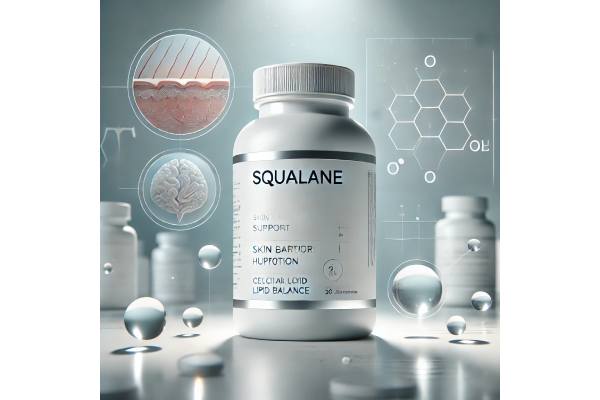
Squalane has become one of the most trusted modern moisturising ingredients, especially in minimalist and “skin-barrier-first” routines. It is a lightweight, stable oil that is chemically similar to lipids made naturally in human skin. Unlike many traditional plant oils, squalane is fully saturated, which means it resists oxidation, stays clear and odourless over time, and is much less likely to irritate sensitive skin.
Today, most cosmetic squalane is produced from olives, sugarcane, or other plant sources, offering a more sustainable and cruelty-free alternative to the shark-derived squalene that dominated the market in the past. Formulators value squalane because it glides smoothly, absorbs quickly, and mixes easily with other active ingredients without destabilising them.
This guide explains what squalane is, how it differs from squalene, its main benefits for skin and hair, how to use it in a routine, realistic dosage ranges, safety considerations, and the current state of research so you can make confident, informed choices.
Quick Overview
- Squalane is a stable, skin-identical emollient that boosts hydration, softens texture, and helps support the skin barrier.
- It suits most skin types, including sensitive and acne-prone skin, because it is lightweight and generally non-comedogenic.
- Typical facial use is about 0.1–0.5 mL (2–5 drops) once or twice daily, or 2–15% when included in moisturisers and serums.
- People with known allergies to olives, sugarcane derivatives, or previous reactions to squalane-based products should patch-test carefully or avoid it.
Table of Contents
- What is squalane and how is it different from squalene?
- What are the main skin benefits of squalane?
- How to use squalane for face, body, and hair
- How much squalane should you use each day?
- Squalane side effects, safety, and who should avoid it
- What does the research say about squalane?
What is squalane and how is it different from squalene?
Squalane is a saturated hydrocarbon with the formula C₃₀H₆₂. In simpler terms, it is a clear, odourless, stable oil that belongs to the same family of lipids naturally present in human sebum. It is produced by hydrogenating squalene, an unsaturated lipid our bodies use as a building block for cholesterol and other important molecules. This hydrogenation step is crucial: it replaces squalene’s double bonds with single bonds, which makes squalane much more resistant to oxidation and breakdown.
Squalene occurs naturally in the outermost layers of the skin and helps maintain suppleness, but it is chemically fragile. When exposed to air and light, squalene oxidises, which can contribute to irritation, clogged pores, and a dull appearance over time. Squalane, by contrast, is highly stable and does not readily oxidise on the skin or in the bottle. That stability is one reason it is so widely used as a base oil in cosmetic formulas.
Historically, commercial squalene (and therefore squalane) was sourced from deep-sea shark liver oil. This raised obvious ethical and ecological concerns. Modern cosmetic-grade squalane is overwhelmingly plant-derived. Common sources include:
- olives (olive-sourced squalane),
- sugarcane, produced via fermentation and hydrogenation, and
- less commonly, rice bran or other vegetable oils.
In all of these cases, the resulting squalane molecule is the same; what differs is the sustainability profile and potential trace impurities. Sugarcane-derived squalane produced by fermentation is particularly valued for its purity, consistency, and lower environmental footprint.
Functionally, squalane is classified as an emollient and skin-conditioning agent. It creates a thin, flexible film on the skin’s surface that helps reduce transepidermal water loss while feeling lighter and less greasy than many plant oils or petrolatum-based products. It also spreads easily and enhances the slip of creams, serums, and sunscreens, which is why you see it so often near the top of ingredient lists.
What are the main skin benefits of squalane?
Most people reach for squalane because it promises better hydration without heaviness. At a practical level, squalane’s benefits fall into several overlapping categories: moisturising, barrier support, soothing, and cosmetic elegance.
First, squalane is an excellent emollient. It fills in microscopic gaps between the cells of the outer skin layer, leaving the surface feeling smoother and more flexible. Many moisturisers containing squalane demonstrate measurable improvements in skin hydration and reductions in transepidermal water loss. Users typically describe their skin as “soft,” “bouncy,” or “plump” rather than oily or coated.
Second, squalane supports barrier function. The outermost layer of the skin relies on a mix of lipids, including ceramides, cholesterol, and fatty acids, to maintain its integrity. While squalane does not replace these core lipids, it behaves similarly to natural sebum and helps reinforce that protective film. When the barrier is compromised, the skin tends to lose water faster and becomes more reactive. Introducing a stable, skin-mimicking lipid such as squalane can be a gentle way to help restore comfort while other barrier-repair actives (like ceramides or niacinamide) do their work.
Third, squalane is usually well tolerated by sensitive, redness-prone, or eczema-prone skin. Because it is fully saturated, it is less likely to form irritating oxidation products under sun exposure than many unsaturated plant oils. Several modern studies suggest that saturated hydrocarbons like squalane are less prone to generating inflammatory byproducts than unsaturated lipids when exposed to ultraviolet light. This supports its use in daytime moisturisers and sunscreens, particularly for people in sunny climates or with reactive skin.
Fourth, squalane is generally non-comedogenic. Its molecular structure allows it to spread in a very thin layer without clogging pores in most users. That makes it a reasonable choice for oily or combination skin types that want the benefits of an oil without worsening breakouts. It can also help balance overly stripped skin, for example after using harsh cleansers or acne medications, by providing comfort without adding a heavy occlusive layer.
Finally, squalane enhances the performance of other ingredients. Because it spreads easily and dissolves many oil-soluble actives, formulators often use it to carry antioxidants, retinoid-like ingredients such as bakuchiol, and botanical extracts deeper into the superficial layers of the skin. In clinical work with squalane-containing serums, improvements in elasticity, fine lines, and overall texture are often attributed to the combined action of these actives with squalane as a well-tolerated vehicle.
How to use squalane for face, body, and hair
Squalane is versatile and relatively forgiving, but how you use it can change how effective and comfortable it feels. The main variables are where you apply it, when in your routine you use it, and how much you apply.
For the face, pure squalane oil can be used as a stand-alone moisturiser or layered with other products. A common routine is:
- Cleanse with a gentle, low-foaming cleanser.
- Apply water-based products such as toners, essences, or serums.
- While the skin is still slightly damp, apply 2–3 drops of squalane, spreading it over the face and neck.
- If your skin is very dry, seal with a cream moisturiser on top; if you are oily, you might skip this final step.
In the morning, you can layer squalane either underneath or mixed into your moisturiser, followed by sunscreen. At night, some people prefer to apply it as the final step to lock in hydration. If you are using strong actives such as retinoids or exfoliating acids, applying squalane afterward can help reduce dryness and tightness.
For the body, squalane works well as a “booster” to your usual lotion or as a targeted oil for dry areas. You can add a few drops to your body cream in the palm of your hand before applying it, or massage a small amount of neat squalane into particularly dry zones like elbows, shins, or hands. Because it spreads easily, a little goes a long way; start with less than you think you need and build up. Many people find it particularly helpful after showering, when applied to slightly damp skin.
Squalane also has uses in hair care. Its light texture makes it a useful alternative to heavier oils such as argan or coconut oil. You can:
- apply 1–3 drops to mid-lengths and ends of damp hair as a leave-in treatment,
- smooth a tiny amount over dry lengths to reduce frizz and add shine, or
- use a slightly larger amount as a pre-shampoo oil treatment, leaving it on for 15–30 minutes before washing.
Regardless of the area of use, patch testing is wise, especially if you have a history of sensitivity. Apply a small amount behind the ear or on the inner forearm for several days in a row to check for redness, itching, or breakouts. Because squalane is often combined with other ingredients, any reaction may be due to fragrance, preservatives, or active compounds rather than the squalane itself, so it is helpful to test both the pure oil (if you use it) and finished products.
How much squalane should you use each day?
Unlike vitamins or oral supplements, squalane does not have a standard “dose” measured in milligrams for topical use. Instead, the focus is on practical application amounts and the concentration in finished products. Still, it is helpful to have some reference ranges to avoid both waste and potential problems like shine or product pilling.
For the face, most people do well with approximately 0.1–0.5 mL per application, which corresponds to roughly 2–5 drops from a standard dropper bottle. That is usually enough to cover the face and neck in a thin layer without leaving a greasy film. If your skin is oily or combination, start at the lower end; if it is very dry or mature, you may prefer the higher end at night. Applying this amount once or twice daily is typical in both clinical and real-world settings.
In cosmetic formulations such as creams and serums, squalane is commonly used in the 2–15% range. Lighter hydrating serums may include around 2–5% to improve slip and reduce water loss without feeling oily. Richer creams and facial oils can climb to 10–20%, and some products contain 100% squalane as a single-ingredient oil. Safety assessments indicate that even very high leave-on concentrations are well tolerated on intact skin in the general population.
For body care, the amount depends on the area you treat. As a rough guide:
- hands: 1–2 drops (about 0.05–0.1 mL) massaged in, often mixed with your usual hand cream,
- arms or lower legs: about 0.5–1 mL, either neat or blended into lotion,
- full body after a shower: 1–3 mL, ideally on slightly damp skin.
For hair, using too much can easily weigh strands down. Start with 1–2 drops rubbed between the palms and smoothed over mid-lengths and ends, then adjust gradually. Thicker or coarser hair types may tolerate slightly more, while fine hair often needs less than a drop per section.
Oral use of squalane is uncommon compared with squalene and is not necessary for skin benefits. While small amounts of related lipids are present in many foods, using squalane as an oral supplement is not standard practice. If you come across ingestible formulas that include squalane, treat them like any other dietary supplement: review the full ingredient list, consider the total amount per day in milligrams, and speak with a healthcare professional before use, especially if you have chronic conditions or take medication.
In daily life, the simplest guideline is to use the smallest amount of squalane that gives you the desired level of slip and comfort, avoid layering many oil-rich products on top of one another, and adjust seasonally. In hot, humid climates or for oily skin, you might reserve larger amounts for night-time; in cold, dry weather, you might increase frequency or pair squalane with richer occlusives.
Squalane side effects, safety, and who should avoid it
Squalane has a strong safety record as a cosmetic ingredient. Industry safety panels have reviewed data from animal testing, patch tests, and decades of consumer use and concluded that squalane is safe in the concentrations and formats commonly used in personal care products. Pure squalane shows very low acute toxicity, minimal irritation potential, and a low tendency to sensitise the skin in standardised tests.
In everyday use, most people experience squalane as non-irritating, even at 100% concentration on intact skin. It is widely used in products marketed for sensitive, dry, or barrier-compromised skin, and many people with eczema or rosacea find it more tolerable than strongly fragranced products or certain unsaturated oils. Squalane is also typically considered acceptable during pregnancy and breastfeeding when used topically, although it is still sensible to review any new routine with a healthcare professional.
Despite this generally favourable profile, a few caveats apply. Rarely, individuals may develop contact dermatitis to squalane itself or to impurities present in specific grades of the ingredient. More commonly, reactions occur because of other components in a product that happens to contain squalane, such as fragrance, botanical extracts, or preservatives. That is why patch testing both pure squalane and the final formulation can help clarify what your skin tolerates.
From an acne perspective, squalane is usually described as non-comedogenic or very low on comedogenicity scales. However, no ingredient is universally safe for every acne-prone person. Some individuals may find that heavy use of oils, even stable ones, worsens congestion or shine. If you are very breakout-prone, it may be best to:
- introduce squalane gradually,
- use it once daily at night at first,
- keep the amount to 2–3 drops, and
- avoid combining it with many other rich, occlusive products.
Certain people should exercise extra caution or avoid squalane-based products altogether. These include:
- anyone with a known allergy to squalane, squalene, or similar hydrocarbons,
- individuals with confirmed allergies to specific plant sources (for example, olives) when the squalane is derived from that plant,
- people who have previously experienced unexplained rashes or swelling after using multiple squalane-rich products, and
- those under the care of a dermatologist for complex skin conditions, where every new product should ideally be reviewed as part of a coordinated plan.
Finally, sustainability and ethical sourcing are part of “safety” in a broader sense. If you wish to avoid animal-derived ingredients, look for labels such as “100% plant-derived squalane” or “sugarcane-derived squalane,” and buy from brands that clearly state they do not use shark liver oil. This not only aligns your skincare with your values but also supports the industry’s shift toward more sustainable production methods.
What does the research say about squalane?
Although squalane has been used in cosmetics for decades, more detailed scientific work on how it behaves in and on the skin has accelerated in recent years. Much of this research focuses on its safety, its role in barrier support, its interaction with other lipids, and its usefulness as a vehicle for active compounds.
Comprehensive safety assessments of squalane and its precursor squalene have reviewed animal toxicity studies, irritation and sensitisation tests, and real-world usage data. These reviews conclude that squalane is safe in current cosmetic practices, even when used at very high concentrations in leave-on products, with low rates of irritation or allergy in humans. This provides a strong foundation for its use in moisturisers, serums, and cleansing products across a wide range of skin types.
On the mechanistic side, recent laboratory work has compared squalane with unsaturated lipids such as oleic and linoleic acid under ultraviolet exposure. In mouse and cell models, squalane at typical cosmetic concentrations did not significantly worsen UV-induced oxidative damage or inflammation, while higher concentrations of unsaturated fatty acids generated more lipid peroxidation products and upregulated pro-inflammatory genes. These findings support the idea that fully saturated emollients like squalane may be particularly suitable for daytime formulations and for oily or acne-prone skin, where minimising oxidised lipids is desirable.
Other studies examine how squalane influences the delivery of active ingredients. Ex vivo skin experiments using pig skin have shown that adding squalane to water-in-oil emulsions can increase the residence time of certain polyphenols in the skin, effectively enhancing their local availability while reducing rapid penetration. This suggests that squalane can help position actives where they are most useful—within the upper layers of the skin—rather than allowing them to pass through too quickly.
Clinical and cosmetic trials involving products that contain squalane alongside other actives provide more real-world context. For example, facial oil serums combining squalane with ingredients such as bakuchiol have been associated with improvements in hydration, elasticity, and overall appearance over several weeks of daily use, with good tolerability. Although the benefits in such formulations cannot be attributed solely to squalane, its presence as a non-irritating carrier and barrier-supporting lipid is a key part of their success.
From a sustainability angle, biotechnological research has focused on producing high-purity squalane via fermentation, particularly from sugarcane. Reviews of fermentation in cosmetics highlight this molecule as a flagship example of how biotechnology can replace less sustainable extraction methods while delivering consistent ingredient quality. This has made plant- and fermentation-derived squalane the norm in modern skincare, rather than the exception.
Overall, current evidence supports squalane as a safe, stable, and effective emollient that helps maintain skin hydration and barrier function, with additional benefits as a vehicle for active ingredients. Future research will likely refine our understanding of its performance in different skin conditions and expand clinical data, but existing findings already justify its widespread use as a foundational moisturising ingredient.
References
- Safety Assessment of Squalane and Squalene as Used in Cosmetics, 2019 (Safety Review)
- Oxidative-Inflammatory Modulation of Skin Lipid Metabolism by Squalane, Oleic Acid, and Linoleic Acid, 2025 (Experimental Study)
- Effect of squalane-based emulsion on polyphenols skin penetration: Ex vivo skin study, 2022 (Experimental Study)
- Daily use of a bakuchiol and squalane-containing face serum impacts skin esthetics, 2023 (Clinical Cosmetic Study)
- Unlocking the Potential of Fermentation in Cosmetics: A Review, 2023 (Review)
Disclaimer
The information in this article is intended for general educational purposes and does not replace personalised advice from a dermatologist, pharmacist, or other qualified healthcare professional. While squalane is widely considered safe and well tolerated in cosmetic use, individual responses can vary, and long-term effects for specific medical conditions have not been fully studied. Always patch-test new products, review ingredient lists if you have allergies or sensitive skin, and consult a healthcare professional before introducing new products if you are pregnant, breastfeeding, managing chronic illness, or using prescription treatments. Never ignore or delay seeking professional medical advice because of something you have read online.
If you found this article helpful, you are welcome to share it on Facebook, X (formerly Twitter), or any platform you prefer, and to follow our work on social media. Thoughtful sharing helps our team continue creating careful, evidence-informed content for readers like you.