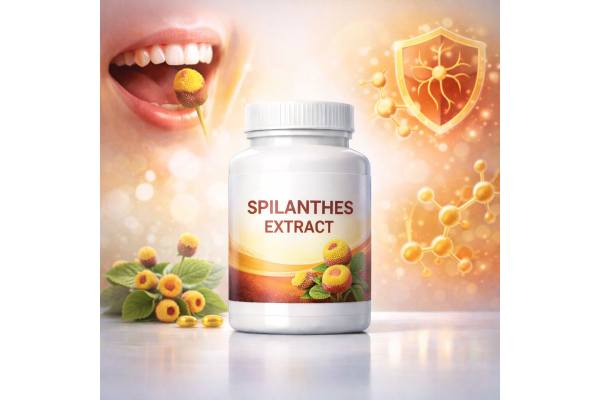
Spilanthes extract, often derived from the toothache plant Spilanthes acmella (also known as Acmella oleracea or paracress), has moved from traditional folk remedy to modern supplement shelves and cosmetic formulas. Traditionally chewed for tooth pain and oral infections, the plant produces a distinctive tingling, numbing sensation that many people still use for fast, local relief. Today, standardized extracts rich in spilanthol and related alkylamides appear in products that target skin firmness, male sexual function, joint comfort, and immune support.
This guide explains what Spilanthes extract is, how it appears to work, where the evidence is strongest, and where claims are still speculative. You will also find practical information on typical dosages, ways to use it (oral, topical, oral-care), safety considerations, and who should avoid it. The goal is to give you enough context to discuss Spilanthes extract intelligently with a healthcare professional and to evaluate products with a critical, informed eye.
Key Insights and Quick Facts for Spilanthes Extract
- Spilanthes extract contains spilanthol and related compounds that can provide local numbing, anti-inflammatory, and antioxidant effects.
- Topical formulas with Spilanthes are widely used for short-term skin smoothing and wrinkle softening, while oral extracts are being studied for male sexual function and joint comfort.
- Common supplement doses range from about 250 mg to 1,000 mg Spilanthes extract per day, often standardized for spilanthol, taken for limited periods.
- People who are pregnant or breastfeeding, have hormone-sensitive conditions, severe heart disease, or are on complex medication regimens should avoid unsupervised use.
Table of Contents
- What is Spilanthes extract?
- Spilanthes extract benefits for health and skin
- How to use Spilanthes extract in daily life
- Spilanthes extract dosage and timing
- Side effects, interactions, and who should avoid it
- What current research says about Spilanthes extract
What is Spilanthes extract?
Spilanthes extract is a concentrated preparation from the aerial parts (flowers and leaves) of Spilanthes acmella, a small herb in the Asteraceae family. The plant is commonly called the toothache plant, electric daisy, or paracress. Its yellow, cone-shaped flower heads have been chewed in many traditional systems of medicine for rapid relief of tooth pain, mouth sores, and throat discomfort. The extract captures the most active components of these parts in a standardized form.
The primary bioactive molecule is spilanthol, a pungent N-alkylamide that causes the characteristic tingling, numbing, and salivation when the plant is chewed. Spilanthol and related alkylamides can interact with sensory nerve receptors in the mouth and may modulate inflammatory pathways, oxidative stress, and vascular tone. In addition, Spilanthes contains flavonoids, triterpenoids, phenolic acids, and essential-oil components that contribute antioxidant and anti-inflammatory activity.
Commercial Spilanthes extracts typically fall into two broad categories. First, there are internal-use extracts such as capsules, tablets, and liquid tinctures, often standardized to a specific percentage of spilanthol (for example around 3.5 percent). Second, there are topical cosmetic extracts included in serums, creams, and oils designed to smooth fine lines and improve the perception of skin firmness. Some products also use Spilanthes in oral-care formulations such as mouthwashes or herbal sprays.
It is important to distinguish Spilanthes extract from other tingling or “numbing” botanicals. For example, Sichuan pepper and Heliopsis longipes also cause tingling but contain different chemistries. When you read labels, look specifically for Spilanthes acmella or Acmella oleracea, and check whether the product gives information about spilanthol content or plant part used. This is one of the best ways to compare products and judge how concentrated they are.
Spilanthes extract benefits for health and skin
Spilanthes extract has a wide range of traditional uses and a growing, though still limited, body of modern research. Most claimed benefits fall into four main categories: oral and dental comfort, skin appearance, musculoskeletal and joint support, and male sexual health and metabolic markers. The strength of evidence is not equal across these areas, so it helps to understand where the data are more robust.
For oral health, Spilanthes’ classic use as a toothache remedy stems from its fast-acting numbing effect. Chewing the flowers or using an extract in the mouth can temporarily reduce the perception of pain and may increase salivation, which naturally supports oral cleansing. Laboratory work suggests antibacterial and antifungal activity against some oral microbes, although human trials in this area are limited. Many modern herbalists still use Spilanthes as a short-term adjunct for minor oral discomfort, not as a replacement for dental care.
Topical cosmetic benefits are another major focus. Spilanthes extract, often labeled under the synonym Acmella oleracea, appears in “botanical botox-like” products, especially serums that claim quick wrinkle softening. Small human studies with facial serums containing standardized Spilanthes have shown improvements in fine-line depth and subjective perceptions of skin smoothness over several weeks of use. Mechanistically, spilanthol may act on subcutaneous muscle fibers and influence collagen organization, contributing to a modest and reversible skin-tightening effect.
Internally, traditional systems have used Spilanthes for fever, joint discomfort, and general immune support. Animal and cell studies show anti-inflammatory activity, including reductions in pro-inflammatory mediators and oxidative stress markers. These findings support its use as part of broader strategies for managing low-grade inflammation, but they do not replace standard medical treatments.
Male sexual health and metabolic support are emerging areas of research. Modern clinical trials using standardized capsules of Spilanthes extract (often branded formulations) have reported improvements in scores related to erectile function and sexual satisfaction, along with increases in serum testosterone in men with low baseline levels. Another recent trial in people with dyslipidemia found that a spilanthol-rich supplement improved some lipid parameters, especially when combined with structured exercise. These results are promising, but they involve specific proprietary extracts and controlled settings, so they should not be generalized to all Spilanthes products.
Overall, Spilanthes extract appears most clearly useful for short-term oral comfort, cosmetic skin-smoothing, and potentially as an adjunctive aid in male sexual health under supervision. Other benefits, such as general joint or immune support, remain more speculative and are based heavily on traditional use and preclinical models rather than large, long-term human trials.
How to use Spilanthes extract in daily life
There are several practical ways to incorporate Spilanthes extract, depending on whether your focus is oral comfort, skin appearance, or systemic support. The form you choose influences both its effects and its safety profile.
For oral and dental uses, common preparations include tinctures, liquid extracts, and lozenges. A typical approach is to apply a small amount of tincture directly to the gums or tooth area with a clean cotton swab, hold it in place for a short period, and then spit it out rather than swallowing a large volume. This local approach maximizes the numbing sensation while limiting systemic exposure. Some herbal mouthwashes also include low concentrations of Spilanthes together with other botanicals for general oral hygiene.
Topical use focuses on cosmetic benefits. You will see Spilanthes extract in serums, eye creams, and facial moisturizers, often marketed as “instant smoothing” or “expression line” products. Many of these formulas include one to five percent standardized Spilanthes extract, sometimes alongside peptides and hyaluronic acid. For most people, the practical routine is straightforward: cleanse the skin, apply a small amount of the Spilanthes-containing serum to expression-prone areas (such as forehead, crow’s feet, and smile lines), wait for it to absorb, and follow with moisturizer and sun protection. Effects on fine lines are typically subtle and temporary, building gradually over several weeks of regular use.
For dietary supplementation, Spilanthes extract is usually supplied as capsules or tablets. These products may be standalone or blended with other herbs for male vitality, joint comfort, or immune defense. Many standardized formulas provide 250–500 mg of extract per serving, often taken once or twice daily with food. Because different brands use different extraction methods and standardization levels, it is essential to read the label: look for information about spilanthol content, plant part used (flower and leaf are common), and any excipients.
Some people also use Spilanthes as a culinary herb in small amounts, particularly in parts of South America and Asia where the fresh leaves are part of traditional dishes. This culinary use generally involves much lower exposures than concentrated supplements and is closer to a functional food than to a therapeutic intervention.
Regardless of the form, it is wise to start with a low amount to gauge your personal sensitivity. The tingling and numbing in the mouth can feel intense if you are not used to it. Monitor how you feel in the hours after use, particularly if you are taking other herbs or medications. If you plan to use Spilanthes extract regularly for a health-related goal, it is best to integrate it into a broader plan discussed with a healthcare professional rather than using it as a stand-alone solution.
Spilanthes extract dosage and timing
Because there is no universally accepted therapeutic dose for Spilanthes extract, dosage recommendations are usually based on traditional use, product-specific clinical trials, and expert opinion. The safest approach is to treat label directions as the upper limit unless your clinician advises otherwise and to consider Spilanthes as a short- to medium-term adjunct rather than a long-term daily staple.
In human trials using standardized capsules for male sexual health and metabolic outcomes, a common regimen has been 500 mg of Spilanthes extract per day, standardized to around 3.5 percent spilanthol, yielding roughly 17.5 mg of spilanthol daily. Participants generally took one capsule per day with food over periods of one to three months. These trials reported measurable changes in sexual function scores, testosterone levels, and lipid profiles, with relatively good short-term tolerability.
For more general supplement use, many products fall within a range of 250–500 mg of extract taken once or twice daily, for a total daily intake between about 250 and 1,000 mg. When you first start, it is reasonable to begin at the lower end of that range and gradually increase only if needed and if you tolerate it well. Exceeding 1,000 mg of concentrated extract per day, especially for extended periods, has not been well studied and is not recommended without medical supervision.
Topical dosages are expressed as percentage of extract in the formula rather than milligrams per day. Cosmetic products often use Spilanthes extract concentrations in the approximate range of 1–5 percent for daily face serums and creams, and somewhat higher percentages in short-contact treatments or professional products. For most users, applying these products once or twice daily to clean skin is sufficient. Using more product than directed does not necessarily increase benefits and may increase the risk of irritation.
When using herbal tinctures or liquid extracts for oral comfort or general support, dosing is sometimes expressed in drops or milliliters. Depending on strength, a common pattern might be 0.5–1 ml up to three times per day, held briefly in the mouth before swallowing or spitting out. Because liquid preparations vary widely, it is especially important to follow the manufacturer’s instructions and consult a practitioner if you plan to use them regularly.
Timing can be adjusted to your goals. For sexual function and testosterone support, taking Spilanthes extract at the same time each day with a meal may help maintain more stable levels. For cosmetic use, morning and/or evening application fits well into typical skin-care routines. In general, periodic breaks (for example, using the supplement for eight to twelve weeks, then pausing) allow you and your clinician to reassess whether it is still needed and whether any side effects are emerging.
Side effects, interactions, and who should avoid it
Most short-term studies suggest that Spilanthes extract is reasonably well tolerated in healthy adults at commonly used doses, but that does not mean it is risk free. Understanding typical side effects and higher-risk situations can help you use it more safely.
The most immediate effect many people notice is the strong tingling and numbing sensation in the mouth, sometimes accompanied by increased salivation and a slightly altered sense of taste. This is expected and generally temporary. In clinical trials with standardized capsules, taste disturbance (dysgeusia) has been one of the more commonly reported side effects, usually mild and reversible. Some users also report transient gastrointestinal discomfort, nausea, or loose stools, particularly at higher doses or when taken on an empty stomach.
Because Spilanthes can influence blood vessels and inflammatory pathways, there is theoretical potential for changes in blood pressure, heart rate, and clotting. People taking antihypertensive medications, antiplatelet agents, or anticoagulants should be especially cautious. Combining Spilanthes with other herbs or supplements that affect circulation, such as high-dose ginkgo or high-dose garlic, can increase uncertainty about overall effects.
The emerging data on Spilanthes and testosterone suggest that it may modulate hormone levels in some men. While this is a desired effect in some contexts, it raises questions about long-term endocrine effects and potential risks for people with hormone-sensitive conditions. Individuals with a history of hormone-dependent cancers, such as prostate or breast cancer, or those with unexplained hormone abnormalities, should avoid Spilanthes unless their specialist explicitly clears it.
Allergic reactions are possible, particularly in people who are sensitive to plants in the Asteraceae family (which includes ragweed, chamomile, and daisies). Signs of an allergic reaction can include itching, rash, swelling of the lips or tongue, or respiratory symptoms. Any such symptoms require prompt medical attention and permanent avoidance of the herb.
Certain groups should generally avoid Spilanthes extract unless under strict medical supervision. These include:
- People who are pregnant or trying to conceive, due to limited safety data and theoretical effects on hormones and uterine activity.
- Individuals who are breastfeeding, because transfer into breast milk and effects on infants are unknown.
- Children and adolescents, especially when considering concentrated extracts rather than culinary use.
- People with significant cardiovascular disease, uncontrolled hypertension, arrhythmias, or recent stroke or heart attack.
- Anyone scheduled for surgery, due to potential interactions with anesthesia and clotting; discontinuation at least one to two weeks before elective procedures is prudent.
If you experience persistent headaches, dizziness, chest discomfort, unusual mood or sleep changes, or any other concerning symptom after starting Spilanthes extract, stop the product and seek medical evaluation. Herbal products can interact with prescription drugs, and self-diagnosis is rarely reliable for complex symptoms.
What current research says about Spilanthes extract
Modern research on Spilanthes extract combines traditional ethnobotanical knowledge with pharmacology, laboratory models, animal studies, and an increasing number of human clinical trials. While the overall picture is promising, especially for certain targeted applications, the evidence base is still developing and has important limitations.
Comprehensive reviews of Spilanthes acmella have cataloged its diverse phytochemicals and pharmacological activities. These analyses show that the plant contains spilanthol and other alkylamides with significant activity at sensory and immune receptors, as well as flavonoids, triterpenoids, and phenolic compounds with antioxidant and anti-inflammatory properties. In vitro and animal models suggest antipyretic, analgesic, anti-inflammatory, vasorelaxant, diuretic, antimicrobial, and even insecticidal actions. However, many of these findings have not yet been confirmed in large, high-quality human studies.
A more recent body of work has focused on musculoskeletal health. A systematic review of Acmella genus plants has highlighted preclinical data indicating potential benefits for bone formation, tendon healing, and osteoarthritis models. Several animal studies show improved markers of bone density or tendon collagen organization when Spilanthes or Acmella extracts are used, often in combination with exercise. These results suggest that the plant may have relevance for joint and connective tissue health, but human trials in this area remain sparse.
In dermatology and cosmetics, clinical research has evaluated topical formulations containing Acmella oleracea extract in anti-wrinkle serums. In at least one study, an emulsion serum with standardized extract demonstrated measurable improvements in fine-line depth and skin firmness parameters over several weeks, with good tolerability. Users often report a subtle tightening or smoothing effect shortly after application, which is consistent with the proposed mechanism involving subcutaneous muscle relaxation and collagen support.
Perhaps the most advanced human data involve standardized Spilanthes extract capsules for male sexual health and associated metabolic markers. Randomized, placebo-controlled trials have found that a daily 500 mg dose of a spilanthol-standardized extract improved questionnaire-based measures of erectile function and sexual satisfaction in men with erectile dysfunction. A parallel double-blind trial also showed statistically significant increases in serum testosterone levels compared with placebo over three months, with effects persisting for several months after discontinuation in many participants. Another randomized study in people with dyslipidemia reported improved lipid profiles, particularly when supplementation was combined with structured exercise.
Despite these encouraging findings, several caveats apply. Many of the human trials use proprietary formulations that may not be identical to generic products. Sample sizes, while respectable for early-stage research, are not large enough to fully define long-term safety or rare adverse effects. Follow-up periods are relatively short, and most participants are men within a limited age range, which may not represent broader populations.
In summary, current research supports targeted uses of Spilanthes extract, especially for cosmetic skin benefits and as a supervised adjunct in male sexual health and metabolic programs. Evidence for broader claims, such as general immune boosting or long-term joint protection, is still emerging. Anyone considering Spilanthes for a medical condition should view it as a complementary option and work closely with a qualified clinician rather than relying on the herb alone.
References
- High therapeutic potential of Spilanthes acmella: A review 2013 (Review)
- Potential Antioxidant and Anti-Inflammatory Effects of Spilanthes acmella and Its Health Beneficial Effects: A Review 2021 (Systematic Review)
- A Systematic Review of the Potential of Acmella Genus Plants for the Treatment of Musculoskeletal Disorders 2025 (Systematic Review)
- ‘All-natural’ anti-wrinkle emulsion serum with Acmella oleracea extract: A design of experiments (DoE) formulation approach, rheology and in vivo skin performance/efficacy evaluation 2021 (RCT / Cosmetic Study)
- Anti-hyperlipidemic effects of 500 mg spilanthol (SA3X) supplementation in people with dyslipidemia – a randomized, parallel-group placebo-controlled trial 2024 (RCT)
Disclaimer
The information in this article is for educational purposes only and is not a substitute for personalized medical advice, diagnosis, or treatment. Spilanthes extract can interact with medications and medical conditions, and its long-term safety at supplemental doses has not been fully established. Always speak with a qualified healthcare professional before starting, stopping, or changing any supplement, especially if you are pregnant, breastfeeding, planning surgery, managing a chronic illness, or taking prescription or over-the-counter medicines. Never delay seeking professional care because of something you have read here.
If you found this guide useful, you are welcome to share it with others on Facebook, X (formerly Twitter), or any platform you prefer, and to follow our work on social media. Your thoughtful sharing helps support our team in continuing to create careful, evidence-informed content for readers who value clear and reliable health information.