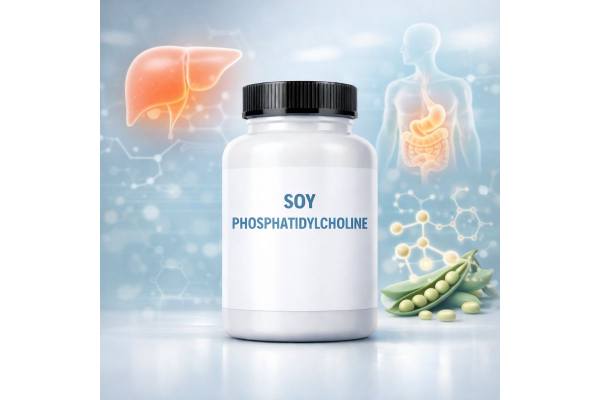
Soy phosphatidylcholine (often shortened to “PC” or “PPC” when highly purified) is a soy-derived phospholipid that helps build and protect cell membranes, especially in the liver and nervous system. It is one of the main forms in which the essential nutrient choline appears in foods and supplements. Because the liver is rich in phosphatidylcholine and uses it to package and export fats, soy PC is frequently marketed for fatty liver, alcohol-related liver damage, and general “liver support.” It is also added to brain, cardiovascular, and digestive health formulas.
Over the past several decades, essential phospholipids extracted from soy have been tested in people with nonalcoholic fatty liver disease (NAFLD), alcoholic liver disease, and other liver conditions, usually as an add-on to lifestyle changes. Results suggest improvements in liver enzymes and ultrasound findings for some patients, with a good safety profile when taken at studied doses. This guide explains what soy phosphatidylcholine is, how it may help, typical dosage ranges, potential side effects, and how to use it sensibly with medical supervision.
Key Insights for Soy Phosphatidylcholine
- Soy phosphatidylcholine supplies phospholipids and choline that help stabilize liver cell membranes and support fat transport out of the liver.
- Clinical studies using 1,050–1,800 mg per day of purified soy phospholipids have shown improvements in liver enzymes and ultrasound findings when combined with diet and exercise.
- Usual supplemental intakes of soy phosphatidylcholine are well below the choline upper limit of 3,500 mg per day, but very high total choline can cause low blood pressure, sweating, and fishy body odor.
- Many adults use 600–1,800 mg soy phosphatidylcholine daily in divided doses; higher intakes (up to around 2,700–3,000 mg) should be short term and medically supervised.
- People with soy allergy, existing severe liver disease, hypotension, or those who are pregnant, breastfeeding, or on multiple medications should avoid self-prescribing and consult a clinician first.
Table of Contents
- What is soy phosphatidylcholine?
- How soy phosphatidylcholine supports liver and metabolic health
- Other potential benefits for brain, digestion, and cells
- How to take soy phosphatidylcholine: dosage and forms
- Safety, side effects, and who should avoid it
- Soy phosphatidylcholine versus other choline and lecithin supplements
What is soy phosphatidylcholine?
Phosphatidylcholine is a phospholipid: a molecule with a water-loving “head” and fat-loving “tails” that forms the basic structure of cell membranes. In soy phosphatidylcholine, these molecules are extracted from soybeans and concentrated into a supplement. When the extract is standardized to a high percentage of polyunsaturated phosphatidylcholine, it is often called polyenylphosphatidylcholine (PPC) or essential phospholipids.
In food, phosphatidylcholine appears in egg yolks, meat, fish, and soy products. Once ingested, digestive enzymes release choline from part of the molecule and also allow intact phospholipids to be absorbed and carried in lipoproteins. Choline is an essential nutrient: the body uses it to synthesize acetylcholine (a neurotransmitter), support methylation reactions, and maintain normal liver fat metabolism. However, phosphatidylcholine itself also has “structural” actions as it integrates into cell membranes and lipoprotein particles.
Soy phosphatidylcholine supplements differ from crude soy lecithin. Lecithin is a broader mixture of phospholipids and other fats, whereas purified essential phospholipids are enriched in specific species such as 1,2-dilinoleoylphosphatidylcholine. These highly unsaturated species are more biologically active in membranes, increasing membrane fluidity and helping repair damaged areas. Clinical studies in liver disease typically use these purified essential phospholipids rather than generic lecithin.
Because the liver is constantly exposed to toxins, medications, alcohol, and dietary fats, hepatocytes (liver cells) rely heavily on phosphatidylcholine to maintain membrane integrity and to assemble very-low-density lipoproteins (VLDL) that export triglycerides. When phosphatidylcholine supply is inadequate, fat can accumulate in the liver, contributing to fatty liver and inflammation. Soy phosphatidylcholine supplementation attempts to correct this imbalance by directly supplying membrane-building blocks and choline.
How soy phosphatidylcholine supports liver and metabolic health
Most of the human data for soy phosphatidylcholine comes from studies in fatty liver and other liver diseases. Essential phospholipids from soy have been used as adjunctive therapy in nonalcoholic fatty liver disease (NAFLD), metabolic syndrome, and alcoholic liver disease.
In NAFLD, patients accumulate excess fat in the liver, often due to insulin resistance, abdominal obesity, and dyslipidemia. Trials using oral essential phospholipids in doses around 1,050–1,800 mg per day for several months, together with calorie control and increased activity, have reported:
- Reductions in liver enzymes such as ALT and AST, suggesting less liver cell injury.
- Improvements in ultrasound features of steatosis (less “bright” liver and better liver structure).
- Better lipid profiles in some groups, with modest reductions in total cholesterol and triglycerides and occasional increases in HDL cholesterol.
A systematic review and network meta-analysis of essential phospholipids in NAFLD associated with metabolic syndrome found that these preparations, used alongside diet and lifestyle changes, improved liver enzymes and serum lipids and were generally well tolerated. Another real-world observational study in thousands of NAFLD patients prescribed 1,800 mg PPC daily for about 24 weeks reported significant improvements in ultrasound steatosis and liver echogenicity alongside standard care.
Mechanistically, soy phosphatidylcholine appears to act on several fronts:
- Membrane repair and protection: By inserting into damaged hepatocyte membranes, it can improve membrane fluidity and function, which in turn may normalize enzyme leakage and support cell survival.
- Improved fat export: Adequate phosphatidylcholine is required to make VLDL particles that carry triglycerides out of the liver. Supplementation may help “mobilize” stored fat, reducing steatosis over time when combined with calorie control.
- Anti-inflammatory and antifibrotic effects: Experimental work suggests that PPC reduces oxidative stress, dampens inflammatory cytokines, and slows fibrotic processes in liver tissue, although long-term antifibrotic benefits in humans remain less certain.
- Metabolic support: Some studies note improvements in insulin resistance markers and fasting glucose in people with fatty liver who receive essential phospholipids, particularly when combined with weight loss.
It is important to see soy phosphatidylcholine as supportive rather than curative. The strongest effects appear when it is layered onto proven lifestyle changes: weight reduction, physical activity, alcohol moderation or abstinence, and management of blood sugar and lipids. Used in this context, it may accelerate improvements in liver tests and imaging for some patients.
Other potential benefits for brain, digestion, and cells
Because phosphatidylcholine is abundant in nerve cell membranes and supplies choline for acetylcholine synthesis, it is often included in cognitive and “brain health” supplements. However, the clinical evidence for soy phosphatidylcholine alone as a memory enhancer is mixed.
Observational studies link higher dietary phosphatidylcholine intake with better cognitive performance and lower risk of dementia later in life. Experimental work shows that phosphatidylcholine can cross the blood–brain barrier and influence membrane composition, neurotransmission, and neuroinflammation. Yet controlled trials of phosphatidylcholine or lecithin supplements in people with age-related memory complaints or dementia have produced modest or inconsistent results. At this point, soy phosphatidylcholine looks more like a way to support overall brain nutrition than a stand-alone treatment for cognitive disorders.
In pregnancy, choline needs rise substantially because the fetus depends on maternal supply for brain and spinal cord development. Some prenatal supplements now include phosphatidylcholine rather than (or in addition to) choline salts. Small randomized trials of high-dose choline (often provided as phosphatidylcholine) in pregnant women suggest potential benefits for offspring attention and information processing later in childhood. However, these protocols use doses and designs that go beyond typical over-the-counter products, and decisions about high-dose choline in pregnancy should be made with a specialist.
Soy phosphatidylcholine also plays roles in digestion. It is a natural component of bile and helps form mixed micelles that emulsify dietary fats, protecting the intestinal lining from the detergent effect of bile salts. Some research in inflammatory bowel disease hints that phosphatidylcholine-enriched formulations of mesalamine or other agents may improve mucosal barrier function, though this is a very specific pharmaceutical application, not a general over-the-counter supplement use.
On a cellular level, phosphatidylcholine supplementation can:
- Support repair of cell membranes in organs beyond the liver, including heart and kidneys.
- Modulate cell signaling pathways and receptor function via changes in membrane composition.
- Influence lipoprotein structure and potentially favor a more anti-atherogenic lipid profile.
These effects are biologically plausible and backed by experimental work, but in many non-liver indications, human clinical data are still limited. For most people, the main practical reason to use soy phosphatidylcholine remains liver and metabolic support, while any additional cognitive or systemic benefits should be viewed as possible extras rather than guaranteed outcomes.
How to take soy phosphatidylcholine: dosage and forms
There is no single universally accepted dose of soy phosphatidylcholine, but several patterns emerge from clinical research and supplement practice.
Common supplemental ranges
- Many general wellness or “liver support” products provide 300–1,200 mg soy phosphatidylcholine per day, usually split into one to three doses with meals.
- Clinical studies in fatty liver and alcoholic liver disease commonly use 1,050–1,800 mg per day of purified essential phospholipids, often for 3–6 months, sometimes longer under supervision.
- Some older trials in severe alcoholic liver disease used up to 4,500–6,000 mg per day, but these higher doses were given in hospital settings to high-risk patients and are not typical for self-directed supplementation.
For most adults interested in liver support, a practical approach with medical oversight might be:
- Start at 600–900 mg per day, taken with food to enhance absorption and minimize digestive discomfort.
- If well tolerated and if a clinician agrees, increase toward 1,200–1,800 mg per day in divided doses for a defined period (for example, 12–24 weeks) while working intensively on diet and activity.
- Reassess liver enzymes, ultrasound findings (if relevant), and overall risk factors. Long-term maintenance doses, if used, are often at the lower end (300–900 mg daily).
Relationship to choline intake limits
Phosphatidylcholine contributes choline to the diet. Regulatory bodies set a tolerable upper intake level (UL) for total choline at 3,500 mg per day for adults, based on doses that caused hypotension, excessive sweating, and fishy body odor in some individuals. Typical soy phosphatidylcholine intakes in the ranges above provide significantly less choline than this threshold, especially compared with pure choline salts, but all supplemental choline sources and diet should be considered together.
Forms and product selection
You may see:
- Essential phospholipids / PPC (polyenylphosphatidylcholine): Highly purified soy phosphatidylcholine (often 70–90% PC) used in most clinical liver trials.
- Soy lecithin granules or softgels: Mixed phospholipids with a lower proportion of active PC; doses might need to be higher to match the PC content of PPC.
- Liposomal phosphatidylcholine liquids: Emulsified liquids often used in “liver flush” or liposomal nutrient products; taste and cost vary.
When comparing labels, look for:
- Phosphatidylcholine content per capsule or teaspoon (not just “lecithin”).
- Source (non-GMO soy if this matters to you).
- Third-party testing for purity and absence of contaminants.
Take soy phosphatidylcholine with food, preferably meals containing some fat, to support absorption and reduce the chance of mild nausea. As always, coordinate dosing decisions with a healthcare professional, especially if you have liver disease, take multiple medications, or are pregnant or breastfeeding.
Safety, side effects, and who should avoid it
Soy phosphatidylcholine has a favorable safety record in clinical studies, including long-term trials in liver disease where doses up to 1,800 mg daily (and occasionally higher) were given for months to years. Serious adverse events directly attributable to essential phospholipids are rare. However, “generally safe” is not the same as “risk-free,” especially in people with complex medical histories.
Possible side effects
At typical supplemental doses, reported side effects are usually mild:
- Gastrointestinal symptoms: nausea, soft stools, abdominal discomfort, or bloating.
- Headache or a sense of fatigue in the first days of use in some individuals.
- Rarely, skin reactions consistent with allergy or intolerance.
At very high overall choline intakes (usually far above what soy phosphatidylcholine alone provides), symptoms such as low blood pressure, fishy body odor, excessive sweating, and increased salivation have been described. These effects define the choline upper intake level of 3,500 mg per day. People with a low baseline blood pressure or those on blood pressure medications should be cautious and report any dizziness or unusual fatigue.
Interactions and cautions
- Liver disease: While essential phospholipids are often studied as supportive therapy in liver disease, dosing and duration should be individualized. In advanced cirrhosis, portal hypertension, or active hepatitis, any supplement can potentially complicate management, so decisions should rest with a hepatologist.
- Cardiovascular risk: High choline intakes can increase production of trimethylamine N-oxide (TMAO) in some individuals, a metabolite associated with higher cardiovascular risk in observational research. Typical phosphatidylcholine doses are unlikely to push total choline above tolerated thresholds, but people with established cardiovascular disease should avoid very high choline supplementation unless monitored.
- Medications: In theory, changes in liver membrane function and bile composition could influence the handling of certain drugs, but robust interaction data are limited. Caution is prudent if you take multiple hepatically cleared medications, anticoagulants, or antiarrhythmic drugs.
- Allergy: Anyone with a known soy allergy should avoid soy phosphatidylcholine supplements and consider alternative sources (such as sunflower-derived phosphatidylcholine) if appropriate.
Who should avoid self-prescribing
- Pregnant or breastfeeding individuals considering doses above those found in standard prenatal supplements.
- People with severe liver disease, active hepatitis, or unexplained jaundice.
- Those with chronic low blood pressure, autonomic dysfunction, or episodes of fainting.
- Anyone taking numerous prescription medications, particularly for the heart, liver, or brain.
In these groups, soy phosphatidylcholine might still have a role, but only after careful evaluation and under direct medical supervision. For otherwise healthy adults using moderate doses along with lifestyle changes, the main priorities are staying within reasonable choline totals, monitoring for mild side effects, and periodically reevaluating whether the supplement is still needed.
Soy phosphatidylcholine versus other choline and lecithin supplements
When you look at the supplement shelf, soy phosphatidylcholine is just one of several options for delivering choline or phospholipids. Understanding the differences can help match the product to your goals.
Soy phosphatidylcholine / PPC
- Strengths: Well-studied as part of essential phospholipid preparations for liver health; directly supports cell membranes; provides choline in a relatively slow-release form; generally well tolerated.
- Limitations: Less convenient if your primary goal is to reach specific high choline targets (for example in some pregnancy trials); products differ in purity, and not all “lecithin” supplements match clinical trial preparations.
Sunflower phosphatidylcholine
- Similar phospholipid profile but derived from sunflower instead of soy.
- Often chosen by people who avoid soy for allergy or personal preference.
- Less clinical data specifically with sunflower-derived PC, but mechanisms are likely comparable when the phosphatidylcholine content and fatty acid profile are similar.
Choline salts (choline bitartrate, choline chloride)
- Provide higher choline content per gram and are used when a precise choline dose is required.
- Raise blood choline quickly and may more readily approach the 3,500 mg per day upper limit if not monitored.
- Do not supply phospholipids for membrane repair; more focused on choline as a nutrient.
Advanced choline donors (alpha-GPC, CDP-choline)
- Designed to cross the blood–brain barrier efficiently and support acetylcholine synthesis and phospholipid metabolism in the brain.
- Backed by more targeted cognitive and stroke recovery research than standard soy phosphatidylcholine, but less directly relevant for liver disease.
- Usually more expensive and used in lower mg doses due to high choline density.
Crude lecithin granules or powders
- Mixtures of phospholipids (phosphatidylcholine, phosphatidylinositol, phosphatidylethanolamine, etc.) plus triglycerides and other components.
- Convenient to mix into foods but less standardized; choline and phosphatidylcholine content per spoonful can vary by brand and processing.
- Clinical evidence in liver disease is weaker than for purified essential phospholipids.
If your primary goal is liver and metabolic support, soy phosphatidylcholine in a standardized essential phospholipid product has the strongest track record. If your focus is achieving a particular choline intake (for instance in pregnancy under specialist guidance), choline salts or specific prenatal formulations may be more precise. For those with soy allergy or preference, sunflower phosphatidylcholine is the closest alternative, though human data are less extensive.
In all cases, think of these supplements as adjuncts to — not substitutes for — nutrition and lifestyle foundations: balanced diet, moderated alcohol intake, physical activity, and appropriate medical care.
References
- Choline – Health Professional Fact Sheet 2022 (Guideline)
- Essential phospholipids in fatty liver: a scientific update 2016 (Review)
- Soybean polyenylphosphatidylcholine (PPC) is beneficial in liver and extrahepatic tissue injury: An update in experimental research 2024 (Review)
- Effectiveness of phosphatidylcholine as adjunctive therapy in improving liver function tests in patients with non-alcoholic fatty liver disease and metabolic comorbidities: real-life observational study from Russia 2020 (Observational Study)
- Essential phospholipids for nonalcoholic fatty liver disease associated with metabolic syndrome: A systematic review and network meta-analysis 2020 (Systematic Review)
Disclaimer
The information in this article is intended for general educational purposes and does not replace personalized medical advice, diagnosis, or treatment. Soy phosphatidylcholine and other choline-containing supplements may not be appropriate for everyone, especially individuals with existing medical conditions, those who are pregnant or breastfeeding, or those taking prescription medications. Never start, stop, or change any supplement or medication regimen without consulting a qualified healthcare professional who can consider your full medical history, current treatments, and laboratory findings. If you experience new or worsening symptoms while using any supplement, seek medical attention promptly.
If you found this guide helpful, you are warmly invited to share it on Facebook, X (formerly Twitter), or any other platform you prefer, and to follow our work on social media. Your support in sharing our articles helps our team continue to research, write, and update high-quality, evidence-informed health content.