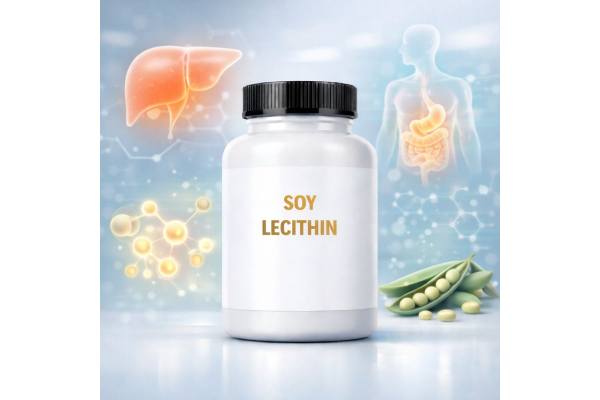
Soy lecithin appears on many supplement labels, yet most people are unsure what it actually does. Extracted from soybeans, this fatty substance is rich in phospholipids such as phosphatidylcholine that help build and protect cell membranes. As a supplement, soy lecithin is promoted for cholesterol management, liver support, brain and nerve function, and hormone-related symptoms such as fatigue during midlife. It also plays a practical role in foods as an emulsifier that keeps fats and water mixed in products like chocolate and dressings.
This guide explains how soy lecithin works, its potential benefits and limitations, how it is used in supplements and foods, and what to consider for safe dosing. You will also find detailed information about side effects, who should avoid it, and what current research really shows. Use it as a balanced starting point for talking with a healthcare professional about whether soy lecithin fits your health goals.
Key Insights on Soy Lecithin
- Soy lecithin is a soy-derived source of phospholipids that support cell membranes, fat transport, and bile flow.
- It may modestly support cholesterol balance, liver fat metabolism, and subjective fatigue in some adults.
- Typical supplemental intakes range from 1,200–3,600 mg soy lecithin per day, usually divided with meals.
- High doses may cause digestive upset and are not appropriate for people with soy allergy or certain hormone-sensitive conditions.
Table of Contents
- What is soy lecithin?
- How soy lecithin works in the body
- Health benefits of soy lecithin
- Common uses of soy lecithin
- Soy lecithin dosage and forms
- Side effects and safety of soy lecithin
- Research and evidence on soy lecithin
What is soy lecithin?
Soy lecithin is a mixture of fatty, phosphorus-containing molecules (phospholipids) obtained from soybeans. During soybean oil production, a gummy residue separates from the oil. This residue is refined and dried to produce lecithin. While lecithin can come from egg yolk, sunflower, or rapeseed, soy is the most common commercial source.
The main phospholipids in soy lecithin include phosphatidylcholine, phosphatidylethanolamine, phosphatidylinositol, and smaller amounts of phosphatidylserine. These compounds are key building blocks of the membranes that surround every cell in the body. They help keep membranes flexible, support signaling between cells, and aid the transport of fats in the bloodstream and within cells.
In foods, soy lecithin is classified as an additive and often labeled as “lecithin” or “E322.” It acts as an emulsifier, stabilizer, and sometimes as an antioxidant. In supplements, it is usually sold as granules, powders, softgels, or liquid concentrates. The supplement is valued mainly as a convenient source of phospholipids and choline, an essential nutrient involved in brain, liver, and muscle function.
Because soy lecithin is derived from soybeans, people sometimes worry about residual proteins and allergens. Modern refining processes greatly reduce protein content, but small traces can remain. For most people this is not clinically important, but individuals with proven soy allergy should avoid it or use non-soy lecithin sources under medical guidance.
Taken as a whole, soy lecithin is not a single drug-like compound. It is a complex mixture whose health effects depend on the combined action of its phospholipids and associated fatty acids.
How soy lecithin works in the body
To understand soy lecithin’s potential benefits, it helps to see what happens after you swallow it. In the digestive tract, lecithin is broken down by enzymes and bile salts into smaller units. Some phospholipids remain partly intact and can be absorbed as such, while others are dismantled into choline, fatty acids, and glycerol.
Once absorbed, these molecules are reassembled in intestinal cells and the liver into new phospholipids and lipoproteins. Phosphatidylcholine is especially important for packaging triglycerides and cholesterol into lipoprotein particles that carry fats through the bloodstream. This process helps move fats out of the liver and may support normal lipid metabolism.
Choline derived from lecithin is used to:
- Build cell membranes as phosphatidylcholine and sphingomyelin
- Produce acetylcholine, a neurotransmitter involved in memory, attention, and muscle control
- Donate methyl groups in liver pathways that handle homocysteine and other compounds
The phospholipids in lecithin also play structural roles in the protective lining of the gut, in nerve sheaths, and in lung surfactant. In bile, phosphatidylcholine helps keep cholesterol dissolved and may influence the tendency to form gallstones.
Some research suggests that the composition of phospholipids in cell membranes can affect inflammation, oxidative stress, and the behavior of receptors in the membrane. By supplying unsaturated phospholipids, soy lecithin may gently shift these balances, although the effects are usually modest and highly individual.
At the same time, high intakes of choline can be converted by gut bacteria into trimethylamine, which the liver oxidizes to trimethylamine N-oxide. This compound is being studied for its possible link to cardiovascular risk. The relevance of this pathway to typical soy lecithin doses is still being explored, which is why balanced, moderate intake is recommended rather than aggressive megadosing.
Health benefits of soy lecithin
Soy lecithin is not a cure-all, but several potential benefits are supported by early clinical and mechanistic research. The strength of evidence varies by outcome, and many effects appear modest. Key areas of interest include:
1. Lipid and cardiovascular health
Phospholipids such as phosphatidylcholine help emulsify fats and support their transport in lipoproteins. Supplementation with lecithin has been explored as a way to influence cholesterol and triglyceride levels. Some human studies report small improvements in LDL and total cholesterol or markers related to arterial stiffness when lecithin is taken regularly. The effects are generally mild compared with prescription therapies and depend strongly on diet and lifestyle.
2. Liver fat and bile flow
The liver relies on phosphatidylcholine to export triglycerides and maintain membrane integrity. Low choline intake is linked with fatty liver in controlled feeding trials. By supplying both choline and phospholipids, soy lecithin may help support normal liver fat handling, especially in people whose diets are low in choline-rich foods like eggs and organ meats. It is not a replacement for medical treatment of fatty liver disease, but it may be part of a supportive nutrition strategy.
3. Menopausal symptoms and fatigue
A controlled trial in middle-aged women with fatigue found that higher-dose soy lecithin improved subjective vigor and reduced some cardiovascular stiffness markers compared with placebo. The study was relatively small and short, but it suggests that lecithin may benefit energy perception and vascular function in this group. Larger and longer trials are still needed.
4. Brain and nerve function
Since lecithin is a choline source and choline is required for acetylcholine synthesis, soy lecithin has long been marketed for memory and concentration. Current research suggests that phosphatidylcholine may support normal cognitive function, especially when combined with an overall nutrient-dense diet, but evidence for dramatic effects in healthy adults is limited. Benefits may be greater in people with low choline intake or increased demands.
5. Digestive comfort and gut health
Phospholipids contribute to the protective mucus layer in the gut. Some formulations using lecithin-enriched phospholipids have been explored for inflammatory bowel conditions, with mixed but interesting results. Standard over-the-counter soy lecithin is not a licensed treatment, yet supporting a healthy phospholipid pool may be relevant for gut barrier integrity.
Overall, soy lecithin may provide subtle support in several systems rather than a strong effect in one. It works best as part of a bigger picture that includes diet quality, physical activity, and medical care where needed.
Common uses of soy lecithin
Soy lecithin shows up in everyday life more often than most people realize. Its uses span the food industry, home cooking, and dietary supplements.
In processed foods
Manufacturers use soy lecithin primarily as an emulsifier. It helps blend ingredients that normally separate, such as oil and water. You will often find it in:
- Chocolate and chocolate coatings
- Baked goods and cake mixes
- Spreads, margarines, and nut butters
- Salad dressings, sauces, and mayonnaise
- Instant powders and drink mixes
By stabilizing mixtures, lecithin improves texture, prevents separation, and can extend shelf life. The amounts used in foods are typically small and contribute relatively little to total choline intake.
As a dietary supplement
Soy lecithin supplements are marketed for:
- Heart and cholesterol support
- Liver health and detox support
- Brain and memory function
- Menopause and midlife energy
- General “cell membrane” or “cellular health” support
They are sold as:
- Softgels or “pearls,” often 1,200 mg per capsule
- Granules that can be sprinkled on yogurt, oatmeal, or smoothies
- Powders added to shakes or recipes
- Liquid lecithin concentrates used in baking or specialized nutrition formulas
People who struggle to eat eggs or other choline-rich foods sometimes use soy lecithin to help meet daily choline needs. It is also common in specialized nutrition products such as infant formulas, meal replacement shakes, and parenteral nutrition emulsions.
In personal care and other applications
Lecithin’s emulsifying and moisturizing properties make it useful in cosmetics, lotions, and pharmaceutical formulations. It helps mix oil and water phases and can act as a delivery vehicle for fat-soluble active ingredients.
For most consumers, the two main practical questions are: how much supplemental lecithin to consider, and whether the extra choline and phospholipids provide a meaningful advantage beyond a balanced diet. The next sections address dosing and safety to help frame those decisions.
Soy lecithin dosage and forms
There is no universally agreed “standard dose” of soy lecithin, because it is regulated as a food additive and dietary supplement rather than as a drug. However, several practical ranges have emerged from research and common product labeling.
Typical supplemental ranges
- General wellness or basic support:
Many products suggest about 1,200–2,400 mg soy lecithin per day (one to two 1,200 mg capsules, or one to two tablespoons of granules). - Higher-end supplemental use:
Some protocols and clinical studies use around 3,600 mg per day, often divided into three doses of 1,200 mg with meals. - Specialized uses (for example, recurrent breast duct issues when breastfeeding):
Non-official recommendations sometimes fall in the 3,600–4,800 mg per day range, always under professional guidance.
The actual amount of choline you get from soy lecithin is lower than the labelled lecithin content. Soy lecithin typically contains roughly 1.5–2 percent choline by weight, because only part of it is phosphatidylcholine and each phosphatidylcholine molecule is only partly choline. This means a 1,200 mg capsule may provide on the order of 20–25 mg of choline equivalent, depending on exact composition.
How to take soy lecithin
- Take lecithin with food, especially meals that contain some fat, to improve absorption and reduce digestive discomfort.
- Split higher intakes into two or three doses over the day rather than a single large dose.
- Start at the low end of the range and increase gradually over one to two weeks while watching for digestive changes or headaches.
Daily upper limits and choline
Health authorities have set a tolerable upper intake level for total choline from all sources at about 3,500 mg per day for adults. Typical soy lecithin use keeps most people far below that number, but combining high doses of lecithin with large amounts of other choline supplements could approach or exceed it. Exceeding this range may increase the risk of low blood pressure, fishy body odor, sweating, and other side effects associated with excessive choline intake.
Who may benefit from the lower versus higher end of the range
- People simply looking to support a diet that is a bit low in eggs and other choline sources may only need modest amounts.
- Individuals aiming to address specific concerns such as midlife fatigue or cholesterol management sometimes use intakes closer to 2,400–3,600 mg per day, ideally under professional supervision.
Because soy lecithin is a supportive nutrient rather than a quick-acting drug, consistent use over weeks to months is usually needed before judging its effect.
Side effects and safety of soy lecithin
For most healthy adults, soy lecithin used within common supplemental ranges is regarded as generally safe. Food safety authorities have evaluated lecithins as food additives and set acceptable daily intakes that are difficult to exceed with normal diets. Even so, several important safety points deserve attention.
Common, usually mild side effects
At moderate to higher doses, some people report:
- Nausea or a “heavy” feeling in the stomach
- Loose stools or mild diarrhea
- Abdominal cramping or bloating
- Headache
- A sense of fatigue or “brain fog” when first starting high doses
These effects often improve when the dose is reduced, divided more evenly through the day, or taken with larger meals.
Allergy and intolerance
Because soy lecithin is derived from soybeans, people with a history of IgE-mediated soy allergy should be cautious. Highly refined lecithin contains very little soy protein, but trace amounts are possible. For most people with mild intolerance to soy foods, this is not a problem, but those with severe allergy should consult an allergist before using soy-based lecithin and may prefer lecithin from sunflower or other sources.
Hormone-sensitive conditions
Soy contains isoflavones, compounds with weak estrogen-like activity. Refined soy lecithin contains only small amounts of these, but people with hormone-sensitive cancers or those taking hormone-modulating medications should seek specialist advice before regular use of soy-derived supplements.
Choline excess and blood pressure
Very high choline intakes beyond the established upper limits can cause low blood pressure, sweating, increased salivation, fishy body odor, and, in extreme cases, liver stress. While ordinary soy lecithin dosing is unlikely to reach these levels by itself, combining several choline-rich supplements increases the risk.
Potential interactions
- Anticoagulant or antiplatelet drugs: Theoretical concerns exist that high-dose phospholipids might influence platelet function. Although solid evidence is limited, people on blood thinners should introduce lecithin only with medical approval and monitoring.
- Other lipid-lowering therapies: Lecithin is sometimes added to regimens that include statins or other cholesterol-lowering drugs. Healthcare supervision helps ensure that liver tests, muscle symptoms, and overall lipid patterns stay within safe limits.
Who should avoid or be especially cautious
- Individuals with confirmed severe soy allergy
- People with rare metabolic disorders affecting choline handling, unless managed by a specialist
- Pregnant or breastfeeding women considering high doses beyond typical food levels
- Infants and young children, unless lecithin is part of a regulated formula or prescribed nutrition product
When in doubt, it is safer to keep soy lecithin in the food-like, moderate range and discuss any higher or long-term supplemental use with a healthcare professional familiar with your medical history.
Research and evidence on soy lecithin
Research on soy lecithin spans cell studies, animal work, and human trials, with a focus on lipid metabolism, cardiovascular function, liver health, and menopausal symptoms. The overall picture is promising but far from definitive.
Cardiovascular and lipid outcomes
A recent comprehensive review examined how lecithin and its components affect cardiovascular health. It summarized evidence that phospholipids can influence cholesterol absorption, lipoprotein composition, and markers of arterial stiffness. Human studies show that lecithin supplementation may produce small improvements in blood lipids or vascular measures in some populations, but results vary and often involve small sample sizes.
These findings suggest a supportive, not stand-alone, role. Lecithin appears most useful when combined with lifestyle changes such as a heart-healthy diet, regular physical activity, and smoking cessation.
Liver and metabolic effects
Controlled feeding studies have demonstrated that inadequate choline can lead to fat accumulation in the liver. Lecithin, as a source of phosphatidylcholine, may help protect against this by improving the export of triglycerides from liver cells. Some clinical and preclinical work supports a role for phospholipid mixtures in improving liver fat content and enzyme levels, particularly in the context of fatty liver disease. However, the best-studied regimens often use specialized, highly purified phospholipids rather than generic soy lecithin supplements.
Menopausal fatigue and vascular function
One randomized, double-blind, placebo-controlled trial in middle-aged women with fatigue tested soy lecithin at two different doses over several weeks. The higher-dose group showed improved perceived vigor and reductions in certain measures of arterial stiffness compared with placebo, while side effects were minimal. This points to a potential application of soy lecithin for midlife women experiencing both low energy and emerging cardiovascular risk factors. Replication in larger and more diverse groups is still needed.
Brain and cognitive function
Observational research connects adequate choline intake with better cognitive performance and brain structure over time. Since soy lecithin contributes to choline intake, it likely helps support these pathways, especially in people with marginal dietary choline. Interventional trials using lecithin specifically for cognition have produced mixed results, and it is not considered a primary treatment for memory disorders. It may, however, be a reasonable adjunct to a nutrient-dense diet for long-term brain health.
Regulatory and safety evaluations
Food safety bodies have formally reassessed lecithins used as food additives, examining their composition, potential contaminants, and exposure in different age groups, including infants. These reviews have generally concluded that lecithins are of low toxicity at typical intake levels and have set exposure limits for sensitive populations such as very young infants, primarily as a precaution.
Overall, the evidence supports soy lecithin as a safe, modestly beneficial supplement for specific goals, especially when integrated into an overall health plan. It is not a replacement for medical care, but a potentially useful tool in the broader nutrition toolbox.
References
- Lecithin and cardiovascular health: a comprehensive review 2024 (Systematic Review)
- Re-evaluation of lecithins (E 322) as a food additive 2017 (Guideline)
- Opinion on the re-evaluation of lecithins (E 322) as a food additive in foods for infants below 16 weeks of age and follow-up of its re-evaluation as food additive for uses in foods for all population groups 2020 (Guideline)
- Effect of soy lecithin on fatigue and menopausal symptoms in middle-aged women: a randomized, double-blind, placebo-controlled study 2018 (RCT)
- Choline supplements: An update 2023 (Systematic Review)
Disclaimer
The information in this article is for general educational purposes only and is not a substitute for personal medical advice, diagnosis, or treatment. Soy lecithin can interact with individual health conditions, medications, and dietary patterns in ways that this overview cannot fully address. Always discuss any new supplement, including soy lecithin, with a qualified healthcare professional who knows your medical history, current medications, and health goals. Never delay or disregard professional medical advice because of something you have read here.
If you found this guide helpful, please consider sharing it on Facebook, X (formerly Twitter), or any platform you prefer, and follow our social media channels. Your support helps us continue creating clear, evidence-informed content on nutrition and health.