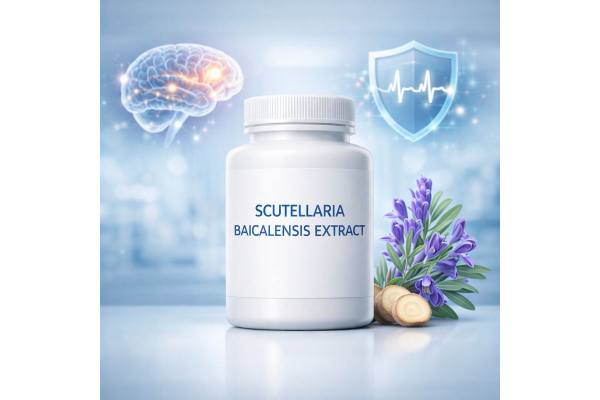
Scutellaria baicalensis, often called Chinese skullcap or Huang Qin, is a traditional East Asian herb that has slipped into modern supplement shelves as a concentrated extract. Its roots are rich in flavonoids such as baicalin, baicalein, wogonin, and wogonoside, which are being studied for anti-inflammatory, antioxidant, neuroprotective, and potential anticancer effects.
Today, Scutellaria baicalensis extract appears in capsules, tinctures, powders, and complex herbal formulas. People most often look to it for support with chronic inflammation, allergies, metabolic health, and overall resilience under stress. At the same time, human trials are still limited, and there have been case reports of liver injury with some skullcap-containing products.
This guide walks you through what the extract actually is, how it appears to work, where the evidence stands, how people typically use it, and the main safety questions to consider before adding it to your routine.
Key Insights for Scutellaria baicalensis extract
- May help modulate inflammation, oxidative stress, and immune activity, mainly based on preclinical research.
- Shows potential benefits for metabolic, digestive, skin, and neurological health, but robust human trials are still limited.
- Typical supplemental doses range roughly from 250 to 1,000 mg of standardized extract per day, or 3 to 9 g of dried root in traditional decoctions.
- Can cause liver injury in rare cases, especially in multi-herb formulas, and may interact with blood thinners, statins, and other medications.
- Should generally be avoided in pregnancy, breastfeeding, significant liver disease, and without medical supervision if you take prescription drugs.
Table of Contents
- What is Scutellaria baicalensis extract?
- How Scutellaria baicalensis extract works in the body
- Evidence based benefits of Scutellaria baicalensis extract
- How to take Scutellaria baicalensis extract
- Scutellaria baicalensis extract dosage guidelines
- Side effects and who should avoid Scutellaria baicalensis
- What current research says overall
What is Scutellaria baicalensis extract?
Scutellaria baicalensis is a perennial plant in the mint family (Lamiaceae) native to northern China, Mongolia, Korea, and parts of Russia. In traditional Chinese medicine (TCM), the dried root—known as Huang Qin—has been used for more than 2,000 years to “clear heat,” “dry dampness,” and support the lungs, stomach, and liver. Historically, it has featured in formulas for fever, respiratory infections, diarrhea, jaundice, and inflammatory conditions.
Modern supplements typically use a concentrated root extract rather than the whole crude root. The roots are dried, milled, and extracted with water, alcohol, or a combination. The resulting extract is standardized to contain a specific percentage of flavonoids, most often:
- Baicalin (usually the dominant compound)
- Baicalein (the aglycone form of baicalin)
- Wogonin and wogonoside
- Other related flavones and flavone glycosides
On labels you might see:
- “Scutellaria baicalensis root extract 10:1” – meaning 10 parts raw root to 1 part extract.
- “Standardized to 85% baicalin” (or another percentage) – indicating a high-purity flavonoid preparation.
- Combination formulas where Scutellaria baicalensis is one of several herbs, as in classical TCM prescriptions.
It is important to distinguish Chinese skullcap (Scutellaria baicalensis) from American skullcap (Scutellaria lateriflora). They are different species with different traditional uses and phytochemical profiles. Much of the research on anti-inflammatory and antitumor effects relates specifically to Scutellaria baicalensis and its flavonoids.
From a regulatory standpoint, Scutellaria baicalensis extract is generally sold as a dietary supplement, not as an approved drug. Quality, composition, and potency can therefore vary widely between brands and products.
How Scutellaria baicalensis extract works in the body
Most of the proposed benefits of Scutellaria baicalensis extract come from its flavonoid content, especially baicalin and baicalein. These molecules appear to act on several interlocking pathways rather than a single target.
1. Modulation of inflammatory pathways
Baicalin, baicalein, and wogonin have been shown in cell and animal models to influence key inflammatory signaling routes:
- Down-regulating nuclear factor-κB (NF-κB), a central “switch” for many inflammatory cytokines.
- Modulating mitogen-activated protein kinase (MAPK) pathways that control cellular stress responses.
- Reducing expression of pro-inflammatory mediators such as TNF-α, IL-1β, IL-6, COX-2, and iNOS in various tissues.
Rather than suppressing all immune activity, the flavonoids tend to shift immune responses away from chronic, over-active states and toward a more regulated baseline, at least in preclinical experiments.
2. Antioxidant and cytoprotective effects
The extract also shows strong antioxidant properties:
- Direct scavenging of reactive oxygen species (ROS).
- Up-regulation of endogenous antioxidant enzymes like superoxide dismutase (SOD) and glutathione peroxidase in some models.
- Protection of cell membranes, mitochondrial function, and DNA from oxidative damage.
Because oxidative stress is intertwined with inflammation, cardiovascular disease, neurodegeneration, and metabolic disorders, these antioxidant actions may underlie many proposed benefits.
3. Effects on metabolism and the gut–liver axis
Baicalin has been studied for effects on glucose and lipid metabolism:
- In animal models, Scutellaria baicalensis preparations can improve insulin sensitivity, reduce fatty liver changes, and modulate cholesterol levels.
- Some research suggests modulation of gut microbiota composition and intestinal barrier integrity, which may feed back into systemic inflammation and metabolic health.
4. Neuroprotective and neuromodulatory actions
Flavonoids from Scutellaria baicalensis appear to:
- Protect neurons from excitotoxic and oxidative damage in preclinical models.
- Influence GABAergic and dopaminergic signaling, which may relate to observed anxiolytic and neuroprotective effects in animals.
- Reduce neuroinflammation and microglial activation under certain experimental conditions.
5. Antiproliferative and pro-apoptotic effects on tumor cells
In vitro and animal studies have shown that Scutellaria baicalensis extracts and their isolated flavonoids can:
- Inhibit tumor cell proliferation and induce cell-cycle arrest.
- Promote apoptosis (programmed cell death) through mitochondrial and caspase pathways.
- Enhance sensitivity of some tumor cells to standard chemotherapeutic agents.
These findings are promising but remain largely preclinical. They do not mean that the extract replaces standard cancer therapy.
Overall, the herb behaves more like a multi-targeted modulator of inflammation, oxidative stress, and cellular stress responses than a simple antioxidant or single-pathway drug.
Evidence based benefits of Scutellaria baicalensis extract
The most robust data for Scutellaria baicalensis extract come from laboratory and animal studies. Human evidence is emerging but still relatively limited. Below is a practical overview of where the science is strongest and where it remains speculative.
1. Inflammation and immune balance
Multiple experimental models show that Scutellaria baicalensis flavonoids can reduce inflammatory signaling in macrophages, intestinal cells, joint tissues, and skin. These effects include lower production of pro-inflammatory cytokines and better control of oxidative stress.
Human data include small trials or formulas in which Scutellaria baicalensis is one component. Examples include:
- Herbal combinations for osteoarthritis symptoms.
- Multi-herb formulas for inflammatory bowel conditions or colitis.
- Adjunctive use with metformin in people with type 2 diabetes to influence inflammation and glycemic control.
Because these are combination formulas, it is difficult to attribute benefits solely to Scutellaria baicalensis, but the herb is often a key contributor.
2. Digestive and liver support
Traditionally, Huang Qin is used for diarrhea, dysentery, and “damp-heat” in the gastrointestinal tract. Modern data suggest:
- Protection of intestinal mucosa in animal models of colitis and food allergy.
- Modulation of gut microbiota and intestinal barrier function.
- Support for liver cells in toxic or inflammatory injury models, with improved liver enzyme patterns and reduced histologic damage.
At the same time, some skullcap-containing products have been linked to liver injury, likely due to high doses, impurities, or interactions. So the liver story is complex: potential protection at appropriate doses versus potential toxicity in some contexts.
3. Cardiometabolic health
Experimental work indicates that Scutellaria baicalensis flavonoids may:
- Improve insulin sensitivity and post-meal glucose control in animal models.
- Influence lipid metabolism and reduce atherosclerotic lesion development in certain experiments.
- Show antithrombotic activity, reducing platelet aggregation and altering coagulation parameters in animals.
Limited human data suggest possible support for lipids or inflammatory markers when Scutellaria baicalensis is included in multi-herb formulas or taken alongside standard therapies. These findings need confirmation in larger, well-designed trials.
4. Neurological and cognitive support
Preclinical studies report that:
- Baicalein and baicalin can protect neurons in models of Parkinson’s disease, Alzheimer’s disease, and ischemic brain injury.
- Scutellaria baicalensis extracts may reduce neuroinflammation and preserve cognitive performance in stressed or toxin-exposed animals.
- Some small human studies of skullcap-containing preparations indicate improved mental speed or mild reductions in anxiety-like symptoms.
These observations suggest potential as an adjunct for brain health, but data are far from definitive.
5. Oncological support (strictly adjunctive and experimental)
Reviews of Scutellaria baicalensis and its flavonoids highlight:
- Inhibition of tumor cell proliferation in digestive system cancers (esophageal, gastric, colorectal, liver, and pancreatic) in preclinical settings.
- Enhanced sensitivity of certain chemotherapy-resistant cell lines to drugs such as 5-fluorouracil or capecitabine when combined with Scutellaria baicalensis extracts.
- Potential modulation of tumor microenvironment, angiogenesis, and immune signaling.
At present, these findings are not a substitute for standard therapy. If used at all in an oncology context, Scutellaria baicalensis extract should only be taken under direct supervision of an oncologist familiar with herbal–drug interactions.
In summary, Scutellaria baicalensis extract shows the most consistent promise for inflammatory and oxidative stress-related conditions, with emerging but still preliminary evidence in metabolic, neurological, and oncological areas.
How to take Scutellaria baicalensis extract
Because there is no universally accepted standard dose or formulation, how you take Scutellaria baicalensis extract should be deliberate and cautious. Consider the following points when planning use with your healthcare provider.
1. Common supplement forms
- Capsules or tablets – Most convenient. Often contain 250–500 mg of standardized root extract per capsule.
- Powdered extract – Can be mixed into water, smoothies, or encapsulated at home.
- Tinctures or fluid extracts – Alcohol or glycerin extracts, dosed in drops or milliliters.
- Traditional decoctions – Dried root slices boiled in water, usually as part of a multi-herb TCM formula prescribed by a practitioner.
For safety and consistency, standardized products from reputable manufacturers are generally preferable to unlabelled powders or bulk raw herbs if you are self-directing.
2. With or without food
Many people tolerate Scutellaria baicalensis extract best with food, especially if they are sensitive to bitter or astringent herbs. Taking it with a meal may:
- Reduce the risk of nausea or stomach discomfort.
- Smooth out absorption and reduce peak plasma levels of flavonoids, which could help minimize side effects.
However, some protocols suggest taking it between meals for better bioavailability. If doing this, start low and watch carefully for digestive upset.
3. Dosing schedules
Depending on the total daily amount and product, common schedules include:
- Once daily for lower doses and maintenance-type use.
- Two or three divided doses per day for higher daily totals or when targeting specific symptoms (for example, inflammatory flares or intense oxidative stress).
Dividing the dose may provide more stable blood levels and reduce the likelihood of side effects such as sedation or gastrointestinal upset.
4. Duration of use
Scutellaria baicalensis has a long history of short-term use in acute conditions (e.g., infections, fevers) and intermediate use for chronic inflammatory states. For modern supplements:
- Short-term courses of 2–8 weeks are typical for self-directed use.
- Longer-term use should be done with medical supervision, especially if you have underlying conditions or take other medications.
If you plan to use it for months, periodic breaks and lab monitoring (liver function tests, lipids, coagulation as appropriate) are sensible precautions.
5. Combining with other supplements or herbs
Scutellaria baicalensis is frequently combined with:
- Other anti-inflammatory botanicals (for example, turmeric, Boswellia).
- Liver and digestive herbs (for example, milk thistle, dandelion root).
- Multi-herb TCM formulas designed by practitioners.
However, every additional ingredient increases complexity and potential interaction risk. If you are already taking medications—especially anticoagulants, antiplatelets, statins, or drugs metabolized by CYP450 enzymes—professional guidance becomes particularly important.
Scutellaria baicalensis extract dosage guidelines
There is no single “correct” dose of Scutellaria baicalensis extract. Published clinical data are limited, and products vary in strength and standardization. The ranges below are practical reference points, not medical prescriptions.
1. Traditional herbal medicine context
In TCM, the usual daily dose of dried Scutellaria baicalensis root in decoction is approximately:
- 3–9 g of dried root per day, often divided into two doses and combined with other herbs.
The extraction achieved by boiling may yield a wide range of flavonoid content depending on preparation time and root quality.
2. Modern extract doses
For standardized Scutellaria baicalensis root extract used as a dietary supplement, common ranges are:
- Low range (introductory / sensitive individuals):
Around 250 mg of extract once daily (sometimes even 100–150 mg). - Moderate range (typical supplemental intake):
250–500 mg twice daily (total 500–1,000 mg per day). - Higher range (research-style dosing, usually supervised):
Up to 1,500 mg per day of standardized extract in divided doses, or high-purity baicalein/baicalin taken at several hundred milligrams per day in early-phase studies.
These higher ranges are not appropriate for self-experimentation without medical oversight, particularly because of potential liver and drug-interaction risks.
3. Factors that influence the right dose
Several variables affect what may be appropriate for a given person:
- Standardization – A 90% baicalin extract is far more concentrated than a 20% flavonoid extract; doses are not interchangeable.
- Body weight and metabolic rate – Smaller or frail individuals may need lower doses.
- Health status – Liver disease, kidney issues, bleeding disorders, and active cancer therapy all require special caution.
- Medication use – Concurrent use of anticoagulants, antiplatelets, statins, or narrow-therapeutic-index drugs may necessitate lower or no use.
- Goal of use – Occasional support for transient inflammatory episodes versus chronic, long-term modulation.
4. Practical dosing approach
A typical cautious strategy (to be confirmed with your clinician) might look like:
- Start with 250 mg standardized extract once daily with food.
- Monitor for 1–2 weeks for any changes in digestion, energy, mood, or signs of sensitivity.
- If well tolerated and a higher effect seems needed, increase to 250 mg twice daily or 500 mg once daily.
- Avoid exceeding 1,000 mg per day of a concentrated extract without medical supervision and laboratory monitoring.
Never assume that “natural” means safe at high doses. More is not always better, especially with bioactive flavonoids that can alter liver enzymes and blood clotting parameters.
Side effects and who should avoid Scutellaria baicalensis
Despite its long history of use, Scutellaria baicalensis extract is not risk-free. Most people tolerate modest doses for short periods reasonably well, but important safety considerations exist.
1. Common or mild side effects
Reported mild effects include:
- Digestive upset: nausea, loose stools, abdominal discomfort.
- Headache or a sense of fatigue.
- Mild dizziness or sedation in sensitive individuals.
- Skin reactions such as itching or mild rash (likely rare and often allergic).
These typically resolve after dose reduction or discontinuation. If symptoms persist, you should stop the supplement and speak with a healthcare professional.
2. Liver toxicity
There have been case reports of acute liver injury associated with products containing baicalin or Scutellaria baicalensis, particularly in multi-herb supplements for joint pain or other conditions. In some cases, the exact culprit ingredient was unclear, but Chinese skullcap remains a suspect.
Signs that require immediate medical attention include:
- Dark urine, pale stools, or yellowing of skin/eyes.
- Persistent nausea, vomiting, or severe fatigue.
- Right upper abdominal pain or tenderness.
People with existing liver disease or a history of unexplained liver enzyme elevations should avoid self-directed use and only consider Scutellaria baicalensis under specialist supervision, if at all.
3. Lung and immune reactions
Rarely, herbal preparations including Scutellaria baicalensis have been linked to lung inflammation (pneumonitis) in susceptible individuals. Symptoms might include cough, shortness of breath, or chest tightness. Any respiratory symptoms that arise after starting the supplement warrant prompt evaluation, especially if you already have asthma, COPD, or interstitial lung disease.
4. Drug interactions
Scutellaria baicalensis flavonoids can affect drug metabolism and transport:
- Anticoagulants and antiplatelets: Baicalin and related compounds may have antithrombotic properties and could theoretically increase bleeding risk when combined with warfarin, DOACs, or high-dose antiplatelets.
- Statins: Some studies suggest altered statin levels when taken with baicalin-containing products.
- CYP450 substrates: Wogonin and other flavonoids may inhibit or modulate cytochrome P450 enzymes (especially CYP1A2 and CYP2C19), potentially changing levels of drugs such as some antidepressants, antiepileptics, and proton pump inhibitors.
- Transporter-mediated drugs: Baicalein, baicalin, and wogonin can inhibit certain drug transporters in vitro, which could influence tissue exposure to specific medications.
Because these interactions can be complex, Scutellaria baicalensis extract should not be added on top of prescription drugs without discussing it with a clinician or pharmacist who understands herb–drug interactions.
5. Special populations who should avoid or use only with close supervision
- Pregnant or breastfeeding individuals: Safety data are insufficient; avoidance is generally recommended.
- Children: Use should be limited to professional guidance within a pediatric context.
- People with bleeding disorders or on blood thinners: Risk–benefit must be carefully assessed with medical oversight.
- People with significant liver or kidney disease: Avoid unsupervised use; if ever considered, it should be in a clinical research or specialist setting.
- Individuals with multiple medications or complex chronic illness: Professional review is essential before adding this supplement.
When in doubt, it is safer to postpone using Scutellaria baicalensis extract until you have reviewed your situation with a qualified healthcare provider.
What current research says overall
Research interest in Scutellaria baicalensis and its flavonoids has expanded rapidly in the last decade. Several recent comprehensive reviews synthesize findings across botany, phytochemistry, pharmacology, and potential clinical applications.
1. Phytochemistry and standardization
Modern analytical techniques have identified more than a hundred flavonoids and related compounds in Scutellaria baicalensis roots, with baicalin, baicalein, wogonin, wogonoside, and oroxylin A as core active constituents. Recent work has also clarified:
- How growing conditions, harvest timing, and processing affect flavonoid content.
- Strategies for optimizing cultivation and extraction to yield more consistent and potent preparations.
- The role of specific transcription factors and enzymes in the plant’s flavonoid biosynthesis pathways.
These advances support the development of more standardized, reproducible extracts compared with traditional crude decoctions.
2. Mechanistic breadth
Recent reviews highlight that Scutellaria baicalensis flavonoids:
- Act on multiple inflammatory pathways simultaneously, rather than just blocking a single cytokine.
- Influence oxidative stress, mitochondrial function, apoptosis, autophagy, and ferroptosis.
- Modulate the gut–liver and gut–brain axes, possibly through changes in microbiota composition and barrier function.
- Interact with metabolic and oncogenic pathways in digestive system tumors and other cancer models.
This multi-targeted nature is both an opportunity and a challenge: it may offer broad benefits but makes it harder to predict effects in individual patients and to anticipate interactions.
3. Clinical evidence status
Despite rich preclinical data, human studies remain modest in number and scale. Current patterns include:
- Small trials or case series in which Scutellaria baicalensis is part of complex formulas for arthritis, inflammatory bowel disease, respiratory infections, metabolic disorders, or liver disease.
- Early-phase pharmacokinetic and safety studies of isolated baicalein or baicalin in healthy volunteers or patients with specific conditions.
- Limited but intriguing signals of benefit in areas such as osteoarthritis symptom relief, modulation of inflammatory markers, and possible effects on cognitive performance.
At this stage, the evidence supports viewing Scutellaria baicalensis extract as a potentially useful adjunct within broader lifestyle and medical strategies, not as a stand-alone treatment for serious disease.
4. Safety and research priorities
Recent reviews emphasize that:
- Overall toxicity appears low in animal models at therapeutic-range doses, but dose-dependent dual effects (for example, pro- vs anti-angiogenic actions) are possible.
- Herb–drug interactions via CYP450 enzymes and transporters need more systematic human study.
- Reports of hepatotoxicity with skullcap-containing products underline the importance of quality control, realistic dosing, and pharmacovigilance.
Future priorities include larger randomized clinical trials, clearer dose-response data, robust long-term safety studies, and refined understanding of which patient populations might benefit most.
For now, Scutellaria baicalensis extract is best seen as a promising but still evolving option for people seeking targeted support for inflammation and oxidative stress—one that should be integrated thoughtfully and safely into an overall care plan.
References
- Scutellaria baicalensis, the golden herb from the garden of Chinese medicinal plants 2016 (Review)
- Scutellaria baicalensis and its flavonoids in the treatment of digestive system tumors 2024 (Systematic Review)
- The Pharmacological Efficacy of Baicalin in Inflammatory Diseases 2023 (Systematic Review)
- Recent advances in Scutellariae radix 2024 (Review)
- Anti-inflammatory effects of Scutellaria baicalensis water extract in LPS-induced THP-1 Macrophages through metabolomics study 2023 (Experimental Study)
Disclaimer
The information in this article is for general educational purposes only and is not a substitute for personalized medical advice, diagnosis, or treatment. Scutellaria baicalensis extract is a biologically active herbal preparation that can interact with medications and may not be appropriate for everyone. Do not start, stop, or change any supplement or medication based on this article without discussing it with a qualified healthcare professional who knows your medical history, current medications, and health goals. In particular, people who are pregnant or breastfeeding, have liver or kidney disease, bleeding disorders, cancer, or who take prescription drugs (including blood thinners, statins, and drugs metabolized by liver enzymes) should seek individualized medical guidance before using this herb. If you experience any concerning symptoms after taking Scutellaria baicalensis, stop using it and seek medical attention promptly.
If you found this guide helpful, please consider sharing it on Facebook, X (formerly Twitter), or any platform you prefer, and follow our work on social media. Your support by sharing our articles helps our team continue to research and produce clear, evidence-informed content on integrative health topics.