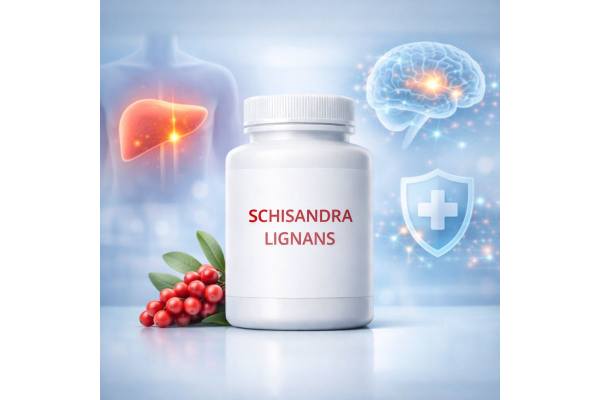
Schisandra lignans are a family of bioactive molecules concentrated in the berries of Schisandra chinensis and related species. These dibenzocyclooctadiene lignans, including schisandrin, schisandrin A, schisandrin B, schisantherin, and gomisins, are now recognised as the main “engine” behind the plant’s adaptogenic and organ-protective reputation. Recent reviews highlight wide-ranging effects: antioxidant and anti-inflammatory actions, liver and brain protection, metabolic support, and possible anticancer activity.
At the same time, Schisandra lignans are highly active at drug-metabolising enzymes and transporters, meaning they can change how your body handles medications. Their pharmacokinetics are complex, and researchers are actively exploring new delivery systems and derivatives to improve bioavailability and safety.
This guide focuses specifically on Schisandra lignans rather than general Schisandra extracts. You will learn what these compounds are, how they work, where the evidence is strongest, how they are used in supplements and experimental therapies, what typical dosage ranges look like, and which safety issues you need to keep in mind before considering them.
Key Insights for Schisandra Lignans
- Schisandra lignans such as schisandrin and schisandrin B show strong antioxidant, anti-inflammatory, and hepatoprotective effects in preclinical models.
- Experimental and early clinical data suggest roles in liver protection, metabolic liver disease, neuroprotection, and modulation of stress responses.
- Most supplements provide Schisandra berry extract standardised to total lignans, commonly around 1–3% lignans at doses of 500–1000 mg per day.
- Schisandra lignans strongly influence cytochrome P450 enzymes and P-glycoprotein, so they can alter blood levels of many medications.
- People with liver disease, those on multiple prescription drugs, pregnant or breastfeeding women, and children should avoid lignan-focused products unless a specialist supervises their use.
Table of Contents
- What are Schisandra lignans?
- How do Schisandra lignans work in the body?
- Health benefits linked to Schisandra lignans
- Pharmacokinetics and bioavailability of Schisandra lignans
- How to use Schisandra lignans in practice
- Dosage of Schisandra lignans and human data
- Side effects, safety, and drug interactions
What are Schisandra lignans?
Schisandra lignans are a group of structurally related compounds found mainly in the fruits of Schisandra chinensis (North Wu Wei Zi) and Schisandra sphenanthera (South Wu Wei Zi). Chemically, they belong to the dibenzocyclooctadiene lignan family, a distinctive scaffold that gives them both lipophilic and phenolic characteristics. The best-known members include schisandrin, schisandrin A (also called deoxyschisandrin), schisandrin B, schisandrin C, schisantherin A and B, and gomisins such as gomisin A, B, and C.
These lignans are considered the principal active constituents of Schisandra berries. While polysaccharides, flavonoids, and volatile components also contribute to biological effects, modern pharmacology and quality control focus on lignans as marker compounds. Analytical methods such as HPLC and LC–MS are now routinely used to quantify individual lignans in raw berries, traditional preparations, and modern extracts.
Lignan profiles differ between Schisandra species and even between growing regions. Schisandra chinensis generally contains more schisandrin-type lignans, whereas Schisandra sphenanthera tends to be richer in certain gomisins and related molecules. These compositional differences help explain why extracts from the two species can have overlapping but not identical pharmacological and interaction profiles.
In the body, Schisandra lignans act as small-molecule modulators rather than classical nutrients. They can cross cell membranes, interact with nuclear receptors, and influence signalling pathways involved in oxidative stress, inflammation, metabolism, and cell survival. Their lipophilicity favours distribution into organs such as the liver, brain, and heart, which is why most mechanistic research has focused on these tissues.
From a supplement perspective, you rarely see pure isolated lignans sold for consumer use. Instead, manufacturers market Schisandra berry extracts standardised to a total lignan content (for example, a certain mg of schisandrins per capsule). Pharmaceutical research, by contrast, often uses purified schisandrin B or related lignans as lead compounds or components of registered hepatoprotective drugs in parts of Asia.
Understanding that “Schisandra lignans” are a defined family of potent plant molecules—not just a vague herbal label—is the first step toward using them thoughtfully and safely.
How do Schisandra lignans work in the body?
Schisandra lignans exert their effects through multiple overlapping mechanisms. Recent comprehensive reviews describe them as pleiotropic modulators of cellular stress responses, metabolism, and drug-handling systems.
Antioxidant and cytoprotective pathways
A core mechanism involves activation of the Keap1–Nrf2 pathway, a master regulator of cellular antioxidant defences. Schisandrin B, in particular, can generate reactive metabolites that modify Keap1 and trigger Nrf2 translocation, increasing the expression of enzymes such as heme oxygenase-1, glutathione S-transferase, and NAD(P)H:quinone oxidoreductase. This upregulation enhances the cell’s ability to neutralise reactive oxygen species and toxic metabolites, which underpins many hepatoprotective and cardioprotective effects observed in animal models.
Anti-inflammatory and immune modulation
Schisandra lignans also dampen inflammatory signalling. They inhibit NF-κB activation and downstream pro-inflammatory cytokines (for example, TNF-α, IL-1β, IL-6) in a variety of cell types, including hepatic, vascular, and tumour cells. In macrophages and liver fibrosis models, schisandrin B has been shown to shift macrophage polarisation toward less inflammatory phenotypes partly via PPARγ activation, thereby reducing fibrotic progression.
Metabolic and mitochondrial effects
In metabolic-associated fatty liver disease models, Schisandra lignans improve lipid handling by modulating genes involved in fatty acid oxidation, lipid transport, and lipogenesis. They can also enhance mitochondrial function and protect against mitochondrial permeability transition, helping cells tolerate metabolic and oxidative stress.
Neuroprotective and cognitive pathways
Preclinical work suggests that Schisandra lignans protect neurons by reducing oxidative damage, inhibiting excitotoxicity, and modulating signalling pathways such as PI3K/Akt/mTOR. In models of neurodegenerative disease and ischemic injury, they attenuate neuronal loss and improve behavioural outcomes, although robust human data are still limited.
Interaction with drug metabolism
Perhaps uniquely important, Schisandra lignans strongly influence cytochrome P450 enzymes (notably CYP3A4 and CYP2C9) and P-glycoprotein transporters in the gut and liver. Depending on dose, composition, and timing, they can inhibit or induce these systems, changing the exposure to co-administered drugs and other xenobiotics. This can be beneficial in some contexts (for example, enhancing detoxification of reactive metabolites) but risky when it alters the levels of critical medications.
The net result is a multi-target, system-level effect that can support resilience against diverse stresses—but also introduces complexity and interaction risk if Schisandra lignans are used casually alongside other drugs.
Health benefits linked to Schisandra lignans
Because Schisandra lignans are rarely given as isolated supplements in humans, most clinical evidence comes from Schisandra extracts or lignan-enriched preparations. Still, mechanistic and preclinical data make it clear that lignans drive many of the observed benefits.
Liver protection and metabolic liver disease
The strongest body of evidence relates to hepatoprotection. Across numerous animal models—drug-induced liver injury, alcohol-related damage, ischemia–reperfusion, and metabolic-associated fatty liver disease—Schisandra lignans consistently reduce liver enzyme elevations, steatosis, inflammation, and fibrosis. Schisandrin B in particular has repeatedly improved lipid accumulation, oxidative stress markers, and histology in high-fat diet and cell-based metabolic-associated fatty liver disease models, often via PPARγ-dependent mechanisms.
In humans, small trials of Schisandra fruit products (often in combination with sesamin or other ingredients) have reported improvements in liver enzymes in people with elevated ALT and AST or fatty liver-related markers, but study quality and sample sizes are limited. It is reasonable to say that lignan-rich Schisandra preparations are promising adjuncts for liver health, not established treatments.
Cardiovascular and metabolic markers
Schisandra lignans may improve lipid profiles, reduce oxidative damage to lipoproteins, and support endothelial function, based on animal experiments and ex vivo studies. Some human trials with Schisandra-containing products show modest improvements in triglycerides, LDL oxidation, and markers of oxidative stress, especially in people with metabolic risk factors. These effects are consistent with the antioxidant, anti-inflammatory, and lipid-modulating actions described at the cellular level.
Neuroprotection and cognition
Preclinical work indicates that Schisandra lignans can protect against ischemic brain injury, β-amyloid toxicity, and other neurodegenerative insults. They may improve memory and learning in rodent models and reduce neuroinflammation. Human evidence remains sparse; most cognitive and stress-resilience studies use whole-plant adaptogenic combinations, where the specific contribution of lignans is inferred rather than directly measured.
Anticancer and chemoprotective potential
Schisandra lignans have shown anti-proliferative and pro-apoptotic effects in various cancer cell lines, including liver, lung, and breast cancer, often by modulating NF-κB, PI3K/Akt/mTOR, and other survival pathways. Some also sensitise tumour cells to chemotherapy and help overcome multi-drug resistance in vitro. At the same time, they may protect healthy tissues from chemotherapy-induced oxidative and inflammatory damage, suggesting a dual role as chemosensitisers and organ protectants.
Other emerging areas
Additional proposed benefits include cardioprotection (limiting ischemia–reperfusion injury), renal protection, immunomodulation, and glucose homeostasis support. Most of these remain at the preclinical or very early clinical stage. For now, Schisandra lignans are best viewed as promising multi-target molecules with strongest support in liver and metabolic protection, and emerging potential in neuroprotection and oncology.
Pharmacokinetics and bioavailability of Schisandra lignans
Understanding how Schisandra lignans are absorbed, distributed, metabolised, and eliminated is essential for translating preclinical findings into safe human use. Recent pharmacokinetic work highlights several recurring themes: limited intrinsic bioavailability, strong first-pass metabolism, and extensive interaction with metabolic enzymes and transporters.
Absorption and distribution
Lignans such as schisandrin and schisandrin B are lipophilic molecules with relatively poor water solubility, which can limit their absorption from the gut. After oral administration in animals and humans, they reach peak plasma concentrations within a few hours and then distribute preferentially to the liver, lungs, kidneys, and brain.
Metabolism and elimination
First-pass metabolism in the liver and intestinal wall strongly shapes lignan exposure. Phase I reactions (mainly demethylation and hydroxylation) followed by phase II conjugation (glucuronidation and sulfation) generate a range of metabolites with varying activity and polarity. Some metabolites retain biological activity; others are primarily excretory forms. Lignans and their metabolites are eliminated via bile and urine, with half-lives ranging from a few hours to more than a day depending on the specific compound and species.
Drug-metabolising enzymes and transporters
A distinctive feature of Schisandra lignans is their bidirectional action on cytochrome P450 enzymes and P-glycoprotein. They can inhibit these systems at lower or acute doses but induce them with repeated exposure, leading to complex, time-dependent effects on co-administered drugs. This is one reason why they are being studied both as potential perpetrators and mitigators of drug–drug interactions.
Bioavailability challenges and delivery innovations
Because oral bioavailability is limited by solubility and first-pass metabolism, researchers are exploring a variety of delivery strategies to enhance systemic exposure and target specific organs:
- Nanoparticle, liposome, and polymer-based carriers to improve solubility and stability.
- Solid dispersions and self-emulsifying systems to increase dissolution in the gut.
- Prodrugs and structural analogues designed to resist rapid metabolism.
These technologies are mainly at the experimental or early clinical stage but illustrate that Schisandra lignans are being treated as serious drug candidates, not just dietary supplement ingredients. For consumers, the key takeaway is that different formulations may produce very different blood levels and tissue exposures even at the same “mg” dose, reinforcing the need for medical guidance and cautious interpretation of labels.
How to use Schisandra lignans in practice
Most people will encounter Schisandra lignans not as pure isolated compounds but as part of Schisandra berry extracts, multi-herb formulas, or, in clinical contexts, as components of licensed hepatoprotective drugs. Practical use therefore means choosing, dosing, and monitoring lignan-rich preparations rather than self-experimenting with research-grade molecules.
Choosing a product
When evaluating a supplement, it helps to look for:
- Clear identification of species (Schisandra chinensis, Schisandra sphenanthera, or both).
- Extract ratio (for example, 5:1, 10:1) and standardisation (such as a defined percentage of total schisandrins or specific lignans).
- Evidence of third-party testing for identity, potency, and contaminants.
Products that explicitly quantify total lignans or key lignans (for example, schisandrin B) provide more useful information than those that only state “Schisandra berry powder.”
Aligning form with goal
- For general liver support or metabolic health, whole-berry extracts standardised to total lignans are most commonly used, sometimes in blends with other hepatoprotective herbs like milk thistle.
- For research or specialist use in liver disease, purified lignans or lignan-rich fractions may be prescribed within formal clinical protocols rather than as over-the-counter supplements.
- For cognitive or stress-related aims, Schisandra often appears in multi-adaptogen formulas; in these cases lignans are important, but the overall effect also reflects other constituents.
Practical steps for responsible use
- Discuss with a clinician who can review your diagnoses, medications, and baseline liver function.
- Start with a modest lignan exposure, often via 250–500 mg per day of a standardised Schisandra extract taken with food, unless your clinician advises differently.
- Avoid stacking multiple lignan-rich products (for example, combining several Schisandra supplements or using them alongside certain traditional formulas that already contain the herb).
- Monitor subjective and objective responses, including energy, digestion, sleep, and, where appropriate, periodic liver enzyme tests.
- Reassess after 8–12 weeks to see whether benefits justify continued use, dosage adjustment, or discontinuation.
Specialists might employ higher or more targeted doses of lignan-rich preparations in conditions such as fatty liver disease, chemotherapy support, or chronic hepatitis, but these uses belong in the realm of supervised medical treatment, not self-directed supplementation.
Dosage of Schisandra lignans and human data
Because consumers usually take lignans as part of Schisandra extracts, dosage is best described in terms of extract amounts and approximate lignan content rather than mg of a single lignan.
Traditional and extract-based ranges
Traditional Chinese medicine texts commonly describe using 3–9 g per day of dried Schisandra berries in decoction, typically as part of multi-herb formulas. When converted into modern extracts, this roughly corresponds to several hundred to a few thousand milligrams of crude berry equivalent per day.
Modern supplements often provide:
- 250–1000 mg per day of Schisandra berry extract, sometimes labelled as 5:1 or 10:1 extracts.
- Standardisation to 1–3% total schisandrins or specific lignans (for example, “10 mg schisandrins per capsule”).
In such products, a daily dose of 500–1000 mg of extract may deliver on the order of 5–30 mg of total lignans, though exact values depend on the formulation.
Lignan-focused research
In preclinical studies, pure schisandrin B is often dosed at levels that translate to tens of milligrams per kilogram in rodents, which, when converted to human-equivalent doses, would be in the low to mid milligram per kilogram range—higher than what most dietary supplements currently provide.
Human trials with lignan-rich Schisandra products have used, for example:
- Mixtures of Schisandra fruit extract and sesamin providing a defined lignan dose in people with abnormal liver enzymes, taken for several weeks.
- Schisandra extracts around 500–1000 mg per day in studies of menopausal symptoms, exercise performance, or metabolic markers, where lignan content was not always fully detailed but likely in the tens of milligrams per day range.
No consensus “therapeutic dose” of Schisandra lignans has been established in humans. Instead, dosing is generally anchored to whole-extract amounts that have shown benefits with acceptable safety in small trials.
Practical guidance
For otherwise healthy adults, and only under professional advice, a cautious pattern might be:
- Start with 250–500 mg per day of a lignan-standardised Schisandra extract.
- If well tolerated and if additional effect is desired, increase toward 500–1000 mg per day, keeping in mind that total lignan intake will rise accordingly.
- Avoid exceeding the upper end of typical supplemental ranges unless you are in a monitored clinical setting.
People with low body weight, older age, polypharmacy, or reduced liver or kidney function often require more conservative dosing or complete avoidance. Children, pregnant or breastfeeding women, and individuals with significant liver disease should not use lignan-focused Schisandra products outside a research or specialist context.
Side effects, safety, and drug interactions
Schisandra lignans are biologically potent, and their safety profile reflects this. Short-term human studies with lignan-rich Schisandra extracts generally report good tolerability, but preclinical work and pharmacokinetic data highlight several areas of concern.
Common and mild side effects
At typical supplemental doses, the most frequently reported side effects include:
- Gastrointestinal upset: nausea, stomach discomfort, or loose stools.
- Headache or a feeling of mild stimulation.
- Occasional skin reactions such as itching or rash.
- Changes in sleep, including vivid dreams or insomnia in some users.
These reactions are usually mild and reversible with dose reduction or discontinuation.
Liver-related considerations
Paradoxically, while Schisandra lignans protect the liver in many animal models, they can also pose risks:
- Their metabolism in the liver generates reactive intermediates that both activate protective Nrf2 signalling and, at high or prolonged exposure, may contribute to hepatotoxicity.
- Inappropriate dosing or interactions with other hepatotoxic substances could tip the balance from protection toward harm, especially in vulnerable patients.
For people with existing liver disease, regular alcohol intake, or concurrent use of potentially hepatotoxic drugs, Schisandra lignans should only be used under close medical supervision, if at all.
Drug–drug interaction risk
A key safety issue is the potential for Schisandra lignans to alter the metabolism and transport of many medications via effects on:
- CYP3A4, CYP2C9, and related cytochrome P450 enzymes.
- P-glycoprotein and other efflux transporters in the intestine and liver.
Depending on context, this can:
- Reduce the effectiveness of some drugs by speeding their clearance.
- Increase the toxicity of others by inhibiting their breakdown or efflux.
Particular caution is warranted with:
- Immunosuppressants (for example, tacrolimus, cyclosporine).
- Certain statins and cardiovascular drugs.
- Anticoagulants and antiplatelet agents.
- Antiepileptics and psychiatric medications.
- Chemotherapeutic agents with narrow therapeutic windows.
Anyone taking regular prescription medications should not start lignan-focused Schisandra products without a thorough review by a doctor or pharmacist.
Who should avoid Schisandra lignans?
In general, avoid use unless a specialist explicitly recommends and monitors it if you:
- Have diagnosed liver disease or unexplained liver enzyme elevation.
- Take multiple medications metabolised by CYP3A4, CYP2C9, or transported by P-glycoprotein.
- Are pregnant or breastfeeding.
- Are a child or adolescent.
- Have a history of severe allergic reactions to Schisandra or related plants.
Stop Schisandra and seek medical care if you notice jaundice, dark urine, pale stools, severe fatigue, unusual bruising, significant abdominal pain, or any signs of hypersensitivity such as facial swelling or breathing difficulty.
Used carefully and in the right context, Schisandra lignans can be valuable tools. Used casually, they can complicate medication regimens and create avoidable risks.
References
- A comprehensive review of Schisandra chinensis lignans: pharmacokinetics, pharmacological mechanisms, and future prospects in disease prevention and treatment, 2025 (Systematic Review).
- A Comprehensive Review of the Main Lignan Components of Schisandra chinensis (North Wu Wei Zi) and Schisandra sphenanthera (South Wu Wei Zi) and the Lignan-Induced Drug-Drug Interactions Based on the Inhibition of Cytochrome P450 and P-Glycoprotein Activities, 2022 (Systematic Review).
- A Review of the Biological Activity and Structure–Property Relationships of the Main Compounds from Schisandra chinensis, 2025 (Review).
- Schisandrin B Alleviates Lipid Metabolism Disorders and Apoptosis of MAFLD via Modulation of PPARγ-PCK1 and Caspase-3 Signaling Pathways, 2025 (Preclinical Study).
- Schisandrin B regulates macrophage polarization and alleviates liver inflammation and fibrosis via activation of PPARγ, 2021 (Preclinical Study).
Disclaimer
This article is for general informational purposes only and does not constitute medical advice, diagnosis, or treatment. Schisandra lignans are pharmacologically active compounds that can affect liver function and the metabolism of many medications. Evidence for their benefits in humans is still evolving, and most data derive from preclinical studies or small clinical trials. Always consult a qualified healthcare professional before starting, changing, or stopping any supplement containing Schisandra or its lignans, especially if you have liver disease, take prescription medications, are pregnant or breastfeeding, or have complex medical conditions. Never delay or replace conventional medical care with supplements.
If you found this guide useful, you are welcome to share it on Facebook, X (formerly Twitter), or any other platform you prefer, and to follow our work on social media. Thoughtful sharing helps support our team in continuing to create careful, evidence-based content on botanical compounds and health.