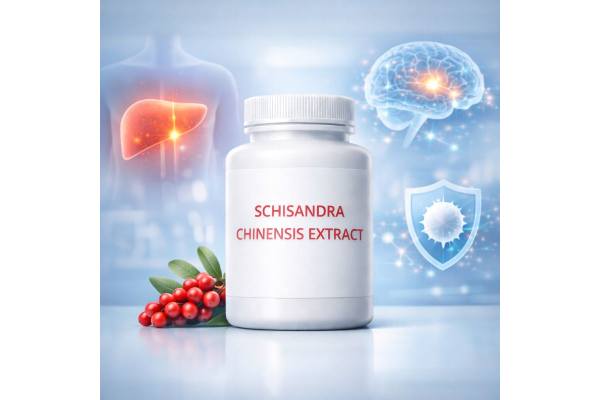
Schisandra chinensis, sometimes called Chinese magnolia vine or “five-flavor berry,” is a traditional East Asian medicinal plant that has recently become popular as a modern supplement. Standardized Schisandra chinensis extract is promoted for better stress resilience, sharper concentration, liver support, physical performance, and overall vitality. Most of these claims come from a mix of long traditional use, promising animal data, and a growing but still modest body of human research.
This guide walks you through what Schisandra extract is, how it appears to work, which benefits are realistically supported by evidence, and how people typically use it in practice. You will also find a careful look at dosage ranges, side effects, and who should avoid it or speak with a clinician before trying it. The goal is to help you make informed, safety-first decisions rather than rely on marketing promises or vague “adaptogen” labels.
Schisandra chinensis Quick Summary
- Standardized Schisandra chinensis extract is used as an adaptogenic supplement for stress, liver support, and physical performance.
- Early human trials suggest benefits for menopausal symptoms, muscle strength, and fatigue, but overall clinical evidence remains limited.
- Common supplemental intakes are around 500–1000 mg per day of standardized extract or roughly 1.5–6 g of dried berries, usually in divided doses.
- Possible side effects include digestive discomfort, headache, and changes in liver enzymes, especially when combined with other medications.
- People with liver disease, those on multiple prescription drugs, pregnant or breastfeeding women, and children should avoid Schisandra unless a qualified professional supervises its use.
Table of Contents
- What is Schisandra chinensis extract and how does it work?
- Schisandra extract benefits: what it may help
- How to take Schisandra extract in practice
- Schisandra dosage: how much per day?
- Side effects, interactions, and safety concerns
- Who should avoid Schisandra and when to see a doctor
What is Schisandra chinensis extract and how does it work?
Schisandra chinensis is a woody vine native to Northeast Asia whose bright red berries have been used for centuries in Chinese, Korean, and Russian herbal traditions. The berries are called “five-flavor fruit” because they are described as sour, sweet, salty, bitter, and pungent all at once. Traditionally, Schisandra has been used to “nourish qi,” calm the spirit, protect the liver, and support endurance and sexual vitality.
Modern Schisandra supplements usually contain concentrated berry extract rather than the whole dried fruit. Manufacturers often standardize those extracts to specific lignans, particularly schisandrin, schisandrin A, schisandrin B, and gomisin A. Lignans are polyphenolic compounds believed to be largely responsible for the plant’s antioxidant, anti-inflammatory, and neuroprotective properties. Many extracts also contain polysaccharides and other phytonutrients that may add synergistic effects.
From a pharmacological perspective, Schisandra extract seems to work on several levels at once. In cell and animal models, its lignans appear to:
- Increase antioxidant defenses such as glutathione and superoxide dismutase.
- Reduce pro-inflammatory cytokines and markers of oxidative stress in liver, brain, and muscle tissue.
- Modulate stress-related pathways, including the hypothalamic–pituitary–adrenal (HPA) axis.
- Interact with neurotransmitter receptors and ion channels linked to mood, attention, and fatigue perception.
- Influence cytochrome P450 enzymes (especially CYP3A4 and CYP2C) involved in drug metabolism.
A large recent review of Schisandra lignans highlighted their potential roles in protecting the liver, brain, heart, and metabolic organs. It also emphasized that these compounds can induce certain drug-metabolizing enzymes in the liver, which partly explains both possible benefits (enhanced detoxification) and risks (altered drug levels).
Because Schisandra appears to help the body adapt to physical and psychological stress while preserving organ function, it is often described as an “adaptogen.” However, “adaptogen” is a functional marketing term, not a regulated medical category, and the strength of evidence varies by outcome. For now, the most plausible mechanisms involve reduced oxidative stress, modulation of inflammatory pathways, and support of mitochondrial and liver function.
Schisandra extract benefits: what it may help
The potential benefits of Schisandra chinensis extract can be grouped into several main domains: liver protection, physical performance and fatigue, stress and cognition, metabolic health, and women’s health. It is important to distinguish between promising early findings and well-established clinical effects.
Liver support and detoxification
Preclinical studies dominate this area. In numerous animal models of liver injury caused by toxins, alcohol, or ischemia, Schisandra extracts and isolated lignans consistently reduce liver enzyme elevation (ALT, AST), oxidative damage, and inflammation while improving histological appearance of liver tissue. A recent systematic review and meta-analysis of animal studies concluded that Schisandra has robust hepatoprotective effects across different liver injury models, likely through antioxidant and anti-inflammatory mechanisms.
Human data are more limited. Schisandra-derived pharmaceuticals (such as bicyclol and related compounds) are used in parts of Asia for chronic hepatitis and drug-induced liver injury, with clinical trials supporting improved liver enzymes and symptoms. However, these are purified drugs, not over-the-counter berry extracts, and their dosing and safety profiles are not interchangeable with dietary supplements.
Physical performance, fatigue, and recovery
Schisandra has a long history as a stamina and “anti-fatigue” tonic. Modern research is beginning to catch up. A randomized controlled trial in postmenopausal women found that 12 weeks of 1000 mg per day of Schisandra extract significantly improved quadriceps muscle strength and reduced resting lactate compared with placebo, suggesting better muscle performance and fatigue resistance. Other human work, though smaller, hints that Schisandra-based formulas may improve perceived fatigue and exercise capacity, particularly in older adults and those doing low-intensity training.
Stress, cognition, and mood
Schisandra features in several adaptogenic herbal blends studied for mental performance and stress resilience. In combination formulas, it has been associated with improvements in attention, mental speed, and perceived stress under demanding conditions. Animal studies suggest that Schisandra lignans may modulate neurotransmitters such as dopamine, serotonin, and GABA, and may protect neurons from oxidative damage. However, stand-alone human trials of Schisandra extract for anxiety, depression, or cognitive decline are still scarce.
Metabolic and cardiovascular markers
In overweight and obese adults, Schisandra-containing fruit extracts have been investigated for effects on blood lipids, inflammation, and antioxidant status. Some trials report modest reductions in triglycerides and inflammatory markers along with improved antioxidant capacity, especially when Schisandra is combined with other polyphenol-rich ingredients. Preclinical work suggests possible benefits for insulin sensitivity and non-alcoholic fatty liver disease, but definitive human evidence is still emerging.
Women’s health and menopausal symptoms
A randomized, placebo-controlled study in women with menopausal symptoms found that a standardized Schisandra extract (BMO-30) reduced overall symptom scores, including hot flashes, sweating, and palpitations, compared with placebo over 12 weeks. This suggests that Schisandra may offer complementary support for vasomotor and neurovegetative menopausal complaints. The trial was relatively small, and larger studies are needed, but it is one of the more encouraging human data points.
Overall, Schisandra chinensis extract shows promise in several areas, particularly liver protection, muscle performance, and menopausal symptom relief. At the same time, it should still be considered a complementary option with limited high-quality human data rather than a standalone treatment for serious conditions.
How to take Schisandra extract in practice
If you and your healthcare professional decide that Schisandra chinensis extract is appropriate for you, the way you take it can influence both benefits and side effects. The key variables are the form, timing, combination with other supplements or drugs, and the length of use.
Common supplemental forms
You will usually encounter Schisandra in one of the following forms:
- Standardized capsules or tablets containing berry extract (often labeled with a specific percentage of schisandrins or total lignans).
- Tinctures or liquid extracts in alcohol or glycerin, sometimes combined with other adaptogens.
- Powdered berries or extracts sold for mixing into drinks.
- Traditional dried berries intended for teas or decoctions.
For most people seeking predictable dosing and convenience, standardized capsules are easiest. The label should clearly state the amount of extract per capsule and, ideally, its standardization to key lignans.
Timing and with or without food
Schisandra extracts are often taken once or twice daily. Because higher doses may cause mild nausea or reflux in some people, many clinicians suggest taking them with food rather than on an empty stomach. If your product is divided into multiple capsules per day, splitting the dose (for example, morning and early afternoon) can reduce the risk of stomach upset and may smooth subjective effects on energy and focus.
Stacking with other supplements
Schisandra is frequently combined with other adaptogens such as Rhodiola rosea, Eleutherococcus senticosus, or Panax ginseng in “energy and stress” formulas. While this may increase perceived benefits, it can also make it harder to identify which ingredient is causing a reaction or interaction. If you are sensitive or take prescription medications, it is often wiser to start with Schisandra alone at a lower dose and add other supplements only after you know how you respond.
A practical stepwise approach
- Confirm that there are no obvious contraindications (for example, active liver disease, pregnancy, significant polypharmacy) with a qualified professional.
- Choose a reputable brand that discloses extract ratio, standardization, and independent testing for contaminants.
- Start at the lower end of the dosing range (often 250–500 mg per day of standardized extract) with food.
- Monitor how you feel for one to two weeks, including energy, sleep, digestion, and any symptoms such as itching, right-upper-quadrant discomfort, or dark urine.
- If needed and well tolerated, titrate toward a target dose agreed with your clinician (for example, 500–1000 mg per day) and reassess after 8–12 weeks.
- For long-term use, periodic breaks (such as 1–2 weeks off every few months) and occasional blood tests, especially liver enzymes, are a cautious strategy.
People using Schisandra specifically for exercise performance or menopausal symptoms should align dosing and duration with the protocols used in clinical trials as closely as is safe and practical, again under professional guidance.
Schisandra dosage: how much per day?
There is no single universally accepted dosage for Schisandra chinensis extract, and recommendations differ depending on whether you are using whole berries, crude extracts, or standardized products. The following ranges are drawn from pharmacopoeias, preclinical–to–human dose conversions, and published clinical trials.
Traditional herbal use
In Chinese herbal practice, dried Schisandra berries are typically used in decoctions at roughly 3–9 g per day, often combined with other herbs. When converted to capsules or powders, this might correspond to several grams of crude berry material daily. Such traditional dosing is usually supervised by practitioners trained in Chinese medicine and tailored to the individual.
Standardized extract dosing
Most modern dietary supplements provide concentrated extracts rather than crude berry powder. Key points:
- Many human trials of Schisandra extracts use doses around 500–1000 mg per day of a standardized berry extract.
- For example, an exercise study in postmenopausal women used 1000 mg per day of an ethanol extract for 12 weeks, improving quadriceps strength and lowering resting lactate without major safety issues.
- Animal studies, when converted to human-equivalent doses, often support a wide range of possible intakes, but recent analyses suggest that about 1 g per day of extract offers a reasonable balance between efficacy and tolerability for adults.
A conservative, safety-first approach for adults
For otherwise healthy adults, a cautious general pattern (to be refined by a clinician) could look like:
- Start: 250–500 mg per day of standardized Schisandra berry extract with food.
- Typical “maintenance”: 500–1000 mg per day, divided into one or two doses.
- Maximum to avoid exceeding without supervision: more than 1000–1500 mg per day of concentrated extract, especially if you also use other herbs or medications affecting the liver.
Body weight matters somewhat, but liver function, concurrent medicines, and individual sensitivity are more important. Smaller or older adults and those on multiple drugs may need to stay at the lower end of the range.
Special situations
- For liver support: lower, steady doses over time, alongside medical monitoring, are preferred over high short-term dosing.
- For exercise performance: studies have often used 1000 mg per day for at least 8–12 weeks alongside mild exercise; benefits are unlikely from sporadic use.
- For menopausal symptoms: clinical trials have used standardized extracts over about 6–12 weeks, with doses chosen to balance symptom relief and safety rather than aiming for maximal pharmacological effect.
Children, pregnant or breastfeeding women, and people with known liver disease should not self-dose Schisandra. In these groups, there is insufficient safety data, and any use should be under specialist supervision, if at all.
Finally, remember that “natural” does not mean “risk-free.” Because Schisandra can influence drug-metabolizing enzymes, even moderate doses may meaningfully change the way your body handles prescription medicines, which is one reason why a personalized medical opinion is essential.
Side effects, interactions, and safety concerns
Most short-term human trials report that Schisandra chinensis extract is generally well tolerated at typical supplemental doses. However, “generally well tolerated” does not mean universally safe, and both minor side effects and more serious risks are possible, especially with long-term use, high doses, or complex medication regimens.
Common mild side effects
In clinical and observational reports, the more frequent minor reactions include:
- Gastrointestinal upset: nausea, stomach discomfort, reflux, or loose stools.
- Headache or a feeling of being “wired,” particularly when combined with other stimulating adaptogens or taken late in the day.
- Skin reactions such as mild rash or itching in sensitive individuals.
- Temporary changes in sleep pattern, either mild insomnia or vivid dreams, which may improve with dose timing adjustments.
These effects often lessen when the dose is reduced, when Schisandra is taken with food, or when evening doses are avoided.
Liver-related risks
Paradoxically, a herb with strong hepatoprotective effects in animals still raises important liver safety questions in humans. Several factors are relevant:
- Schisandra lignans are active in the liver and can induce or inhibit drug-metabolizing enzymes.
- In pharmaceutical form, some Schisandra-derived compounds used for liver disease have well-documented safety monitoring protocols.
- As a dietary supplement, quality and composition vary widely; contaminants or mis-standardization could contribute to unexpected liver stress.
While clinically apparent liver injury from Schisandra supplements appears rare, it cannot be ruled out, especially when combined with other hepatotoxic drugs, alcohol, or supplements. Warning signs that demand urgent medical evaluation include jaundice (yellowing of skin or eyes), dark urine, pale stools, intense fatigue, or pain in the upper right abdomen. Schisandra should be stopped immediately if any of these develop.
Drug interactions
One of the most significant safety issues with Schisandra is its potential to alter the metabolism of other medications. Experimental and clinical data suggest that Schisandra lignans can:
- Induce CYP3A and related enzymes involved in the clearance of many drugs.
- Affect P-glycoprotein and other transporters that move drugs into and out of cells.
This means Schisandra could theoretically lower blood levels of some drugs (reducing effectiveness) or, depending on context and timing, increase levels of others. Drugs that deserve particular caution include:
- Certain statins and other cardiovascular medications.
- Immunosuppressants such as tacrolimus and cyclosporine.
- Some anticoagulants and antiplatelet agents.
- Anti-seizure medicines and psychiatric medications.
- Drugs with a narrow therapeutic window (where small changes in blood level have big clinical consequences).
Because these pathways are complex and dose-dependent, it is virtually impossible to predict interactions accurately without medical supervision. Anyone on regular prescription medications should have their regimen reviewed by a doctor or pharmacist before adding Schisandra.
Allergic reactions and rare events
True allergic reactions to Schisandra are uncommon but may occur, especially in people with multiple plant allergies. Symptoms could include hives, swelling, or difficulty breathing; these require immediate emergency care.
In summary, while many people use Schisandra chinensis extract without noticeable problems, it is not side-effect-free. Its active interaction with liver enzymes and transporters makes it a supplement that deserves respect and careful monitoring, not casual experimentation.
Who should avoid Schisandra and when to see a doctor
Because Schisandra chinensis extract is pharmacologically active, certain groups should not use it or should only use it under specialist supervision. Understanding where it may be inappropriate is just as important as knowing its potential benefits.
People who should generally avoid Schisandra
- Individuals with known liver disease or unexplained liver enzyme elevation, unless their hepatologist or gastroenterologist explicitly approves and monitors use.
- People taking multiple prescription drugs, especially those processed by CYP3A4, CYP2C9, or P-glycoprotein, or drugs with a narrow therapeutic window.
- Pregnant women, due to insufficient safety data and the possibility of uterine effects inferred from traditional usage patterns.
- Breastfeeding women, since data on excretion into breast milk and effects on infants are lacking.
- Children and adolescents, as safety and appropriate dosing have not been established in these age groups.
Situations requiring extra caution and medical input
Even if Schisandra is not absolutely contraindicated, careful supervision is recommended when:
- You have a history of autoimmune disease, severe allergies, or multiple chemical sensitivities.
- You are scheduled for surgery or procedures requiring anesthesia (herbal–drug interactions may alter anesthesia requirements or bleeding risk).
- You consume significant amounts of alcohol or use other potentially hepatotoxic substances (including high-dose vitamin A, some bodybuilding supplements, or other herbs like kava).
- You are already using several herbal products marketed for liver support, energy, or hormonal balance. The combined effect on liver enzymes and hormone pathways may be unpredictable.
Warning signs that warrant stopping Schisandra and seeking care
Stop the supplement and contact a healthcare professional promptly if you experience:
- Jaundice, dark urine, pale or clay-colored stools, or persistent right-upper-quadrant abdominal pain.
- Unexplained bruising, unusual bleeding, or severe fatigue.
- New or worsening palpitations, shortness of breath, or chest discomfort.
- Generalized rash, swelling of the face or throat, or difficulty breathing (seek emergency care).
- Marked changes in mood, sleep, or behavior that appear after starting the supplement.
Working with professionals
Because the research base for Schisandra is still evolving, it is wise to involve practitioners with experience in both conventional medicine and herbal therapeutics whenever possible. An ideal situation might include:
- A physician or nurse practitioner who can review your diagnoses, medications, and lab results.
- A pharmacist who can assess interaction risk and help plan monitoring.
- If desired, a qualified herbalist or practitioner of Chinese medicine who understands traditional patterns and herb combinations.
This team-based approach is especially valuable if you hope to use Schisandra as part of a strategy to support liver health, manage menopausal symptoms, or enhance exercise performance, where objective outcome tracking (lab tests, symptom scores, or performance metrics) can help determine whether the supplement is truly helpful for you.
Ultimately, Schisandra chinensis extract is best thought of as a potent plant-derived tool—not a harmless “extra.” Used thoughtfully and respectfully, it may offer meaningful benefits for selected people and conditions, but it should never replace appropriate medical care or monitoring.
References
- A comprehensive review of Schisandra chinensis lignans: pharmacokinetics, pharmacological mechanisms, and future prospects in disease prevention and treatment, 2025 (Systematic Review)
- Efficacy of Schisandra chinensis in liver injury: a systematic review and preclinical meta-analysis, 2025 (Systematic Review)
- Systematic analysis of the pharmacological function of Schisandra as a potential exercise supplement, 2021 (Systematic Analysis)
- Effect of Schisandra chinensis Extract Supplementation on Quadriceps Muscle Strength and Fatigue in Adult Women: A Randomized, Double-Blind, Placebo-Controlled Trial, 2020 (RCT)
- A randomized, double-blind, placebo-controlled trial of Schisandra chinensis for menopausal symptoms, 2016 (RCT)
Disclaimer
The information in this article is for general educational purposes only and is not a substitute for personalized medical advice, diagnosis, or treatment. Schisandra chinensis extract is a biologically active product that can interact with medications and underlying health conditions, particularly those involving the liver and cardiovascular system. Do not start, stop, or change any supplement or medication based on this article without speaking with a qualified healthcare professional who knows your medical history. Never use Schisandra or any supplement in place of urgent medical care, and seek immediate attention if you experience symptoms suggesting liver injury, allergic reaction, or other serious adverse effects.
If you found this guide helpful, please consider sharing it on Facebook, X (formerly Twitter), or any platform you prefer, and follow our work on social media. Your support in sharing helps our team continue to research, write, and update high-quality, evidence-based content for readers like you.