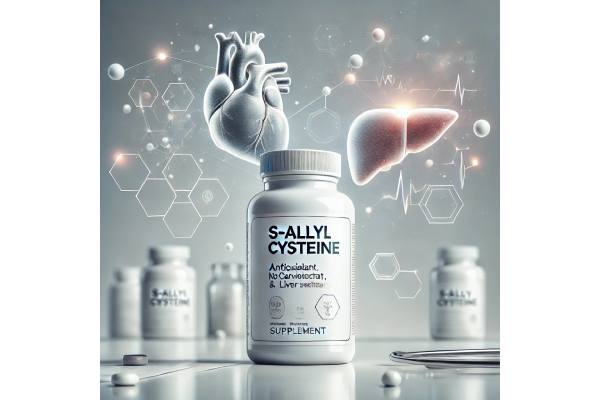
S-allyl cysteine is a naturally occurring sulfur-containing amino acid best known as a key active compound in aged garlic extract and black garlic. Unlike the pungent, unstable components of fresh garlic, S-allyl cysteine is water-soluble, stable, and well absorbed, which makes it especially interesting as a supplement ingredient. Early research suggests that it may help support antioxidant defenses, cardiovascular health, brain function, mood, and metabolic balance, mainly by reducing oxidative stress and chronic low-grade inflammation.
Most human studies so far use S-allyl cysteine within aged garlic products rather than as a standalone supplement, so it is better viewed as one piece of a broader garlic-based strategy rather than a magic bullet on its own. Still, its safety profile looks favorable, and standardized doses make it easier to study and use. This guide walks you through what S-allyl cysteine is, how it works, its potential benefits, dosing ranges, safety issues, and how to decide whether it fits into your supplement plan.
Key Insights
- S-allyl cysteine from aged garlic extract supports antioxidant defenses, vascular health, and brain function.
- Its main actions include reducing oxidative stress, calming inflammatory pathways, and protecting cells from premature death.
- Typical supplemental exposure from aged garlic products provides about 1–2 mg S-allyl cysteine per day, with some trials using up to 2 mg/day.
- People on blood thinners, blood pressure or diabetes medicines, or with surgery planned should only use S-allyl cysteine under medical supervision.
- Individuals who are pregnant, breastfeeding, very sensitive to garlic, or have a history of bleeding problems should avoid S-allyl cysteine unless their clinician clearly approves it.
Table of Contents
- What is S-allyl cysteine?
- How S-allyl cysteine acts in the body
- Benefits of S-allyl cysteine for health
- How to take S-allyl cysteine
- S-allyl cysteine combinations and interactions
- Side effects of S-allyl cysteine and who should avoid it
What is S-allyl cysteine?
S-allyl cysteine (often abbreviated SAC) is a sulfur-containing derivative of the amino acid cysteine. It is formed naturally when garlic is aged or fermented. In aged garlic extract, S-allyl cysteine becomes one of the most abundant and best-characterized organosulfur compounds. Because it is water-soluble and chemically stable, it can be standardized and measured precisely in supplements, which is not the case for many of the more volatile garlic compounds.
When fresh garlic is processed into aged garlic extract, the harsh, reactive molecules that contribute to its strong smell, such as allicin, gradually convert into milder, more stable substances. S-allyl cysteine is a key end-product of this transformation. Similar chemistry happens when making black garlic through slow heating and fermentation, so black garlic also contains meaningful amounts of S-allyl cysteine.
In the body, S-allyl cysteine behaves differently from raw garlic oil components. It dissolves readily in water, is absorbed from the gut, and circulates in the bloodstream. Because it is relatively stable, blood and tissue levels can be predicted more reliably for a given dose. This consistency is important for clinical research and helps explain why aged garlic extract is often standardized by its S-allyl cysteine content.
It is important to remember that S-allyl cysteine rarely appears alone in real-world products. Most supplements provide it as part of aged garlic extract or S-allyl cysteine–enriched garlic powders, which also contain other sulfur compounds, small peptides, and phenolics. The health effects seen in human trials such as improved blood pressure or better sleep probably come from the combined activity of all these molecules, with S-allyl cysteine acting as a major, but not the only, contributor.
How S-allyl cysteine acts in the body
S-allyl cysteine influences several fundamental biological systems rather than targeting just one organ. The best-characterized actions involve oxidative stress, inflammation, cell survival pathways, and, in the brain, signaling related to mood and memory.
Oxidative stress refers to an imbalance between reactive oxygen species and the antioxidant systems that keep them under control. S-allyl cysteine helps on both sides of this equation. In experimental models it can directly scavenge free radicals, but more importantly, it upregulates endogenous defense systems. Enzymes such as superoxide dismutase, catalase, and glutathione peroxidase tend to rise with S-allyl cysteine exposure, while markers of lipid peroxidation and protein damage fall. This broad antioxidant support is one reason why aged garlic products are studied for cardiovascular and neuroprotective effects.
Chronic, low-level inflammation is another major target. S-allyl cysteine appears to dampen inflammatory signaling by influencing key transcription factors such as NF-κB and upstream receptors such as Toll-like receptor 4. When these systems are chronically overactivated, they drive production of cytokines and enzymes that damage vascular, metabolic, and neural tissues. By dialing down these pathways, S-allyl cysteine may help maintain healthier endothelial function, reduce inflammatory damage in the brain, and modulate responses to environmental stressors such as cigarette smoke.
At the cellular level, S-allyl cysteine also interacts with mechanisms that decide whether a cell survives or undergoes programmed cell death. Studies in neurons, liver cells, and heart cells exposed to toxic insults show that S-allyl cysteine can shift the balance away from apoptosis, in part by stabilizing mitochondria and in part by reducing endoplasmic reticulum stress. In brain cells specifically, there is evidence that it modulates calcium-handling enzymes such as calpains, which are often involved in neurodegeneration.
In the central nervous system, S-allyl cysteine may also influence neurotransmitter systems and neurotrophic factors. Animal work suggests it can increase brain-derived neurotrophic factor and enhance serotonergic signaling, mechanisms that align with reported antidepressant-like effects and potential improvement in resilience to chronic stress.
Altogether, these actions paint S-allyl cysteine as a multi-target “cell guardian”: it does not cure specific diseases on its own, but it can make tissues more resistant to oxidative, inflammatory, and metabolic insults.
Benefits of S-allyl cysteine for health
Because S-allyl cysteine is mostly delivered through aged garlic or S-allyl cysteine–enriched garlic supplements, much of the benefit data comes from trials using those products. It is often difficult to separate the unique contribution of S-allyl cysteine from other garlic constituents, but several areas stand out.
Cardiovascular health and blood pressure
Aged garlic extract standardized to provide around 1–1.5 mg S-allyl cysteine per day has been shown in clinical studies to modestly lower systolic blood pressure in people with uncontrolled hypertension. Reductions around 5 mm Hg may look small, but they are meaningful at the population level and comparable to the effect of adding a mild second-line drug in some patients. These garlic preparations also tend to improve markers such as arterial stiffness and endothelial function, which are crucial for long-term vascular health.
Anti-inflammatory and respiratory support
S-allyl cysteine–rich aged garlic has been studied as a way to blunt inflammation triggered by cigarette smoke at the cellular level, particularly through dampening TLR4 and NF-κB signaling. While this does not make smoking safe, it suggests a potential role in mitigating some of the inflammatory burden in current or former smokers when combined with smoking cessation and standard care.
Brain health, mood, and resilience
A series of laboratory and animal studies shows that S-allyl cysteine protects neurons against diverse insults, including ischemia-like conditions, toxic proteins, and models of Parkinson’s disease. It appears to reduce endoplasmic reticulum stress, limit calcium-driven cell damage, and preserve neuronal connections. In behavioral models, S-allyl cysteine produces antidepressant-like effects, associated with increased brain-derived neurotrophic factor and healthier serotonin signaling.
In humans, early data with S-allyl cysteine–enriched garlic supplements suggest possible benefits for subjective sleep quality and fatigue. Participants taking about 2 mg S-allyl cysteine per day, within a garlic matrix, reported better sleep latency and daytime energy than those on placebo. These findings are preliminary but consistent with its stress-buffering and neuroprotective profile.
Metabolic and liver support
Preclinical models also show that S-allyl cysteine can improve insulin sensitivity, reduce glycation-related damage, and protect liver cells from toxins. Aged garlic preparations have shown modest improvements in cholesterol profiles and markers related to glucose metabolism in some human trials, again likely reflecting the combined effects of S-allyl cysteine and other actives.
Taken together, the current evidence supports using S-allyl cysteine–containing garlic preparations as an adjunct for cardiovascular risk reduction, general antioxidant support, and possibly brain health, particularly in midlife and older adults. It should still be viewed as complementary to, not a replacement for, prescribed medication and lifestyle changes.
How to take S-allyl cysteine
Because pure S-allyl cysteine supplements are relatively uncommon, most people obtain it from aged garlic extract capsules or S-allyl cysteine–enriched garlic powders. These products are usually standardized so that each capsule provides a known amount of aged garlic along with a specific S-allyl cysteine content.
Clinical trials in hypertension and other cardiovascular risk settings often use two capsules daily providing a total of about 1.2 g aged garlic extract and roughly 1.2 mg S-allyl cysteine. In sleep and fatigue research, S-allyl cysteine–enriched garlic supplements have supplied around 2 mg S-allyl cysteine per day for 12 weeks without major safety concerns. Based on these data, a reasonable practical range for adults from well-formulated products is about 1–2 mg S-allyl cysteine per day, delivered within 600–1200 mg of aged garlic extract or a comparable garlic matrix.
Some formulations, especially those marketed for more intensive cardiovascular or antioxidant support, may provide higher daily intakes of aged garlic and therefore somewhat more S-allyl cysteine. However, there is little human data above about 2–3 mg S-allyl cysteine per day, so going much beyond that is not advisable without medical oversight.
Basic usage guidelines:
- Start low: Begin with one capsule daily, taken with food, to gauge tolerance.
- Increase gradually: If tolerated, move to the full studied regimen (often two capsules per day) after one to two weeks.
- Timing: Many people take aged garlic or S-allyl cysteine supplements with breakfast and dinner to reduce any mild digestive discomfort.
- Consistency: Most benefits, especially for blood pressure or sleep quality, have appeared after 8–12 weeks of regular use, not overnight.
Special populations require extra caution. For older adults on multiple medications, it is important to have a clinician review potential interactions before adding S-allyl cysteine–containing products. People with low baseline blood pressure, those prone to dizziness, or individuals with very sensitive stomachs may need lower doses or slower titration.
Food sources also matter. Black garlic and aged garlic in the diet provide S-allyl cysteine naturally, though the exact amount varies widely by preparation. If your diet already includes these frequently, supplemental doses should be kept toward the lower end of the range.
S-allyl cysteine combinations and interactions
In practice, S-allyl cysteine is rarely used on its own. It usually appears as part of aged garlic formulations or multi-ingredient cardiovascular and “healthy aging” blends. Understanding how it fits with other supplements and medicines is essential for safe, rational use.
Common supplement combinations
S-allyl cysteine–containing products are often paired with:
- Omega-3 fatty acids, to cover both inflammatory and lipid-related risk factors.
- Coenzyme Q10, for mitochondrial and cardiovascular support.
- Magnesium, especially for blood pressure control and muscle relaxation.
- B vitamins, which support homocysteine metabolism and nervous system function.
These pairings aim to provide complementary mechanisms, such as combining the anti-inflammatory effects of S-allyl cysteine with the triglyceride-lowering effects of omega-3s or the endothelial benefits of magnesium. As long as dosages remain within standard ranges and kidney and liver function are normal, such combinations are generally well tolerated.
Possible interactions with medicines
Because most data come from garlic as a whole, interaction patterns are guided by that experience:
- Blood thinners and antiplatelet drugs: Garlic, particularly in higher doses, can slightly increase bleeding tendency. While S-allyl cysteine itself appears milder than raw garlic preparations, caution is still advised with warfarin, direct oral anticoagulants, aspirin, clopidogrel, or combinations of these.
- Blood pressure medicines: Aged garlic extract can modestly lower blood pressure. Adding S-allyl cysteine–rich garlic products to existing antihypertensive regimens may increase the risk of dizziness or symptomatic low blood pressure, especially in hot weather or during illness.
- Diabetes medicines: Garlic-based products can improve insulin sensitivity and glycemic parameters in some individuals. When combined with insulin or oral hypoglycemics, they may contribute to episodes of low blood sugar if doses of the prescription drugs are not adjusted appropriately.
Strategic use rather than stacking
Rather than stacking many “antioxidant” or “heart health” supplements on top of each other, it is usually better to choose a focused, evidence-aligned combination and integrate it with lifestyle interventions. For example, a middle-aged person with mildly elevated blood pressure and high stress might combine S-allyl cysteine–standardized aged garlic with omega-3s and a structured exercise program, rather than adding several overlapping herbal agents with similar effects.
Always review your complete supplement and medication list with a healthcare professional, particularly if you are on prescription drugs or have a history of cardiovascular, bleeding, or metabolic disorders. If any new symptoms such as easy bruising, nosebleeds, palpitations, or severe fatigue appear after starting S-allyl cysteine–containing products, medical advice should be sought promptly.
Side effects of S-allyl cysteine and who should avoid it
Compared with raw garlic oils or high-dose garlic powders, S-allyl cysteine–rich aged garlic preparations are generally well tolerated. The aging process removes much of the pungency and reduces the likelihood of acute digestive upset, while S-allyl cysteine itself is water-soluble and cleared efficiently by the body. Still, side effects and risks can occur, especially at higher doses or in sensitive individuals.
Common, usually mild effects
Reported mild side effects with aged garlic and S-allyl cysteine–containing products include:
- Subtle garlic-like body or breath odor, usually less intense than with raw garlic
- Mild gastrointestinal discomfort, such as gas, bloating, or soft stools
- Occasional nausea if taken on an empty stomach
- Headache or lightheadedness in people whose blood pressure falls quickly
These reactions often improve with dose reduction, taking capsules with meals, or spacing doses across the day.
Less common but more serious concerns
There are a few safety areas that deserve special attention:
- Bleeding risk: Garlic has a modest antiplatelet effect. While S-allyl cysteine appears less aggressive than some other garlic components, people on anticoagulants or multiple antiplatelet drugs should be cautious. Unexplained bruising, frequent nosebleeds, or prolonged bleeding from small cuts are warning signs.
- Low blood pressure or blood sugar: In individuals already on intensive blood pressure or diabetes regimens, adding S-allyl cysteine–rich products can rarely contribute to episodes of symptomatic low blood pressure or low blood sugar. Symptoms include dizziness, faintness, blurred vision, confusion, or palpitations.
- Allergic reactions: True garlic allergy is uncommon but possible. Symptoms such as rash, itching, swelling of lips or tongue, or difficulty breathing require immediate medical attention and permanent avoidance of garlic-derived products, including S-allyl cysteine.
Who should avoid S-allyl cysteine or use it only under supervision
- People with known garlic allergy or severe intolerance
- Individuals with active bleeding disorders or very low platelet counts
- Anyone taking warfarin or other strong anticoagulants, unless their prescribing clinician specifically approves the combination and monitors closely
- People scheduled for surgery or invasive dental procedures, who are often advised to stop garlic-containing supplements at least 1–2 weeks beforehand
- Pregnant or breastfeeding individuals, due to lack of targeted safety data for concentrated S-allyl cysteine
- Children and adolescents, unless a pediatric specialist recommends use for a specific reason
For most otherwise healthy adults, S-allyl cysteine–containing aged garlic supplements used in the 1–2 mg per day range appear safe over periods of several months in clinical research. Long-term, high-dose use has not been studied thoroughly, so it is wise to review periodic lab tests and medical checkups if you plan to use these products as part of a chronic prevention strategy.
References
- The Antioxidant Mechanisms Underlying the Aged Garlic Extract (AGE) and Its Main Active Compound, S-Allylcysteine 2012 (Systematic Review)
- Neuroprotective mechanisms of S-allyl-L-cysteine in neurological disease (Review) 2019 (Review)
- S-Allyl Cysteine, a Garlic Compound, Produces an Antidepressant-Like Effect in Mice, Probably Via a Combination of Increasing Brain-Derived Neurotrophic Factor and Enhancing Serotonergic Transmission 2020 (RCT in animal model)
- Effects of S-allyl cysteine-enriched garlic supplement on sleep quality and fatigue in Japanese adults: a randomized, double-blind, placebo-controlled, parallel-group trial 2025 (RCT)
- Aged Garlic Extract and Its Bioactive Molecules S-Allyl-Cysteine and S1-Propenyl-Cysteine: A Review Focusing on Evidences Supporting Their Use for Mitigating the Effects of Cigarette Smoking 2025 (Systematic Review)
Disclaimer
The information in this article is for general educational purposes only and is not intended to provide medical advice, diagnosis, or treatment. S-allyl cysteine and aged garlic extract can affect blood pressure, blood clotting, and other physiological processes, especially when combined with prescription medicines or underlying health conditions. Always consult a qualified healthcare professional before starting, stopping, or changing any supplement regimen, particularly if you are pregnant, breastfeeding, living with a chronic illness, or taking regular medications.
If you found this guide helpful, you are warmly invited to share it with others on Facebook, X (formerly Twitter), or any platform you prefer, and to follow our work on social media. Your thoughtful sharing and support help our team continue to research, write, and update high-quality health content for readers around the world.