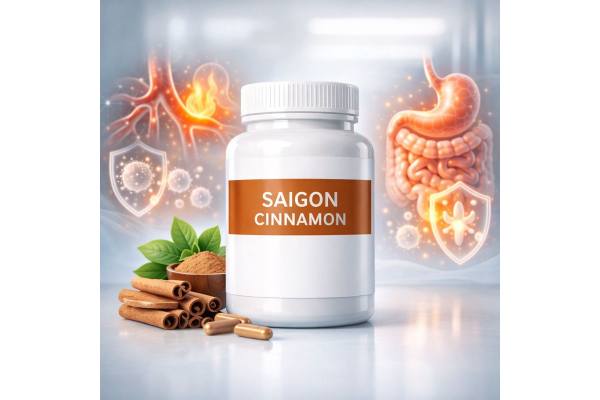
Saigon cinnamon, also called Vietnamese cinnamon (Cinnamomum loureiroi), is famous for its intense aroma and natural sweetness. Compared with common supermarket “cassia” cinnamon, it usually has higher essential oil and cinnamaldehyde levels, which makes it a favorite in baking, coffee drinks, and Vietnamese dishes like phở. Because cinnamon in general has been studied for blood sugar, cholesterol, and weight-related markers, Saigon cinnamon is sometimes promoted as a “stronger” or more potent option.
However, there is a key trade-off: Saigon cinnamon is a cassia-type cinnamon that tends to contain more coumarin, a natural compound that can stress the liver if consumed in high amounts over time. Most human trials on cinnamon’s health benefits do not distinguish Saigon from other cassia or Ceylon species, and the doses used in supplements are much higher than typical culinary use. This guide explains what makes Saigon cinnamon unique, what we actually know from research, how to use it sensibly, and where safety limits come in.
Key Insights on Saigon Cinnamon
- Saigon cinnamon is a cassia-type cinnamon with higher essential oil and coumarin content than many other varieties.
- Clinical research on “cinnamon” for blood sugar and cholesterol usually uses 1–6 g per day of cassia or Ceylon cinnamon, not specifically Saigon.
- Because of coumarin, Saigon cinnamon is better suited to occasional flavoring than large daily supplement doses.
- A practical upper culinary range for most adults is about 1–2 g per day of cassia-type cinnamon, with long-term use preferably based on lower-coumarin Ceylon cinnamon.
- People with liver disease, those on blood-thinning or diabetes medications, and children should be especially cautious with frequent high cassia intake.
Table of Contents
- What is Saigon cinnamon and how it differs from other types
- Evidence based benefits of Saigon cinnamon and cinnamon in general
- How to use Saigon cinnamon in food and supplement form
- Safe dosage for Saigon cinnamon and coumarin exposure
- Side effects, interactions, and who should avoid Saigon cinnamon
- Choosing Saigon cinnamon products and when to prefer Ceylon cinnamon
What is Saigon cinnamon and how it differs from other types
Saigon cinnamon comes from the bark of the Cinnamomum loureiroi tree, native to parts of Vietnam and mainland Southeast Asia. In the spice trade it is often labeled “Vietnamese cinnamon” or sometimes “Vietnamese cassia.” Botanically, it is more closely related to Chinese cassia (Cinnamomum cassia) than to so-called “true” Ceylon cinnamon (Cinnamomum verum).
What makes Saigon cinnamon stand out is its high essential oil content and strong cinnamaldehyde concentration. This gives it a very warm, sweet, almost spicy-hot flavor. Many bakers and manufacturers prefer Saigon cinnamon for its ability to deliver a big cinnamon taste with relatively small amounts of spice.
From a health perspective, the key difference among cinnamon types is coumarin, a naturally occurring compound that can be toxic to the liver at high chronic intakes. Ceylon cinnamon tends to have very low coumarin levels, while cassia-type cinnamons (including Chinese, Indonesian, and Saigon cinnamon) typically have much higher levels. Saigon cinnamon is often near the top of that range.
In laboratory surveys of commercial cinnamon samples, cassia barks have shown coumarin levels dozens of times higher than Ceylon cinnamon, and Saigon cinnamon often contains more coumarin than common Chinese cassia. That does not make it “bad,” but it means that regular, high-volume use of Saigon cinnamon as a supplement carries more coumarin exposure than the same weight of Ceylon cinnamon.
Another important point is that most health claims about Saigon cinnamon are actually based on research using generic cassia, unspecified cinnamon species, or Ceylon cinnamon. Very few clinical trials identify Saigon cinnamon specifically. For consumers, the practical message is that Saigon cinnamon likely shares many of the same potential benefits as other cassia cinnamons, but also shares—and may amplify—the coumarin-related safety concerns.
Evidence based benefits of Saigon cinnamon and cinnamon in general
When you see headlines about “cinnamon lowering blood sugar” or “cinnamon improving cholesterol,” those conclusions usually come from studies that use cassia or mixed cinnamon species. Saigon cinnamon is a cassia-type cinnamon, so it likely behaves similarly, but it has not been singled out and tested as often as a distinct variety.
Across multiple randomized trials and recent systematic reviews, cinnamon supplements have shown modest benefits in several areas:
- Glycemic control in type 2 diabetes
Meta-analyses of randomized trials in adults with type 2 diabetes indicate that cinnamon supplementation can lower fasting blood sugar, improve insulin resistance indices, and reduce hemoglobin A1c by a small but measurable amount compared with placebo. These effects are more evident at daily doses in the gram range and over at least 8–12 weeks of use. - Cardiometabolic risk factors
A recent comprehensive review pooling dozens of studies found that cinnamon supplementation in adults can modestly reduce waist circumference, blood pressure, triglycerides, total cholesterol, and LDL cholesterol, while slightly increasing HDL cholesterol. These changes tend to be small individually, but together they may support broader cardiometabolic management when combined with diet, exercise, and medication where indicated. - Body weight and body composition
Some studies report small reductions in body weight or body mass index with cinnamon supplementation, particularly at higher doses and in people with obesity or metabolic syndrome. The effect size is usually modest and should be viewed as supportive rather than transformative. - Antioxidant and anti-inflammatory activity
Cinnamon bark contains polyphenols and other compounds with antioxidant and anti-inflammatory properties. Clinical studies sometimes show decreases in markers like C-reactive protein or oxidative stress markers after cinnamon supplementation, although these findings are not entirely consistent.
For Saigon cinnamon specifically, there is very little human research that separates it from other cinnamons. Given its high cinnamaldehyde and polyphenol content, it likely shares many of the same mechanisms: modulation of insulin signaling, effects on glucose transporters, mild inhibition of digestive enzymes that break down carbohydrates, and antioxidant activity in blood vessels and the liver.
However, the stronger flavor and higher coumarin content do not guarantee better health effects. In practice, the benefit appears more related to total bioactive compound intake over time than to any single variety. Because coumarin is a limiting factor for safety, it is often wiser to use Saigon cinnamon for occasional intense flavor and rely on lower-coumarin cinnamon (usually Ceylon) if you plan to take gram-level doses regularly.
How to use Saigon cinnamon in food and supplement form
Saigon cinnamon is most safely and traditionally used as a culinary spice. Its strong sweetness and aroma mean that small amounts go a long way, which is helpful when you want flavor without heavy sugar or salt.
Common culinary uses include:
- Stirring a small pinch into coffee, hot chocolate, or chai-style tea
- Sprinkling over oatmeal, yogurt, or fruit instead of added sugar
- Adding to baked goods like cinnamon rolls, cookies, or banana bread
- Using in savory dishes such as Vietnamese-style broths, stews, or spiced meats
Because Saigon cinnamon is potent, many people find that ¼–½ teaspoon (about 0.5–1 g) provides enough flavor in a single serving. For most healthy adults, using these amounts a few times per week is unlikely to approach coumarin limits, especially if other cinnamon sources are modest.
Supplements are more complex. Many “cinnamon” capsules on the market do not specify which species they use, and relatively few call out Saigon cinnamon by name. Supplement labels typically list:
- The species (for example, Cinnamomum cassia, C. verum, or just “cinnamon bark”)
- The amount per capsule (often 500–1,000 mg)
- Sometimes, standardization details (for example, “standardized to 1% cinnamaldehyde”)
Typical study-style supplemental intakes are 1–6 g per day of cinnamon powder or extract, divided into two or three doses. These amounts are far higher than what most people use in cooking. If such doses were taken as Saigon cinnamon specifically, coumarin exposure could quickly become an issue, especially over months of continuous use.
Practical ways to integrate Saigon cinnamon while managing risk:
- Use Saigon primarily for taste. Let it be your “special flavor” cinnamon in recipes, coffee, and desserts where its intensity shines.
- Rely on low-coumarin cinnamon for daily, higher doses. If you and your clinician decide that cinnamon supplementation makes sense for blood sugar or lipid support, Ceylon cinnamon is usually preferred.
- Rotate spices. Combine Saigon cinnamon with other beneficial spices such as ginger, turmeric, and cardamom rather than relying on any single spice in large quantities.
- Check your total intake. Count all sources—baked goods, breakfast cereals, herbal teas, and supplements—so that you do not unknowingly stack multiple cassia sources on top of each other.
If a supplement label clearly states Saigon cinnamon and delivers 1–2 g per day, it should be considered an occasional, short-term product rather than a long-term daily regimen unless a healthcare professional is monitoring liver function and overall exposure.
Safe dosage for Saigon cinnamon and coumarin exposure
The main safety concern with Saigon cinnamon is coumarin. Regulatory authorities in Europe have recommended a tolerable daily intake (TDI) of 0.1 mg of coumarin per kilogram of body weight per day. For a 70 kg adult, this is about 7 mg of coumarin per day on average over long periods.
Analyses of commercial cinnamon show that:
- Cassia-type cinnamons (including Saigon) can contain coumarin in the range of several hundred to several thousand milligrams per kilogram of spice.
- Ground cassia cinnamon sold at retail often averages a few thousand mg of coumarin per kilogram.
- Ceylon cinnamon typically contains only a small fraction of that amount.
Because Saigon cinnamon tends to be on the higher end among cassias, the coumarin content in 1 g of Saigon cinnamon can easily account for a large share of the daily TDI, especially for lighter individuals or children. Exact numbers vary by batch and origin, but the principle is clear: a little Saigon cinnamon can be a lot of coumarin.
A practical, conservative framework for most adults without liver disease:
- Occasional use: Up to about 1–2 g of Saigon cinnamon on days when you use it, especially if not repeated every single day, is unlikely to be problematic for most healthy adults.
- Regular daily use: For people who want daily cinnamon for health reasons, it is safer to keep cassia-type cinnamon (including Saigon) closer to ½–1 g per day, and to shift higher doses to Ceylon cinnamon.
- Children: Because children weigh less, their coumarin limit is lower. For example, a 20 kg child would have a TDI of only 2 mg of coumarin per day. In this group, it is wise to use Saigon cinnamon sparingly and to favor Ceylon cinnamon in recipes that are served often.
Remember that coumarin exposure comes from all sources, not cinnamon alone. Herbal teas, baked goods, breakfast cereals, and even some cosmetics can add to the total. People who love cinnamon-flavored foods, drink cinnamon teas regularly, and take cinnamon capsules could unknowingly exceed the TDI if those products rely on cassia or Saigon cinnamon.
Because manufacturers do not usually print coumarin content on labels, the safest strategy is to:
- Treat Saigon cinnamon as a high-intensity, occasional spice.
- Use Ceylon cinnamon as your “everyday” cinnamon if you plan to consume it frequently or in gram-level doses.
- Discuss with a clinician before using any cassia cinnamon at supplement-level doses for months at a time, especially if you have liver concerns or take other medications.
Side effects, interactions, and who should avoid Saigon cinnamon
Most people tolerate small culinary amounts of Saigon cinnamon without noticeable problems. Side effects are more likely when total cassia cinnamon intake is high, when concentrated extracts are used, or when underlying health issues are present.
Possible side effects associated with high or prolonged cassia cinnamon intake include:
- Liver stress or damage
Coumarin can be toxic to the liver in susceptible individuals. In reports related to coumarin-containing drugs and very high cinnamon consumption, liver enzyme elevations and, rarely, more serious liver injury have been observed. Discontinuation usually normalizes liver tests, but this is a significant warning signal. - Allergic reactions and sensitivity
Some people develop mouth irritation, tongue burning, or contact allergy with cinnamon. These reactions can arise from cinnamaldehyde or other compounds in the essential oil. - Digestive symptoms
Large amounts of cinnamon or high-dose supplements may cause nausea, stomach discomfort, or diarrhea in some users. - Blood sugar changes
For people with diabetes, cinnamon’s ability to lower fasting blood sugar and improve insulin sensitivity is a double-edged sword. Adding cinnamon to an existing medication regimen can increase the risk of low blood sugar, especially if doses are not adjusted.
Potential interactions to consider:
- Antidiabetic medications (insulin, metformin, sulfonylureas, GLP-1 agonists): cinnamon may amplify glucose-lowering effects.
- Anticoagulant or antiplatelet drugs (warfarin, DOACs, aspirin): laboratory work and case reports suggest cinnamon constituents may affect clotting, although the clinical significance is still uncertain. Combining high cinnamon intake with these drugs should be done cautiously.
- Hepatotoxic medications (certain anticonvulsants, methotrexate, high-dose acetaminophen, some antifungals): adding a coumarin-rich cinnamon could further strain the liver.
People who should be especially cautious or avoid self-prescribing Saigon cinnamon at high doses include:
- Individuals with known liver disease or persistently abnormal liver tests.
- People with a history of heavy alcohol use, which already stresses the liver.
- Those taking multiple medications metabolized in the liver, especially if they already require regular liver monitoring.
- Children, due to their lower body weight and tighter coumarin margin.
- Pregnant and breastfeeding individuals, because cinnamon-related safety data at supplement-level doses are limited and coumarin crosses into the bloodstream.
- People with bleeding disorders or on strong blood thinners, where any additional factor that might affect clotting should be discussed with a clinician first.
If you notice signs such as unusual fatigue, dark urine, yellowing of the skin or eyes, or persistent itching while consuming large amounts of cassia cinnamon, you should stop the cinnamon and seek prompt medical evaluation, as these can be signs of liver injury.
Choosing Saigon cinnamon products and when to prefer Ceylon cinnamon
Given the balance of intense flavor, potential metabolic benefits, and coumarin risk, choosing the right cinnamon—and the right way to use it—matters.
When buying Saigon cinnamon for kitchen use:
- Look for clear labeling. The package should specify “Saigon cinnamon,” “Vietnamese cinnamon,” or Cinnamomum loureiroi.
- Prefer reputable suppliers. Established spice companies tend to have better quality control, including screening for heavy metals and adulteration.
- Consider whole sticks for freshness. Whole bark sticks often keep flavor longer than pre-ground powder and are less prone to adulteration. You can grate or grind small amounts as needed.
When buying cinnamon supplements:
- Identify the species. If a capsule simply lists “cinnamon bark” without mentioning Ceylon vs cassia vs Saigon, assume it may be cassia-based and higher in coumarin.
- Check dose per day. Doses in the 1–6 g/day range are typical of research, but for long-term use such amounts are safer when the product is Ceylon or explicitly low in coumarin.
- Seek transparency. Trust brands that disclose source species, provide batch testing information, and respond to consumer questions.
When to choose Saigon cinnamon versus Ceylon cinnamon:
- Saigon cinnamon is most suitable for:
- Occasional baking or special dishes where strong cinnamon flavor is desired
- Small flavor-boosting amounts in drinks or desserts
- Infrequent, short-term use where total intake remains modest
- Ceylon cinnamon is generally preferable for:
- Daily or near-daily use
- Higher doses for potential glycemic or lipid support discussed with a clinician
- Households with children or individuals with liver concerns
If your main goal is health supplementation, it often makes sense to:
- Use a Ceylon cinnamon supplement or low-coumarin standardized extract in the dose range studied for your specific condition, under professional guidance.
- Use Saigon cinnamon like a gourmet spice—something you enjoy in recipes and drinks without making it the primary driver of your daily cinnamon intake.
Remember that cinnamon, regardless of type, is an adjunct. It cannot replace foundational steps such as blood sugar monitoring, evidence-based medications, dietary changes, exercise, and weight management. The most realistic role for Saigon cinnamon is to enrich your diet with flavor and potentially add small metabolic benefits on top of a solid health plan, while being mindful of coumarin exposure.
References
- The effect of cinnamon supplementation on glycemic control in patients with type 2 diabetes mellitus: An updated systematic review and dose-response meta-analysis of randomized controlled trials 2024 (Systematic Review and Meta-analysis)
- The effect of cinnamon supplementation on cardiovascular risk factors in adults: a GRADE assessed systematic review, dose–response and meta-analysis of randomized controlled trials 2025 (Systematic Review and Meta-analysis)
- Efficacy of cinnamon in patients with type II diabetes mellitus: A randomized controlled clinical trial 2019 (RCT)
- Coumarin in Cinnamon, Cinnamon-Containing Foods and Licorice Flavoured Foods – April 1, 2015 to March 31, 2016 2024 (Surveillance Report and Risk Assessment)
Disclaimer
This article is for general information only and is not a substitute for professional medical advice, diagnosis, or treatment. Saigon cinnamon and other cinnamon products can affect blood sugar, liver health, and medication responses, and may not be appropriate for everyone. Always consult a qualified healthcare professional before starting, stopping, or changing any supplement, especially if you have diabetes, liver disease, bleeding disorders, or other chronic conditions, or if you are pregnant, breastfeeding, or giving supplements to a child. Never ignore or delay seeking professional advice because of information you have read online.
If you found this guide useful, you are kindly invited to share it on Facebook, X (formerly Twitter), or any platform you prefer, and to follow our work on social media. Your thoughtful sharing helps our team continue creating careful, evidence-informed content for readers who value trustworthy health information.