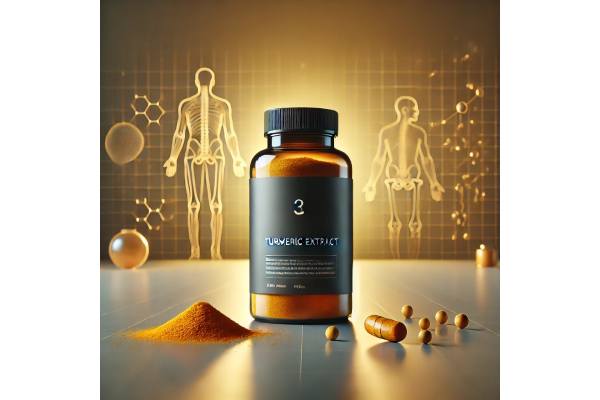
Turmeric extract is a concentrated form of Curcuma longa designed to deliver higher amounts of curcuminoids—especially curcumin—than you would typically get from cooking with turmeric powder. People reach for it when they want a practical anti-inflammatory option for joint comfort, a gentle way to support recovery after hard training, or added support for cardiometabolic and mood-related goals. Its biggest advantage is potency, but its biggest limitation is absorption: plain curcumin is poorly absorbed unless the product is formulated for better uptake. That is why two turmeric extracts with the same milligram number can feel completely different in the real world. This guide explains what turmeric extract is, how it works, which benefits are most realistic, how to choose a high-quality product, and how to dose it safely—especially if you take medications or have gallbladder, bleeding, or liver-risk concerns.
Quick Overview for Turmeric Extract
- Joint pain and stiffness relief is one of the most consistent, practical uses.
- Effects on inflammation markers and mood are possible, but outcomes vary by formulation and dose.
- Typical daily dosing is 500–1,500 mg/day of curcuminoids (often split), depending on the product.
- Avoid stacking with blood thinners without medical guidance due to potential bleeding-risk interactions.
- Avoid or use only with clinician oversight if you have gallbladder disease, take anticoagulants, or have a history of supplement-related liver issues.
Table of Contents
- What is turmeric extract?
- How curcumin works in the body
- Benefits you can realistically expect
- How to choose a high-absorption product
- How much to take and when
- Side effects, interactions, and who should avoid
- What the best studies actually show
What is turmeric extract?
Turmeric extract is a supplement ingredient made from the turmeric root (rhizome) that concentrates specific compounds—most importantly curcuminoids. Curcuminoids are the yellow-orange polyphenols that give turmeric its color and much of its research interest. A label may say “turmeric extract,” “curcumin,” or “curcuminoids,” but those are not interchangeable in practice. The best way to understand what you are buying is to look for standardization and actual milligrams of curcuminoids per serving.
Here is a simple breakdown:
- Turmeric powder (spice): mostly starch and fiber, with a small percentage of curcuminoids. Great for food, but hard to reach research-style doses through cooking alone.
- Turmeric extract: processed to concentrate curcuminoids and sometimes other turmeric constituents.
- Curcumin: one curcuminoid (often the main one). Many products use “curcumin” loosely even when they contain mixed curcuminoids.
- Curcuminoids: typically a mix (curcumin, demethoxycurcumin, bisdemethoxycurcumin).
Another key concept is bioavailability—how much of an ingredient actually gets absorbed and reaches tissues. Plain curcumin has notoriously low bioavailability because it is poorly soluble in water, rapidly metabolized, and quickly eliminated. For that reason, many supplements use technologies intended to improve uptake, such as pairing curcumin with black pepper extract (piperine), binding it to phospholipids, or placing it into micelles or nanoparticles.
A practical advantage of turmeric extract is dosing clarity: you can target a consistent daily intake instead of guessing how much curcumin you got from food. A practical disadvantage is variability: two products can differ in purity, absorption, and contaminant testing. Your results are often determined less by “turmeric” and more by the formulation, dose, and duration you choose.
If your goal is everyday wellness, food-first turmeric can be a great baseline. If your goal is measurable symptom relief—especially joint discomfort—extracts tend to be the more realistic path.
How curcumin works in the body
Curcumin’s reputation comes from how it influences inflammation signaling, oxidative stress, and the way cells respond to injury. It is not a painkiller in the same way as ibuprofen, and it is not a stimulant that “turns off” inflammation instantly. Instead, it tends to act like a signal-shaper—nudging multiple pathways toward a calmer, more balanced state over time.
Key mechanisms, explained in plain language:
1) Inflammation signaling modulation
Inflammation is controlled by molecular “switchboards” inside cells. Curcumin has been studied for its influence on pathways commonly discussed in inflammation research, including NF-kB (a major inflammatory transcription factor) and enzymes involved in inflammatory mediator production. The practical meaning: in some people, curcumin may reduce the intensity of inflammatory messaging, which can translate to less stiffness, less sensitivity after activity, and better day-to-day comfort.
2) Oxidative stress and antioxidant response
Oxidative stress is not just “damage”—it is also a signal that can amplify inflammation and slow recovery. Curcumin appears to support the body’s internal antioxidant response systems, which may help tissues handle stress more efficiently. This is one reason it shows up in discussions about exercise recovery and metabolic health.
3) Gut and bile dynamics
Turmeric compounds interact with digestion. Some people notice changes in bloating, stool patterns, or meal tolerance. At the same time, curcumin can affect bile-related processes. That can be helpful for some digestive patterns, but it is also why people with gallbladder disease need extra caution.
4) Why absorption changes everything
Most of curcumin’s potential hinges on whether enough of it is absorbed. If a product is poorly absorbed, you may mainly get local gut effects (fiber-like and microbiome-related impacts) rather than broader systemic effects. If a product is highly bioavailable, you may feel stronger effects—both positive (symptom improvement) and negative (side effects or interactions).
A useful way to set expectations: turmeric extract usually works best when you treat it like a steady routine, not a rescue remedy. People who do well with it often describe a gradual shift over several weeks—less “snap,” more “smoother baseline.”
Benefits you can realistically expect
Turmeric extract is most helpful when the goal is symptom support, not a dramatic transformation. Its strongest reputation is in joint comfort, but people also use it for inflammation-related fatigue, mood support, and cardiometabolic goals. The realistic approach is to prioritize benefits that show up repeatedly in human trials and meta-analyses—then decide whether those match your needs.
1) Joint pain, stiffness, and function (especially knee osteoarthritis)
This is the most practical, best-known use. Many people use turmeric extract as a daily anti-inflammatory option to reduce pain intensity, morning stiffness, or “rusty” movement. Some also use it to reduce reliance on frequent NSAID use (while still using NSAIDs when needed). The key is consistency: joint-related outcomes are usually evaluated over 8–12 weeks, not days.
2) Inflammation marker support and recovery
If you feel sore, puffy, or slow to recover after training or long workdays, turmeric extract may help some people feel “less inflamed.” This benefit is most noticeable when inflammation is part of the story: higher stress, poor sleep, high training load, or an inflammatory diet pattern. It is not a substitute for recovery basics, but it can be a useful add-on.
3) Mood and stress-related symptoms
Curcumin has been studied for depressive and anxiety symptoms, particularly when chronic inflammation or chronic illness is involved. For some, the benefit feels like better emotional steadiness rather than a dramatic mood lift. Because outcomes vary, it is best framed as a complement to evidence-based care, not a replacement.
4) Cardiometabolic and liver-related markers
You will see turmeric extract promoted for cholesterol, blood sugar, blood pressure, and fatty liver. Some human data suggests modest improvements in certain markers for some groups, but results are not uniform across all studies. If you pursue turmeric for this reason, treat it as a small lever alongside diet, activity, and medical care—not the main strategy.
What turmeric extract is unlikely to do
- Replace disease-modifying treatment for inflammatory diseases
- “Detox” your liver in a meaningful medical sense
- Cause major weight loss by itself
- Prevent serious disease on its own
A smart way to decide: pick one primary outcome (for example, knee pain on stairs) and one secondary outcome (for example, morning stiffness). Track both for 6–8 weeks. Turmeric works best when you can clearly tell whether it is earning its place in your routine.
How to choose a high-absorption product
With turmeric extract, label reading is not optional. A high-quality product makes it easy to know what you are taking, how much you are taking, and why it should absorb. A low-quality product often hides behind vague blends and impressive-sounding buzzwords.
Step 1: Identify the real active dose
Look for one of these on the label:
- “Standardized to 95% curcuminoids” (common in many extracts), or
- a clear listing of curcuminoids (mg) per serving.
If the label only says “turmeric extract 1,000 mg” with no curcuminoids listed, you cannot reliably compare it to research dosing.
Step 2: Check the absorption strategy
Common approaches include:
- Piperine (black pepper extract): often listed in mg (for example, 5–10 mg piperine or a standardized black pepper extract). This can boost absorption, but it can also increase interaction risk with certain medications.
- Phospholipid complexes (phytosome-style): curcumin bound to phospholipids to improve uptake.
- Micellar, liposomal, or nanoparticle forms: designed to improve solubility and stability.
There is no single best method for everyone. The best choice is the one that matches your goals and risk profile. If you take multiple medications, a highly enhancing formulation may require extra caution.
Step 3: Prefer third-party contaminant testing
Because turmeric is an agricultural product, quality control matters. Look for verification or documentation that the product is tested for:
- heavy metals,
- microbial contamination,
- identity and potency,
- and common adulterants.
Step 4: Avoid the most common buying mistakes
- Proprietary blends that do not reveal curcuminoid dose
- “Mega-dose” products without a clear absorption strategy (or with an overly aggressive one)
- Stacking multiple curcumin products at once, which can create side effects while still leaving you uncertain about what worked
- Ignoring capsule count: a bottle can look cheap until you realize the effective dose requires 4–6 capsules daily
A practical shortcut
If you want the simplest path: choose a product that clearly lists curcuminoids per serving, explains the absorption method, and provides testing transparency. Then start with a conservative dose and adjust only after you see how your body responds.
How much to take and when
Turmeric extract dosing depends on the curcuminoid content and the formulation. A “1,000 mg turmeric extract” capsule can deliver very different curcuminoid amounts depending on standardization, and bioavailability-enhanced products may require lower doses than standard extracts.
Common adult dosing ranges (general use)
- Curcuminoids: 500–1,500 mg/day, often split into 1–2 doses
- For joint-focused goals, many people land around 1,000–1,500 mg/day of curcuminoids for an 8–12 week trial
- For sensitive digestion or first-time users, starting at 250–500 mg/day can reduce drop-offs from stomach upset
A sensible ramp-up plan
- Days 1–4: 250–500 mg/day with a meal
- Days 5–10: 500–1,000 mg/day, split if needed
- Weeks 2–8: adjust toward 1,000–1,500 mg/day based on symptoms and tolerance
If your product is highly bioavailable (for example, paired with piperine or delivered as a specialized complex), you may not need the high end of the range to get noticeable effects.
When to take turmeric extract
- Take it with food, ideally with a meal that contains some fat, to improve comfort and uptake.
- If you experience nausea, switch to smaller, split doses (morning and evening).
- If your goal is joint comfort, consistency matters more than timing. If your goal is exercise recovery, many people take one dose earlier in the day and one after training with a meal.
How long until you can judge results?
- Joint outcomes: usually 6–12 weeks
- Mood and inflammation-related fatigue: often 4–8 weeks
- Metabolic markers: typically 8–12 weeks, and results (if any) are usually modest
Signs your dose is too high
- persistent heartburn, nausea, or diarrhea
- unusual bruising or bleeding tendencies
- worsening gallbladder-type symptoms after fatty meals
- feeling “off” in a way that correlates tightly with dosing
A practical mindset: aim for the lowest effective dose. If you only increase the dose to chase a bigger effect, you often increase side effects faster than benefits.
Side effects, interactions, and who should avoid
Most people tolerate turmeric extract well at moderate doses, but side effects and interactions are real—especially with bioavailability-enhanced formulations. Treat turmeric extract as biologically active, not as a harmless seasoning in pill form.
Common side effects (usually dose-related)
- stomach upset, nausea, or reflux
- loose stools or cramping
- headache in some users
- skin reactions in people sensitive to turmeric or related plants (rare)
If side effects occur, the first fix is usually to lower the dose, take it with food, and avoid taking it late at night if reflux is an issue.
Higher-risk concerns
- Gallbladder disease: turmeric extract can worsen symptoms for some people with gallstones or bile duct issues. If you have right-upper abdominal pain after meals, do not self-experiment.
- Bleeding risk and surgery: curcumin may influence platelet activity in ways that could matter for people on anticoagulants or antiplatelet medications, or around surgery.
- Liver risk: rare cases of supplement-associated liver injury have been reported with certain turmeric and curcumin products, and risk may be higher with highly bioavailable formulations in susceptible individuals. Treat unusual fatigue, dark urine, itching, or yellowing of the eyes or skin as urgent red flags.
Potential interactions (clinician check strongly recommended)
- Anticoagulants and antiplatelets: warfarin, direct oral anticoagulants, aspirin, clopidogrel
- Diabetes medications: turmeric may add to glucose-lowering effects for some people
- Chemotherapy and complex oncology regimens: timing and interactions can be clinically important
- Multiple medication regimens: especially if the product includes piperine, which can affect drug metabolism and absorption
Who should avoid turmeric extract or use only with medical supervision
- pregnant or breastfeeding individuals (supplement-dose safety is not well established)
- people with gallbladder disease or bile duct obstruction
- those with bleeding disorders or who are preparing for surgery
- anyone with a history of supplement-related liver injury
- people on immunosuppressants or complex medication regimens who cannot risk unpredictable interactions
A practical safety rule: if you take medications that you cannot afford to “destabilize,” do not add turmeric extract casually. Bring the label to a pharmacist or clinician and ask specifically about interactions with your current regimen.
What the best studies actually show
Turmeric extract sits in a crowded supplement category: lots of trials, lots of different products, and lots of mixed quality. The most useful way to interpret the evidence is not “does it work,” but when does it tend to work, for whom, and under what formulation conditions.
Where the signal is strongest
- Knee osteoarthritis pain and function: Across systematic reviews and meta-analyses, turmeric and curcumin preparations frequently show improvements in pain scores and function compared with placebo. However, the certainty of evidence is often rated low to moderate because trials vary in product type, dose, and duration. The practical takeaway is that a structured 8–12 week trial is reasonable for many adults seeking joint symptom relief.
- Inflammation-related outcomes: Umbrella-style evidence summaries suggest curcumin can improve certain inflammatory and oxidative stress markers in some populations. The challenge is that markers do not always predict how someone feels, and different trials measure different endpoints.
- Mood symptoms in chronic disease contexts: Meta-analytic findings suggest curcumin may reduce depressive symptoms and may help anxiety symptoms for some people, but heterogeneity is common. In other words, it helps some people noticeably and does little for others.
Where the signal is promising but less consistent
- Lipids, blood pressure, and glucose: Some analyses show improvements in triglycerides, LDL cholesterol, fasting glucose, and related measures, especially in metabolic syndrome-type populations. Effects are often modest and more meaningful when paired with lifestyle changes.
- Liver-related markers in metabolic contexts: Curcumin is studied for fatty liver and metabolic inflammation, but results depend heavily on the population and the product used.
Why so many people get “no results”
- Dose does not match curcuminoids: “Turmeric extract 1,000 mg” is not the same as “curcuminoids 1,000 mg.”
- Absorption is too low: A product may be valid but under-absorbed for systemic benefits.
- Trial duration is too short: Many benefits require weeks, not days.
- Wrong target: If your main problem is structural joint damage or a medical condition requiring treatment, turmeric may not move the needle much by itself.
- Expectations are too broad: People often start turmeric hoping it will improve pain, energy, sleep, mood, digestion, and weight all at once.
A grounded conclusion: turmeric extract has credible evidence for symptom support—especially joint discomfort—and possible benefits for inflammation and mood in some groups. The best results usually come from clear dosing, an absorption-aware product, and a realistic trial period with measurable goals.
References
- Effect of turmeric products on knee osteoarthritis: a systematic review and network meta-analysis – PubMed 2025 (Systematic Review)
- Potential therapeutic benefits of curcumin in depression or anxiety induced by chronic diseases: a systematic review of mechanistic and clinical evidence – PubMed 2025 (Systematic Review and Meta-Analysis)
- Curcumin and multiple health outcomes: critical umbrella review of intervention meta-analyses – PubMed 2025 (Umbrella Review)
- Curcuminoids for Metabolic Syndrome: Meta-Analysis Evidences Toward Personalized Prevention and Treatment Management – PubMed 2022 (Review and Meta-Analysis)
- Turmeric: Usefulness and Safety | NCCIH 2025 (Government Health Summary)
Disclaimer
This article is for educational purposes only and does not provide medical advice, diagnosis, or treatment. Turmeric extract and curcumin supplements can affect people differently and may interact with prescription and over-the-counter medications. If you are pregnant, breastfeeding, have gallbladder disease, a bleeding disorder, liver disease, or you take anticoagulants, antiplatelet drugs, diabetes medications, or cancer therapies, consult a qualified clinician before using turmeric extract. Stop use and seek medical care urgently if you develop signs of a serious reaction or possible liver injury (such as dark urine, yellowing of the skin or eyes, severe fatigue, or persistent abdominal pain).
If you found this guide helpful, please consider sharing it on Facebook, X (formerly Twitter), or any platform you prefer, and follow us on social media. Your support through sharing helps our team continue producing high-quality, trustworthy health content.