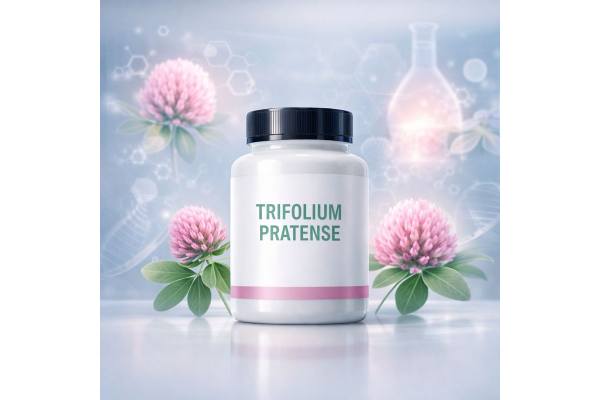
Trifolium pratense—better known as red clover—is most often used as a plant-based option for menopause-related hot flashes and night sweats, especially by people who want to avoid or cannot use hormone therapy. Its key compounds are isoflavones, a type of phytoestrogen (plant compound that can interact with estrogen receptors). That makes red clover uniquely “targeted”: it is not a general energy herb, but a supplement people choose for hormone-adjacent symptoms, vascular markers, and bone-related questions.
Red clover also comes with real trade-offs. Benefits tend to be modest, product quality varies, and it is not a good fit for everyone—especially those with hormone-sensitive conditions or who take certain medications. This guide covers what red clover is, what it contains, what it may help with, how to choose and use it, practical dosing ranges, and the safety rules that matter most.
Key Takeaways
- Red clover isoflavones may modestly reduce hot flashes when used consistently for 8–12 weeks.
- Some studies show improvements in lipid markers and vascular inflammation, but results vary by product and dose.
- Typical supplement dosing is 40–80 mg/day total isoflavones, often split into two doses.
- Avoid combining with anticoagulants or hormone therapies unless a clinician confirms it is appropriate.
- People with a history of estrogen-dependent cancers, pregnancy, or breastfeeding should avoid red clover supplements unless medically supervised.
Table of Contents
- What is Trifolium pratense and what makes it different
- Does red clover help with hot flashes and night sweats
- Can red clover support heart and bone health
- How to choose a red clover supplement that is worth trying
- How much red clover should you take and for how long
- Common mistakes that make red clover look like it does not work
- Side effects, interactions, and who should avoid red clover
What is Trifolium pratense and what makes it different
Red clover is a flowering plant traditionally used in teas and folk preparations, but modern supplement use focuses on standardized extracts of its isoflavones. Isoflavones are “phytoestrogens,” meaning they can bind to estrogen receptors. That does not mean they act exactly like estrogen. In many tissues, isoflavones behave more like selective, weaker signals, and their effects depend on dose, the form of isoflavones, and an individual’s biology.
What compounds matter most
Most red clover supplements emphasize four isoflavones (or their metabolites):
- Biochanin A
- Formononetin
- Daidzein
- Genistein
Biochanin A and formononetin can be converted in the body into other isoflavones, which is one reason product composition matters. You will often see “total isoflavones” listed in mg. That number is useful, but it does not tell you everything about absorption or the ratio of individual isoflavones.
Why red clover is not “just like soy”
Soy and red clover both contain isoflavones, but they are not identical mixtures. Red clover extracts often emphasize biochanin A and formononetin, which can affect how the supplement performs across symptoms and biomarkers. Another practical difference: red clover products are frequently sold as concentrated extracts, while soy is commonly consumed as food. People often tolerate food isoflavones differently than pill-form extracts.
Who typically looks for red clover
Most users are looking for one of these outcomes:
- Fewer or milder hot flashes and night sweats
- Better sleep continuity disrupted by vasomotor symptoms
- A gentle option to support lipid profiles or vascular markers during menopause
- A longer-term strategy to complement bone health habits (strength training, protein, calcium, vitamin D)
A helpful mindset is to treat red clover as a targeted tool for menopause-related concerns—worth a structured trial, but not something to take casually without checking fit and safety.
Does red clover help with hot flashes and night sweats
Red clover’s best-known use is for vasomotor symptoms—hot flashes and night sweats. The most honest summary is: it can help some people, but it is not a guaranteed fix, and the effect is usually modest rather than dramatic.
What a realistic benefit looks like
Many people expect a supplement to “turn off” hot flashes. Red clover rarely works that way. When it helps, it tends to show up as:
- Fewer hot flashes per day
- Lower intensity (less “surge” feeling)
- Shorter duration
- Better sleep because night sweats are less disruptive
In research patterns, results often look better when participants start with frequent hot flashes, use a higher isoflavone dose, and stick with it for around 12 weeks. That timing matters: red clover is not typically an “as needed” product. Consistency is part of the mechanism.
Why response varies so much
Three factors often explain why one person raves and another feels nothing:
- Baseline symptom drivers
Hot flashes can be amplified by alcohol, nicotine, spicy foods, overheating, untreated anxiety, and sleep deprivation. If triggers dominate, a phytoestrogen supplement may feel weak until those are addressed. - Metabolism and gut conversion
Isoflavones are processed by the gut and liver. Some people convert isoflavones into more active metabolites more efficiently than others. That can change perceived benefit even with the same dose. - Product quality and isoflavone profile
Two “red clover” bottles can deliver very different amounts of true isoflavones, or different ratios. If the label is vague, the outcome is unpredictable.
How to run a clean personal trial
If you want a fair test, treat it like a 12-week project:
- Track baseline hot flashes for 7 days (frequency and severity).
- Choose one standardized product and keep dose consistent.
- Re-check at weeks 4, 8, and 12.
- If there is no meaningful change by week 12, it is reasonable to stop and consider other options.
This approach prevents the most common trap: stopping too early, switching products repeatedly, and never learning whether red clover was actually a match.
Can red clover support heart and bone health
Beyond hot flashes, red clover is often marketed for heart and bone support, especially during menopause when cardiovascular and skeletal risks begin to shift. These areas are more nuanced than symptom relief because they involve slow-moving biology and many confounding lifestyle factors.
Heart and vascular markers
Some studies report improvements in lipid markers (such as total cholesterol, LDL cholesterol, triglycerides, and HDL cholesterol) and changes in inflammatory markers tied to vascular health. A practical interpretation is that red clover may act as a small nudge in the right direction for some postmenopausal women—particularly when the dose is adequate and used consistently.
However, it is important to keep expectations proportional:
- A supplement is unlikely to “outperform” core interventions like dietary pattern, weight management (when relevant), and movement.
- Improvements in lab markers do not automatically mean reduced heart events.
- If you already take a statin or other lipid medication, you should not add red clover without checking for compatibility and monitoring plans.
If vascular support is your main goal, red clover works best as a “layer” added to a stable foundation: fiber intake, blood pressure habits, resistance training, and sleep.
Bone health and menopause
Bone remodeling changes with declining estrogen. Red clover’s isoflavones are sometimes studied for effects on bone mineral density or bone turnover markers. Across the broader isoflavone research landscape, benefits appear more likely when:
- the intervention lasts long enough (bone changes are slow)
- baseline bone risk is present (osteopenia or early menopause-related changes)
- the overall lifestyle context supports bone (protein, calcium, vitamin D, and loading exercise)
A key point: even if red clover helps bone markers slightly, it should not be treated as a stand-alone osteoporosis strategy. For anyone with diagnosed osteopenia, osteoporosis, or fracture risk factors, clinical evaluation and a full plan matter far more than any single supplement.
Secondary uses people ask about
Some people explore red clover for:
- skin aging and elasticity questions during menopause
- mood and irritability that track with vasomotor symptoms
- urogenital discomfort
These areas are less consistent than hot flash outcomes. If you pursue them, it is still reasonable to use the same “structured trial” mindset: choose a measurable target, keep variables steady, and decide in advance what success looks like.
Overall: red clover’s strongest “real-world” value is symptom support, with possible added benefits for vascular markers and longer-term menopause-related health—best approached conservatively and measured over time.
How to choose a red clover supplement that is worth trying
Choosing the right red clover product is often the difference between “this did nothing” and “this helped a bit.” Because red clover isoflavones can vary widely, your goal is to reduce uncertainty.
Look for clarity on the label
A red clover supplement is generally easier to evaluate when it states:
- Plant part and preparation (extract vs. whole herb powder)
- Total isoflavones per day in mg (not just “red clover 500 mg”)
- Standardization details (for example, standardized to a specific percent isoflavones)
- A complete Supplement Facts panel with no hidden proprietary blend for the main active
If the product does not tell you the isoflavone content, you cannot reliably compare it to studied doses.
Consider the isoflavone “delivery” form
Some products use fermented red clover extracts. Fermentation can shift isoflavones into forms that may be more readily absorbed for some users. This does not guarantee better symptom relief, but it is a meaningful formulation detail—especially for people who felt nothing on a standard extract.
Capsules, tablets, and liquids can all work. The key is consistency and accurate dosing. Liquids can be convenient, but they also make it easier to take an inconsistent dose unless the measurement is precise.
Third-party testing matters more than marketing
Because this supplement category often targets midlife health concerns, you want quality controls:
- batch testing for contaminants (including heavy metals)
- identity testing to confirm plant material
- GMP or similar manufacturing standards
Avoid products that lean heavily on dramatic hormone language (“natural estrogen replacement”) or promise outcomes that sound like prescription therapy.
Red clover tea vs. extracts
Red clover tea can be a pleasant traditional option, but it is harder to dose. The isoflavone amount in tea varies by:
- plant quality and freshness
- steep time and temperature
- how much herb is used per cup
Tea may fit someone who wants a gentle ritual and is not chasing a precise dose. For symptom trials where you want to judge effectiveness, extracts are usually easier to interpret.
A simple rule: if your goal is hot flash reduction, choose a standardized extract with a known isoflavone dose, and keep everything else steady long enough to learn whether it helps you.
How much red clover should you take and for how long
Red clover dosing is best discussed in terms of total isoflavones (mg/day) rather than raw herb weight. Most clinical-style products land in a practical range that can be tested safely for most healthy adults, assuming no contraindications.
Common dosing ranges used in practice
For standardized extracts, a typical starting range is:
- 40–80 mg/day total isoflavones, often split into two doses (morning and evening)
Many people start at the low end for 1–2 weeks, then move toward the higher end if tolerated and if symptoms remain unchanged. Splitting the dose can improve tolerance and keep blood levels steadier.
How long before you decide it works
Red clover is not usually a “three-day verdict” supplement. A practical evaluation window is:
- 8–12 weeks of consistent dosing
Some people notice early changes in 2–4 weeks, but the more reliable point to judge vasomotor symptoms is closer to 12 weeks. If nothing meaningful happens by that point, continuing indefinitely rarely changes the story.
Timing strategies that can improve results
- If night sweats disrupt sleep, consider placing one dose with dinner.
- If hot flashes cluster in the afternoon, a midday dose may fit better than a bedtime-only approach.
- Take with food if you are prone to nausea.
What about “more is better”
With phytoestrogen supplements, higher dose is not automatically better because:
- response can plateau
- side effects may rise
- safety questions become more relevant in hormone-sensitive contexts
If you feel no benefit at 80 mg/day after a full 12-week trial, the better next step is usually reconsidering the strategy (trigger control, alternative nonhormonal options, clinician-guided choices) rather than pushing dose upward without supervision.
Who should dose conservatively
Even in people who can use red clover, these groups should start low and be cautious:
- those with a history of migraines triggered by hormonal shifts
- people prone to gastrointestinal sensitivity
- anyone taking multiple medications
The best dose is the smallest one that produces a clear benefit with minimal trade-offs. If you cannot measure a benefit, it is not the right tool—no matter how promising the theory sounds.
Common mistakes that make red clover look like it does not work
Red clover often fails in real life for reasons that have nothing to do with the plant itself. Fixing these mistakes can save time and reduce frustration.
Mistake 1: Using a non-standardized product
If the label does not list isoflavones, you might be taking too little to matter—or you might be taking an inconsistent amount from bottle to bottle. If you want symptom relief, choose a product that tells you the mg/day of isoflavones.
Mistake 2: Stopping too early
Hot flashes fluctuate naturally with stress, sleep, and triggers. If you take red clover for two weeks, feel nothing, and stop, you have not run a fair trial. For most people, 8–12 weeks is the minimum timeframe to judge.
Mistake 3: Expecting it to overpower strong triggers
Common hot flash amplifiers include:
- alcohol (especially in the evening)
- nicotine
- overheating at night (heavy bedding, warm room)
- spicy foods
- untreated anxiety or panic patterns
- poor sleep and irregular schedules
If triggers are intense, red clover can feel like it is doing nothing. A smart approach is to reduce one or two triggers while you trial the supplement, so you can actually detect a signal.
Mistake 4: Stacking multiple phytoestrogens
Combining red clover with soy isoflavone pills, hops extracts, or multiple menopause blends can create confusion and may increase side effects. If you want to learn what works, start with one primary product.
Mistake 5: Not measuring outcomes
Memory is unreliable when symptoms vary daily. Use a simple score:
- hot flashes per day
- severity from 1–10
- night sweats and sleep disruption (yes or no)
If the numbers improve, you have evidence. If they do not, you have clarity.
Mistake 6: Ignoring medical causes of “hot flashes”
Not every heat surge is menopause. Thyroid disorders, medication effects, infections, and other conditions can mimic vasomotor symptoms. If symptoms are new, severe, or paired with red flags (unexplained weight loss, persistent fever, chest pain, unusual bleeding), the right next step is medical evaluation—not a higher supplement dose.
Red clover works best when you treat it like a structured trial, not a last-minute rescue. That mindset is often the difference between guessing and knowing.
Side effects, interactions, and who should avoid red clover
Because red clover contains phytoestrogens, safety is not only about “typical side effects.” It is also about fit—whether estrogen-receptor activity is appropriate for your medical history and medications.
Common side effects
Most people who tolerate red clover well report few issues, but possible side effects include:
- mild stomach upset, nausea, or bloating
- headache
- rash or itching in sensitive individuals
- breast tenderness or changes in how the body “feels” hormonally (not everyone experiences this)
If side effects appear, first adjust the basics: lower the dose, split the dose, or take with food. If symptoms persist, stop.
Important interaction and caution zones
Red clover may not be appropriate without clinician oversight if you take:
- anticoagulants or antiplatelet medications (bleeding risk and monitoring concerns)
- hormone therapies (including estrogen or combined therapy) unless specifically approved
- medications where small changes in metabolism or bleeding risk matter significantly
If you have upcoming surgery or procedures, it is prudent to discuss supplement use ahead of time.
Who should avoid red clover supplements
Avoid unless medically supervised if you are:
- pregnant or breastfeeding
- under 18
- diagnosed with, being treated for, or at high risk for estrogen-dependent cancers (such as certain breast or endometrial cancers)
- experiencing unexplained vaginal bleeding
- living with liver disease or complex chronic illness where supplement safety is uncertain
A practical safety checklist
Before starting:
- List your medications and supplements and look specifically for bleeding-risk combinations.
- Decide your trial dose and duration in advance.
- Track any unusual bleeding, breast changes, severe headaches, or persistent GI symptoms.
- Stop and seek medical advice if you notice concerning symptoms.
A useful rule of thumb: red clover should feel like a gentle, steady shift—not like a hormone roller coaster. If you feel unstable, it is a sign to pause and reassess rather than push through.
References
- Evaluation of Clinical Meaningfulness of Red Clover (Trifolium pratense L.) Extract to Relieve Hot Flushes and Menopausal Symptoms in Peri- and Post-Menopausal Women: A Systematic Review and Meta-Analysis of Randomized Controlled Trials 2021 (Systematic Review and Meta-Analysis)
- Isoflavones obtained from red clover improve both dyslipidemia and menopausal symptoms in menopausal women: a prospective randomized placebo-controlled trial 2024 (RCT)
- Short-Term Supplementation With Fermented Red Clover Extract Reduces Vascular Inflammation in Early Post-menopausal Women 2022 (RCT)
- Analysis of Safety Concerns on Herbal Products with Assumed Phytoestrogenic Activity 2023 (Safety Review and Pharmacovigilance)
Disclaimer
This article is for educational purposes only and does not provide medical advice, diagnosis, or treatment. Red clover (Trifolium pratense) supplements can vary widely in composition and potency, and phytoestrogen-containing products may be inappropriate for people with hormone-sensitive conditions. If you are pregnant, breastfeeding, have a history of estrogen-dependent cancer, have unexplained vaginal bleeding, or take prescription medications—especially anticoagulants, antiplatelet drugs, or hormone therapies—consult a licensed healthcare professional before using red clover. Stop use and seek medical advice if you develop concerning symptoms such as allergic reactions, persistent gastrointestinal distress, unusual bleeding, or severe headaches.
If you found this guide helpful, please share it on Facebook, X (formerly Twitter), or any platform you prefer, and follow us on social media. Your support through sharing helps our team continue producing clear, trustworthy health content.