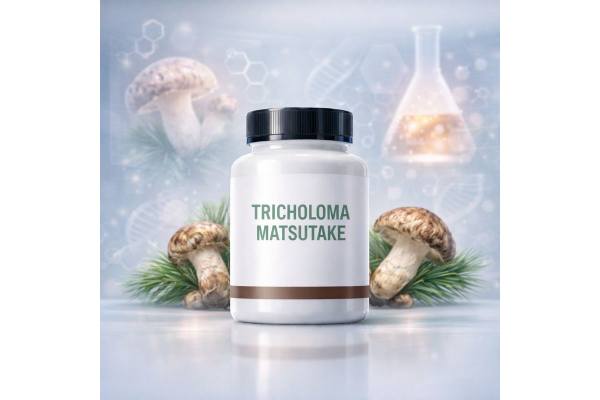
Tricholoma matsutake—often called matsutake or pine mushroom—is prized first for its aroma and culinary value, and second for a growing list of interesting bioactive compounds found in its cell walls and extracts. People most often seek it out for a “clean” umami flavor, but interest in matsutake supplements has increased because mushroom polysaccharides (complex fibers) can interact with immune signaling, oxidative stress pathways, and gut microbes. The practical advantage is that you can approach matsutake in two ways: as a premium food that upgrades meals, or as a concentrated powder or extract when you want convenience and consistency. Still, matsutake is not a miracle ingredient, and the quality of evidence differs widely by claim. This guide explains what matsutake is, what it contains, what benefits are realistic, how to use it, what dose makes sense, and how to think about safety.
Essential Insights
- Matsutake provides flavorful umami and contains polysaccharides that may support immune signaling and antioxidant defenses.
- Avoid wild-foraged mushrooms unless identification is expert-level; look-alikes can cause severe poisoning.
- Typical culinary use is about 5–10 g dried matsutake (or 50–100 g fresh) per serving.
- People on immunosuppressant therapy, pregnant or breastfeeding individuals, and anyone with mushroom allergy should avoid matsutake supplements unless a clinician advises otherwise.
Table of Contents
- What is Tricholoma matsutake?
- What nutrients and compounds does it contain?
- Which benefits are realistic and which are hype?
- How can you use matsutake in real life?
- How much matsutake should you take?
- Common mistakes and quality checks
- Side effects and who should avoid it
What is Tricholoma matsutake?
Tricholoma matsutake is a wild, forest-associated mushroom known for a firm texture and a distinctive spicy-woody aroma that many people describe as “pine,” “cinnamon-like,” or “resinous.” It’s often grouped with premium mushrooms because its flavor profile can stand on its own rather than disappearing into a dish. Unlike common cultivated mushrooms, matsutake is typically tied to specific ecosystems and tree partners, which makes it harder to produce at scale and contributes to its high price.
From a “supplement” point of view, matsutake is interesting because it sits at the intersection of food and functional ingredient. It contains the standard building blocks of edible mushrooms—water, protein, minerals, and fiber—but it also contains structural polysaccharides in its cell walls. Those polysaccharides can behave like prebiotic fibers (feeding beneficial gut microbes) and may influence immune signaling through gut-associated immune tissue. That’s the same broad category of interest that drives research into many medicinal mushrooms, even if matsutake is better known in the kitchen than the clinic.
It’s also important to separate matsutake the ingredient from “matsutake products.” In stores you’ll see:
- Fresh matsutake (high aroma, short shelf life).
- Dried slices (more stable, concentrated flavor).
- Powder (easy to measure and mix).
- Extracts (often labeled by extraction ratio or polysaccharide percentage).
These forms do not behave identically in cooking or in the body. Fresh mushrooms deliver aroma compounds and texture; powders and extracts deliver more consistent “mushroom solids,” especially polysaccharides. Your best choice depends on whether your goal is culinary impact, convenience, or a more standardized routine.
What nutrients and compounds does it contain?
Matsutake shares many nutritional traits with other edible mushrooms: low fat, modest protein, and a meaningful amount of fiber-like carbohydrates that your body does not digest the way it digests starch. If you’re using matsutake as food, think of it as a nutrient-dense flavor ingredient rather than a “macro” food. Its biggest nutritional value often comes from what it replaces—heavy sauces, excess salt, or large amounts of meat—because matsutake adds strong savoriness with relatively few calories.
Key “functional” components
Polysaccharides (including beta-glucan-like structures): These are complex carbohydrates in the mushroom cell wall. In practical terms, they can:
- Increase dietary fiber intake when you eat the mushroom or powder.
- Act as fermentable substrate for gut microbes (varies by structure).
- Interact with immune receptors in ways that can shift signaling patterns.
Phenolic compounds and antioxidant-related molecules: Mushrooms can contain phenolics and other compounds that participate in redox (oxidation–reduction) balance. This does not mean “detox,” but it may contribute to measured antioxidant activity in lab settings.
Volatile aroma compounds: Matsutake’s identity is strongly tied to smell. Heat and fat help carry aroma, so many cooks use matsutake with butter, oil, egg, rice, or broth. From a health angle, aroma compounds matter more for appetite and satisfaction than for supplementation.
Minerals and trace elements: Wild mushrooms can concentrate minerals from their environment. That can be a benefit (nutrient minerals) or a risk (excess accumulation) depending on the harvest region and soil conditions. For supplements, this is one reason third-party testing matters.
Why product labels can be confusing
Two matsutake powders can look similar yet deliver very different “actives.” One might be simply dried, ground mushroom (a whole-food powder). Another might be an extract that concentrates polysaccharides and removes some insoluble material. Extraction ratio (for example, 10:1) and “polysaccharide percent” sound precise, but methods vary, and not all polysaccharide tests are equivalent. When possible, prefer products that specify the part used (fruiting body vs. mycelium), extraction solvent (water vs. alcohol), and provide contaminant testing.
Which benefits are realistic and which are hype?
Matsutake is best approached as a premium edible mushroom with potential functional “extras,” not as a shortcut to dramatic health outcomes. The most realistic benefits come from consistent dietary use, good product selection, and expectations that match the evidence.
Realistic, food-first advantages
Better meal quality through flavor: The biggest day-to-day benefit may be behavioral: matsutake makes simple foods satisfying. If it helps you cook at home more often, rely less on ultra-processed foods, or cut back on heavy sauces, that’s meaningful.
Fiber-like support and gut comfort (for many people): Mushroom polysaccharides behave like complex fibers. For some, that supports regularity and a steadier appetite. For others—especially those sensitive to fermentable fibers—it can cause bloating (more on that in safety).
Immune “tone” rather than immune “boosting”: The language of “boosting immunity” is often misleading. A more accurate goal is supporting balanced immune signaling. Polysaccharides can nudge immune activity in lab and animal studies, but translating that into fewer colds or faster recovery in humans is not guaranteed.
Benefits that are plausible but not settled
Oxidative stress and inflammation markers: Some matsutake components show antioxidant and inflammation-related effects in preclinical research. That can be relevant if you pair matsutake with a broader lifestyle plan (sleep, training, dietary pattern). On its own, matsutake is unlikely to “lower inflammation” in a way you can feel immediately.
Skin-related effects from extracts: Some research uses matsutake polysaccharide extracts in skin-related contexts. That doesn’t automatically mean an oral matsutake supplement will improve skin for everyone, but it suggests a possible direction for future human research.
Common hype patterns to ignore
- “Cures cancer” or “treats tumors.” Preclinical anticancer activity does not equal a human treatment.
- “Detoxes the liver.” Your liver detoxifies; matsutake is not a replacement for medical care or risk reduction.
- “Works the same as all medicinal mushrooms.” Even if mushrooms share broad categories of compounds, the details matter: species, growing conditions, processing, and dose.
A useful test is this: if a claim sounds like a pharmaceutical outcome, it should require pharmaceutical-grade evidence. Matsutake’s strongest everyday value remains culinary, with functional potential that is promising but still developing.
How can you use matsutake in real life?
You’ll get the most from matsutake when you match the form to the goal. Fresh matsutake is about aroma and texture; dried and powdered forms are about convenience, repeatability, and an easy way to add “mushroom solids” to meals.
Fresh matsutake (best for aroma)
Practical tips:
- Clean gently: Use a soft brush or lightly damp cloth. Avoid soaking; mushrooms absorb water.
- Slice thick enough to keep texture: Thin slices lose the “bite” that makes matsutake special.
- Cook with fat and moderate heat: Butter, ghee, or oil helps carry aroma. Very high heat can flatten delicate notes.
Simple uses:
- Sauté and serve over rice, eggs, or tofu.
- Add to broth-based soups near the end to preserve aroma.
- Pair with mild proteins so matsutake remains the focus.
Dried matsutake (best for stability)
Dried matsutake is concentrated. Rehydration water is flavorful—treat it like a mini stock.
- Rehydrate in warm water for 15–30 minutes.
- Use the soaking liquid in soups, risotto, or sauces (strain grit if needed).
Powder and supplements (best for routine)
If you want consistency, a whole-mushroom powder is usually easier to interpret than a heavily marketed “proprietary blend.” Practical ways to use powder:
- Mix into soups and stews (heat is fine).
- Stir into yogurt or oatmeal if you tolerate the flavor.
- Add to savory smoothies (think tomato-based or broth-like blends).
If using capsules or extracts, treat matsutake like a “functional food concentrate,” not a quick fix. Use it consistently, evaluate your tolerance, and keep the rest of your health plan doing the heavy lifting.
How much matsutake should you take?
There is no universally established clinical dosage for matsutake as a dietary supplement, largely because products vary (whole powder vs. extract), and human trials for most outcomes are limited. So the most responsible approach is to anchor dosing in culinary reality, then adjust cautiously if you use concentrated products.
Practical dose ranges by form
Fresh matsutake (food use): A typical serving is 50–100 g fresh in a dish. This is a culinary amount—enough to taste and enjoy—rather than a “therapeutic” dose.
Dried matsutake (food use): Because drying removes water, a common serving is 5–10 g dried per meal (often rehydrated). Start at the low end if you’re new to mushroom fibers.
Whole-mushroom powder: If you’re using powder as a daily add-in, a cautious starting point is 1,000–2,000 mg (1–2 g) per day, mixed into food. Many people prefer splitting it (for example, 1 g with lunch and 1 g with dinner) to reduce digestive load.
Extracts: Extracts can vary dramatically. The best default is to follow the manufacturer’s labeled serving size and avoid combining multiple mushroom extracts on day one. If the label lists a polysaccharide percentage, treat it as a rough indicator, not a guarantee of identical bioactivity across brands.
Timing and “cycling”
Matsutake does not need a strict schedule, but these patterns are practical:
- With meals if you’re prone to nausea or reflux.
- Earlier in the day if you find mushroom extracts feel “activating” (some people notice this, many do not).
- Consistency over intensity: Use a moderate dose 4–6 days per week for a month before you decide it “does nothing.”
How to personalize your dose
Adjust based on:
- Your gut tolerance: bloating, loose stools, or cramping usually means “reduce dose, split dose, or pause.”
- Your goal: culinary enjoyment needs less; routine supplementation may use powder or extract.
- Your total fiber intake: adding matsutake on top of a very high-fiber day can backfire.
If you have a medical condition or take prescription medications, a clinician should be part of your plan—especially if you’re using concentrated extracts rather than food portions.
Common mistakes and quality checks
Matsutake’s biggest risks are not “mysterious side effects”—they’re preventable mistakes around sourcing, labeling, and expectations.
Mistake 1: Treating matsutake like a drug
If you start matsutake expecting a dramatic, fast outcome (fat loss, hormone changes, disease treatment), you will either be disappointed or misled by marketing. Matsutake is better viewed as:
- A premium food that can improve meal satisfaction.
- A source of mushroom polysaccharides that may modestly influence immune and oxidative stress pathways over time.
Mistake 2: Trusting “matsutake” without clarity on what it is
Quality checks that matter:
- Part used: fruiting body is generally preferred for whole-mushroom powders.
- Processing: dried and milled (whole powder) vs. water extract (often richer in certain polysaccharides).
- Testing: look for contaminant testing for heavy metals and microbial contamination, especially for wild-harvest products.
- Traceability: region and batch information is a real advantage with wild foods.
Mistake 3: Overdoing the dose on day one
Even if matsutake is “natural,” its fibers can be strong. A rapid jump in mushroom polysaccharides can cause gas, bloating, or loose stools. The solution is simple: start low, split doses, and increase slowly.
Mistake 4: Confusing wild foraging with safe sourcing
Wild mushrooms require expert identification. Many dangerous species resemble edible mushrooms, and cooking does not reliably neutralize all toxins. If matsutake is part of your wellness plan, the safest path is reputable commercial sourcing rather than casual foraging or app-based identification.
Side effects and who should avoid it
Most people tolerate edible mushrooms well as food, but matsutake can still cause problems—especially in concentrated forms or when sourced poorly.
Common side effects
Digestive upset: The most frequent issues are gas, bloating, abdominal discomfort, or looser stools. This is more likely with powders and extracts than with small culinary servings. It’s often dose-related.
Allergy or sensitivity: Mushroom allergy exists. Stop immediately if you develop hives, swelling, wheezing, or throat tightness, and seek urgent care for severe symptoms.
Headache or “off” feeling: Some people report nonspecific symptoms when starting mushroom extracts. This is not proof of “detox.” It usually signals that the dose is too high, the product is not tolerated, or the person is already dealing with another trigger (sleep debt, dehydration, alcohol, or illness).
Who should avoid matsutake supplements without medical guidance
- Pregnant or breastfeeding individuals: safety data for concentrated matsutake extracts is limited.
- People on immunosuppressant therapy: mushroom polysaccharides can interact with immune signaling in theory; the safest approach is clinician oversight.
- People with autoimmune conditions: some do fine with mushroom products, others flare—this is individualized and worth careful monitoring.
- Anyone with a known mushroom allergy or history of severe food allergy reactions.
- People with chronic kidney disease should be cautious with any supplement that could add extra mineral load or contaminants.
High-stakes risk: misidentification and poisoning
The most serious “side effect” associated with mushrooms is poisoning from the wrong species. Symptoms can include severe gastrointestinal distress and, in some poisonings, delayed organ injury. If there is any chance a wild mushroom was misidentified, do not “wait and see.” Seek urgent guidance from local poison control or emergency services.
A practical safety checklist
- Prefer reputable sellers and tested batches.
- Start with food portions before extracts.
- Avoid combining multiple mushroom supplements at once.
- Stop if symptoms persist beyond a few days or worsen with each dose increase.
References
- Insights into health promoting effects and myochemical profiles of pine mushroom Tricholoma matsutake – PubMed 2023 (Review)
- Structure, bioactivities and applications of the polysaccharides from Tricholoma Matsutake: a review 2022 (Review)
- Metals Transfer in Mushroom Tricholoma matsutake from Regional High Geochemical Background Areas: Environmental Influences and Human Health Risk – PubMed 2024 (Risk Assessment Study)
- A Novel Polysaccharide Purified from Tricholoma matsutake: Structural Characterization and In Vitro Immunological Activity 2025 (Experimental Study)
- Wild mushroom poisoning 2024 (Public Health Guidance)
Disclaimer
This article is for educational purposes only and does not provide medical advice, diagnosis, or treatment. Dietary supplements and mushroom extracts can vary widely in composition and quality, and “natural” products can still cause side effects, allergies, and interactions. If you are pregnant or breastfeeding, have a medical condition (especially autoimmune disease, chronic kidney disease, or liver disease), or take prescription medications (including immunosuppressants), consult a licensed clinician before using matsutake supplements. For any suspected mushroom poisoning or severe allergic reaction, seek emergency care immediately.
If you found this guide helpful, please share it on Facebook, X (formerly Twitter), or any platform you prefer, and follow us on social media. Your support through sharing helps our team keep producing practical, high-quality health content.