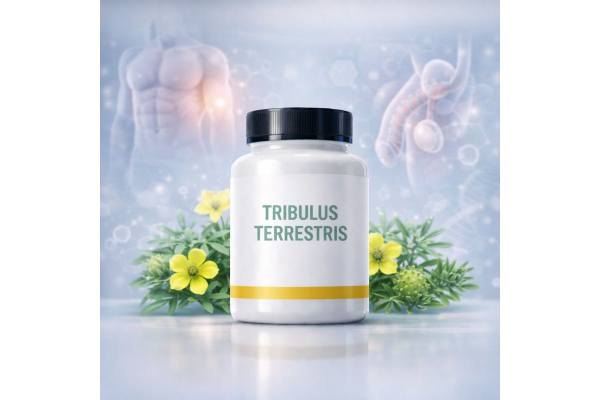
Tribulus terrestris is a spiky-fruited plant (often called puncture vine) that shows up in supplements marketed for libido, testosterone, athletic performance, and “vitality.” The reality is more nuanced—and that is good news if you prefer evidence over hype. Tribulus contains plant compounds (especially steroidal saponins) that may influence sexual function and perceived vitality in some people, but it is not a reliable testosterone booster for most healthy adults. Your results depend heavily on the product’s quality, the extract type, and why you are taking it in the first place. This guide explains what tribulus is, what benefits are most realistic, how to dose it sensibly, what to watch for with side effects and interactions, and how to decide whether it fits your goals without wasting money or taking unnecessary risks.
Essential Insights
- Tribulus may support sexual function in some people, but it is not a dependable testosterone booster for most healthy adults.
- Start with 500–1,000 mg per day of a standardized extract, and reassess after 4–8 weeks.
- Stop if you develop muscle pain with dark urine, yellowing skin, or severe abdominal pain.
- Avoid use during pregnancy and breastfeeding, and use caution with hormone-sensitive conditions.
Table of Contents
- What is tribulus terrestris and what is in it?
- Does tribulus terrestris actually raise testosterone and libido?
- What are the best-supported benefits and uses?
- How much tribulus terrestris should you take per day?
- How to choose a quality tribulus supplement
- Side effects, interactions, and who should avoid it
- What the research says and what it cannot prove yet
What is tribulus terrestris and what is in it?
Tribulus terrestris is a low-growing plant that thrives in dry, sunny regions and produces burr-like fruits that can puncture bike tires and bare feet. In traditional herbal systems, it has been used for urinary comfort, libido, and general vitality. Modern supplements typically use the fruit, sometimes the aerial parts, and less commonly the root. That detail matters because the plant’s chemical profile varies by part, region, and processing method.
The compounds most often discussed are steroidal saponins, with protodioscin being a frequently named one. Tribulus also contains flavonoids, alkaloids, and other plant polyphenols. In a lab setting, these substances can influence pathways related to inflammation, oxidative stress (cellular “wear and tear”), blood vessel function, and hormone signaling. Translating those effects into consistent real-world outcomes is harder—especially because supplements are not uniform.
A practical way to think about tribulus is as a category of products rather than a single substance. Labels may describe:
- Extract ratio (for example, 10:1), which does not guarantee potency.
- Standardization (for example, “40% saponins”), which is more informative but still varies by test method.
- Plant part used (fruit vs. whole herb), which can change the saponin profile.
- Geographic source, which sometimes correlates with different compound patterns.
Because of this variability, two “tribulus” bottles can behave like two different supplements. For most people, the best first step is not chasing marketing claims but deciding what outcome you want (sexual function, training recovery, or something else) and then choosing a product designed and tested for that goal.
Does tribulus terrestris actually raise testosterone and libido?
This is the core question because tribulus is widely sold as a “testosterone booster.” For most healthy adults with normal baseline testosterone, tribulus is unlikely to produce a meaningful rise in testosterone. When trials measure hormones before and after supplementation, many find little to no change—especially in younger or already-healthy men.
Libido and sexual function are different from testosterone. Sexual function depends on blood flow, nerve signaling, stress, sleep, relationship factors, and general health. Tribulus may influence sexual function through mechanisms that do not require a big testosterone increase, such as:
- Nitric oxide and blood vessel tone, which can support erectile function by improving blood flow.
- Perceived arousal and desire, potentially via central (brain) signaling.
- Stress and fatigue overlap, where small shifts in energy or mood can change sexual interest.
A realistic way to set expectations:
- If you are taking tribulus primarily to “push numbers” on a hormone test, you may be disappointed.
- If your goal is sexual function support—especially mild erectile concerns or libido that has dipped—tribulus may help some people, but results are inconsistent.
Timing also matters. Short trials may miss outcomes that require weeks, while very long use may not be necessary. Many users who benefit report noticing changes in 2–6 weeks, if any.
One more important point: if libido or erectile function has changed suddenly, is persistent, or comes with symptoms like low mood, major fatigue, or reduced morning erections, it is worth checking common root causes (sleep apnea, medication effects, cardiovascular risk, depression, diabetes, low iron, thyroid issues). Supplements can mask a problem that deserves direct attention.
What are the best-supported benefits and uses?
Tribulus is promoted for many outcomes, but only a few are plausible enough to treat as “may help” rather than “marketing.” The most realistic benefits tend to cluster around sexual function and certain health biomarkers, while performance and muscle gains are less consistent.
Sexual function support
This is the most common reason people try tribulus. The best-case scenario is modest improvement in aspects of sexual function—such as desire, satisfaction, or erectile quality—over a few weeks. Benefits appear more likely when there is an underlying issue to improve (for example, mild erectile dysfunction) rather than when everything is already working well.
Perceived vitality and well-being
Some users describe improved “drive” or reduced sense of fatigue. This can be hard to separate from placebo effects, sleep changes, training changes, or other supplements taken at the same time. Still, if it helps, it tends to show up as a gentle shift rather than a dramatic transformation.
Metabolic and cardiovascular-adjacent markers
Tribulus is sometimes studied for blood sugar control, lipids, and oxidative stress markers. Human evidence is mixed, and results vary by product and population. If you already take prescribed medication for diabetes or cholesterol, tribulus is not a replacement—and it adds interaction considerations (covered below).
Urinary comfort and fluid balance
Traditional use includes urinary support and mild diuretic effects. Some people report changes in urinary comfort or frequency. If you have urinary symptoms (pain, fever, blood in urine, or persistent urgency), treat that as a medical issue first.
A helpful decision rule: tribulus makes the most sense as a targeted trial for sexual function or “vitality” rather than as an all-purpose performance enhancer. If your primary goal is muscle gain or strength, your money usually goes farther toward protein intake, creatine monohydrate, training progression, and sleep.
How much tribulus terrestris should you take per day?
Tribulus dosing is messy because products vary so much. Still, you can use a structured approach that minimizes risk and makes it clear whether it is helping.
Common daily ranges
Most trials and typical supplement labels land in these ranges:
- Standardized extract: 400–750 mg per day is common; many people trial 500–1,000 mg per day.
- Higher-label dosing: some products go up to 1,500 mg per day of extract or blended “whole herb,” but higher is not automatically better.
- Weight-based dosing: occasionally you will see mg per kg dosing; if used, keep it conservative and do not treat it as permission to push very high intakes.
How to take it
- Start low for 7 days: 250–500 mg per day with food.
- Increase to your target: 500–1,000 mg per day, split into 1–2 doses (morning and early afternoon, or morning and evening).
- Give it enough time: assess after 4 weeks, and again at 8 weeks.
- Stop if it is not clearly helping: more time is not always the answer, especially if side effects appear.
Taking it with food can reduce stomach upset. If it feels stimulating or disrupts sleep, avoid dosing late in the day.
Should you cycle tribulus?
Cycling is not required, but some people prefer a simple pattern to limit unnecessary long-term exposure:
- 8 weeks on, 2–4 weeks off is a common, conservative approach.
If you are using it for sexual function support, you may also choose to stop once benefits are stable and reintroduce later if needed.
What to track so you know it worked
Pick 1–2 measurable outcomes:
- Libido rating (0–10) recorded twice weekly
- Erectile quality or morning erections (simple notes)
- Training recovery markers (sleep quality, soreness days)
- Any side effects (GI symptoms, mood changes)
This makes your decision data-driven rather than vibe-driven.
How to choose a quality tribulus supplement
Because tribulus products vary widely, choosing well can matter more than the exact dose. The goal is a supplement that is consistent, clearly labeled, and less likely to be contaminated.
Look for these label signals
- Standardization disclosure (for example, “standardized to saponins”) rather than only an extract ratio.
- Plant part used (fruit vs. whole plant). Fruit extracts are common in sexual-function products.
- Single-ingredient simplicity if you are testing whether tribulus works for you. Blends make it impossible to know what did what.
Quality controls that reduce surprises
- Independent testing (third-party verification) for identity and contaminants.
- Batch-specific testing access (certificate of analysis), ideally for heavy metals and microbial limits.
- Clear dosage per serving in mg, not proprietary “complex” amounts.
This is especially important if you compete in sports or undergo drug testing. The risk is not only tribulus itself but the broader supplement supply chain. Some products can be adulterated or cross-contaminated in manufacturing.
Set expectations based on your goal
- For sexual function, prioritize consistency and tolerability over the highest “percent saponins” claim.
- For training and performance, be cautious: tribulus is often marketed aggressively here, but outcomes are inconsistent. If you still want to try it, treat it as a secondary add-on after fundamentals (training plan, protein, creatine, sleep).
Smart combinations and what to avoid
If you stack supplements, do it strategically:
- Reasonable complements for the same goal: magnesium (if deficient), lifestyle sleep support, and for sexual function, addressing cardiovascular risk factors.
- Avoid “kitchen sink” testosterone blends at first. Too many ingredients increases side effect risk and makes it hard to identify what helped.
If you are prone to anxiety, insomnia, or GI sensitivity, choose a conservative dose and a simple formula. “More ingredients” is usually “more variables,” not “more results.”
Side effects, interactions, and who should avoid it
Tribulus is often tolerated, but “natural” does not mean risk-free. Side effects tend to be dose-related and product-dependent.
Common side effects
- Stomach upset, nausea, or diarrhea
- Headache
- Restlessness or sleep disruption (especially if taken late)
- Mood changes (irritability in some people)
If these occur, the first move is to reduce the dose, take it with food, or stop entirely.
More serious red flags
Stop tribulus and seek medical care if you develop:
- Severe muscle pain or weakness, especially with dark urine
- Yellowing of skin or eyes, intense itching, or persistent right-upper abdominal pain
- Severe vomiting, confusion, or fainting
These are rare signals but important.
Medication interactions to take seriously
Tribulus may affect how some medications are processed in the body. Be cautious if you take:
- Statins (cholesterol medications), especially if you have a history of muscle-related statin side effects
- Blood pressure medications (if tribulus lowers blood pressure in you)
- Diabetes medications (if it lowers blood sugar in you)
- Blood thinners (because herbal products can unpredictably affect bleeding risk)
If you take any prescription medication, the safest step is to ask a clinician or pharmacist to screen for interactions before starting.
Who should avoid tribulus
- Pregnant or breastfeeding people
- Children and adolescents
- People with hormone-sensitive conditions (for example, certain prostate, breast, or uterine conditions) unless a clinician approves
- Anyone with significant liver or kidney disease unless medically supervised
- Competitive athletes who cannot risk supplement contamination
Also avoid tribulus if you have a pattern of reacting strongly to stimulatory supplements, or if you are dealing with unexplained symptoms that need a medical workup first.
What the research says and what it cannot prove yet
Tribulus research is a classic example of why supplement claims can outpace evidence. Human trials exist, but they often differ in extract type, dose, participant health status, and outcome measures. That makes it difficult to give one universal answer.
What is reasonably supported
- Sexual function outcomes may improve in some groups, particularly people with existing sexual-function concerns. Effects are not guaranteed, and improvements tend to be modest rather than dramatic.
- Testosterone increases are not consistent in healthy men with normal baseline levels. When changes appear, they are usually small and not always clinically meaningful.
- Performance and body composition effects are inconsistent. Some studies show no meaningful changes in strength, body fat, or training outcomes compared with placebo.
Why results vary so much
Several factors can change outcomes:
- Baseline status: people with a “problem to solve” often have more room for measurable improvement.
- Extract composition: “saponins” is not one compound; the profile changes by plant source and processing.
- Short trial windows: some outcomes (sexual confidence, sleep, stress) may change slowly and influence results indirectly.
- Blinded vs. real-world expectation effects: tribulus is strongly marketed, and expectation can amplify perceived outcomes.
A practical decision framework
If your goal is libido or sexual function:
- Address basics first (sleep, stress, alcohol, relationship factors, cardio fitness).
- Trial tribulus for 8 weeks at a conservative dose.
- Continue only if benefits are clear and side effects are absent.
If your goal is testosterone:
- Consider tribulus a low-probability option. If symptoms suggest low testosterone, confirm with appropriate lab testing and clinical evaluation rather than relying on supplements.
If your goal is performance:
- Treat tribulus as optional and secondary. If you try it, track objective outcomes (reps, load, recovery time) and stop if nothing changes.
The most evidence-aligned view is that tribulus can be a reasonable short-term experiment for specific people and goals, but it should not replace diagnosis, proven therapies, or training fundamentals.
References
- Effects of Tribulus (Tribulus terrestris L.) Supplementation on Erectile Dysfunction and Testosterone Levels in Men-A Systematic Review of Clinical Trials – PubMed 2025 (Systematic Review)
- Tribulus terrestris and Sport Performance: A Quantitative and Qualitative Evaluation of Its Advertisement and Availability via Online Shopping in Six Different Countries – PubMed 2024
- Rhabdomyolysis Risk: The Dangers of Tribulus Terrestris, an Over-the-Counter Supplement – PubMed 2024 (Case Report)
- The Effects of 6 Weeks of Tribulus terrestris L. Supplementation on Body Composition, Hormonal Response, Perceived Exertion, and CrossFit® Performance: A Randomized, Single-Blind, Placebo-Controlled Study – PubMed 2021 (RCT)
Disclaimer
This article is for educational purposes only and does not provide medical advice, diagnosis, or treatment. Dietary supplements can affect people differently and may interact with prescription or over-the-counter medications. If you are pregnant or breastfeeding, have a chronic medical condition (especially liver, kidney, cardiovascular, endocrine, or hormone-sensitive conditions), or take any medications, consult a qualified healthcare professional before using tribulus terrestris. Seek prompt medical care for severe symptoms such as muscle pain with dark urine, fainting, severe abdominal pain, or signs of an allergic reaction.
If you found this guide helpful, please share it on Facebook, X (formerly Twitter), or any platform you prefer—and follow us on social media. Your support through sharing helps our team keep producing clear, high-quality health content.