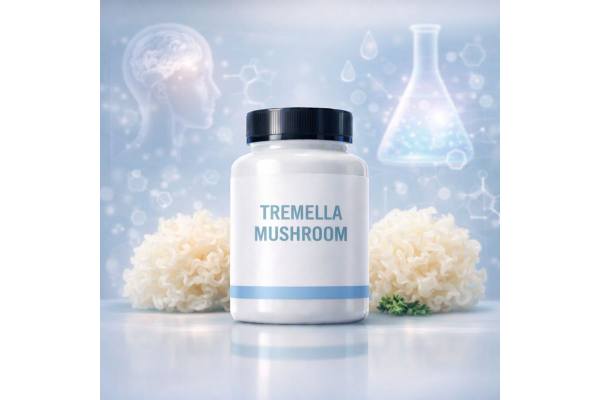
Tremella mushroom—often sold as “snow mushroom” or “silver ear”—has moved from traditional soups and tonics into modern powders, capsules, and skincare. What makes it interesting is not a single vitamin or mineral, but a family of gel-forming polysaccharides (including beta-glucans) that hold water, interact with gut microbes, and may influence immune signaling. People use Tremella for skin hydration, barrier support, and “inner glow” routines, but it is also studied for metabolic markers and antioxidant activity.
Still, Tremella is not a shortcut to better health. Product quality varies, doses are not standardized, and much of the strongest data comes from lab and animal research. This guide will help you understand what Tremella is, what benefits are realistic, how to dose it sensibly, and when it is smart to skip it.
Essential Insights for Tremella Mushroom
- May support skin hydration and barrier comfort when used consistently for 4–12 weeks.
- May modestly support metabolic markers in some people when taken daily as part of a broader diet plan.
- Typical oral intake is 500–3,000 mg/day (dried powder equivalent) or 250–1,000 mg/day (extract), depending on concentration.
- Stop and avoid re-challenge if you develop hives, wheeze, or facial swelling (possible allergy).
- Avoid if pregnant or breastfeeding, post-transplant, or using immunosuppressant drugs unless your clinician approves.
Table of Contents
- What is Tremella mushroom extract?
- What benefits is Tremella best known for?
- Does Tremella help skin hydration and aging?
- How much Tremella should you take per day?
- How to choose a quality Tremella product
- Side effects, interactions, and who should avoid it
- What the research shows and what it does not
What is Tremella mushroom extract?
“Tremella” is a genus of jelly fungi. In supplements and skincare, the most common species is Tremella fuciformis, nicknamed snow mushroom, snow fungus, white jelly mushroom, or silver ear. You may also see other Tremella species mentioned in culinary contexts (for example, “witch’s butter”), but commercial wellness products usually center on snow mushroom because of its polysaccharide profile and long history of food use.
Most Tremella products fall into a few categories:
- Whole mushroom powder (fruiting body): Ground dried mushroom. This is typically the least concentrated option, but it preserves a broad mix of fibers and compounds.
- Mycelium-based products: Made from the root-like growth form cultured on a substrate. These can be useful, but they may contain substantial substrate material unless clearly disclosed.
- Extracts (often “polysaccharide-rich”): Concentrated fractions made with hot water and precipitation steps. These aim to increase beta-glucans and related polysaccharides per serving.
- Topical ingredients: Tremella polysaccharides added to serums, creams, and masks for hydration and a smoother feel.
The “signature” components are polysaccharides, including beta-glucans and other complex sugars that form a soft gel. You will also find smaller amounts of proteins, minerals, and phenolic compounds depending on the source and processing.
A key advantage of Tremella, compared with some trend supplements, is that it often functions as a food-first ingredient: it can be used in meals (soups, smoothies, teas) or as a standardized supplement. The main limitation is that labels can be vague—“Tremella extract” may not tell you what fraction, what concentration, or even whether it is fruiting body or mycelium unless the brand is transparent.
What benefits is Tremella best known for?
Tremella is most famous for hydration and skin-support routines, but its potential benefits extend into gut health, immune signaling, and metabolic markers. It helps to separate “popular uses” from “best-supported uses,” because the hype can outrun the data.
Commonly reported benefits and why they may happen:
- Hydration support (inside and out): Tremella polysaccharides bind water and create a film-like texture. Taken orally, they act more like fermentable fibers than like hyaluronic acid you swallow, but people still report improved dryness over time.
- Barrier comfort and redness-prone skin: Skin barrier issues often improve when hydration and inflammation are better controlled. Tremella’s polysaccharides are studied for antioxidant and soothing pathways, which may matter most for people with dryness or sensitivity patterns.
- Gut microbiome support: Tremella polysaccharides can behave like prebiotic fibers, meaning gut bacteria ferment them into compounds that may support gut lining integrity and immune balance. This does not mean it “fixes your gut” overnight; it means the ingredient may nudge the system in a helpful direction when used consistently.
- Metabolic support (modest): Some human research suggests Tremella-based functional foods may improve a few metabolic markers over weeks. This is best viewed as a supporting tool, not a replacement for diet, exercise, sleep, or prescribed medication.
- Immune modulation (not “immune boosting”): Many mushroom polysaccharides influence immune signaling. That can be beneficial for resilience, but it also creates caution for people with autoimmune disease or those using immunosuppressants.
Advantages that matter in real life:
- Generally food-compatible: Many people tolerate Tremella well when used as a culinary mushroom or simple powder.
- Multi-format flexibility: You can use it as a supplement, add it to smoothies, or use it topically.
- Hydration-oriented “stacking”: Tremella pairs well with basics like adequate water intake, omega-3 intake, and barrier-friendly skincare.
A realistic expectation: if Tremella helps you, it tends to show up as small improvements—less tightness, better bounce, steadier digestion, or slightly improved lab trends when combined with lifestyle changes—rather than a dramatic transformation.
Does Tremella help skin hydration and aging?
Skin is where Tremella has the strongest “everyday user intent,” so it’s worth getting specific. Tremella is often marketed as a plant-like alternative to hyaluronic acid, but the better comparison is this: Tremella polysaccharides act as film-formers and water binders, and they may also influence oxidative stress and irritation pathways that contribute to dullness and sensitivity.
What Tremella may do for skin (most plausible effects):
- Surface hydration and softness: Topical Tremella polysaccharides can help the skin feel smoother by reducing transepidermal water loss (water escaping from the skin). This is especially noticeable when the formula also includes humectants (like glycerin) and occlusives (like squalane).
- Barrier “bounce” over time: Orally, Tremella acts more like a functional fiber. The skin connection likely comes through systemic effects—gut fermentation products, inflammatory signaling changes, and antioxidant support—rather than the mushroom directly “turning into” moisture in your face.
- Comfort for dryness-prone routines: If you use retinoids, exfoliating acids, or live in dry climates, hydration support can reduce the “tight, flaky cycle.” Tremella may fit well here, especially paired with gentle cleansing and consistent moisturizer use.
- Anti-aging positioning (with limits): “Anti-aging” is a broad claim. Tremella is more likely to support appearance factors tied to hydration and calm (fine lines that look worse with dryness, uneven texture from irritation) than to produce dramatic wrinkle reversal.
How to use it for skin results:
- Choose one lane first: Either oral Tremella daily or a topical Tremella serum nightly. Doing both can be fine, but start with one so you can tell what helps.
- Commit to a realistic timeline: Aim for 4–8 weeks before judging oral effects. Topical hydration effects can appear sooner (days to 2 weeks), but longer use matters for barrier resilience.
- Pair it intelligently: For topical use, Tremella works well alongside ceramides, glycerin, and sunscreen. For oral use, pair with adequate protein, vitamin C-rich foods, and consistent sleep.
If your skin concern is primarily acne, melasma, or rosacea flares, Tremella may still help indirectly by supporting barrier hydration, but it should not be your primary treatment strategy.
How much Tremella should you take per day?
There is no official daily requirement for Tremella. Dosing depends on whether you are using whole powder, a concentrated extract, or a functional beverage. The most common mistake is treating all Tremella products as interchangeable. They are not.
Practical dosage ranges (adult use):
- Fruiting body powder (dried mushroom equivalent): 500–3,000 mg/day.
This is a reasonable starting range for general wellness and skin support. Many people start at 500–1,000 mg/day for one week, then increase if tolerated. - Hot-water extract (polysaccharide-rich): 250–1,000 mg/day.
Extracts can be more concentrated, so you typically need less total powder. If the label lists a polysaccharide percentage, the lower end may be sufficient. - High-dose functional food formats: Some human studies use much higher intakes of Tremella-derived beta-glucans in beverage form. This does not mean you need “grams of beta-glucan” from capsules; it means study products can be formulated very differently than typical supplements.
How to take it:
- Timing: Any time of day is fine. If you notice bloating, take it with a meal and split the dose (morning and evening).
- With food vs. empty stomach: With food is usually better tolerated, especially for people sensitive to fibers.
- Consistency matters more than timing: Tremella is not a stimulant. It works (if it works for you) through gradual changes—hydration habits, gut fermentation, and signaling pathways.
What to expect and when:
- Days to 2 weeks: Topical hydration feel (if using skincare). Mild digestive changes (good or bad) if using oral forms.
- 4 to 8 weeks: Better read on skin comfort, dryness, and “baseline” glow if it suits you.
- 8 to 12 weeks: More meaningful window for metabolic markers when combined with diet and activity.
When to reduce your dose:
- New bloating, loose stools, or cramping that persists beyond the first week.
- New itching or rash (stop entirely and reassess—possible allergy).
- If you are stacking multiple mushroom products (to avoid unnecessary immune stimulation).
If you have a medical condition (especially autoimmune disease or diabetes) or you take prescription medications, treat dosing as something to review with your clinician rather than a self-experiment with unlimited upside.
How to choose a quality Tremella product
With Tremella, quality is not a luxury—it is the difference between a meaningful polysaccharide dose and a scoop of vague “mushroom” powder that does little. Use these criteria to shop smarter.
Label checks that matter:
- Species name: Look for Tremella fuciformis if your goal is the classic “snow mushroom” profile. If the label only says “Tremella,” you are missing key detail.
- Part used: Fruiting body, mycelium, or “extract.” Fruiting body and clearly identified extracts are easier to evaluate than unlabeled mycelium blends.
- Extraction disclosure: “Hot water extract” is a good sign for polysaccharides. If the product is labeled “dual extract” (water plus alcohol), that can be fine, but Tremella’s headline compounds are typically water-soluble polysaccharides.
- Standardization: If available, look for a stated polysaccharide or beta-glucan content. Be cautious with “beta-glucan” numbers that are not clearly measured or explained.
Quality and safety signals:
- Third-party testing: Ideally includes heavy metals (lead, arsenic, cadmium, mercury) and microbial contaminants. Mushrooms can concentrate elements from growing conditions, so this matters.
- Clear sourcing: Country of origin, cultivation method, and whether it is grown on logs, substrate, or via fermentation.
- No “proprietary blend” dosing games: If Tremella is buried in a blend with tiny amounts, you cannot dose it reliably.
Form choice based on your goal:
- Skin and hydration goals: A polysaccharide-rich extract may be more efficient than whole powder. Topicals are useful if your primary goal is surface hydration and comfort.
- Gut and general wellness: Whole powder can work well, especially if you prefer food-style use in smoothies or soups.
- Sensitive digestion: Start low, choose a simpler ingredient list, and consider splitting doses.
A simple decision rule: if the brand cannot tell you the species, the part used, and whether it is an extract, you should assume you are buying marketing—not a targeted Tremella supplement.
Side effects, interactions, and who should avoid it
Tremella is often well tolerated as a food, but supplements can concentrate compounds and raise the chance of side effects—especially when stacked with other immune-active products. Safety is also about your context: your medications, immune system status, and allergy history.
Possible side effects:
- Digestive upset: Gas, bloating, or loose stools are the most common issues, especially when starting at a high dose. This is typical of fiber-like polysaccharides and often improves when you lower the dose or take it with food.
- Allergic reactions: Mushrooms can trigger allergy in some people. Signs include hives, itching, swelling, wheezing, or throat tightness. Treat these symptoms seriously and seek urgent care if breathing is affected.
- Headache or “off” feeling: Less common, but can happen with new supplements due to sensitivity, dehydration, or interactions with other products.
Potential interactions and caution zones:
- Immunosuppressants: Because mushroom polysaccharides may influence immune signaling, use caution if you take immunosuppressant drugs (for example, post-transplant medications). Do not self-start Tremella without clinician approval.
- Autoimmune conditions: Some people with autoimmune disease do fine with culinary mushrooms but react poorly to concentrated extracts. If you try it, start low and monitor symptoms closely.
- Blood sugar medications: If you take glucose-lowering medications, adding a supplement that may influence metabolic markers could increase the risk of low blood sugar in some contexts. Monitoring is wise, especially early on.
- Anticoagulants and antiplatelets: Definitive interaction data for Tremella is limited, but if you take blood thinners, it is still prudent to discuss new supplements with your clinician and watch for unusual bruising or bleeding.
Who should avoid Tremella unless a clinician advises otherwise:
- Pregnant or breastfeeding individuals (insufficient safety data for concentrated extracts).
- People with a history of severe mushroom allergy.
- Organ transplant recipients and people on immunosuppressant therapy.
- Individuals with unstable chronic illness who are frequently adjusting medications.
If you are scheduled for surgery, it is also reasonable to stop non-essential supplements 1–2 weeks beforehand unless your surgical team says otherwise.
What the research shows and what it does not
Tremella research is promising, but it is uneven: there is a lot of chemistry and lab work, growing animal evidence, and a smaller amount of human data. The smartest way to read the science is to ask two questions: What outcomes were measured in humans? and What form and dose was actually used?
What looks supported (with the strongest practical relevance):
- Polysaccharides are the main active fraction. Across reviews, Tremella’s biological activity is repeatedly linked to polysaccharides (including beta-glucans and related complex sugars). This supports choosing products that disclose extraction methods and concentrations.
- Skin-related benefits are plausible, especially topically. The dermatology-focused literature highlights hydration, barrier support, and protective mechanisms. However, many “anti-aging” claims still lean heavily on lab models rather than large clinical trials.
- Metabolic marker improvement is possible in some contexts. A small randomized controlled trial using a Tremella-based beverage reported improvements in specific metabolic measures over weeks. This is encouraging, but it does not yet establish a universal supplement protocol, and it does not replace lifestyle or medical care.
What remains uncertain:
- Best dose for most goals: Human studies often use specialized products (like functional beverages) that do not map cleanly onto capsules. Until more dose-response studies appear, “more” is not automatically better.
- Which people benefit most: Genetics, baseline diet, gut microbiome composition, sleep, and metabolic status likely change outcomes. This is one reason Tremella feels “amazing” for one person and “meh” for another.
- Long-term safety of high-dose extracts: Food use is reassuring, but concentrated extracts taken daily for years are not as well studied.
How to apply the evidence without overreaching:
- Choose a transparent product (species, part used, extract method).
- Start with a conservative dose and track one or two outcomes (skin dryness score, bowel regularity, fasting glucose trend if relevant).
- Evaluate at 8–12 weeks before deciding it is “working” or “not working.”
- Avoid stacking multiple immune-active mushrooms unless you have a clear reason and good tolerance.
Tremella is best viewed as a supportive tool: potentially useful, often gentle, but not a substitute for fundamentals like nutrition, movement, sleep, and appropriate medical treatment.
References
- Recent advances in polysaccharides from Tremella fuciformis: isolation, structures, bioactivities and application 2025 (Systematic Review)
- Structure, Function and Application of Tremella Fuciformis Polysaccharide: A Review 2025 (Review)
- Tremella fuciformis beverage improves glycated hemoglobin A1c and waist circumference in overweight/obese prediabetic subjects: a randomized controlled trial 2024 (RCT)
- The potential cutaneous benefits of Tremella fuciformis 2023 (Review)
- A review on the production, structure, bioactivities and applications of Tremella polysaccharides 2021 (Review)
Disclaimer
This article is for educational purposes only and does not provide medical advice, diagnosis, or treatment. Supplements can affect people differently based on health conditions, allergies, pregnancy status, and medications. If you are pregnant or breastfeeding, have an autoimmune condition, are immunocompromised, are post-transplant, or take prescription medications (including glucose-lowering drugs or blood thinners), consult a qualified healthcare professional before using Tremella mushroom products. Stop use and seek urgent care if you develop signs of a serious allergic reaction such as swelling of the face or throat, wheezing, or difficulty breathing.
If you found this guide useful, please consider sharing it on Facebook, X (formerly Twitter), or any platform you prefer, and following us on social media. Your support through sharing helps our team continue producing high-quality, practical health content.