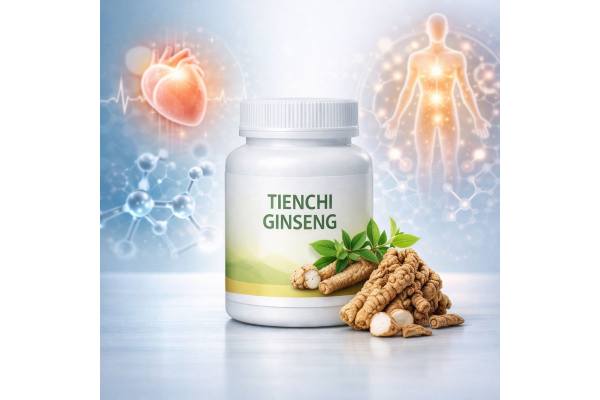
Tienchi ginseng is a traditional Chinese medicinal root that has gained attention worldwide for its potential effects on circulation, bruising, cardiovascular health, and recovery after injury. Often used to “move blood” in classical herbal formulas, it contains unique compounds called notoginsenosides that differ from those in Asian or American ginseng. Modern research is exploring how these components may influence blood flow in the brain and heart, support vessel integrity, and modulate inflammation.
At the same time, Tienchi ginseng is not a simple wellness tea. It has measurable effects on clotting, can interact with blood-thinning medicines, and has been studied in people with serious conditions such as stroke and heart disease.
This guide walks you through what Tienchi ginseng is, how people use it, reasonable supplement dosages, safety concerns, and who should avoid it. It is written for informed readers who want an in-depth but practical overview before discussing it with a qualified health professional.
Key Insights for Tienchi ginseng
- Tienchi ginseng may support microcirculation, capillary strength, and recovery from bruises or minor vascular injuries.
- Early trials suggest potential benefits in ischemic stroke and cardiovascular disease when used alongside standard care, not as a replacement.
- Common supplement doses range roughly from 300 to 1,000 mg per day of standardized extract, usually divided into two or three servings.
- People on anticoagulants or antiplatelet medicines, and those with bleeding disorders, should avoid Tienchi ginseng unless their specialist explicitly recommends it.
Table of Contents
- What is Tienchi ginseng?
- How Tienchi ginseng may benefit health
- How to use Tienchi ginseng day to day
- Tienchi ginseng dosage ranges and forms
- Side effects, interactions, and safety
- Who should avoid Tienchi ginseng
- What the research says so far
What is Tienchi ginseng?
Tienchi ginseng is the common English name for the root of Panax notoginseng, a small perennial plant in the same botanical genus as Asian and American ginseng. In Chinese herbal medicine it is known as “San Qi” or “Tian Qi” and has been used for centuries to “stop bleeding and move blood,” especially after trauma or surgery. Unlike energy-tonic ginsengs, Tienchi is mainly prized for its effects on circulation and vascular repair rather than for boosting stamina or stress resilience.
The root is rich in saponins called notoginsenosides. These are structurally related to ginsenosides found in other ginsengs but have a somewhat different profile, which seems to underlie its emphasis on blood flow, platelet function, and anti-inflammatory activity.
Traditionally, practitioners differentiate between raw and steamed or cooked Tienchi ginseng. Raw forms are often used for acute injuries and bruises, while processed forms may be used more for circulation and long-term cardiovascular support. Modern supplements usually standardize the extract to a specified percentage of total saponins or specific notoginsenosides so that each capsule delivers a reproducible dose.
In pharmacies and online stores, you may encounter Tienchi ginseng as capsules, tablets, powder, liquid extracts, or as part of multi-herb formulas, especially those aimed at circulation, brain health, or recovery. In some Asian countries, injectable preparations of notoginseng saponins are used in hospitals under medical supervision, but these are prescription medicines and not over-the-counter supplements.
It is important to distinguish Tienchi ginseng from ordinary ginseng products: substitutes are common, and not every “ginseng” product is the same plant or has the same risk profile. Always check the Latin name on the label and look for Panax notoginseng if you specifically want Tienchi.
How Tienchi ginseng may benefit health
Most of the proposed benefits of Tienchi ginseng come from its effects on blood vessels, blood flow, and inflammation. Instead of acting as a stimulant, it seems to influence how blood moves through small vessels and how easily platelets clump together.
Laboratory and animal studies suggest that notoginsenosides can relax blood vessel walls, improve microcirculation, and help reduce “leakiness” of fragile capillaries. They may also reduce oxidative stress and support the function of the endothelium, the delicate cell layer lining blood vessels.
In human research, Tienchi ginseng has been studied most in cardiovascular and cerebrovascular conditions:
- In people recovering from ischemic stroke, notoginseng saponin capsules added to standard therapy have been reported to modestly improve functional recovery and neurological scores compared with standard therapy alone.
- In acute heart attack and other coronary disease settings, injectable notoginseng saponins used in hospitals (under strict supervision) have been associated with improved cardiac function and certain blood markers when combined with guideline-based care.
These results are encouraging but should be interpreted cautiously. They come mostly from Chinese hospital settings, sometimes with modest sample sizes and variable study quality. Tienchi ginseng was given as an add-on to conventional treatment, not as a replacement.
Outside of serious disease, people use Tienchi ginseng supplements for:
- Support during heavy bruising or muscle injury recovery
- Mild circulatory issues, such as cold extremities
- Capillary health in people prone to easy bruising or visible broken capillaries
- General vascular support with aging
These uses largely mirror its traditional roles. However, high-quality trials for everyday wellness, sports recovery, or cosmetic applications are limited. At this stage, evidence is stronger for its pharmacological potential than for routine preventive use in otherwise healthy people.
How to use Tienchi ginseng day to day
If you and your clinician decide that Tienchi ginseng is appropriate, the next questions are how to use it, for how long, and in which form. Because the herb affects clotting and circulation, it should be approached with more care than many “general wellness” botanicals.
Common supplement forms
- Standardized capsules or tablets – The most common format, typically listing a specific amount of Panax notoginseng root extract and total saponin content.
- Loose powder – Dried root powder to mix into warm water or food, often used in traditional settings.
- Tinctures and liquid extracts – Alcohol or glycerin-based extracts, allowing flexible dosing in drops or milliliters.
- Herbal formulas – Tienchi ginseng combined with other herbs for circulation, joint comfort, or brain health. Here, its dose is usually lower per serving than in single-ingredient products.
Timing with meals
Many people take Tienchi ginseng with food to reduce the chance of stomach upset. If using it to support exercise recovery or to coincide with other medications, clinicians sometimes time it earlier in the day to allow better monitoring for unusual bruising or bleeding.
Duration of use
In clinical trials for stroke and cardiovascular conditions, standardized notoginseng saponin capsules or injections were usually used for weeks to a few months, then reassessed.
For general circulatory support, herbal practitioners may recommend limited courses (for example, 4–12 weeks) with breaks in between, rather than continuous long-term use without review.
Best practices for day-to-day use
- Confirm all medications first. Because of bleeding risk, always review current prescriptions and over-the-counter drugs, particularly blood thinners and antiplatelet agents.
- Start at the lower end of the dosage range. See the next section for ranges; avoid “front-loading” large doses.
- Monitor your body. New nosebleeds, unusually heavy menstrual bleeding, easy bruising, dark stools, or prolonged bleeding from cuts are warning signs to stop and consult a clinician.
- Plan around procedures. If you are scheduled for dental work, endoscopy, or surgery, most clinicians will advise stopping Tienchi ginseng in advance (often 7–10 days, sometimes longer, similar to other anticoagulant herbs).
Tienchi ginseng is not meant to be a self-prescribed emergency treatment. If you suspect a stroke, heart attack, or serious internal bleed, emergency medical care always takes priority over herbal remedies.
Tienchi ginseng dosage ranges and forms
There is no single universally accepted “standard dose” for Tienchi ginseng, and products vary in strength. However, research trials and traditional usage offer some practical ranges to discuss with your healthcare provider.
Typical supplemental ranges (adults)
- Standardized extract capsules: Many commercial products provide around 100–300 mg of Panax notoginseng extract per capsule. Label directions often suggest total daily intakes in the range of 300–1,000 mg per day, divided into two or three doses.
- Traditional dried root powder: In classical Chinese practice, daily amounts often fall roughly between 1 and 3 g of dried root in decoction or powder form, sometimes adjusted depending on body size and clinical situation.
In hospital-based studies using notoginseng saponin capsules for ischemic stroke, total daily doses of around 600 mg of standardized saponins (for example, 200 mg three times daily) have been used under close medical supervision.
These doses are not automatically safe or appropriate for self-use outside of a supervised setting, but they provide context for the potency of the herb.
Practical dosage considerations
- Start low: If using a supplement at home, many clinicians prefer starting at the lower end (for instance, 100–150 mg twice daily) and titrating up only if needed and well tolerated.
- Consider body weight and frailty: Older adults, underweight individuals, and those with liver or kidney disease may require lower doses or complete avoidance.
- Split doses: Dividing the daily amount into two or three doses can smooth blood levels and reduce the chance of gastrointestinal side effects.
- Children: Safety and dosing data for children are limited. Pediatric use should be specialist-guided only, typically as part of formal medical care rather than as a self-selected supplement.
Maximum doses
Some practitioners and product labels mention short-term higher doses (for example, 1.5–2 g of powdered root per day) in acute settings like trauma or pronounced bruising. Because high doses may increase bleeding risk, such approaches should only be used with professional guidance and awareness of all concurrent medications.
Ultimately, the safest “dose” is one that has been individually assessed for you in the context of your medical history, lab results, and other treatments.
Side effects, interactions, and safety
Even though Tienchi ginseng is plant-based, it is pharmacologically active and can cause significant side effects, especially when combined with other drugs that affect blood flow or clotting.
Commonly reported side effects
- Mild digestive upset (nausea, loose stools, stomach discomfort)
- Headache or lightheadedness, particularly at higher doses
- Feeling unusually warm or flushed
These reactions are usually mild and resolve after dose reduction or discontinuation. However, more serious reactions are possible.
Bleeding and clotting concerns
The most important safety issue with Tienchi ginseng is its impact on hemostasis. Notoginsenosides have been shown to influence platelet aggregation and fibrinolysis (the breakdown of clots).
Potential consequences include:
- Increased tendency to bruise
- Longer bleeding time from cuts
- Heavier menstrual bleeding in some users
- Theoretical or actual increased bleeding risk when combined with:
- Warfarin or other vitamin K antagonists
- Direct oral anticoagulants (such as apixaban, rivaroxaban, dabigatran)
- Antiplatelet agents (such as aspirin, clopidogrel, ticagrelor)
- High-dose fish oil or other anticoagulant herbs
Because stroke and cardiovascular trials often used Tienchi ginseng alongside conventional antithrombotic therapy in hospital, safety was monitored with lab tests and physician oversight. That level of monitoring rarely occurs with self-directed supplementation, which makes caution essential.
Other possible concerns
- Blood pressure: Some data suggest mild blood pressure–lowering effects. People with low baseline blood pressure, or those on multiple antihypertensives, should be monitored for dizziness or faintness.
- Liver and kidney function: Large-scale toxicology reviews have generally found low intrinsic toxicity at typical doses, but high doses or long-term use may put more load on detoxification pathways, particularly in those with preexisting organ disease.
- Allergy: As with any botanical, allergic reactions are possible but appear to be uncommon. Any rash, itching, swelling, or breathing difficulty is a reason for immediate medical attention.
If you develop signs such as unexplained bruises, blood in urine or stool, persistent nosebleeds, coughing up blood, or sudden severe headache while using Tienchi ginseng, you should stop the product and seek urgent medical evaluation.
Who should avoid Tienchi ginseng
Because of its effects on circulation and clotting, Tienchi ginseng is not suitable for everyone. In some cases, the risk can outweigh any potential benefit.
People who should generally avoid Tienchi ginseng unless explicitly cleared by a specialist
- Those on anticoagulant or antiplatelet drugs
- Warfarin, apixaban, rivaroxaban, dabigatran, edoxaban
- Heparins and low-molecular-weight heparins
- Aspirin, clopidogrel, prasugrel, ticagrelor, and similar agents
- Individuals with diagnosed bleeding disorders
- Hemophilia
- Von Willebrand disease
- Severe thrombocytopenia or platelet function disorders
- People with active gastrointestinal, urinary, or intracranial bleeding or a recent history of major hemorrhage
Situations calling for extra caution
- Upcoming surgery or invasive procedures: Most clinicians prefer stopping Tienchi ginseng at least 7–10 days before major surgery, similar to other herbs and drugs that affect clotting, to reduce intraoperative and postoperative bleeding risk.
- Pregnancy and breastfeeding: Data are limited, and subtle effects on uterine blood flow or clotting cannot be ruled out, particularly in high-risk pregnancies. Avoiding Tienchi ginseng in pregnancy and lactation is usually the safest course unless a specialist is involved.
- Severe liver or kidney impairment: Reduced clearance of active compounds could increase side effects, including bleeding and drug interactions.
- Children and adolescents: Evidence in pediatric populations is sparse. Use should be reserved for clinical settings where an experienced practitioner can monitor outcomes.
When to reconsider use
Even if you do not fit the high-risk categories above, you should reconsider or pause Tienchi ginseng if:
- You start a new medication that affects clotting or blood pressure.
- You experience new or worsening migraines, visual disturbances, or neurological symptoms.
- Routine lab tests show unexpected changes in coagulation parameters or liver enzymes.
As with any potent herbal preparation, “natural” does not equal “risk-free.” When in doubt, discuss your specific situation with a clinician who understands both herbal medicine and your underlying medical conditions.
What the research says so far
Modern research on Tienchi ginseng spans basic laboratory work, animal studies, and human clinical trials, with the strongest focus on cardiovascular and cerebrovascular diseases.
Mechanistic and preclinical findings
Experimental studies indicate that notoginsenosides:
- Modulate inflammatory signaling pathways involved in vascular injury
- Improve endothelial function and nitric oxide availability
- Influence platelet activity and fibrinolysis
- Protect heart and brain tissue from ischemia–reperfusion damage in animal models
These findings support the traditional idea that Tienchi ginseng “moves blood” and protects vessels, but translating them to clinical outcomes requires robust human trials.
Clinical research highlights
- Ischemic stroke: A large randomized trial in adults with acute ischemic stroke compared standardized notoginseng saponin capsules plus standard care to standard care alone. The combination group showed modestly better functional recovery at follow-up, with a safety profile similar to control under hospital monitoring.
- Acute myocardial infarction and coronary disease: Systematic reviews and meta-analyses of injectable notoginseng saponin preparations, when added to guideline-based therapy, reported improvements in heart function measures and certain biomarkers. However, many included trials were small and varied in quality.
- General cardiovascular protection: Recent reviews have summarized potential benefits of notoginsenosides on atherosclerosis progression, microcirculation, and cardiac remodeling, but emphasize that long-term endpoint trials (for example, heart attack or stroke prevention in at-risk but stable adults) are still lacking.
Safety and regulatory assessments
Toxicological reviews generally find that standardized extracts of Panax notoginseng have a relatively wide safety margin in animals and in short- to medium-term human use when dosed appropriately. The main concern, consistently, is altered bleeding risk when combined with anticoagulant therapies or in people with underlying hemostatic disorders.
What this means for everyday users
For now:
- Evidence is strongest for Tienchi ginseng as an adjunct to conventional treatment for specific cardiovascular and cerebrovascular conditions, under professional supervision.
- Data for its long-term use as a general wellness supplement are less robust.
- Safety appears acceptable in carefully selected adults at moderate doses, but unsupervised high-dose use or combination with blood-thinning drugs may be risky.
In practice, Tienchi ginseng is best viewed as a targeted, potent vascular herb rather than a casual daily tonic. If it is used, it should be part of a broader plan that includes diagnosis, lifestyle interventions, and evidence-based medical care.
References
- Efficacy and Safety of Panax notoginseng Saponins in the Treatment of Adults with Ischemic Stroke in China 2023 (RCT)
- Panax notoginseng: Pharmacological Aspects and Toxicological Issues 2024 (Systematic Review)
- Research Progress and Pharmacological Effects of Panax notoginseng Saponins in Cardiovascular Diseases 2025 (Review)
- Efficacy and Safety of Panax notoginseng Saponin Injection in the Treatment of Acute Myocardial Infarction: A Systematic Review and Meta-Analysis of Randomized Controlled Trials 2024 (Systematic Review and Meta-analysis)
Disclaimer
The information in this article is for general educational purposes and does not replace personalized medical advice, diagnosis, or treatment. Tienchi ginseng is a pharmacologically active herb that can interact with prescription medicines and may not be appropriate for many people, especially those with cardiovascular disease, bleeding disorders, pregnancy, or complex medication regimens. Never start, stop, or change any medication or supplement based solely on online information. Always consult your physician, pharmacist, or qualified health professional before using Tienchi ginseng or any other supplement, particularly if you have ongoing health conditions, are scheduled for surgery, or are taking blood-thinning or heart medicines.
If you found this guide useful, you are warmly invited to share it with others on Facebook, X (formerly Twitter), or any platform you prefer, and to follow our work on social media. Your support in sharing our content helps our team continue to research, write, and provide high-quality health information for readers around the world.