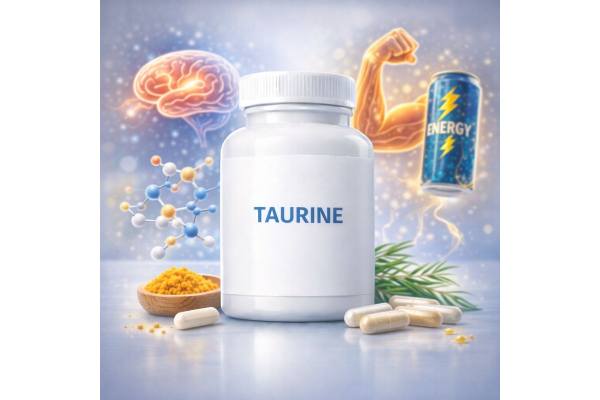
Taurine has moved from the fine print on energy drink labels into serious scientific discussion. This sulfur-containing compound is often called an amino acid, but it behaves differently from the ones that build proteins. It is highly concentrated in your heart, brain, eyes, and immune cells, where it helps control calcium balance, fluid regulation, bile acid formation, and antioxidant defenses. Research over the last decade has explored taurine for blood pressure, metabolic health, heart function, exercise performance, and potential healthy aging support.
In this guide, you will learn what taurine actually does in the body, where it comes from, and how it might support cardiovascular and metabolic health when used responsibly. You will also see realistic dosage ranges used in human studies, how to take it in daily life, and where caution is needed. The goal is not to sell taurine as a miracle, but to help you understand when it may be useful—and when it may not be the right choice.
Key Insights for Taurine Users
- Taurine supports cardiovascular, metabolic, and nervous system function and may help reduce blood pressure and improve some blood lipid markers.
- Typical supplemental intakes range from 500 mg to 3,000 mg per day, often divided into one to three doses with food.
- Human studies generally find taurine well tolerated up to 3,000 mg per day, with higher intakes (up to 10,000 mg per day for several months) tested but with limited long-term safety data.
- People who are pregnant, breastfeeding, under 18, or taking multiple prescription medicines should only use taurine under medical supervision.
- Individuals with significant heart, liver, or kidney disease, very low blood pressure, or seizure disorders should be especially cautious and consult a clinician before using taurine supplements.
Table of Contents
- What is taurine and why it matters
- Health benefits of taurine backed by research
- How much taurine per day is safe and effective
- How to use taurine for different goals
- Taurine side effects, interactions, and who should avoid it
- Taurine and longevity: what the science really shows
- Taurine from food vs supplements: which makes sense
What is taurine and why it matters
Taurine is an aminosulfonic acid, not a typical amino acid, because it lacks the carboxyl group needed to build proteins. Instead, it acts as a small, highly soluble signaling and protective molecule. It is abundant in the heart, retina, brain, skeletal muscle, platelets, and immune cells, sometimes reaching concentrations of several millimoles per liter in tissues. That high concentration is a clue that taurine does something important rather than being a metabolic bystander.
Your body can synthesize taurine from the sulfur-containing amino acids cysteine and methionine, with vitamin B₆ as a cofactor. However, endogenous production is limited, and diet contributes significantly. Taurine is found almost exclusively in animal-derived foods such as shellfish, fish, dark poultry meat, and red meat. Typical daily intake in omnivores is often in the range of roughly 100 to 400 mg per day, though it varies widely by diet. Strict vegans generally consume very little taurine from food and rely almost entirely on internal synthesis.
At the cellular level, taurine helps regulate cell volume, stabilizes cell membranes, and participates in the formation of bile salts that aid digestion and fat absorption. It also supports calcium handling in heart and skeletal muscle cells, which influences contraction strength and rhythm stability. Taurine has antioxidant and anti-inflammatory roles as well, partly through forming taurine chloramine, a compound that can modulate excessive immune responses.
Because taurine is concentrated in tissues that are highly active and sensitive to oxidative stress—such as the heart and brain—its availability may become more relevant in states of chronic disease, high metabolic demand, or aging. This is one reason researchers are exploring whether targeted taurine supplementation could help restore resilience in these systems.
Health benefits of taurine backed by research
Human research on taurine is not as extensive as for some major nutrients, but several areas have promising data: cardiovascular health, metabolic regulation, antioxidant defense, and exercise performance. It is important to separate early signals from established clinical applications.
For cardiovascular health, multiple randomized trials in people with elevated blood pressure or prehypertension have tested doses around 1,500 to 3,000 mg per day. These studies report modest but meaningful reductions in systolic blood pressure (often in the range of 4 to 8 mmHg) and improvements in measures of vascular function such as arterial stiffness and endothelial function. Some older trials in heart failure patients also suggest improved exercise capacity and ejection fraction when taurine is added to standard therapy, though sample sizes are small and follow-up is short.
Metabolic health is another emerging area. Recent systematic reviews and meta-analyses of randomized controlled trials in adults with overweight, obesity, or type 2 diabetes have found that taurine supplementation can reduce fasting triglycerides, total cholesterol, and, in some groups, fasting glucose, insulin, and markers of insulin resistance. Trials often use doses of 1,500 to 3,000 mg per day for eight to sixteen weeks. The improvements are modest but consistent enough to suggest that taurine may be a useful adjunct to diet and exercise interventions, not a replacement for them.
There is also clinical evidence that taurine can enhance antioxidant defenses. In one controlled trial in women aged 55 to 70 years, 1,500 mg of taurine daily for sixteen weeks increased levels of the antioxidant enzyme superoxide dismutase and blunted markers of oxidative damage compared with placebo. Other human studies in obesity and chronic disease contexts show reduced markers of inflammation and oxidative stress after taurine supplementation, often accompanied by improved adipokine profiles such as higher adiponectin.
In sports and exercise, taurine is commonly marketed as a performance enhancer. Acute doses of 1,000 to 2,000 mg taken before exercise have produced small improvements in time-to-exhaustion or perceived exertion in some studies, particularly for high-intensity efforts. However, not all trials find a benefit, and long-term supplementation does not universally improve endurance or strength. Overall, the best-supported areas for taurine today are modest improvements in blood pressure, some lipid and glucose markers, and markers of oxidative stress, rather than dramatic performance gains or disease reversal.
How much taurine per day is safe and effective
When thinking about taurine dosage, it helps to distinguish three layers: what most people get from food, what has been tested in clinical trials, and what is considered a reasonable upper limit for safety in supplements.
From a typical mixed diet, many adults consume roughly 100 to 400 mg of taurine per day, primarily from meat and seafood. Energy drinks may add another 1,000 to 3,000 mg per serving, but they also include caffeine and other stimulants, which complicates safety assessment. Vegans often consume negligible taurine from diet, although their bodies still synthesize some.
In clinical studies, supplemental taurine doses usually fall between 500 mg and 6,000 mg per day. For cardiovascular and metabolic endpoints, 1,500 to 3,000 mg daily—often split into two or three doses with meals—is common. Some hepatology and portal hypertension trials have used doses up to 6,000 mg per day for a few weeks. Reviews of safety data and monographs from evidence-based drug information sources note that no meaningful adverse effects have been reported at doses up to 3,000 mg per day in adults, and doses as high as 10,000 mg per day have been tested for several months without clear toxicity, although long-term data are still sparse.
For most adults considering taurine as a general health adjunct, pragmatic ranges are:
- 500 to 1,000 mg per day for low-intensity support (for example, in a multicomponent longevity stack or sleep formula).
- 1,500 to 3,000 mg per day for targeted support of blood pressure, lipids, or glycemic control, ideally under medical guidance if you have diagnosed conditions.
A conservative way to start is 500 mg once daily with food for one to two weeks, then gradually increase by 500 mg steps to a target of 1,500 to 2,000 mg per day if tolerated and clinically appropriate. Splitting the total into two or three doses may reduce mild digestive discomfort. Exceeding 3,000 mg per day regularly is generally not necessary for most goals and should be reserved for supervised clinical use, especially if taken for more than a few months.
Children, adolescents, pregnant or breastfeeding individuals, and anyone with advanced heart, liver, or kidney disease should not self-prescribe taurine at these doses. In these groups, any taurine supplementation above what is present in routine diet or infant formula should be discussed with a qualified clinician.
How to use taurine for different goals
Taurine is not a single-purpose supplement. How you use it depends on your primary goal, your overall health, and what other changes you are making at the same time. Below are practical frameworks rather than rigid protocols; they should be adapted with professional input where needed.
For blood pressure and cardiovascular support, most human trials use 1,500 to 3,000 mg per day, usually divided into two or three doses. Taurine is best viewed as an add-on to lifestyle measures such as reducing sodium, increasing potassium-rich foods, exercising regularly, controlling weight, and limiting alcohol. It is not a replacement for prescribed antihypertensive medication. A common pattern is 1,000 mg with breakfast and 1,000 mg with dinner, reassessing blood pressure after six to eight weeks using a validated home monitor. Any medication adjustments should be managed by your doctor.
For metabolic health and weight-related goals, taurine is often combined with a calorie-appropriate, whole-food diet and regular physical activity. In studies involving overweight or obese adults, doses around 1,500 to 3,000 mg per day for several months have improved triglycerides, total cholesterol, and markers of insulin resistance. It can fit well into morning or mealtime supplement routines because it does not usually cause stimulation or sedation. People already on glucose-lowering medications should monitor for symptoms of low blood sugar and coordinate care with their clinician.
For antioxidant and healthy aging support, lower to moderate doses can be reasonable, especially in older adults who may have lower taurine status. A structured but cautious approach might be 1,000 to 1,500 mg per day, taken with meals and reassessed every three to six months. In this context, taurine should be one part of a broader strategy that includes movement, sleep optimization, adequate protein intake, and management of blood pressure and lipids.
For exercise performance and recovery, some athletes use 1,000 to 2,000 mg about one to two hours before high-intensity sessions, sometimes combined with a daily baseline dose. This approach aims to capitalize on taurine’s roles in calcium handling and membrane stabilization in muscle cells, as well as potential reduction in exercise-induced oxidative stress. Evidence is mixed, so it makes sense to treat taurine as an experiment: track performance, perceived exertion, and recovery over several weeks, and discontinue if you see no clear benefit.
In every case, taurine should be introduced thoughtfully, ideally one variable at a time. Because it is present in many energy drinks, it is also wise to avoid layering a high-dose taurine supplement on top of multiple taurine-containing beverages.
Taurine side effects, interactions, and who should avoid it
Taurine is generally well tolerated in healthy adults at doses up to 3,000 mg per day, and even higher intakes have not consistently produced serious adverse effects in clinical research. However, “generally well tolerated” does not mean universally safe, and there are important caveats.
Commonly reported minor side effects include digestive upset (such as nausea, soft stools, or abdominal discomfort), mild headache, or a sense of restlessness when taken for the first time or in large doses at once. These often improve when taurine is taken with food, when the dose is reduced, or when the total amount is split into smaller doses throughout the day. If symptoms persist or are severe, discontinuation and medical evaluation are appropriate.
More serious concerns arise from indirect or theoretical mechanisms. Taurine can lower blood pressure, which is desirable for someone with hypertension but could contribute to dizziness in people with already low blood pressure or those on multiple antihypertensive medications. Taurine also interacts with neurotransmission, including gamma-aminobutyric acid (GABA) pathways, so individuals with seizure disorders or on multiple central nervous system–active drugs should be cautious. Some data suggest taurine can affect cytochrome P450 2E1, a liver enzyme; in theory, this could alter how certain medications are metabolized.
Energy drinks deserve special mention. They often contain 1,000 to 3,000 mg of taurine per serving alongside high doses of caffeine and sugar or other stimulants. Reports of cardiovascular events in energy drink users likely reflect combined effects of caffeine, other ingredients, intense physical exertion, and sometimes alcohol, rather than taurine alone. Still, if you already consume energy drinks, adding a separate taurine supplement can push your total intake higher than intended.
Groups that should avoid unsupervised taurine supplementation at moderate or high doses include:
- People who are pregnant or breastfeeding, due to limited safety data at supplemental doses.
- Children and adolescents, unless taurine is included in formula or specialized nutrition products under medical guidance.
- Individuals with advanced kidney or liver disease, where altered clearance could change taurine’s effects.
- People with very low resting blood pressure, a history of fainting, or on complex antihypertensive regimens.
- Individuals with seizure disorders or on multiple psychiatric or neurologic medications, unless carefully supervised.
If you experience chest pain, palpitations, severe dizziness, shortness of breath, or neurological symptoms after starting taurine, you should stop taking it and seek urgent medical evaluation.
Taurine and longevity: what the science really shows
Taurine has attracted attention as a potential “longevity nutrient.” Animal studies have reported that taurine supplementation can extend lifespan in worms, mice, and some other model organisms, and human observational research suggests that higher taurine levels or taurine-rich diets correlate with better cardiovascular profiles in certain populations. More recently, comprehensive reviews have outlined ways in which taurine influences hallmarks of aging, including mitochondrial function, oxidative stress, inflammation, and metabolic regulation.
However, there are several important limitations. First, lifespan extension in short-lived laboratory animals does not automatically translate into increased lifespan in humans. The doses used in animal studies, when scaled to humans, are often large and given under tightly controlled conditions. Second, there are currently no long-term randomized trials in humans showing that taurine supplementation extends lifespan or reduces hard endpoints such as heart attacks, strokes, or mortality. Most human studies focus on intermediate markers, such as blood pressure, lipid levels, or antioxidant enzyme activity, and follow participants for weeks to months rather than years.
What can reasonably be said is that taurine appears to support systems that tend to erode with age—vascular function, metabolic flexibility, and cellular stress responses. For example, controlled trials in older adults have demonstrated improvements in antioxidant capacity and reductions in oxidative damage markers with 1,500 mg of taurine daily. Meta-analyses in adults with overweight or obesity show better lipid profiles and insulin sensitivity over time. Reviews integrating basic and clinical data argue that maintaining adequate taurine status might help buffer age-related decline in cardiovascular and metabolic health.
This makes taurine a plausible candidate for inclusion in a broader healthy aging strategy, not a stand-alone antiaging drug. Its potential value likely lies in helping maintain function over decades when combined with foundational behaviors: not smoking, staying physically active, eating a nutrient-dense diet, maintaining healthy sleep, and managing blood pressure, lipids, and glucose. Using taurine while neglecting those fundamentals is unlikely to deliver meaningful longevity benefits.
For individuals interested in longevity protocols, reasonable use might involve moderate doses (for example, 1,000 to 1,500 mg per day) layered on top of solid lifestyle habits and regular medical care. Decisions about higher doses or multi-supplement “stacks” are best made with a clinician experienced in preventive and functional medicine, especially given the lack of long-term outcome data.
Taurine from food vs supplements: which makes sense
Before reaching for a capsule, it is useful to understand how much taurine you can realistically obtain from your diet and whether supplementation adds something meaningful. Taurine is abundant in animal products, especially seafood. Shellfish such as scallops, mussels, and clams, as well as dark meat from turkey and chicken, and various cuts of beef and lamb, can contain hundreds of milligrams of taurine per 100 grams of cooked food. Fish such as mackerel or salmon also contribute significant amounts. Taurine is relatively heat stable, so normal cooking does not destroy it.
If you eat several servings of these foods per day, your taurine intake may already be close to the lower end of doses used in some trials, especially if your overall protein intake is high. In that case, the marginal benefit of adding a small supplement may be modest, although targeted use (for example, around exercise or during specific health efforts) might still be of interest. On the other hand, if you rarely eat animal products or follow a vegan diet, your dietary taurine intake is probably very low, and modest supplementation may help approximate the intake of omnivorous diets.
There is currently no routine clinical test that tells you your “taurine status” in a way that guides precise dosing, and taurine levels are not part of standard blood work. Instead, decisions rely on diet history, health status, and specific goals. For some people, focusing on taurine-rich foods first is a practical step: increasing seafood intake several times per week, choosing dark poultry meat occasionally, and ensuring adequate protein. This approach also improves other nutrients associated with better health, such as omega-3 fatty acids, B vitamins, and trace minerals.
Supplements become more relevant when you have a clear clinical goal that has been studied with specific doses—such as supporting blood pressure, triglycerides, or markers of oxidative stress—or when dietary approaches are constrained by ethics, allergies, intolerances, or lack of access to certain foods. In that setting, taurine can offer a controlled, measurable intake that is hard to achieve with diet alone.
Ultimately, taurine from food and taurine from supplements should be viewed as two tools that can be combined thoughtfully. Many people will benefit from optimizing diet first, and then considering a supplement if there is a defined reason, a clear dosing plan, and appropriate medical oversight.
References
- Functional Role of Taurine in Aging and Cardiovascular Health: An Updated Overview 2023 (Systematic Review)
- Taurine reduces the risk for metabolic syndrome: a systematic review and meta-analysis of randomized controlled trials | Nutrition & Diabetes 2024 (Systematic Review and Meta-Analysis)
- Effect of Long-Term Taurine Supplementation on the Lipid and Glycaemic Profile in Adults with Overweight or Obesity: A Systematic Review and Meta-Analysis 2025 (Systematic Review and Meta-Analysis)
- Taurine as a possible antiaging therapy: A controlled clinical trial on taurine antioxidant activity in women ages 55 to 70 2022 (RCT)
- Taurine Supplementation Lowers Blood Pressure and Improves Vascular Function in Prehypertension: Randomized, Double-Blind, Placebo-Controlled Study 2016 (RCT)
Disclaimer
The information in this article is for general educational purposes only and is not a substitute for personalized medical advice, diagnosis, or treatment. Taurine supplements can influence blood pressure, metabolic markers, and nervous system function, and may interact with prescription or over-the-counter medications. Always consult a qualified health professional before starting, stopping, or changing any supplement, especially if you are pregnant or breastfeeding, under 18 years old, living with chronic medical conditions, or taking regular medications. Never delay seeking or disregard professional medical advice because of information you have read online. Your healthcare provider is the best person to help you decide whether taurine is appropriate for your specific situation.
If you found this guide useful, please consider sharing it with others on Facebook, X (formerly Twitter), or any platform you prefer, and follow our work on social media. Your support in sharing our content helps our team continue to research, write, and provide high-quality health information for readers around the world.