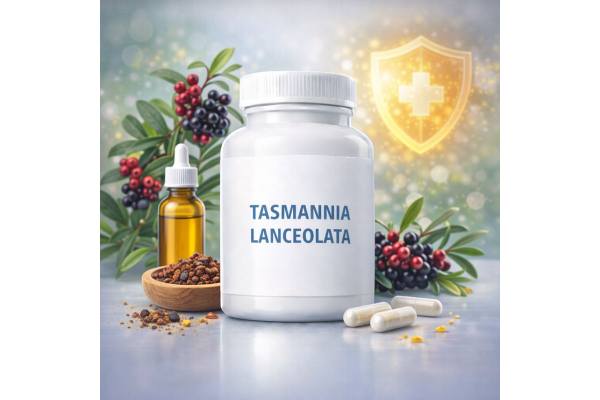
Tasmannia lanceolata, often called Tasmanian pepperberry or mountain pepper, is an aromatic shrub native to the cool forests of south-eastern Australia. Its berries and leaves have long been used as a spicy food ingredient, and today they also appear in functional foods, herbal supplements, and skincare products. Interest in this plant has grown because its berries and leaves contain high levels of antioxidant polyphenols and a pungent compound called polygodial, linked to antimicrobial and preservative activity in laboratory and food studies.
People are now exploring Tasmanian pepperberry for general wellness support, digestive comfort, skin appearance, and natural food preservation. At the same time, clinical research in humans is still limited, and most data come from test-tube or animal models. This guide walks you through what is currently known about Tasmannia lanceolata, how it is used, common dosage ranges in products, potential benefits and side effects, and who should be cautious or avoid it altogether.
Key Facts for Tasmannia lanceolata
- Tasmanian pepperberry and leaf are rich in antioxidant polyphenols and the pungent compound polygodial, which shows antimicrobial effects in laboratory studies.
- Early research suggests potential benefits for food preservation, skin appearance, and gastrointestinal balance, but robust human clinical data are still limited.
- Culinary use often involves up to around 1–2 g of dried berry or leaf per day spread across meals; supplement products commonly provide about 300–500 mg of dried powder once or twice daily, following label directions.
- Side effects may include mouth or stomach irritation, especially at higher intakes or in sensitive individuals, and concentrated extracts should be introduced gradually.
- Pregnant or breastfeeding women, children, people with significant liver, kidney, or gastrointestinal disease, and anyone taking multiple medications should avoid high-dose Tasmannia lanceolata supplements unless advised by a qualified healthcare professional.
Table of Contents
- What is Tasmannia lanceolata used for?
- Proven and potential health benefits
- How Tasmannia lanceolata works in the body
- Practical ways to use pepperberry daily
- Typical dosage and how to take it
- Side effects interactions and who should avoid it
- What the research says about safety and efficacy
What is Tasmannia lanceolata used for?
Tasmannia lanceolata is an evergreen shrub that grows in cool, high-rainfall areas of Tasmania and mainland south-eastern Australia. It produces dark, peppery berries and narrow lance-shaped leaves, which is where the species name “lanceolata” comes from. In everyday language, you will often see it sold as Tasmanian pepperberry, mountain pepper, or simply “pepper leaf.”
Traditionally, Indigenous Australians used the aromatic leaves and berries to flavour foods and, in some regions, as part of local medicinal practices. In modern cuisine, the dried berries are ground as a substitute for black pepper, with a flavour that starts fruity and mild before turning intensely hot and lingering. The leaves are used like bay leaves or mixed herbs, giving sauces, marinades, and stews a herbal, pepper-like note.
Beyond the kitchen, Tasmannia lanceolata has become a “bushfood” ingredient in gourmet products. You may find it in:
- spice blends and rubs
- flavoured oils, vinegars, or sauces
- infused chocolates, cheeses, and cured meats
- herbal teas and functional beverages
In the wellness and cosmetic space, the plant is also used in:
- capsules or tablets containing dried berry or leaf powder, marketed for antioxidant or general wellness support
- standardized extracts added to complex herbal formulas for digestive comfort or immune support
- topical products such as creams or serums, especially those targeting skin tone, firmness, or stretch marks
In food technology, pepper leaf extract has been tested as a natural preservative, helping limit fungal growth and extend the shelf life of certain products. However, while these uses are promising, they rely largely on laboratory data and small studies rather than large, long-term clinical trials.
Overall, Tasmannia lanceolata is best understood as a spicy culinary ingredient with emerging roles in natural preservation and skincare, and only a modest but growing role as a dietary supplement.
Proven and potential health benefits
Interest in Tasmannia lanceolata as more than a flavouring comes from its unusually high content of polyphenols and other phytochemicals. Leaves and berries show strong antioxidant capacity in laboratory tests, often higher than many commonly cited “superfruits.” These antioxidant compounds help neutralize reactive oxygen species in test systems and may, in theory, support the body’s defence against oxidative stress when consumed as part of a balanced diet.
The plant also contains polygodial, a pungent drimane sesquiterpenoid responsible for much of its hot taste. In vitro and food-based studies suggest that polygodial-rich extracts can inhibit the growth of various fungi and bacteria, including organisms that spoil food. For example, pepper leaf extracts have been used to reduce fungal contamination and extend the shelf life of fresh fruit in controlled conditions. This has led to interest in mountain pepper as a natural alternative or complement to synthetic preservatives in foods and beverages.
Another area of research is skin health. A cosmetic clinical trial using a Tasmannia lanceolata leaf extract in a cream found that regular topical application over several weeks improved the appearance of stretch marks compared with a placebo product, based on photographic analysis and skin firmness measurements. Laboratory work on human skin samples suggests that the extract may stimulate components of the extracellular matrix, such as collagen and elastin, which are important for skin structure and resilience.
There is also evidence that pepperberry extracts can inhibit certain gut parasites and pathogenic microbes in test-tube models. Extracts of the berry and leaf have been shown to reduce the growth of Giardia species and some bacteria associated with gastrointestinal disease, while exhibiting low toxicity in basic screening assays. These findings support its potential as a complementary antimicrobial agent, although there is not yet robust evidence that oral supplements improve gastrointestinal conditions in humans.
Finally, like many polyphenol-rich plants, Tasmannia lanceolata is being explored for possible metabolic, cardiovascular, and anti-inflammatory effects. Antioxidant and antimicrobial properties may indirectly support immune resilience and general wellbeing, but current evidence remains preliminary. At this stage, the strongest support is for its role as a natural preservative, skin-care ingredient, and antioxidant-rich food, rather than as a stand-alone treatment for specific diseases.
How Tasmannia lanceolata works in the body
The potential actions of Tasmannia lanceolata can be better understood by looking at its main bioactive components. Two broad groups are important: the pungent drimane sesquiterpenoids (especially polygodial) and a wide range of polyphenolic compounds.
Polygodial is a spicy, lipid-soluble molecule concentrated in the berries and leaves. It contributes to the strong burning, peppery sensation when you taste the spice. In cell and microbial studies, polygodial and related drimanes show antifungal and antibacterial activity, likely by disturbing cell membranes and interfering with energy metabolism in microbes. This membrane-disrupting effect appears to underlie its usefulness as a natural preservative in foods. When applied topically in controlled formulations, polygodial-containing extracts may also modulate inflammatory signalling and sensory receptors in the skin, possibly contributing to improvements in skin texture and discomfort in some cosmetic applications.
The second major group comprises polyphenols such as catechins, procyanidins, chlorogenic acid, quercetin derivatives, and various organic acids. These compounds act as antioxidants in laboratory systems, scavenging free radicals and influencing redox-sensitive pathways. In biological contexts, polyphenols can support the body’s antioxidant defences, modulate inflammatory cascades, and interact with signalling pathways involved in metabolism and vascular function. Pepperberry’s polyphenol profile is part of what makes it attractive for functional foods and nutraceutical formulations.
When consumed orally in culinary amounts, these compounds pass through the digestive tract where they may:
- interact with the gut microbiota, potentially influencing microbial balance and metabolite production
- contribute to local antimicrobial effects in the mouth and intestines
- be absorbed and metabolized by the liver, producing phase-II conjugates that circulate at low levels in the bloodstream
However, the actual concentrations that reach human tissues after typical dietary or supplemental doses are not well characterized. Most mechanistic insights come from in vitro studies using higher concentrations than would usually occur in the body.
For topical use, standardized extracts are formulated in creams or serums to deliver polygodial and polyphenols to the upper layers of the skin. These molecules may help protect skin structures from oxidative damage, support extracellular matrix components, and modulate local inflammatory mediators. Clinical evidence is still emerging, and results are most relevant to specific tested formulations rather than every pepperberry product.
Given these mechanisms, it is helpful to think of Tasmannia lanceolata as a multifunctional botanical that combines pungent antimicrobial drimanes with a complex antioxidant polyphenol matrix. The real-world effects depend strongly on the dose, preparation (culinary spice versus concentrated extract), and route of use (oral versus topical).
Practical ways to use pepperberry daily
For most people, the most accessible and safest way to experience Tasmannia lanceolata is as a culinary ingredient. Used in food, it contributes both flavour and beneficial phytochemicals, while helping keep intake within the range that people in Australia commonly consume.
Common culinary uses include:
- Ground pepperberry as a seasoning: Use it much like black pepper, but start with smaller amounts because the heat can build slowly and then become intense. A light sprinkle over eggs, roasted vegetables, grilled meats, or seafood can add a fruity, smoky heat.
- Whole or cracked berries in slow-cooked dishes: Adding berries to stews, casseroles, or braises allows their flavour to infuse over time. They are often removed before serving or left as soft, edible bursts of heat.
- Pepper leaf as a herb: Dried leaves can be crumbled into marinades, sauces, or savoury baking. Fresh leaves may be used similarly to bay leaves, added early in cooking and removed before serving.
- Infused oils or vinegars: Some people infuse pepperberry in olive oil or vinegar for salad dressings and finishing drizzles, capturing both aroma and colour.
If you are using the spice for the first time, a reasonable starting point is a pinch (about 100–200 mg) of ground berry or leaf per serving, adjusting gradually according to taste and tolerance. Across a day, many home cooks will use up to around 1–2 g spread across meals, although there are no formal upper limits established for healthy adults.
In supplement form, Tasmannia lanceolata may appear as:
- capsules with dried berry or leaf powder
- blended formulas that include pepper leaf extract alongside other herbs
- powders intended for smoothies or functional drinks
Because there is no standardized dosing framework, responsible products typically provide modest amounts of dried plant material or standardized extract and advise staying within label directions. Choosing products from manufacturers that provide information about extraction method, standardization (for example, polygodial or total polyphenols), and quality testing can improve transparency.
Topical products such as creams and serums may list “Tasmannia lanceolata leaf extract” or “Tasmanian pepperberry extract” on the ingredient label. These are typically used once or twice daily to target specific concerns such as skin redness, firmness, or stretch marks. As with any active cosmetic ingredient, patch testing on a small area of skin before broader use is a prudent step, especially for those with sensitive skin.
In everyday life, many people choose to focus on culinary and topical uses, viewing high-dose oral supplements as an option only after discussing potential risks and benefits with a healthcare professional.
Typical dosage and how to take it
There is currently no universally accepted therapeutic dose of Tasmannia lanceolata for humans. Most available guidance comes from culinary traditions, product labels, and safety evaluations rather than from large, controlled clinical trials. Because of this, dosage should be approached conservatively.
For culinary use, intake is usually measured in teaspoons and pinches rather than milligrams:
- Ground dried berry or leaf: many cooks use approximately 100–300 mg (a small pinch) per serving in place of black pepper.
- Daily culinary range: spreading around 500 mg to 2 g of dried spice across several meals is common in cooking traditions that include pepperberry.
At these levels, Tasmannia lanceolata functions primarily as a seasoning, and for most healthy adults, this is considered within a normal dietary exposure range. People with very sensitive digestion may still notice mouth or stomach irritation if they suddenly increase intake.
For oral supplements, products vary widely. Typical ranges seen on labels include:
- 300–500 mg of dried berry or leaf powder per capsule, taken once or twice daily with food
- blended formulations where pepper leaf extract is one of several ingredients, providing lower amounts per dose
- standardized extracts, sometimes quantified for polygodial or total polyphenols, in which daily intakes might range from around 50 mg to a few hundred milligrams of extract
Because polygodial and some polyphenols are biologically active, it is wise not to exceed the manufacturer’s suggested dose. When trying a new supplement, a stepwise approach is sensible:
- Start at the lowest dose suggested on the label, taken with a main meal to reduce the risk of stomach upset.
- Monitor for two to three days for any signs of mouth irritation, heartburn, abdominal pain, headache, rash, or other new symptoms.
- If tolerated, continue at that level rather than escalating unless specifically advised by a professional who understands your health history.
People with smaller body size, older age, or complex medical conditions may wish to start at half of the typical product dose and only increase under supervision.
For topical use, follow the cosmetic product’s instructions. Many tested formulas apply once or twice daily to clean skin. Applying more frequently than recommended will not necessarily improve results and may increase the chance of irritation.
In all cases, it is crucial to remember that high-dose Tasmannia lanceolata supplementation is not necessary for general health. There is no strong evidence that taking more than food-like amounts provides extra long-term benefits, and safety data for long-term high-dose use remain limited.
Side effects interactions and who should avoid it
Although Tasmannia lanceolata is widely used as a culinary spice and appears generally well tolerated in food-level amounts, it is still a biologically active plant. Like other pungent, polyphenol-rich botanicals, it can cause side effects, especially when taken in concentrated extract form or at higher doses than those typically used in cooking.
Possible side effects include:
- burning or tingling sensations in the mouth or throat after consuming large amounts of ground berry or strong infusions
- stomach discomfort, cramping, or reflux-like symptoms in individuals with sensitive digestion or existing gastrointestinal conditions
- loose stools or mild nausea when high intakes are introduced suddenly
- skin redness, stinging, or irritation when topical products are applied to sensitive or broken skin
Allergic reactions to Tasmannia lanceolata are not commonly reported but are possible with any plant. Symptoms such as facial swelling, difficulty breathing, or widespread hives require immediate medical attention and permanent avoidance of the plant.
Potential interactions with medications are not well characterized. However, due to its polyphenol content and antimicrobial properties, there are theoretical concerns and prudent cautions:
- People taking multiple prescription medications, especially for cardiovascular disease, diabetes, or immune conditions, should discuss regular supplement use with their doctor or pharmacist.
- Very high intakes of polyphenol-rich extracts could, in theory, influence drug-metabolizing enzymes or transporters, although this has not been specifically established for pepperberry.
- Individuals using anticoagulants or antiplatelet agents should use caution, as with many herbal products, because changes in diet or supplements can sometimes affect bleeding risk.
Certain groups should avoid high-dose supplements or only use them under personalized medical guidance:
- Pregnant and breastfeeding women: There is insufficient safety data for concentrated oral extracts during pregnancy or lactation. Culinary use in normal food amounts is usually considered acceptable, but any additional supplementation should be discussed with a healthcare professional.
- Children and adolescents: Safety data for supplemental doses in younger people are lacking. Limiting exposure to standard food uses is the most cautious approach.
- People with chronic liver or kidney disease: Because these organs are involved in processing bioactive compounds and their metabolites, additional herbal burdens should be assessed by a specialist.
- Individuals with active gastrointestinal ulcers, severe reflux, or inflammatory bowel disease: The pungency and antimicrobial effects of polygodial may aggravate symptoms in some cases.
For topical products, those with very sensitive skin, eczema, rosacea, or a history of cosmetic intolerance should patch-test new formulations and avoid application to broken or inflamed skin unless advised otherwise by a dermatologist.
Overall, moderate culinary use is unlikely to cause serious problems in most healthy adults, but concentrated extracts demand more caution because long-term human data are still limited.
What the research says about safety and efficacy
The scientific evidence on Tasmannia lanceolata has expanded in recent years but remains at an early stage compared with many better-known herbs. Most data come from phytochemical analyses, in vitro experiments, animal models, and a small number of human or ex vivo studies.
Phytochemical and analytical research has documented that both berries and leaves contain a wide spectrum of polyphenols, including catechins, procyanidins, ellagitannins, and various organic acids, alongside the pungent drimane polygodial. These compounds contribute to strong antioxidant scores and measurable antimicrobial activity against several food-borne and pathogenic microbes in laboratory systems. Extracts have shown the ability to inhibit bacteria and fungi and to reduce growth of gastrointestinal parasites in cell-based assays.
Food science studies have explored pepper leaf extracts as natural preservatives. In controlled experiments, treatments containing defined concentrations of polygodial extended the shelf life of fresh fruit by limiting fungal contamination, sometimes tripling the period before significant spoilage occurred compared with untreated controls. Such findings support the use of Tasmannia lanceolata in food preservation and packaging technologies.
Safety assessments using model organisms, such as zebrafish embryos and simple invertebrate bioassays, have generally found low toxicity for many pepper leaf and berry extracts at concentrations relevant to potential future therapeutic applications, although higher concentrations can cause adverse developmental effects. These results highlight both the promise and the need for careful dose selection and further toxicological studies before widespread high-dose use.
In human-relevant models, a topical cosmetic study demonstrated that a standardized leaf extract applied for several weeks improved stretch mark appearance and skin firmness compared with placebo. Ex vivo work on human skin samples suggests support for extracellular matrix synthesis, aligning with observed cosmetic benefits. However, these results apply to specific formulations and usage regimens and cannot be automatically generalized to all products on the market.
Notably, there is a lack of large, long-term randomized trials testing oral Tasmannia lanceolata supplements for defined clinical endpoints such as cardiovascular disease, metabolic health, or infection outcomes. At present, any claims that pepperberry supplements prevent or treat specific diseases go beyond the strength of the evidence. The most defensible positions are that:
- it is a flavourful, antioxidant-rich culinary ingredient
- it shows promising antimicrobial and preservative effects in foods
- certain topical formulations have early clinical support for cosmetic skin benefits
Future research priorities include detailed human pharmacokinetic studies, longer-term safety trials at various dose levels, and well-designed clinical trials that focus on realistic outcomes. Until such data are available, Tasmannia lanceolata is best approached as part of a varied diet and targeted cosmetic routines, rather than as a primary therapeutic agent.
References
- Phytochemical and Safety Evaluations of Finger Lime, Mountain Pepper, and Tamarind in Zebrafish Embryos 2022 (Experimental toxicology and antioxidant assessment)
- Valorisation of Three Underutilised Native Australian Plants: Phenolic and Organic Acid Profiles and In Vitro Antimicrobial Activity 2023 (Phytochemical profiling and antimicrobial activity)
- Phytochemical Analysis of Tasmannia lanceolata Extracts and Inhibition of Giardia duodenalis Proliferation 2016 (In vitro antiparasitic activity and toxicity screening)
- Investigating the Efficacy of Tasmannia lanceolata Extract in Inactivating Fungi and Prolonging the Shelf Life of Date Fruit 2022 (Food preservation and antifungal efficacy)
- Tasmannia lanceolata leaf extract alleviates stretch mark appearance in a randomized, placebo-controlled clinical trial in women and stimulates extracellular matrix synthesis in ex vivo human skin explants 2021 (Cosmetic clinical trial and skin biology)
Disclaimer
The information in this guide is intended for general educational purposes and does not replace personalized medical advice, diagnosis, or treatment. Tasmannia lanceolata products are not approved to prevent, treat, or cure any disease, and most current evidence is based on laboratory, animal, or small human studies. Always consult a qualified healthcare professional before starting, stopping, or changing any supplement, particularly if you are pregnant or breastfeeding, have an existing medical condition, or take prescription or over-the-counter medications. Never delay seeking professional medical care because of information you have read online.
If you found this article helpful, please consider sharing it on Facebook, X (formerly Twitter), or any platform you prefer, and follow our work on social media. Your support in sharing our content helps our team continue to research, write, and publish clear, evidence-informed resources on emerging supplements and natural ingredients.