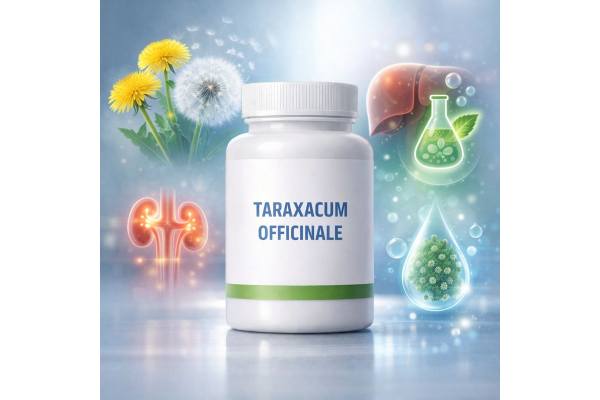
Taraxacum officinale, better known as common dandelion, is far more than a stubborn lawn weed. Its roots, leaves, and flowers have a long history in European, Asian, and North American herbal traditions for supporting digestion, liver function, urinary health, and general vitality. Today, dandelion appears in teas, tinctures, capsules, and functional foods, promoted for antioxidant, diuretic, and anti-inflammatory effects.
Modern research is beginning to explain why. Dandelion contains a dense mix of polyphenols, sesquiterpene lactones, inulin, minerals, and vitamins that may help protect cells from oxidative stress, support bile flow, and modestly increase urine output. At the same time, the evidence base is still evolving, and most data come from animal and in vitro experiments rather than large human trials.
This guide walks through what Taraxacum officinale is, how it may work, where it seems most promising, how people typically use it, and what to know about safe dosing and side effects before you consider adding it to your routine.
Key Insights for Taraxacum officinale
- Taraxacum officinale root and leaf are traditionally used to support digestion, liver function, and mild fluid retention.
- Its polyphenols, sesquiterpene lactones, and inulin may provide antioxidant, anti-inflammatory, and prebiotic effects.
- Typical supplemental intake ranges from about 500–1,500 mg of standardized extract per day, divided into 2–3 doses.
- People with ragweed or related plant allergies, gallbladder obstruction, or significant kidney disease should avoid unsupervised use.
- Dandelion can interact with diuretics, lithium, and some diabetes drugs, so medical guidance is important if you use these medicines.
Table of Contents
- What is Taraxacum officinale and how is it used?
- Key health benefits of Taraxacum officinale
- Active compounds and how they support health
- How to take Taraxacum officinale in practice
- Taraxacum officinale dosage how much per day?
- Side effects, safety and who should avoid it
- What does the research say overall?
What is Taraxacum officinale and how is it used?
Taraxacum officinale is a perennial plant in the Asteraceae family with deeply toothed leaves, hollow stems, and bright yellow composite flowers that mature into the familiar fluffy seed heads. Almost every part of the plant is edible and has been used as food or medicine: young leaves as salad greens, flowers in wines or syrups, and roots as a roasted coffee substitute or decoction.
In traditional European and Asian herbalism, dandelion was regarded as a “drainage” remedy. Practitioners used the root to stimulate bile flow and digestion and the leaves as a mild diuretic to relieve feelings of bloating or heaviness. Some folk systems also used it for skin conditions, joint stiffness, and supporting recovery after illness, reflecting the broader idea of “purifying” the blood and organs.
Modern products usually separate root and aerial parts based on their primary applications:
- Root: commonly marketed for liver and digestive support, sometimes combined with other choleretic herbs.
- Leaf: more often positioned for urinary and kidney support or for maintaining healthy fluid balance.
- Whole plant or blends: included in detox teas, bitters formulas, and multi-herb liver or kidney tonics.
People use Taraxacum officinale today in several ways:
- As a food: fresh leaves in salads, cooked greens, or added to soups.
- As tea: dried root or leaf infused in hot water, often consumed between meals.
- As supplements: capsules, tablets, glycerites, and tinctures providing standardized or crude extracts.
- As topical preparations: less common, but some traditional uses exist for minor skin issues.
While its culinary use is generally considered low risk, concentrated extracts behave more like herbal medicines. Understanding the difference between a salad made with a handful of leaves and a capsule containing a gram of extract is important for safety and expectations.
Key health benefits of Taraxacum officinale
Research on Taraxacum officinale explores several potential health benefits, mostly in preclinical models with a modest number of human studies. These are the main areas of interest:
1. Digestive and liver support
Dandelion root has a long history as a bitter digestive herb. Bitters stimulate receptors in the mouth and upper gut, which can enhance gastric secretion, bile flow, and motility. Experimental studies suggest dandelion extracts may:
- Increase bile production and flow.
- Support antioxidant defenses in liver cells exposed to toxins.
- Help regulate fat accumulation and inflammatory signaling in the liver.
These findings align with its traditional use for sluggish digestion, feelings of fullness after meals, and general liver “tone,” though robust human clinical data are still limited.
2. Mild diuretic and fluid balance effects
Dandelion leaf is well known for promoting urination. Animal models and a small pilot study in humans suggest that certain leaf extracts can increase urine frequency and excretion over several hours without major changes in electrolyte balance. For people who feel puffy or retain fluid mildly, this effect may be perceived as relief of bloating or heaviness. It is not, however, a substitute for prescribed diuretics in heart or kidney disease.
3. Antioxidant and anti-inflammatory activity
Phenolic acids, flavonoids, and sesquiterpene lactones in Taraxacum officinale show strong antioxidant and anti-inflammatory actions in cell and animal studies. These compounds help neutralize free radicals, modulate inflammatory mediators, and may protect tissues such as liver, kidney, and vascular endothelium from oxidative stress.
4. Blood sugar and metabolic parameters (early data)
Some preclinical work suggests dandelion extracts can influence insulin secretion, glucose uptake, and lipid metabolism, hinting at potential supportive roles in metabolic health. These findings are preliminary and do not replace established treatments but help explain why dandelion appears in some metabolic or “detox” blends.
5. Gut microbiome and prebiotic effects
Dandelion root is rich in inulin, a fermentable fiber that serves as food for beneficial gut bacteria. Regular intake of inulin-rich foods can support a healthier microbiome, which indirectly influences digestion, immunity, and metabolic parameters. Dandelion’s prebiotic contribution depends strongly on the amount and form consumed.
Overall, the most plausible benefits at typical supplemental doses relate to digestion, mild diuresis, and antioxidant support, with more ambitious claims (for example, anticancer) remaining speculative in humans.
Active compounds and how they support health
Taraxacum officinale is chemically complex. Its potential effects come from multiple classes of constituents that may act together rather than a single active molecule.
Key groups of compounds include:
- Sesquiterpene lactones (such as taraxinic acid and related molecules)
- Phenolic acids (including chlorogenic, caffeic, chicoric, and caftaric acids)
- Flavonoids (such as luteolin, luteolin-7-O-glucoside, quercetin, and rutin)
- Triterpenes and sterols (taraxasterol, β-sitosterol, stigmasterol)
- Polysaccharides and inulin (soluble fibers with prebiotic properties)
- Vitamins and minerals, particularly potassium, magnesium, and vitamin K in the leaves
These compounds are distributed differently in roots, leaves, and flowers:
- Roots tend to be richer in inulin, certain triterpenes, and phenolic acids.
- Leaves contain high levels of potassium, flavonoids, and chlorophyll.
- Flowers are particularly rich in flavonoids and carotenoids, contributing strong antioxidant capacity.
How these constituents may support health:
- Antioxidant defense
Phenolic acids and flavonoids can scavenge reactive oxygen species and upregulate endogenous antioxidant enzymes. This may protect liver, kidney, and vascular tissues from oxidative injury in experimental models. - Anti-inflammatory modulation
Sesquiterpene lactones and certain phenolic compounds can reduce the production of inflammatory mediators such as nitric oxide, prostaglandins, and specific cytokines in cell models. This could partly explain observed benefits in inflammatory and liver injury models. - Choleretic and digestive actions
Bitter sesquiterpene lactones and triterpenes stimulate bitter receptors, encouraging saliva, gastric juice, and bile secretion. Increased bile flow helps emulsify fats, supports digestion, and may assist in the clearance of certain metabolic byproducts. - Diuretic and mineral effects
High potassium content in the leaves and certain phenolic compounds may contribute to an increase in urine volume. Unlike some pharmaceutical diuretics, dandelion appears less likely to deplete potassium at typical doses, although this has not been rigorously tested in large trials. - Prebiotic influence on the gut microbiome
Inulin resists digestion in the upper gut and reaches the colon, where it is fermented by beneficial bacteria. This fermentation produces short-chain fatty acids that nourish colon cells and influence inflammatory and metabolic pathways.
Because most studies are preclinical, we cannot assign exact contributions of each molecule to specific clinical outcomes. However, the combined profile of Taraxacum officinale makes it plausible that it could provide mild support across digestive, hepatic, urinary, and metabolic domains when used appropriately.
How to take Taraxacum officinale in practice
If you and your healthcare professional decide that Taraxacum officinale may be appropriate, the next step is choosing a form and pattern of use that fit your goals and health status. The same plant can feel very different depending on how it is prepared.
Common forms include:
- Dried herb teas (infusions and decoctions)
- Leaf tea: often used for mild diuretic and digestive support.
- Root decoction: simmered longer to extract bitters, inulin, and polyphenols for liver and digestive support.
- Tinctures and liquid extracts
- Alcoholic or hydroalcoholic extracts concentrate both water-soluble and alcohol-soluble compounds.
- Convenient for flexible dosing and combining with other herbs such as artichoke, milk thistle, or chicory.
- Capsules and tablets
- Contain powdered whole herb or standardized extracts of root, leaf, or both.
- Provide consistent doses but remove the sensory aspect of bitters, which may reduce some digestive effects.
- Food uses
- Young leaves eaten as salad greens or cooked like spinach.
- Roasted roots brewed as a coffee-like beverage.
Some practical considerations:
- Match the plant part to the goal
- For digestive and liver support, root or root-dominant blends are more common.
- For fluid balance and urinary support, leaf preparations are traditional.
- For general antioxidant intake, whole-plant mixtures or foods can make sense.
- Start low and go slow
People vary in their response to bitters, diuretic effects, and inulin content. Starting with a lower dose allows you to monitor for digestive discomfort, urgent urination, or allergic reactions. - Timing with meals
- Bitters for digestion are often taken 10–20 minutes before meals.
- Leaf teas for diuretic purposes are typically used earlier in the day to avoid disturbing sleep with nighttime urination.
- Capsules may be taken with food to reduce stomach upset.
- Duration of use
Dandelion is sometimes used for short, focused periods (for example, several weeks of digestive support) or as a lower-dose component of a long-term wellness routine. Continuous high-dose use, especially of concentrated extracts, should be supervised medically. - Combine with lifestyle measures
No herbal product can compensate for excessive alcohol, very high sugar intake, or a diet low in fiber and phytonutrients. Dandelion is best viewed as an adjunct to nutrition, sleep, movement, and stress management.
Always consider other medications, medical diagnoses, and allergies before deciding how to take Taraxacum officinale, and involve a qualified professional when in doubt.
Taraxacum officinale dosage how much per day?
Dosage for Taraxacum officinale is not standardized globally, and products vary widely in strength and composition. The following ranges are commonly used in herbal practice and product labels, but they are not formal dosing guidelines and are not a substitute for personalized medical advice.
Traditional dried herb ranges (adults)
- Dried leaf: often in the range of about 4–10 g per day, divided into two or three doses as tea or capsules.
- Dried root: about 2–8 g per day, typically prepared as a decoction (simmered) or taken as powder in capsules.
These amounts reflect whole herbal material. Extracts provide similar constituent exposure in smaller volumes.
Liquid extracts and tinctures
- Tincture (for example, 1:5 or 1:2 in 25–45 percent alcohol): label ranges may fall around 2–5 mL, up to three times daily.
- Glycerites or low-alcohol extracts: similar volume ranges, but potency depends on the herb-to-solvent ratio.
Because products differ, always follow the manufacturer’s instructions unless your clinician gives a customized regimen.
Standardized extracts and capsules
Many supplements provide 300–500 mg of dandelion extract per capsule. A typical daily intake might range:
- From 500 mg up to about 1,500 mg per day, divided into two or three doses.
Some liver or digestive formulas combine dandelion with other herbs, so the actual amount of Taraxacum officinale per serving may be lower.
Adjustments and cautions
- Body size and sensitivity: smaller or sensitive individuals may do better at the lower end of ranges.
- Kidney and heart conditions: because of potential diuretic effects and mineral shifts, people with these conditions need individualized dosing under medical supervision or may need to avoid dandelion entirely.
- Diabetes or blood sugar medications: experimental data suggest possible effects on glucose and insulin handling, so extra monitoring of blood sugar may be prudent.
If you notice symptoms such as cramping, urgent or excessive urination, dizziness, or skin rash after starting a dandelion product, reduce the dose or stop and seek guidance. In all cases, professional oversight is strongly recommended for long-term or high-intensity use.
Side effects, safety and who should avoid it
Taraxacum officinale is widely consumed as food and has a generally favorable safety profile when eaten in typical culinary amounts. However, concentrated extracts and medicinal doses carry real risks, especially for specific groups.
Common or mild side effects
At typical supplemental doses, reported side effects include:
- Gastrointestinal discomfort such as stomach ache, nausea, or mild diarrhea.
- Heartburn or worsening of existing reflux in some individuals.
- Increased urination, which is expected but can be inconvenient or disruptive.
- Skin rash or irritation, particularly after contact with fresh latex in sensitive people.
These effects often improve when the dose is lowered or the product is taken with food, but they should not be ignored.
Allergy and cross-reactivity
Dandelion belongs to the Asteraceae family. People allergic to plants such as ragweed, chrysanthemums, marigolds, or daisies may react to Taraxacum officinale. Reactions can include:
- Itching, hives, or rash.
- Swelling of lips or eyelids.
- In rare cases, more severe symptoms such as throat tightness.
Anyone with a history of serious plant allergies should approach dandelion only with medical supervision, if at all.
Interactions with medications
Key potential interactions include:
- Diuretics: dandelion’s own diuretic effect may amplify or unpredictably alter the action of prescribed diuretics, affecting fluid and mineral balance.
- Lithium: changes in kidney handling of fluids may influence lithium levels.
- Diabetes medications and insulin: experimental evidence that dandelion may impact blood sugar handling raises the possibility of additive effects with drugs.
- Drugs that rely on precise potassium or sodium balance: because dandelion leaf is high in potassium, there is theoretical potential to affect electrolytes, although this has not been well quantified in large trials.
Who should avoid Taraxacum officinale or use it only with strict medical oversight
- Individuals with known allergies to dandelion or other Asteraceae plants.
- People with obstructed bile ducts, significant gallstones, or acute biliary colic, due to the choleretic effect of the root.
- Those with moderate to severe kidney disease or heart failure, where fluid shifts can be dangerous.
- Pregnant or breastfeeding individuals, due to limited high-quality safety data at medicinal doses.
- People on multiple interacting medications, especially lithium, potent diuretics, or complex cardiac regimens.
Even when Taraxacum officinale is used in the context of a herbal protocol, clinicians often start at low doses, monitor symptoms, and may track relevant labs (for example, electrolytes or liver enzymes) in higher-risk patients.
What does the research say overall?
The scientific picture of Taraxacum officinale is evolving. Over the past decade, interest has grown in mapping its phytochemistry and testing its traditional uses in modern models. Several broad themes emerge:
- Rich phytochemical profile with consistent antioxidant and anti-inflammatory signals
Reviews of Taraxacum species highlight a wide range of polyphenols, flavonoids, sesquiterpene lactones, and polysaccharides with demonstrable antioxidant and anti-inflammatory effects in cells and animals. These findings are robust across different plant parts and extraction methods. - Promising hepatoprotective effects in preclinical models
Multiple animal and in vitro studies show that dandelion extracts can reduce markers of liver injury, improve antioxidant enzyme activity, and limit fibrosis in chemically induced liver damage. Early work continues to refine which extracts, doses, and compounds are most relevant. - Documented diuretic action with limited human data
A small, controlled human trial has confirmed increased urine frequency and excretion after ingestion of a leaf extract over a single day, supporting long-standing traditional claims. Larger and longer-term studies are still lacking, especially in clinical populations. - Broad but preliminary exploration of other indications
Experimental work continues around blood sugar, lipid metabolism, antimicrobial effects, immune modulation, and potential anticancer actions. These areas are intriguing but remain far from clinical recommendations. - Evidence quality and gaps
- Most studies use animal models or cell cultures, which may not predict human outcomes at typical supplemental doses.
- Extracts are often not standardized in a way that mirrors commercial products, making dose translation difficult.
- High-quality, randomized controlled human trials are scarce, especially for chronic conditions and long-term safety.
Taken together, current evidence supports viewing Taraxacum officinale as a promising supportive herb for digestion, mild fluid retention, and general antioxidant status, rather than as a primary treatment for serious disease. For now, it is best used as one component in a broader lifestyle and medical plan, under the guidance of a qualified practitioner, rather than as a stand-alone therapy.
References
- Dandelion (Taraxacum Genus): A Review of Chemical Constituents and Pharmacological Effects 2023 (Systematic Review)
- A comprehensive review of the benefits of Taraxacum officinale on human health 2021 (Systematic Review)
- Bioactive Compounds from Vegetal Organs of Taraxacum Species (Dandelion) with Biomedical Applications: A Review 2025 (Review)
- The Role of Dandelion (Taraxacum officinale) in Liver Health and Hepatoprotective Properties 2025 (Systematic Review)
- The diuretic effect in human subjects of an extract of Taraxacum officinale folium over a single day 2009 (Pilot Human Study)
Disclaimer
The information in this article is for educational purposes only and is not intended to diagnose, treat, cure, or prevent any disease. Taraxacum officinale products are dietary supplements and are not regulated to the same standard as prescription medicines. Effects and safety can vary according to the product used, dose, individual health status, and concurrent medications.
Always consult a qualified healthcare professional before starting, stopping, or changing any supplement or medication, especially if you are pregnant or breastfeeding, have liver, kidney, heart, or autoimmune disease, have known allergies to plants in the Asteraceae family, or take prescription drugs such as diuretics, lithium, or diabetes medications. Never delay or disregard professional medical advice because of something you have read online.
If you found this guide helpful, you are warmly invited to share it on Facebook, X (formerly Twitter), or any platform you prefer, and to follow our work on social media. Your support in sharing our articles helps our team continue to research, write, and update high-quality, evidence-informed content for readers around the world.