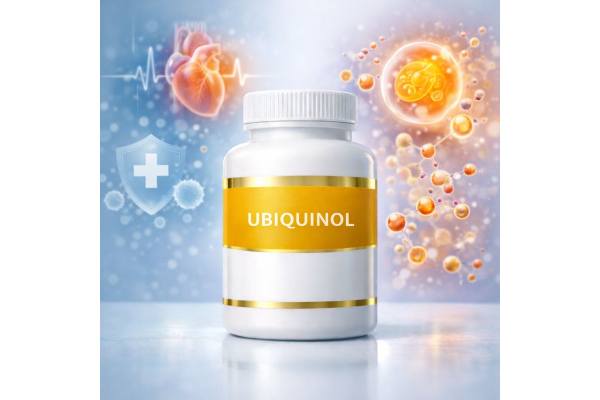
Ubiquinol is the “active” reduced form of coenzyme Q10 (CoQ10), a fat-soluble compound your cells use to generate energy and manage oxidative stress. If you’ve seen CoQ10 on a label, ubiquinol is closely related—it’s part of the same recycling pair your body constantly converts back and forth to keep mitochondria working. People most often explore ubiquinol for heart support, statin-associated muscle symptoms, migraine prevention, fertility support, and age-related energy changes. What makes it stand out is practicality: ubiquinol is often easier for some people (especially older adults) to absorb and use, and it’s gentle enough for long-term routines when chosen and dosed thoughtfully. This guide covers what ubiquinol is, what benefits are realistic, how to take it for best results, and the safety details that matter most.
Essential Insights
- Ubiquinol may support heart function and exercise capacity in some people, especially when baseline CoQ10 status is low.
- Taking it with a fat-containing meal can improve absorption compared with taking it on an empty stomach.
- Typical daily intake is 100–300 mg, with some short-term protocols using higher amounts under clinician guidance.
- It may interact with warfarin and can affect blood pressure or blood sugar in sensitive individuals.
- Avoid or use only with clinician oversight during pregnancy, breastfeeding, and active chemotherapy unless specifically approved.
Table of Contents
- What is ubiquinol and how is it different from CoQ10?
- What benefits are most supported by research?
- How ubiquinol works in your body
- How much ubiquinol should you take and when?
- How to choose a ubiquinol supplement that actually performs
- Side effects, interactions, and who should not take ubiquinol
What is ubiquinol and how is it different from CoQ10?
Ubiquinol is the reduced form of coenzyme Q10. You’ll also see the oxidized form called ubiquinone, and many supplements simply say “CoQ10” without specifying which one. Both forms belong to the same system: your body continually converts ubiquinone to ubiquinol and back again as part of normal energy production and antioxidant defense.
Here’s the simplest way to think about the difference:
- Ubiquinone is the oxidized form. It can be converted into ubiquinol inside the body.
- Ubiquinol is the reduced form. It can donate electrons (an antioxidant action) and can be converted back into ubiquinone when needed.
In practice, the “best” form is not universal. Some people do well with either form because conversion is normal physiology. Others—especially older adults, people under higher oxidative stress, or those with absorption challenges—may prefer ubiquinol because it can raise circulating CoQ10 status more efficiently in some contexts. That doesn’t mean ubiquinol is automatically superior for every goal; it means it can be a more reliable choice when you want predictable uptake and you’re willing to pay a bit more.
Another important reality: ubiquinol is less stable than ubiquinone. Because it’s the reduced form, it’s more prone to oxidizing back into ubiquinone when exposed to heat, light, and oxygen. A high-quality ubiquinol product compensates for this with protective packaging and appropriate carrier oils.
Finally, ubiquinol is not a stimulant and it isn’t a vitamin in the strict sense. It’s more accurately described as a vitamin-like, fat-soluble compound your body makes and also obtains from food in small amounts. Supplementing is mainly about raising tissue availability beyond typical dietary intake, especially when levels decline with age or medication use.
What benefits are most supported by research?
Ubiquinol is often marketed as a “cellular energy” supplement, but the best way to judge it is by specific outcomes people care about. Evidence varies by condition, dose, and how long it’s taken. Also, many studies examine CoQ10 broadly (including ubiquinone), so it’s helpful to treat ubiquinol as a form of CoQ10 with potential absorption advantages rather than a completely separate category.
Heart failure and cardiovascular support
The strongest clinical signal for CoQ10 supplementation is in heart failure, where multiple trials and meta-analyses suggest improvements in functional measures and some clinical outcomes when used alongside standard medical therapy. In research syntheses, people taking CoQ10 have shown improvements in markers such as exercise capacity (e.g., 6-minute walk distance) and modest shifts in cardiac function measures. This doesn’t replace heart medications, but it may serve as an adjunct in select patients under clinician oversight.
Statin-associated muscle symptoms (SAMS)
A common reason people try ubiquinol is muscle aches or weakness after starting statins. Research here is mixed, but more recent analyses of randomized trials show a small-to-moderate reduction in muscle pain intensity in some statin-treated individuals, often using doses in the 100–600 mg/day range for 1–3 months. A practical takeaway: if you’re going to trial it for SAMS, it’s reasonable to set a defined window (like 8–12 weeks) and track symptoms rather than taking it indefinitely without feedback.
Migraine prevention
For migraine prophylaxis, meta-analytic evidence suggests CoQ10 can reduce attack frequency and attack duration modestly, though effects on severity are less consistent. It’s not a rescue treatment; it’s a “prevention support” option that usually requires daily use for several weeks before judging.
Fertility and healthy aging (emerging areas)
CoQ10 is also studied for sperm parameters and age-related mitochondrial function. Results are promising in some populations, but the evidence is more variable and goal-dependent. If you’re using ubiquinol for fertility, think in terms of multi-month timelines and coordinated care, not a quick fix.
Bottom line: ubiquinol is best viewed as a targeted support tool—most compelling in heart failure adjunct care, potentially helpful for statin muscle symptoms and migraine prevention, and still evolving for performance and fertility.
How ubiquinol works in your body
Ubiquinol’s value comes from two overlapping jobs: energy production and redox balance (how the body manages oxidation and reduction reactions).
1) Mitochondrial energy support
Inside mitochondria, CoQ10 acts like a shuttle in the electron transport chain—moving electrons between complexes that ultimately drive ATP production (ATP is the cell’s usable energy currency). When CoQ10 availability is low, energy-demanding tissues can feel it first. That’s one reason CoQ10 is heavily discussed in the context of the heart, which is metabolically demanding and continuously active.
It’s also why people describe ubiquinol as helping with “fatigue” or “energy.” But that language can be misleading: ubiquinol doesn’t create energy from nothing; it supports a pathway that may become less efficient with age, illness, or medication effects.
2) Antioxidant recycling and oxidative stress control
Ubiquinol is the reduced form, which means it can donate electrons to neutralize reactive compounds. In plain terms, it can help limit oxidative damage to lipids and proteins, especially in cell membranes and lipoproteins. It also participates in antioxidant network behavior—supporting the recycling of other antioxidants under certain conditions.
This matters because oxidative stress tends to rise when mitochondria are strained, inflammation is higher, or metabolic conditions are present. If you’re using ubiquinol for “recovery” or “inflammation,” this is the logic behind it. Still, antioxidant support is not the same as anti-inflammatory drug action, and outcomes depend on the person’s baseline status.
3) Why “ubiquinol vs ubiquinone” can feel different
Even if the body converts between forms, the supplement experience can differ because of:
- Absorption and formulation: CoQ10 is fat-soluble and has naturally low oral absorption. The carrier oil, capsule design, and whether the product disperses well can matter as much as the form.
- Age and conversion capacity: Some people may convert less efficiently, which can make ubiquinol feel more dependable.
- Dose-response reality: Many benefits are linked to achieving sufficient circulating and tissue levels over time, not just taking a small dose sporadically.
A useful mindset is to treat ubiquinol as a “better delivery” option for CoQ10 support—especially when you want consistent uptake and you’re willing to invest in a well-made product.
How much ubiquinol should you take and when?
Ubiquinol dosing depends on your goal, your sensitivity, and how you respond. Most people do best with a dose that’s high enough to matter but low enough to stay comfortable and affordable.
Common daily ranges
- General wellness and healthy aging: 100–200 mg/day
- Migraine prevention (trial): often 100–300 mg/day
- Statin-associated muscle symptoms (trial): commonly 200–300 mg/day, with some studies using higher (up to 600 mg/day) for short periods
- Clinician-guided cardiovascular adjunct use: frequently 100–300 mg/day (individualized)
If you’re unsure where to start, 100 mg/day is a conservative entry point. If you’re targeting a specific outcome (like SAMS), 200 mg/day is a common practical dose. Higher doses are not automatically better; they’re mainly useful when a clinician is monitoring you, or when you’re doing a structured trial and tolerating it well.
Timing and absorption: make the dose count
Ubiquinol is fat-soluble. To improve absorption:
- Take it with a meal that contains fat (e.g., eggs, yogurt, olive oil, salmon, avocado).
- Split doses if you’re taking 200 mg/day or more, especially if you notice stomach upset.
- If you feel more alert after taking it, avoid late-evening dosing and shift it to breakfast or lunch.
How long until you see results?
Set realistic timelines:
- Energy and general wellbeing: 2–6 weeks (if it helps, you’ll usually feel a gradual change)
- Migraine prevention: 8–12 weeks is a fair trial window
- SAMS: 4–12 weeks, with symptom tracking
- Heart-related outcomes: typically longer-term and clinician guided
A practical approach is to choose one measurable target (fewer migraine days, lower muscle pain score, better exercise tolerance) and track it weekly. Ubiquinol is not a “one-dose proof” supplement; it’s a steady, level-building strategy.
How to choose a ubiquinol supplement that actually performs
With ubiquinol, product quality is not a minor detail—it’s part of whether it works at all. Because ubiquinol is sensitive to oxidation and CoQ10 absorption is naturally limited, a “cheap capsule” can underperform even if the label looks right.
Look for these performance signals
- Oil-based softgels: CoQ10 dissolves in fats. Softgels with carrier oils often absorb better than dry tablets.
- Protective packaging: Dark bottles, blister packs, and tight seals help limit light and oxygen exposure.
- Clear labeling of form and dose: The label should explicitly say “ubiquinol” and list milligrams per serving.
- Independent quality testing: A third-party mark (USP, NSF, Informed Choice, or equivalent) can reduce the risk of mislabeling and contamination.
Ubiquinol vs ubiquinone: when each makes sense
Choose ubiquinol if:
- You’re older, or you suspect absorption and conversion aren’t as efficient.
- You want a more “ready-to-use” form for a time-limited trial (migraine prevention, SAMS).
- You’ve tried standard CoQ10 and didn’t notice benefit.
Choose ubiquinone (standard CoQ10) if:
- Budget is a major factor and you can afford a higher dose if needed.
- You’re younger and generally healthy, and you respond well to standard formulations.
- Your clinician prefers one form based on your specific condition or the evidence base for your use case.
Importantly, some research discussions suggest that outcomes in certain cardiovascular contexts are more consistently demonstrated with CoQ10 trials that used the oxidized form. That doesn’t make ubiquinol “bad”; it means you should match the form to your goal and to what the evidence most directly supports.
Smart ways to trial ubiquinol without wasting money
- Pick one primary goal and measure it.
- Run a minimum 8-week trial for prevention-style goals.
- Keep your routine stable (sleep, caffeine, training load) so you can attribute changes more confidently.
- If nothing improves, don’t keep escalating dose indefinitely—switch strategy.
A high-quality ubiquinol product is a “pay for reliability” purchase. If cost forces compromises, you may be better off with a well-formulated standard CoQ10 than a poorly handled ubiquinol.
Side effects, interactions, and who should not take ubiquinol
Ubiquinol is generally well tolerated, but “safe” still means “use thoughtfully,” especially if you take prescription medications or manage a chronic condition.
Common side effects
Most side effects are mild and dose-related:
- Upset stomach, nausea, or loose stools
- Reduced appetite or mild abdominal discomfort
- Headache in some sensitive individuals
- Sleep disruption or feeling “wired” (more likely if taken later in the day)
If side effects occur, the first fixes are usually to take it with food, split the dose, or reduce the dose for a week and titrate up more slowly.
Medication interactions to take seriously
- Warfarin (and other anticoagulants): CoQ10 may reduce warfarin’s effect in some people, which can alter INR control. This is not a “guess and hope” situation—coordinate with the prescribing clinician and monitor appropriately.
- Blood pressure medications: Ubiquinol can modestly lower blood pressure in some individuals. If you already run low, watch for dizziness or lightheadedness.
- Diabetes medications and insulin: Some people notice small changes in glucose control. If you monitor blood sugar, pay attention during the first few weeks.
Also mention any supplement use to your clinician if you’re on complex regimens (transplant medications, chemotherapy agents, antiarrhythmics), because risk depends on your full medication picture.
Who should avoid ubiquinol or only use it with clinician oversight
- Pregnant or breastfeeding individuals: Safety data are limited, so use only if your clinician recommends it.
- People on warfarin: Use only with monitoring and professional guidance.
- Those preparing for surgery: Discuss stopping it ahead of time if your surgical team prefers minimizing supplements that could affect bleeding risk or blood pressure.
- Active cancer treatment: Because antioxidant strategies can be complicated in oncology, use only with oncology approval.
Red flags that should prompt stopping and getting help
Stop and seek medical advice if you experience:
- Severe rash, swelling, or breathing difficulty
- Persistent vomiting, severe abdominal pain, or black/tarry stools
- Fainting, marked dizziness, or unusually low blood pressure
- Any unexpected bleeding or bruising (especially if on anticoagulants)
Used responsibly, ubiquinol is often a low-drama addition. The key is not treating it like a harmless vitamin—treat it like a biologically active compound that deserves the same respect as any other long-term support strategy.
References
- Efficacy and safety of coenzyme Q10 in heart failure: a meta-analysis of randomized controlled trials – PubMed 2024 (Meta-analysis)
- Coenzyme Q10 supplementation for prophylaxis in adult patients with migraine-a meta-analysis – PubMed 2021 (Systematic Review and Meta-analysis)
- Effects of coenzyme Q10 supplementation on myopathy in statin-treated patients: a systematic review and meta-analysis – PubMed 2025 (Systematic Review and Meta-analysis)
- Comparison of Coenzyme Q10 (Ubiquinone) and Reduced Coenzyme Q10 (Ubiquinol) as Supplement to Prevent Cardiovascular Disease and Reduce Cardiovascular Mortality – PubMed 2023 (Review)
- Coenzyme Q10 – StatPearls – NCBI Bookshelf 2024 (Clinical Review)
Disclaimer
This article is for educational purposes only and does not provide medical advice, diagnosis, or treatment. Supplements like ubiquinol can interact with prescription medications (including anticoagulants such as warfarin) and may be inappropriate for people with certain medical conditions, during pregnancy or breastfeeding, or during active cancer treatment. Always talk with a qualified healthcare professional before starting, stopping, or changing the dose of any supplement—especially if you take prescription drugs, manage a chronic condition, or are preparing for surgery.
If you found this guide useful, please consider sharing it on Facebook, X (formerly Twitter), or any platform you prefer, and follow us on social media. Your support by sharing helps our team continue producing clear, trustworthy health content.