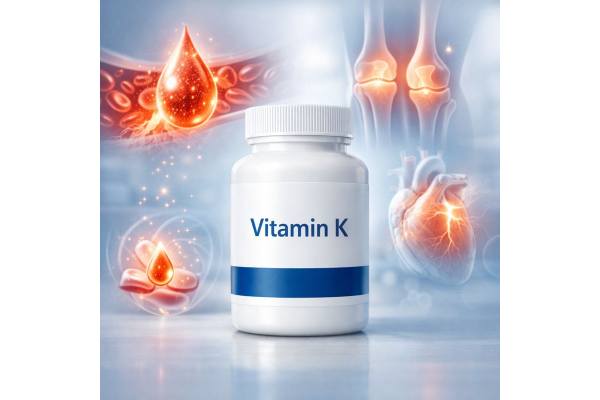
Vitamin K is a fat-soluble nutrient best known for its role in normal blood clotting, but its influence extends far beyond stopping a cut from bleeding. It helps “switch on” specific proteins by enabling a process called carboxylation—an activation step needed for clotting factors, bone proteins, and vascular (blood vessel) regulators to function properly. Vitamin K also comes in more than one form: vitamin K1 from leafy greens and vitamin K2 from fermented foods and some animal products. That distinction matters because the forms behave differently in the body and show up in different diets.
For most people, vitamin K is easiest to get from food, and deficiency is uncommon—except in newborns and in people with fat-malabsorption risks or certain medications. The biggest practical issue is safety with anticoagulants, where consistency is more important than restriction.
Quick Overview for Vitamin K
- Supports normal blood clotting and activates proteins involved in bone metabolism
- Helps regulate proteins that influence vascular calcification and tissue mineral handling
- Typical supplemental range: 50–200 mcg/day (often as K2 MK-7) with food, when appropriate
- Do not start vitamin K supplements without clinical guidance if you take warfarin or similar vitamin K–antagonist therapy
Table of Contents
- What is vitamin K and why does it matter?
- What are the real benefits of vitamin K?
- Vitamin K1 vs K2: which form should you care about?
- Best food sources and practical ways to get enough
- How much vitamin K should you take daily?
- Side effects, interactions, and who should avoid supplements
What is vitamin K and why does it matter?
Vitamin K is a fat-soluble nutrient your body uses to activate a small but powerful group of proteins. The “K” comes from the German word Koagulation, hinting at its best-known job: supporting normal blood clotting. But vitamin K is more accurately described as an enzyme helper—a cofactor—needed for a chemical step called gamma-carboxylation. That step changes certain proteins into an “on” state so they can bind calcium and do their work.
Here is what that looks like in real physiology:
- Clotting control: Vitamin K helps activate clotting factors (including factors II, VII, IX, and X) and also supports regulatory proteins (often described as proteins C and S). Together, these proteins help your body form stable clots when needed and keep clotting from running out of control.
- Bone protein activation: Vitamin K is involved in activating proteins in bone tissue that help manage mineral placement. It does not “build bone” the way protein and resistance training do, but it supports the system that tells minerals where to go.
- Vascular and soft-tissue regulation: Vitamin K–dependent proteins also exist in blood vessels and other tissues. These proteins help regulate calcification processes—important because mineral buildup in the wrong place can be a long-term issue.
Because it is fat-soluble, vitamin K absorption depends on normal fat digestion and bile flow. That is why deficiency is more likely in people with fat-malabsorption conditions (certain liver, gallbladder, pancreas, or intestinal disorders) and in some medication patterns that reduce fat absorption. Newborns are a special case: they have naturally low vitamin K stores at birth, which is why vitamin K prophylaxis is a standard newborn practice in many countries.
For most healthy adults, the goal is straightforward: maintain a steady, adequate intake through food, and treat supplements as situational tools—especially if medications make vitamin K management more delicate.
What are the real benefits of vitamin K?
Vitamin K’s benefits are best understood as function support, not instant symptom relief. Many people will not “feel” vitamin K working, because its job is to keep crucial background systems running smoothly. The most reliable benefits are tied to clotting and protein activation, while emerging areas—like vascular calcification—depend heavily on context and individual risk.
1) Normal clotting and bleeding control
This is the clearest, most established benefit. Vitamin K supports the activation of clotting proteins that help stop bleeding after injury. When vitamin K is insufficient—most often in newborns without prophylaxis or in adults with significant malabsorption—bleeding risk can rise. In clinical care, vitamin K status also matters because it can influence clotting measurements and responses to specific anticoagulant therapies.
2) Bone metabolism support
Vitamin K helps activate bone-related proteins involved in mineral handling. Research in adults suggests vitamin K supplementation can improve certain bone biomarkers (such as shifting undercarboxylated forms toward carboxylated forms), and some studies show modest improvements in bone density at specific sites in certain groups. This does not replace proven foundations like strength training, adequate protein, calcium from diet, and vitamin D sufficiency, but it may complement them—especially when dietary intake is low or when a clinician is targeting a specific bone-health plan.
Practical examples where vitamin K may be relevant:
- People who rarely eat leafy greens or fermented foods and have generally low diet quality
- Older adults managing bone health who want a food-first strategy plus a cautious supplement trial
- Individuals whose labs or clinical profile suggest a need to focus on vitamin K–dependent bone markers (under supervision)
3) Vascular calcification and tissue mineral regulation
Vitamin K–dependent proteins in blood vessels are part of the system that influences calcification. Some trials and syntheses suggest vitamin K supplementation may slow progression of certain calcification measures in some populations, while other analyses show mixed or limited effects depending on the group studied (for example, chronic kidney disease populations can behave differently). The most practical takeaway is not “vitamin K prevents heart disease,” but rather: vitamin K is biologically relevant to vascular mineral handling, and research is actively refining who—if anyone—benefits from supplementation.
If you want a grounded approach: aim for adequacy through food, and consider supplements only when your personal risk profile makes the potential upside worth the effort and monitoring.
Vitamin K1 vs K2: which form should you care about?
Vitamin K is a family, and the two forms you will see most often are vitamin K1 (phylloquinone) and vitamin K2 (menaquinones). They share a core function—supporting carboxylation—but they differ in where they come from, how they circulate, and how people typically supplement them.
Vitamin K1: the leafy-green form
Vitamin K1 is abundant in green vegetables and some plant oils. In many diets, K1 provides the majority of total vitamin K intake. It is strongly associated with the classic clotting role because it supports the liver’s production of clotting proteins. If you eat salads, sautéed greens, or vegetable-forward meals several times per week, K1 adequacy is usually achievable without supplements.
Common K1-rich foods include:
- Kale, spinach, collard greens, and other leafy greens
- Broccoli, Brussels sprouts
- Some vegetable oils (amounts vary)
Vitamin K2: the fermented and animal-associated form
Vitamin K2 refers to a series of menaquinones often labeled by chain length, such as MK-4 and MK-7. Diet sources include fermented foods (notably natto), some cheeses, and certain animal products. K2 is often discussed in relation to bone and vascular proteins because these tissues contain vitamin K–dependent proteins outside the liver.
A practical difference people talk about is circulation time: some K2 forms (commonly MK-7) are described as lasting longer in the bloodstream than K1 or MK-4. That is one reason many supplements favor MK-7 at microgram doses.
Which form is “better”?
It depends on your goal:
- If your main aim is nutritional adequacy, a varied diet with leafy greens typically covers K1 well, and modest K2 from foods can complement it.
- If you are considering a supplement for bone or vascular targets, many products use K2 (often MK-7) because that is where much of the supplementation interest has focused.
A helpful way to decide is to audit your diet first. People often discover they are not choosing between K1 and K2 supplements; they are choosing between “supplementing” and simply eating more greens, nuts, and fermented foods. For most healthy adults, food is the simplest and safest first move.
Best food sources and practical ways to get enough
Vitamin K is one of the more “food-friendly” nutrients: it is widely available in common foods, and many people can meet needs without counting. The challenge is that vitamin K intake can become inconsistent when vegetables disappear from meals for days at a time—especially in travel weeks, high-stress schedules, or ultra-processed diets.
Food sources that reliably raise vitamin K intake
High vitamin K1 foods (phylloquinone):
- Leafy greens: spinach, kale, collards, mustard greens, romaine
- Cruciferous vegetables: broccoli, Brussels sprouts, cabbage
- Herbs: parsley can be surprisingly concentrated in small servings
Vitamin K2 foods (menaquinones):
- Natto (fermented soybeans) is one of the most concentrated natural sources
- Some cheeses (amounts vary by fermentation and aging)
- Some meats, egg yolks, and fermented dairy (generally lower than natto, variable by diet and processing)
Because vitamin K is fat-soluble, pairing vegetables with a source of fat can improve absorption:
- Olive oil dressing on a salad
- Sauté greens with olive oil or avocado oil
- Add nuts, seeds, or cheese to vegetable dishes (if appropriate for your diet)
Simple weekly routines that work
If you want a plan that does not require tracking:
- Choose one leafy green you will keep on hand (baby spinach, kale, romaine).
- Aim for one “green meal” per day, such as a salad, a vegetable omelet, or a stir-fry with greens.
- Add one fermented food a few times per week if you tolerate it (for example, a fermented dairy option, or natto if you enjoy it).
- Keep fats reasonable but present—vitamin K needs fat for absorption, but you do not need heavy amounts.
Special note for anticoagulant users
If you take vitamin K–antagonist therapy (such as warfarin), the goal is typically consistency, not avoidance. A sudden shift from “no greens” to “large salads daily” can change how your medication works. Many clinicians prefer you keep a stable pattern and adjust medication around it, rather than eliminating vitamin K–rich foods entirely.
Food-first vitamin K is usually the most practical, the most stable, and the least likely to create unintended problems. Supplements can be useful, but they should be chosen with a clear reason—especially when medications are in play.
How much vitamin K should you take daily?
Vitamin K guidance is usually expressed in micrograms (mcg), and many recommendations use an Adequate Intake (AI) rather than a strict Recommended Dietary Allowance. In practical terms, that means health authorities set intake targets believed to support nutritional adequacy in most healthy people, even if the data are not perfect enough to define a single “best” number for everyone.
Typical adult intake targets
Common adult AIs are often listed as:
- 120 mcg/day for adult men
- 90 mcg/day for adult women
Needs can vary with life stage, and pregnancy and lactation targets may differ depending on the reference system used. If you want a food-based feel for these numbers, many people can reach them with a daily serving of leafy greens—especially when greens are a consistent part of meals.
What about supplements?
Most vitamin K supplements are dosed in micrograms, and common patterns include:
- K2 (MK-7): often 50–200 mcg/day
- K1: often 100–1,000 mcg/day in some products, though many people do not need this if greens are consistent
A cautious “supplement logic” that tends to hold up:
- If your diet is already rich in greens, supplementation may add complexity without clear benefit.
- If your diet is low in vitamin K foods and you want a small safety net, a modest K2 dose (for example, within the 50–200 mcg/day range) is often the style used in general wellness products.
- If you are targeting bone markers or vascular measures, the dose and form should match your clinical context, and it is worth treating supplementation as a monitored trial rather than an indefinite habit.
Timing and absorption tips
- Take vitamin K supplements with a meal that contains fat, because fat improves absorption.
- If you take other fat-soluble vitamins (A, D, E), avoid “stacking” high doses across multiple products without a clear plan.
What not to do
- Do not self-prescribe vitamin K supplements if you take warfarin or similar therapy—dose changes can affect anticoagulation control.
- Do not assume higher doses create stronger benefits. For vitamin K, adequacy and consistency are usually the wins that matter most.
For most people, aiming for stable intake through food is the simplest path. Supplements can fit, but they are most valuable when they solve a specific problem you can name.
Side effects, interactions, and who should avoid supplements
Vitamin K from food is generally safe for healthy adults. Most safety concerns show up in one of three situations: medication interactions (especially warfarin), fat-malabsorption disorders, or inappropriate supplement choices.
Common side effects
At typical food levels, side effects are uncommon. With supplements, some people report:
- Mild digestive upset (nausea or stomach discomfort)
- Appetite changes or mild headache (less common and nonspecific)
Serious reactions are rare, but any supplement can cause allergic responses depending on inactive ingredients or the source material.
The most important interaction: warfarin
Warfarin and related vitamin K–antagonist medications work by interfering with vitamin K recycling. This makes vitamin K intake highly relevant. Key points:
- Sudden increases in vitamin K intake can reduce anticoagulant effect.
- Sudden decreases can increase bleeding risk.
- The safest strategy is typically consistent vitamin K intake paired with clinician-guided medication management.
Other anticoagulants that do not rely on vitamin K pathways may be less sensitive to vitamin K intake, but you should still discuss supplementation with your clinician—especially if you are combining products, have kidney disease, or have a history of bleeding events.
Other factors that can lower vitamin K status
Vitamin K absorption can be reduced by:
- Fat-malabsorption conditions (bile flow issues, pancreatic insufficiency, certain intestinal disorders)
- Long courses of certain antibiotics that disrupt gut bacteria and reduce menaquinone contribution
- Medications that reduce fat absorption or interfere with fat transport
If you fall into these categories, “more greens” might not fully solve the problem, and clinician-guided assessment becomes more important.
Who should avoid starting vitamin K supplements without guidance
- People taking warfarin or other vitamin K–antagonist therapy
- Anyone with a history of clotting or bleeding disorders where anticoagulation control is delicate
- People with significant liver disease or fat-malabsorption disorders (because absorption and clotting can be complex)
- Anyone preparing for surgery who has been told to avoid supplement changes
A safety note on product choice
Most consumer supplements use K1 or K2 forms intended for dietary supplementation. A synthetic form sometimes referred to as vitamin K3 (menadione) is not used as a typical nutritional supplement in many regions due to safety concerns. Stick to clearly labeled K1 (phylloquinone) or K2 (menaquinones such as MK-7), and avoid products that do not specify the form.
If you want to be cautious: use food-first strategies, keep supplement doses modest, take them with meals, and treat anticoagulant therapy as a hard line where professional guidance is non-negotiable.
References
- Vitamin K – Health Professional Fact Sheet 2021 (Government Fact Sheet)
- Effects of vitamin K supplementation on bone mineral density at different sites and bone metabolism in the middle-aged and elderly population – PubMed 2024 (Systematic Review)
- Efficacy of vitamin K2 in the prevention and treatment of postmenopausal osteoporosis: A systematic review and meta-analysis of randomized controlled trials – PubMed 2022 (Systematic Review)
- Vitamin K supplementation and vascular calcification: a systematic review and meta-analysis of randomized controlled trials – PubMed 2023 (Systematic Review)
Disclaimer
This article is for educational purposes only and does not provide medical advice, diagnosis, or treatment. Vitamin K can meaningfully affect anticoagulant therapy, especially vitamin K–antagonist medications such as warfarin, and changes in vitamin K intake can alter bleeding or clotting risk. If you are pregnant, breastfeeding, have liver disease or a fat-malabsorption condition, have a history of bleeding or clotting disorders, are scheduled for surgery, or take prescription or over-the-counter medicines (particularly blood thinners), consult a qualified healthcare professional before starting, stopping, or changing a vitamin K supplement. Seek urgent medical care if you have unusual bleeding, black stools, severe headache, or symptoms of an allergic reaction.
If you found this guide helpful, please consider sharing it on Facebook, X (formerly Twitter), or any platform you prefer, and follow us on social media. Your support through sharing helps our team continue producing high-quality, evidence-informed health content.