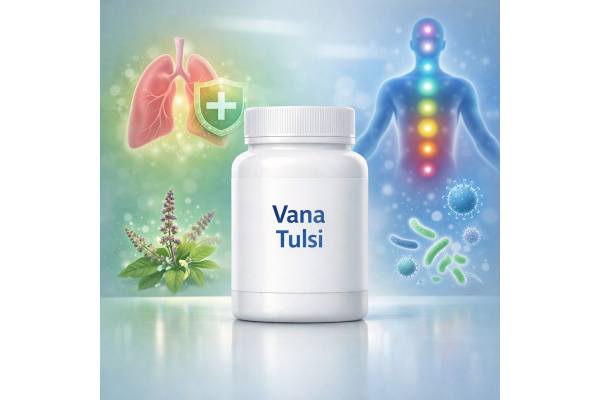
Vana Tulsi is often described as “forest tulsi” or “wild holy basil,” and it has a distinct place in traditional wellness routines—especially as a calming, aromatic tea or daily adaptogen-style herb. What makes it interesting is not just its tradition, but how its chemistry lines up with modern goals: steadier stress response, easier breathing during seasonal shifts, digestive comfort, and gentle metabolic support. In practice, people reach for Vana Tulsi when they want something that feels supportive without being overly stimulating—caffeine-free, pleasantly clove-like, and easy to build into a routine.
That said, “Vana Tulsi” is also a naming maze: some products use it to mean a specific Ocimum species, while others use it as a blend label. Knowing what you’re actually taking—and how to take it safely—matters as much as the benefits.
Essential Insights for Vana Tulsi
- May support stress resilience and more restorative sleep quality over several weeks
- Often used for seasonal respiratory comfort and throat soothing as a warm tea
- Start around 250 mg/day extract or 1–2 g dried leaf per cup, adjusting gradually
- Avoid during pregnancy, while trying to conceive, or if breastfeeding unless clinician-approved
- Use extra caution with blood thinners, diabetes medications, or surgery planning
Table of Contents
- What is Vana Tulsi and how is it different?
- What benefits do people use Vana Tulsi for?
- Which compounds give Vana Tulsi its properties?
- How do you use Vana Tulsi day to day?
- How much Vana Tulsi should you take?
- Side effects, interactions, and who should avoid it
What is Vana Tulsi and how is it different?
Vana Tulsi is a common name used in herbal markets for a “wild” or “forest” form of tulsi (holy basil). In everyday buying, it can mean one of two things:
- A specific Ocimum species marketed as Vana Tulsi (often described as clove-like, sometimes linked to Ocimum gratissimum in seed and tea markets).
- A tulsi category label for a product that may contain Ocimum tenuiflorum (also called Ocimum sanctum) or a blend of tulsi types.
This matters because the research you’ll see online overwhelmingly centers on Ocimum tenuiflorum (holy basil). Vana Tulsi products may overlap with that species, or they may be a related Ocimum with somewhat different dominant aromatic compounds. The practical takeaway: benefits and dosing guidance are most reliable when the label lists the botanical name and the plant part (leaf, aerial parts, extract).
How it compares to other tulsi types
You’ll often see tulsi sold as Rama, Krishna, and Vana. These are used as “types” in commerce, but they can reflect cultivar differences, aroma profiles, and sometimes different species naming conventions. In the cup, Vana Tulsi is typically:
- More clove-forward and aromatic
- Slightly warmer and spicier tasting than milder tulsi teas
- Less “sweet basil” like than culinary basil, with a more medicinal, resinous edge
Why people choose it
Vana Tulsi’s biggest advantage is usability: it’s easy to drink daily, it stacks well with other calming habits (evening routines, breathwork, warm liquids), and it usually does not feel sedating. Many people also like it as a coffee-replacement ritual because it provides a “pause” without caffeine.
Still, “natural” does not mean risk-free. Because tulsi is bioactive—and because naming can be inconsistent—your safest path is to treat Vana Tulsi as a real supplement: verify identity, start low, and match the form (tea vs capsule vs standardized extract) to your goal.
What benefits do people use Vana Tulsi for?
Most people take Vana Tulsi for one of three reasons: steadier stress response, seasonal respiratory comfort, or gentle daily “whole-body” support. While individual responses vary, here’s how the benefits usually show up in real routines.
Stress resilience and mood balance
Vana Tulsi is commonly used as an adaptogen-style herb—meaning it’s taken to support the body’s ability to handle stress rather than to force a stimulant or sedative effect. Many users describe benefits like:
- Feeling less “wired and tired” in the afternoon
- A calmer baseline during busy weeks
- Better ability to unwind at night when used consistently
In clinical research on holy basil extracts (the closest evidence base for many Vana Tulsi products), benefits tend to require daily use over weeks, not days. Think of it like building a buffer, not flipping a switch.
Sleep quality support
Vana Tulsi is not a knockout sleep aid, but it’s often chosen for sleep quality—especially when stress is the driver. It may help by reducing the “mental noise” that keeps people alert, and by supporting a more even stress hormone pattern. Many people prefer it over stronger calming herbs because it is typically less groggy the next day.
Respiratory and throat comfort
As a warm infusion, Vana Tulsi is widely used for:
- Throat soothing and a “clearer” feeling during seasonal shifts
- Comfort when the air is dry or irritating
- Supporting an easier breathing sensation when paired with steam or honey (if appropriate for you)
It is not a replacement for medical care for asthma, infection, or persistent shortness of breath—but it can be a comforting adjunct.
Metabolic and inflammation-adjacent goals
Tulsi is also used for metabolic wellness goals such as maintaining healthy fasting glucose and lipid levels already in the normal range. If you’re using it for this reason, consistency, dosing, and medication interactions matter more—especially if you’re already taking glucose-lowering drugs.
A helpful way to frame Vana Tulsi: it’s a “daily support” herb that tends to reward steady habits, moderate dosing, and realistic expectations.
Which compounds give Vana Tulsi its properties?
Vana Tulsi’s effects come from a mix of aromatic oils and non-volatile plant compounds that influence oxidative stress pathways, inflammatory signaling, and neuroendocrine (stress-response) systems. Exact levels vary by species, growing conditions, harvest timing, and whether you’re drinking a tea or taking a concentrated extract.
Key actives you’ll see discussed
Commonly discussed tulsi compounds include:
- Eugenol: a clove-like aromatic compound associated with soothing, warming properties and antimicrobial activity. It can be higher in some “clove basil” style Vana Tulsi products.
- Rosmarinic acid: a polyphenol found in many mint-family plants, linked to antioxidant activity and immune signaling balance.
- Ursolic acid and oleanolic acid: triterpenoids associated with anti-inflammatory pathways and metabolic support in preclinical research.
- Flavonoids (such as luteolin and apigenin-related compounds): often discussed in relation to antioxidant defenses and calm-focus effects.
- β-caryophyllene and related terpenes: aromatic compounds that can interact with inflammatory and stress-response signaling.
Tea vs extract: why the form changes the effect
A simple but important point: a tea and a capsule do not deliver the same profile.
- Tea (hot infusion) tends to pull more water-soluble compounds and some fraction of the aromatic oils. It’s ideal for ritual, hydration, throat comfort, and mild daily support.
- Standardized extracts concentrate specific fractions and often deliver more consistent dosing. These are more likely to match human trial dosing, especially for stress and sleep outcomes.
- Essential oils are not interchangeable with tea or leaf extracts and can be irritating or unsafe if used improperly. They should not be taken internally unless under qualified professional guidance.
What “adaptogenic” really means here
In practice, adaptogen-style herbs often work by nudging stress physiology toward balance rather than forcing a strong immediate sensation. With tulsi, that typically means modest effects on perceived stress, stress reactivity, and downstream sleep quality—especially when paired with sleep hygiene, exercise, and consistent meal timing.
If you want results you can actually feel, the most “active” levers are usually (1) product identity and consistency, and (2) giving it enough time at a steady dose.
How do you use Vana Tulsi day to day?
The best way to use Vana Tulsi depends on your goal and your tolerance for herbal intensity. Most people do best starting with tea, then moving to capsules or extracts if they want more consistent dosing.
Vana Tulsi tea: a practical method
A simple routine that works for many people:
- Use 1–2 g dried Vana Tulsi leaf (often about 1–2 teaspoons, depending on cut size and density).
- Steep in just-boiled water for 8–12 minutes covered (covering helps retain aromatic compounds).
- Drink once daily for a week before increasing.
Common variations:
- For respiratory comfort: drink warm, slowly, and consider a second cup later in the day.
- For evening wind-down: drink after dinner, at least 60–90 minutes before bed if hot liquids wake you up at night.
Capsules and powders: when they make sense
Capsules are useful when:
- You want consistent intake without brewing tea
- You’re traveling
- You want a defined mg dose to track effects
Powders can be effective but vary widely in taste and potency. If you use powder, mix it into warm water, tea blends, or a smoothie. Avoid high-heat cooking if your goal is to preserve aromatic oils.
Standardized extracts: best for targeted goals
If your goal is stress and sleep, a standardized extract is often the closest match to clinical research. Extract labels may specify:
- Plant part (leaf/aerial parts)
- Extract ratio (for example, 10:1)
- Standardization markers (specific compounds or total polyphenols)
How long to try it before deciding
For stress and sleep: give it 2–4 weeks of consistent daily use before judging. For tea as a ritual and throat comfort: you may notice a difference sooner, but steadier benefits still tend to build over time.
A final practical note: if you change multiple things at once (new supplement plus new sleep schedule plus less caffeine), it gets hard to know what helped. Vana Tulsi works best when you can evaluate it cleanly.
How much Vana Tulsi should you take?
There is no single “perfect” dose for Vana Tulsi because products vary: tea bags, loose leaf, leaf powder capsules, and standardized extracts can deliver very different amounts of active compounds. A smart approach is to choose a form that matches your intent, then start at the low end and increase only if needed.
Common dosing ranges by form
Tea (dried leaf)
- Typical: 1–2 g per cup, 1–3 cups/day
- Many commercial tea bags contain roughly 0.6–2.0 g of dried plant material per bag (varies by brand and blend)
Capsules (leaf powder)
- Typical: 300–600 mg, once or twice daily
- This is often used for gentle daily support rather than strong “clinical” effects
Standardized extracts
- A commonly studied range for stress-related outcomes is 250–1,200 mg/day, depending on the extract and its standardization
- One well-known dosing pattern used in research is 125 mg twice daily of a standardized holy basil extract
Timing: morning, afternoon, or evening?
- For stress resilience: morning or split dosing (morning and late afternoon) often feels smoother than one large dose.
- For sleep quality: take your dose with dinner or early evening. If tea makes you urinate at night, switch to capsules in the evening.
- For digestive comfort: many people prefer taking it after meals.
How to titrate safely
A practical titration plan:
- Week 1: low dose once daily (tea or capsule)
- Week 2: increase to twice daily if needed
- Week 3–4: decide whether the benefit is meaningful, then either maintain, cycle, or stop
Cycling (optional): some users prefer 5 days on, 2 days off, or 8–12 weeks on, 2–4 weeks off to reassess baseline. Cycling is not mandatory, but it’s a reasonable way to reduce “set-and-forget” long-term use when safety data is limited for high daily doses.
If you are using Vana Tulsi for metabolic goals (glucose or lipids), do not self-escalate aggressively—dose consistency and medication compatibility matter more than pushing higher.
Side effects, interactions, and who should avoid it
Most people tolerate tulsi well at moderate doses, especially as a tea. The main risks come from (1) higher-dose extracts, (2) long-term daily use without reassessment, and (3) combining it with medications that affect bleeding, blood sugar, or fertility-related physiology.
Potential side effects
Side effects are usually mild, but can include:
- Stomach upset, nausea, or reflux (more likely on an empty stomach)
- Headache or light dizziness (often from starting too high)
- Increased urination at night (when taken as tea late in the evening)
If you notice agitation or sleep disruption, reduce dose or move timing earlier.
Medication interactions to take seriously
Use extra caution and speak with a clinician if you take:
- Blood thinners or antiplatelet drugs (bleeding risk and surgery planning)
- Diabetes medications (risk of blood sugar dropping too low if combined)
- Blood pressure medications (possible additive lowering in some people)
Also pause Vana Tulsi before planned procedures unless your clinician advises otherwise.
Who should avoid Vana Tulsi
Avoid (or use only with clinician guidance) if you are:
- Pregnant
- Trying to conceive (any gender)
- Breastfeeding
- A child or adolescent, unless specifically advised by a qualified pediatric clinician
A conservative safety concern raised in some risk assessments is potential reproductive effects based largely on non-human data and worst-case exposure assumptions. Even if you personally feel fine using tulsi, pregnancy and fertility are not the time for experimentation.
Quality and labeling safety checks
To reduce risk:
- Choose products that clearly state the botanical name (Ocimum species) and plant part
- Prefer brands with third-party testing for microbial contamination and heavy metals
- Avoid internal use of essential oils unless supervised
Finally, remember that “Vana Tulsi” on a label is not enough information by itself. If you can’t verify what species and dose you’re getting, treat it like an unknown supplement and keep intake modest.
References
- A randomized, double-blind, placebo-controlled trial investigating the effects of an Ocimum tenuiflorum (Holy Basil) extract (HolixerTM) on stress, mood, and sleep in adults experiencing stress – PubMed 2022 (RCT)
- A Comprehensive Review of the Phytochemical Constituents and Bioactivities of Ocimum tenuiflorum – PubMed 2024 (Review)
- Assessment of genotoxicity and acute oral toxicity of a standardized Ocimum tenuiflorum extract (HolixerTM) – PubMed 2025 (Safety Study)
- Risk assessment of holy basil (Ocimum tenuiflorum L. and Ocimum sanctum L.) and some of the component substances used in herbal teas and food supplements 2023 (Risk Assessment)
Disclaimer
This article is for educational purposes only and does not provide medical advice, diagnosis, or treatment. Herbal products such as Vana Tulsi can affect the body and may interact with medications, pregnancy, fertility, surgery planning, and medical conditions. Always read product labels carefully and talk with a qualified clinician before starting Vana Tulsi—especially if you are pregnant, trying to conceive, breastfeeding, have a chronic condition, or take prescriptions (including blood thinners and diabetes medications). Stop use and seek medical guidance if you develop concerning symptoms or an allergic reaction.
If you found this guide helpful, please consider sharing it on Facebook, X (formerly Twitter), or any platform you prefer—and follow us on social media. Your support through sharing helps our team continue producing clear, trustworthy health content.