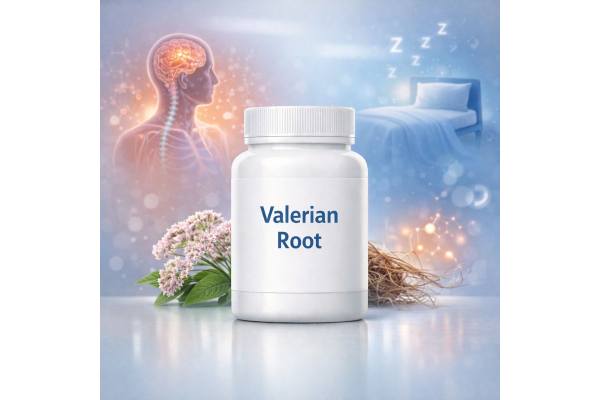
Valerian root (Valeriana officinalis) is one of the most widely used herbal options for sleep support, especially when the problem is taking too long to fall asleep or feeling “wired but tired” at bedtime. Its appeal is simple: it is non-prescription, generally well tolerated for short-term use, and available in many forms—from teas and tinctures to standardized extracts in capsules. People also use valerian for mild nervous tension, situational stress, and the restless, anxious edge that can make sleep feel fragile.
At the same time, valerian is not a guaranteed fix. Research results are mixed because products vary and studies measure sleep in different ways. The best outcomes usually come from choosing a quality product, using a realistic dose for long enough (often a few weeks), and pairing it with basic sleep habits. This guide helps you do that safely and with clear expectations.
Key Insights for Valerian Root Users
- Valerian root may help subjective sleep quality and sleep latency in some people, especially with consistent use over 2–4 weeks.
- Avoid mixing valerian with alcohol, benzodiazepines, opioids, or other sedatives unless a clinician approves.
- Typical adult doses range from 300–600 mg/day (general safety range) and may be 400–600 mg per dose for certain dry extracts.
- Avoid if pregnant, breastfeeding, or if you must drive or operate machinery soon after dosing.
- Stop if you develop next-day grogginess, vivid dreams, agitation, or unusual symptoms that persist.
Table of Contents
- What is valerian root and what does it contain
- What benefits do people use valerian root for
- How valerian may work for sleep and stress
- How to use valerian root: forms, timing, and best practices
- How much valerian root should you take
- Side effects, interactions, and who should avoid valerian
What is valerian root and what does it contain
Valerian is a flowering plant native to Europe and parts of Asia, and its root and rhizome (underground stem) are the parts used in supplements. The root has a distinctive earthy odor—some people describe it as “musky” or “sock-like.” That smell is not a defect by itself; it reflects the plant’s volatile compounds. Still, quality matters: old stock can smell flat, moldy, or sour, which is a reason to skip it.
You will most often see valerian sold as:
- Dried root tea (cut and sifted): gentler, slower onset, and easier to titrate by brewing strength.
- Powdered root capsules: convenient, but potency can be less predictable than standardized extracts.
- Tinctures and fluid extracts: faster to take and easier to adjust drop-by-drop; alcohol content can be a downside for some.
- Standardized dry extracts: designed to deliver a more consistent amount of key constituents; often preferred in research settings.
- Combination formulas: commonly paired with hops, lemon balm, passionflower, or magnesium for broader calming support.
Valerian’s “properties” come from multiple compound families, and that complexity is one reason study results vary. Key groups include:
- Valerenic acids (including valerenic acid): frequently discussed for calming and sleep-support effects.
- Volatile oils: contribute to aroma and may influence relaxation.
- Iridoids (valepotriates, in some preparations): potentially active but less stable; levels can differ by processing.
- Amino acid and sugar derivatives: minor constituents that may still shape the overall effect.
A practical advantage of valerian is flexibility: you can choose a gentle tea, a moderate capsule, or a more targeted extract depending on sensitivity and goals. The tradeoff is that “valerian” is not one uniform product category. Two bottles can contain very different preparations, which is why dosing, expectations, and even side effects can differ from person to person.
What benefits do people use valerian root for
Most people buy valerian for one reason: sleep. But the way valerian helps, when it helps, is often subtler than a prescription sedative. Think “reduces friction at bedtime” rather than “knocks you out.”
1) Falling asleep faster and sleeping more smoothly
Valerian is commonly used for:
- taking too long to fall asleep (sleep latency),
- light, easily interrupted sleep,
- sleep that feels unrefreshing despite enough hours in bed.
Many users report improvements in subjective sleep quality—how sleep feels—more reliably than changes in wearable or lab measures. That difference matters because you might feel better without seeing dramatic changes in a sleep tracker.
2) Mild nervous tension and evening wind-down
Valerian is also used to reduce the “body buzz” of stress: tight chest, racing thoughts, or restlessness that shows up when the lights go out. For some people, that calming effect is the real benefit, and better sleep is a secondary result.
3) Situational anxiety and stress-related sleep disruption
People sometimes use valerian during travel, exam periods, or high workload weeks. In these cases, the goal is not long-term anxiety treatment, but short-term support—helping the nervous system settle at night so sleep does not spiral.
4) Menopause-related sleep changes
Some individuals explore valerian when hot flashes, night waking, and shifting sleep architecture become part of midlife. Valerian is not a hormone treatment, but it may help the “reactivity” component—how easily the body re-arouses once awakened.
What valerian is less reliable for
Valerian is not a dependable single solution for:
- chronic insomnia driven by untreated sleep apnea,
- severe depression or panic disorder,
- stimulant overuse (high caffeine, nicotine, late-day pre-workouts),
- major circadian misalignment (shift work without schedule support).
If one of those drivers is present, valerian may still help at the margins, but it will rarely be enough by itself. The most realistic way to use valerian is as a supportive layer—especially when paired with consistent wake time, reduced late-day caffeine, and a predictable wind-down routine.
How valerian may work for sleep and stress
Valerian’s mechanism is best understood as a multi-compound calming profile rather than a single on-off switch. That is also why it can feel different across users and products.
GABA signaling and “turning down the volume”
One widely discussed pathway involves GABA (gamma-aminobutyric acid), a primary inhibitory neurotransmitter that helps the brain reduce neural “noise.” Many calming interventions—breathing practices, meditation, and several sedating medications—ultimately shift the nervous system toward less excitation. Valerian’s constituents, especially valerenic acids, are often discussed in this context.
In everyday terms, if valerian works for you, it may feel like:
- thoughts slow down without feeling emotionally blunted,
- the body unclenches,
- the urge to keep “checking and thinking” decreases.
Adenosine and sleep pressure
Another way to think about sleep is “sleep pressure.” Adenosine builds during wakefulness and contributes to the feeling of being ready for sleep. Some herbal combinations that include valerian are discussed as supporting the natural sleep-wake rhythm rather than forcing sedation. This aligns with a common experience: valerian may not feel dramatic on night one, but it can help more after repeated use.
Why it can take 2–4 weeks to feel consistent
Unlike fast-acting hypnotics, valerian is often described as having a gradual onset. A useful mental model is that valerian may support the conditions for sleep—lowered reactivity, smoother wind-down—more than it forces sleep itself. That is also why many guidelines and monographs emphasize a multi-week trial.
Why product differences change effects
Valerian teas, powders, tinctures, and standardized extracts do not deliver identical profiles. Differences include:
- how much valerenic acid is present,
- whether volatile oils are preserved,
- how stable certain constituents remain after processing.
This has practical consequences. A tea may feel gentle and body-centered. A standardized extract may feel more targeted and predictable. A tincture may feel quicker but can be irritating for some people due to alcohol.
If you want valerian to be an advantage, the key is consistency: pick one preparation, keep dose and timing steady, and evaluate results over a meaningful window rather than chasing nightly randomness.
How to use valerian root: forms, timing, and best practices
Valerian works best when you use it like a sleep-support routine, not a last-minute rescue. Your two biggest levers are form and timing.
Choosing a form that matches your sensitivity
- Tea is a good starting point if you are sensitive to supplements or want a gentler effect. You can brew it lighter at first, then increase steep time or amount if tolerated.
- Capsules of standardized extract fit people who want consistency and do not want to manage taste or brewing.
- Tinctures work for dose flexibility but can be a poor fit if alcohol triggers reflux, migraines, or sleep disruption.
If you have never used valerian before, avoid starting with a high-dose multi-herb “night complex.” Start with valerian alone so you can tell what it does.
Timing that fits how valerian behaves
A common, practical timing strategy is:
- Take valerian 30–60 minutes before bedtime.
- If your evenings are long and stress-heavy, consider an earlier evening dose (well before bed) and a second bedtime dose only if needed.
If you wake groggy, the first adjustment is not to “push through.” Instead:
- take it earlier,
- reduce the dose,
- or switch from extract to tea.
A simple 14-night trial plan
- Pick a consistent bedtime and wake time (even on weekends).
- Take the same valerian form at the same time nightly for 14 nights.
- Track only a few outcomes: time to fall asleep, number of awakenings, and next-day alertness.
- Keep caffeine stable and avoid adding new supplements during the trial.
This plan gives you signal instead of noise.
Common mistakes that make valerian look “ineffective”
- Using it only on the worst nights (when stress is highest)
- Changing brands or forms every few days
- Taking it at bedtime after scrolling in bright light for an hour
- Combining it with alcohol “to make it work”
- Expecting it to override untreated sleep apnea or late-day stimulant use
Valerian tends to reward steadiness. If you build a predictable wind-down—dim lights, lighter evening meals, calmer inputs—valerian’s calming edge has a better chance to show up.
How much valerian root should you take
Valerian dosing depends on the preparation. A tea dose is not comparable to a standardized extract, and product labels can vary. The safest approach is to start conservative, then adjust based on your response.
Typical adult dosing ranges
Common ranges that appear across safety references and clinical-use patterns include:
- General short-term use: 300–600 mg/day of valerian (often as a standardized product) for up to several weeks.
- Dry extract (certain preparations): 400–600 mg per dose, sometimes used up to 3 times daily for mild nervous tension.
- Herbal tea (infusion): 0.3–3 g of comminuted root in about 150 mL boiling water, with dose strength adjusted to tolerance.
For sleep, many people use a single evening dose. For nervous tension, split dosing earlier in the day can be more appropriate.
How long to take it
Valerian is commonly used as a short course rather than a permanent habit. A practical structure is:
- 2–4 weeks of consistent use, then reassess.
- If you continue beyond that, build in breaks (for example, 1–2 weeks off every 4–8 weeks) and check whether you still need it.
If you see no meaningful benefit after 2–4 weeks at a reasonable dose, increasing indefinitely is rarely the answer.
How to adjust safely
- If you feel nothing: confirm timing (30–60 minutes before bed), and ensure you are not underdosing a weak product. Then make only one change at a time—either increase modestly or switch to a standardized extract.
- If you feel groggy or “hung over”: reduce dose by 25–50%, take it earlier, or use tea instead of extract.
- If you feel restless or agitated: stop. A paradoxical reaction can happen with sedating herbs, especially when sleep debt and stress are high.
Quality checks that protect you
Look for:
- clear botanical identity (Valeriana officinalis, root/rhizome),
- standardized extract details when applicable,
- third-party testing or contaminant screening.
Avoid products that smell rancid or are missing basic identity details. With valerian, quality is not a luxury—it is the difference between a calm trial and a confusing experience.
Side effects, interactions, and who should avoid valerian
Valerian is generally considered safe for many adults when used short term, but it is still pharmacologically active. The main risks come from sedation, next-day impairment, and stacking it with other depressants.
Common side effects
Most side effects are mild but relevant:
- next-day sleepiness or slowed reaction time
- vivid dreams
- headache
- stomach upset or nausea
- mental “dullness” or fogginess (especially at higher doses)
A smaller group experiences the opposite—irritability or restlessness. If that happens, discontinue rather than trying to “balance it” with more supplements.
Interactions to treat seriously
Avoid combining valerian with:
- alcohol
- benzodiazepines
- opioids
- sedating antihistamines
- sleep medications
- other strongly sedating herbs (especially in high doses)
The concern is additive sedation and impaired coordination. If you take prescription medications for mood, seizures, pain, or sleep, a clinician or pharmacist should help you decide if valerian is appropriate.
Who should avoid valerian or use only with medical guidance
Avoid self-directed valerian use if you are:
- pregnant or breastfeeding (safety data is limited)
- under 12 years old, unless a qualified clinician recommends it
- scheduled for surgery soon (sedation and anesthesia considerations)
- dealing with liver disease or a history of supplement-related liver issues
- required to drive, fly, or operate machinery soon after dosing
If you use valerian, plan for safety: take your first dose on a night when you do not need early-morning sharpness, and do not combine it with alcohol.
Reality check on evidence and expectations
Recent reviews describe valerian as having a generally favorable short-term safety profile, but efficacy findings remain mixed. Some trials show improvements in subjective sleep outcomes, while higher-level syntheses have questioned whether valerian meaningfully improves insomnia when measured objectively. The most reasonable stance is: valerian may be worth a careful trial for mild sleep complaints, but it should not delay evaluation for persistent insomnia lasting more than a few weeks—especially when daytime function is impaired.
References
- Does valerian work for insomnia? An umbrella review of the evidence – PubMed 2024 (Umbrella Review)
- Standardized Extract of Valeriana officinalis Improves Overall Sleep Quality in Human Subjects with Sleep Complaints: A Randomized, Double-Blind, Placebo-Controlled, Clinical Study – PubMed 2024 (RCT)
- Effects of a Valerian-Hops Extract Combination (Ze 91019) on Sleep Duration and Daytime Cognitive and Psychological Parameters in Occasional Insomnia: A Randomized Controlled Feasibility Trial – PubMed 2025 (RCT)
- European Union herbal monograph on Valeriana officinalis L., radix 2016 (Herbal Monograph)
Disclaimer
This article is for educational purposes only and does not provide medical advice, diagnosis, or treatment. Herbal products can vary in potency, purity, and interactions. Valerian root may cause drowsiness and may interact with alcohol, sedatives, and certain medications. If you are pregnant, breastfeeding, have a medical condition (including liver disease), are under 18, or take prescription medicines, consult a licensed healthcare professional before using valerian. Do not drive or operate machinery if you feel sleepy or impaired, and seek medical care promptly if you experience severe reactions or concerning symptoms.
If this guide helped you, please share it on Facebook, X (formerly Twitter), or any platform you prefer, and follow us on social media. Your support through sharing helps our team continue producing high-quality, practical content.