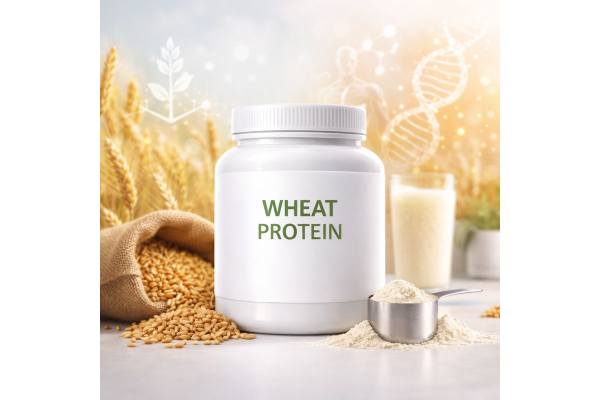
Wheat protein sits at a curious intersection of nutrition and food science. In a shaker bottle it can be a plant-based protein option; in a mixing bowl it becomes the elastic backbone of bread; and in many packaged foods it quietly improves texture and bite. Yet it is also inseparable from gluten, which makes it a poor fit for people with celiac disease or wheat allergy. This guide focuses on what wheat protein is, what it can realistically do, and how to use it safely and effectively—whether your goal is higher daily protein intake, better satiety, or simply cooking and baking with more structure. You’ll also learn practical dosage ranges in grams, what to look for on labels (isolate vs hydrolyzed), and the common side effects that signal you should reduce or avoid it.
Essential Insights
- Helps raise daily protein intake and can support lean-mass goals when total protein is adequate and training is consistent.
- Adds structure and chew to foods, making it useful in baking and plant-based cooking.
- Avoid if you have celiac disease, wheat allergy, or medically confirmed gluten sensitivity.
- Typical supplemental range is 20–40 g per serving and 10–40 g per day depending on your protein gap.
- Use extra caution if you have chronic kidney disease or are on a medically restricted protein diet.
Table of Contents
- What is wheat protein, exactly?
- What benefits can you expect?
- Is wheat protein good for muscle?
- How to use wheat protein daily
- How much wheat protein per day?
- Common mistakes and troubleshooting
- Side effects and who should avoid it
What is wheat protein, exactly?
Wheat protein is a broad label for protein concentrated from wheat. In practice, it usually means one of three things:
- Wheat gluten (vital wheat gluten): The main storage proteins of wheat that form an elastic network when hydrated and mixed. This is the “stretch” in dough and the chew in seitan-style cooking.
- Wheat protein isolate or concentrate: A more purified powder intended to add protein with less starch. These are more common in sports foods and high-protein baking mixes.
- Hydrolyzed wheat protein: Wheat protein that has been partially broken into smaller peptides. You’ll see this in some foods, and often in cosmetics and hair products; in nutrition, it can be used for easier mixing or a different texture.
Nutritionally, wheat protein is not a “complete” protein in the same way as dairy or egg; it is relatively low in lysine, an essential amino acid. That does not make it useless—many diets already include lysine-rich foods—but it does shape how you should use it. If wheat protein is one piece of a mixed diet, you can balance it with lysine-containing foods such as beans, lentils, soy foods, dairy, eggs, fish, or meat.
Another key reality: wheat protein and gluten are tightly linked. Even when a label says “wheat protein isolate,” it may still contain gluten fragments and is not appropriate for gluten-free medical diets unless it is specifically certified and clinically appropriate (which is uncommon for wheat-derived proteins).
Finally, wheat protein behaves differently than many powders. It tends to be less “creamy” than whey and can be more “doughy” or foamy depending on processing. That can be a feature in baking and cooking, but it requires technique if you want a smooth drink.
What benefits can you expect?
The most defensible benefits of wheat protein come from what protein does in general—plus a few practical advantages unique to wheat’s structure.
1) Closing a protein gap (the most important benefit).
If your daily intake is low, adding wheat protein can help you reach a more effective total. That matters because consistent, adequate protein supports lean mass, recovery, and appetite control in many people. Wheat protein is simply one tool for “getting enough” when meals are small, time is tight, or whole-food protein is hard to fit in.
2) Satiety support through structure and volume.
Protein tends to be more satiating than refined carbohydrate for many people, especially when paired with fiber and water. Wheat protein works well in “higher-protein, higher-chew” foods—think dense breads, protein wraps, or seitan-based meals—where the eating experience itself is slower and more filling.
3) Texture and cooking performance (a genuine advantage).
Wheat gluten’s elastic network helps foods hold together. This can make higher-protein baking more successful because protein powders often dry out baked goods. In savory cooking, wheat gluten can create a meat-like bite that other plant proteins struggle to mimic without gums and stabilizers.
4) Useful in blended protein strategies.
Because wheat protein is relatively low in lysine, it pairs naturally with lysine-rich proteins. A blend (for example, wheat plus pea or soy) can improve the overall amino acid profile, which is helpful if most of your protein comes from plants.
5) Practicality: shelf-stable and easy to measure.
Powders are not magic, but they are consistent. If you’re trying to hit a daily target—say, 110 g of protein—wheat protein can make the math easier without building your entire day around cooking.
The main caveat is that these benefits assume wheat protein is tolerated. If it triggers GI symptoms, allergy symptoms, or worsens a diagnosed gluten-related disorder, the “benefit” disappears and risk rises.
Is wheat protein good for muscle?
It can be, but the “good for muscle” answer depends on context: your total daily protein, your training stimulus, and the amino acids you’re getting across the day.
Start with the big picture: muscle gain is driven by progressive training plus adequate energy and protein. Research consistently shows that increasing protein intake—especially when paired with resistance training—can add to lean mass gains compared with lower-protein control diets. The strongest results tend to appear when baseline protein intake is modest and the added protein meaningfully raises daily totals.
Where wheat protein fits:
Wheat protein can contribute to your daily total effectively, but it is typically lower in lysine and may have a less “optimal” essential amino acid balance than whey. That does not mean it cannot support muscle. It means you should avoid making wheat protein your only protein source day after day.
A practical way to think about it:
- If you already eat mixed proteins (dairy, eggs, meat, soy, legumes), wheat protein can work well as a supplement because your overall amino acid intake is balanced.
- If you’re mostly plant-based and wheat is already a major calorie source, relying heavily on wheat protein alone may leave your diet short on lysine unless you deliberately add lysine-rich foods.
How to improve muscle usefulness without overcomplicating it:
- Pair it with complementary proteins. A wheat-and-legume pattern (wheat protein plus beans, lentils, pea protein, or soy) is a classic amino acid complement.
- Distribute protein across the day. Muscle protein synthesis is stimulated in “pulses.” Many athletes do better spreading intake across 3–5 protein-containing eating occasions rather than “one huge protein dinner.”
- Aim for a meaningful dose per meal. Many people do well with roughly 20–40 g of protein per meal (or per shake) depending on body size, age, and training status. Wheat protein can be part of that dose.
Bottom line: wheat protein can support muscle outcomes as long as your total daily protein is adequate and your overall diet supplies enough essential amino acids—especially lysine. If you want the simplest solution, use wheat protein as one ingredient, not as your only protein strategy.
How to use wheat protein daily
The best “use” depends on which wheat protein you have. Treat wheat gluten like a functional cooking ingredient, and treat wheat protein isolate more like a conventional protein powder.
Using wheat protein isolate in food and drinks
For shakes: Wheat protein can mix thicker than whey, so technique matters.
- Use 250–400 ml of liquid per 25 g powder to start.
- Blend, don’t just stir, if you dislike foam or graininess.
- Add a texture helper: yogurt, banana, oats, or cocoa can make it smoother.
- If you’re sensitive to GI upset, start with 10–15 g and increase gradually.
For higher-protein baking:
Wheat protein isolate can increase protein but also dryness. Offset that with moisture and fat.
- Add extra liquid (15–30 ml per 25 g powder is a common starting point).
- Include a binder such as egg, yogurt, or applesauce.
- Expect a slightly firmer crumb; wheat protein tends to “set” baked goods more than some plant powders.
Using vital wheat gluten for cooking and structure
Vital wheat gluten is ideal for savory cooking, especially seitan-style foods.
A simple method:
- Mix vital wheat gluten with seasonings (salt, garlic, smoked paprika, pepper).
- Add liquid and knead briefly until elastic (usually 1–3 minutes).
- Rest 5–10 minutes to hydrate.
- Simmer gently (not a rolling boil) or steam, then optionally bake or pan-sear.
Why the gentle simmer? Aggressive boiling can make the final texture spongy or uneven.
Timing ideas that are easy to live with
- Post-workout: A wheat protein drink can help you hit a post-training protein goal, especially if your next meal is hours away.
- Mid-afternoon “gap filler”: Many people under-eat protein earlier in the day; a 20–30 g serving at 3–5 pm can stabilize appetite and simplify dinner.
- In mixed meals: Instead of chasing perfect timing, add wheat protein to foods you already eat—pancakes, yogurt bowls, soups (stir in carefully to avoid clumps), or high-protein breads.
The most reliable strategy is consistency: use wheat protein where it fits naturally, then let your weekly training and overall diet do the heavy lifting.
How much wheat protein per day?
There is no single “correct” dose because wheat protein is not a medication—it is a food ingredient that helps you reach a daily protein target. So the smartest dosage method is:
- estimate your daily protein target,
- estimate how much you already get from food, and
- use wheat protein only to fill the gap.
Step 1: choose a daily protein target
These ranges are commonly used in practice:
- General adults (maintenance): about 0.8 g per kg body weight per day.
- Active adults and strength training: often around 1.2–2.0 g per kg per day.
- Older adults or those trying to preserve muscle while dieting: often toward the higher end of the active range, depending on medical status.
Example: A 75 kg person aiming for 1.6 g/kg would target 120 g protein/day.
Step 2: measure your “protein gap”
Track a typical day for 2–3 days. Many people discover they hit 60–80 g without trying, then stall. If your target is 120 g and you typically eat 80 g, your gap is 40 g.
Step 3: fill the gap with realistic servings
Common supplemental patterns:
- Light support: 10–20 g per day (half scoop to one scoop), for people who are close to target.
- Moderate support: 20–40 g per day, often one shake or one protein-boosted recipe.
- Higher support: 40–60 g per day, usually split into two servings, used when food intake is limited or targets are high.
A practical per-serving range is 20–40 g protein depending on your body size and meal pattern. If you’re using vital wheat gluten for cooking, calculate protein from the nutrition label; recipes vary widely.
How to dose safely and comfortably
- Start low (10–15 g/day) for 3–4 days if you’re prone to bloating.
- Increase by 5–10 g every few days as tolerated.
- Split into two doses if you notice heaviness or GI discomfort.
If you have kidney disease, liver disease, or a medically prescribed protein restriction, do not use these ranges without clinician guidance. Your “right” dose may be much lower—or wheat protein may be inappropriate.
Common mistakes and troubleshooting
Wheat protein is simple on paper—“just protein”—but the real-world experience can be disappointing if you treat it like whey or ignore how it behaves in recipes. Here are the most common issues and fixes.
Mistake 1: using wheat protein as your only protein source
If most of your protein is wheat-based, you may struggle to get enough lysine and other essential amino acids. Fix it by building a routine around complementary foods:
- Pair wheat protein meals with legumes (lentils, chickpeas, beans).
- Include soy foods if you tolerate them (tofu, tempeh, soy yogurt).
- If you eat animal products, eggs, dairy, fish, and poultry naturally balance wheat’s amino acid gaps.
Mistake 2: expecting a creamy shake with water
Many wheat protein powders turn thick, foamy, or “doughy” with plain water. Improvements that usually work:
- Blend with ice and a thicker base (milk, soy milk, or yogurt).
- Add 5–10 g cocoa powder or instant coffee for flavor and mouthfeel.
- Increase liquid volume and let it sit 2–3 minutes, then shake again.
Mistake 3: dry, tough baked goods
Protein powders can steal moisture. With wheat protein, that effect can be stronger because it sets structure.
- Increase moisture (milk, yogurt, fruit purée).
- Add a small amount of fat (oil, nut butter, egg yolk) for tenderness.
- Avoid overbaking; pull items when the center is just set.
Mistake 4: rubbery seitan or spongy texture
Vital wheat gluten is sensitive to kneading and cooking style.
- Knead less for tenderness (1–3 minutes is often enough).
- Rest the dough so it hydrates evenly.
- Simmer gently or steam; avoid a hard boil.
- Slice thin and sear after cooking for better bite.
Mistake 5: increasing dose too quickly
Bloating and discomfort are more likely when you jump from 0 to 40 g/day.
- Start at 10–15 g/day and ramp gradually.
- Split doses and drink more water with higher-protein meals.
Troubleshooting is not about perfection; it’s about making wheat protein fit your routine without turning every meal into a project.
Side effects and who should avoid it
Wheat protein is well tolerated by many people, but when it causes problems, those problems can be meaningful—especially because of gluten.
Common side effects
- Bloating, gas, or abdominal discomfort: Often dose-related or related to how the powder is formulated. Splitting doses and increasing gradually helps.
- Constipation or stool changes: Higher-protein diets can shift bowel patterns if fiber and fluids are low. Add fiber-rich foods and increase water intake.
- Reflux or heaviness: Thick shakes can sit “heavy.” Use more liquid, smaller doses, or take it with a meal.
Who should avoid wheat protein entirely
- Celiac disease: Wheat protein contains gluten and is not compatible with a gluten-free medical diet.
- Wheat allergy: Wheat proteins can trigger allergic reactions ranging from hives to anaphylaxis. Avoiding wheat protein is non-negotiable.
- Non-celiac gluten sensitivity (medically suspected or confirmed): Many people in this category do best avoiding wheat protein, especially in concentrated forms.
Situations that require extra caution
- Chronic kidney disease or medically limited protein intake: Protein goals can differ dramatically; supplementation may be inappropriate.
- Unexplained iron deficiency, chronic diarrhea, or weight loss: Do not mask symptoms with dietary tweaks—get evaluated, as these can be signs of malabsorption or other conditions.
- Multiple food intolerances or IBS: Wheat can be a trigger for some people. Even if the issue is not gluten, concentrated wheat ingredients may worsen symptoms.
Medication and supplement interactions
Wheat protein itself is not known for dramatic drug interactions, but high-protein diets can indirectly affect routines:
- If you take medications that must be taken on an empty stomach, thick protein shakes may interfere with timing.
- If you use fiber supplements, take them at a different time than protein shakes if you notice GI issues, since combining them can increase bloating.
A final safety note: if you ever experience facial swelling, wheezing, throat tightness, or severe hives after wheat protein, treat it as an emergency and avoid wheat until you’ve been medically assessed.
References
- Current Perspectives on Protein Supplementation in Athletes: General Guidance and Special Considerations for Diabetes-A Narrative Review 2025 (Narrative Review)
- Systematic review and meta‐analysis of protein intake to support muscle mass and function in healthy adults 2022 (Systematic Review and Meta-Analysis)
- Protein Nutrition: Understanding Structure, Digestibility, and Bioavailability for Optimal Health 2024 (Review)
- Gluten Proteins: Beneficial Factors and Toxic Triggers in Human Health 2025 (Review)
- American College of Gastroenterology Guidelines Update: Diagnosis and Management of Celiac Disease 2023 (Guideline)
Disclaimer
This article is for educational purposes and does not replace medical advice. Wheat protein contains gluten and is not appropriate for people with celiac disease, wheat allergy, or other medically indicated gluten-free diets. Protein needs vary by age, training, health status, and kidney function; if you are pregnant, managing a chronic condition, taking prescription medications, or have digestive symptoms you cannot explain, consult a qualified clinician or registered dietitian before changing your protein intake or using supplements.
If you found this guide useful, please consider sharing it on Facebook, X (formerly Twitter), or any platform you prefer, and follow us on social media. Your support through sharing helps our team continue producing reliable, high-quality health content.