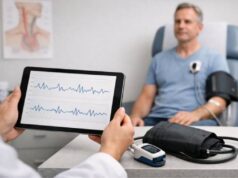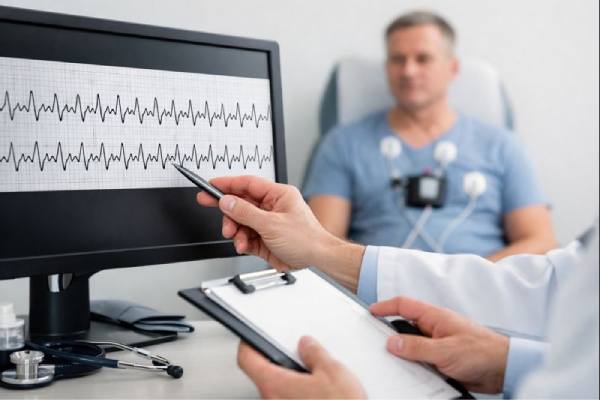
Bidirectional ventricular tachycardia is a rare but important heart rhythm emergency. Instead of a steady heartbeat, the lower chambers (ventricles) fire rapidly from abnormal electrical triggers. What makes this rhythm distinctive is that the ECG pattern “flips” every other beat—two different QRS shapes alternate like a metronome switching hands. That alternating signature often points to a short list of causes, some of which are immediately reversible, such as digoxin (digitalis) toxicity or severe electrolyte imbalance. In other people, it can be the first clue to an inherited rhythm disorder, especially catecholaminergic polymorphic ventricular tachycardia, where exercise or strong emotion can trigger dangerous rhythms even when the heart structure looks normal. Quick recognition matters because treatment depends on the cause, and delays can lead to fainting, cardiac arrest, or stroke-like injury from low blood flow.
Table of Contents
- What is bidirectional ventricular tachycardia?
- What causes it and who is at risk?
- Early symptoms and dangerous complications
- How doctors diagnose bidirectional ventricular tachycardia
- Treatment options and what to expect
- Long-term management, prevention, and when to seek help
What is bidirectional ventricular tachycardia?
Ventricular tachycardia (VT) means the ventricles are beating too fast—often 150–250 beats per minute—because electrical impulses are coming from the ventricles rather than following the normal pathway from the atria through the AV node. “Bidirectional” VT (often shortened to BiVT) describes a specific pattern: the ECG shows two different ventricular activation shapes that alternate beat-to-beat. Clinicians often describe it as an alternating QRS axis (for example, the electrical direction swings left then right, repeatedly).
Why does that matter? Because the pattern is not random. It usually suggests that the rhythm is being driven by two competing ventricular sites or two alternating conduction pathways that take turns firing. The most common underlying electrical mechanism is “triggered activity,” where unstable cells produce extra impulses after a heartbeat—often because calcium handling inside the heart cell has become abnormal. Less often, a re-entry circuit or abnormal automaticity (cells acting like a pacemaker when they should not) can play a role.
BiVT is uncommon compared with other VTs. When it appears, it is often a signal to immediately look for a cause that needs urgent correction. A classic example is digoxin toxicity: digoxin increases intracellular calcium, and excess levels can produce afterdepolarizations that set off ventricular beats. Another major association is catecholaminergic polymorphic ventricular tachycardia (CPVT), an inherited condition where adrenaline (from exercise, stress, or strong emotion) destabilizes calcium release and triggers ventricular arrhythmias in a structurally normal heart. Other, less frequent associations include myocarditis, cardiac sarcoidosis, and certain channelopathies such as Andersen–Tawil syndrome.
One practical point: BiVT is a rhythm diagnosis, not a single disease. The same ECG pattern can arise from different problems, and the safest approach is to treat it as both an emergency rhythm and a diagnostic clue—stabilize the patient while simultaneously searching for the driver.
What causes it and who is at risk?
Because bidirectional VT is so distinctive, the list of likely causes is narrower than for typical VT. Thinking in categories helps: medication or toxin effects, inherited rhythm disorders, inflammation or infiltration of the heart muscle, and metabolic triggers.
Common causes and strong associations
- Digoxin (digitalis) toxicity: This remains a classic cause. Risk rises with kidney impairment (digoxin is largely cleared by the kidneys), dehydration, older age, drug interactions (some antibiotics, antiarrhythmics, and other agents can raise levels), and electrolyte abnormalities—especially low potassium or low magnesium.
- Catecholaminergic polymorphic ventricular tachycardia (CPVT): Often begins in childhood or adolescence with exertional fainting, seizures misdiagnosed as epilepsy, or sudden collapse during sports. The resting ECG is frequently normal, and the heart structure looks normal on echo—until stress reveals the rhythm.
- Andersen–Tawil syndrome and related channelopathies: These are rarer and may come with periodic muscle weakness or characteristic facial/skeletal features, but the heart rhythm can be the first clue.
Other important causes
- Myocarditis: Viral or immune-mediated inflammation can irritate the ventricular muscle and create electrically unstable areas. Symptoms may include viral-like illness, chest pain, or new heart failure signs, but sometimes the first presentation is arrhythmia.
- Cardiac sarcoidosis or other infiltrative disease: Granulomas or scarring can disrupt electrical pathways and promote ventricular arrhythmias.
- Severe electrolyte shifts: Low potassium, low magnesium, and high calcium can increase triggered activity. Even when electrolytes are only moderately abnormal, they can amplify risk if a person is also taking digoxin or has an underlying channelopathy.
- Toxin and medication effects beyond digoxin: Certain sympathomimetics (stimulants), excess thyroid hormone, or drugs that increase catecholamine tone may not “cause” the bidirectional pattern by themselves but can lower the threshold in susceptible patients.
Who is at higher risk?
- People taking digoxin, especially older adults, those with chronic kidney disease, or those who recently started interacting medications.
- Individuals with a personal or family history of exercise-related fainting, unexplained seizures, or sudden death at a young age.
- People with recent viral illness plus new palpitations, chest pain, or shortness of breath.
- Patients with known inflammatory or systemic disease (sarcoidosis, autoimmune conditions) who develop new rhythm symptoms.
A useful mental shortcut: BiVT is often either “digoxin-related” or “adrenaline-related” (CPVT). Your history and first lab tests frequently point toward one of those lanes.
Early symptoms and dangerous complications
Symptoms depend on how fast the heart is beating, how long the rhythm lasts, and how well the rest of the heart can compensate. Some people have brief, self-terminating runs that feel like sudden bursts of pounding or fluttering. Others become unstable within minutes.
Common early symptoms
- Palpitations: A rapid, forceful, sometimes “thumping” heartbeat that starts abruptly.
- Lightheadedness or dizziness: Caused by reduced cardiac output when the ventricles do not fill properly between beats.
- Shortness of breath or chest pressure: Especially if the heart cannot meet the body’s oxygen needs.
- Near-fainting or fainting (syncope): A high-risk symptom in ventricular arrhythmias, particularly if it occurs during exercise or strong emotion.
- Unusual fatigue and weakness: Sometimes mistaken for anxiety or dehydration.
Red flags that suggest an emergency
- Fainting, seizure-like activity, or collapse.
- Chest pain with sweating, nausea, or severe shortness of breath.
- Confusion, inability to speak clearly, or weakness (from low blood flow to the brain).
- Very low blood pressure, gray or blue skin color, or severe agitation.
- A rhythm that does not stop quickly or keeps returning.
Major complications
- Cardiac arrest: VT can deteriorate into ventricular fibrillation, which is immediately life-threatening without defibrillation.
- Shock and organ injury: Sustained rapid ventricular rhythms can reduce blood flow enough to injure kidneys, liver, and brain.
- Worsening heart failure: If the rhythm persists, the ventricles can weaken, and fluid can build up in the lungs.
- Secondary injury from fainting: Falls and head trauma are common when syncope happens suddenly.
- Misdiagnosis and missed prevention: In CPVT, fainting during exertion may be labeled as “vasovagal” or a seizure disorder. Without correct diagnosis and targeted treatment, risk can remain high.
It can be tempting to wait out symptoms if they stop on their own. The safer approach is different: if palpitations are accompanied by fainting, chest pain, severe breathlessness, or occur during exercise, treat that episode as a medical emergency and seek urgent evaluation. Even when the rhythm ends, the cause may still be present, and recurrence can be more dangerous than the first event.
How doctors diagnose bidirectional ventricular tachycardia
Diagnosis has two goals: confirm the rhythm and identify the driver quickly enough to guide treatment. The ECG pattern often gives the strongest initial clue, but it is only the starting point.
1) Confirm the rhythm
- 12-lead ECG: The hallmark is alternating QRS morphology (often alternating axis) on a beat-to-beat basis during VT. A 12-lead helps distinguish BiVT from supraventricular rhythms with aberrancy and from polymorphic VT.
- Continuous telemetry: Captures runs that come and go, shows how the rhythm starts and stops, and helps judge stability.
- Rhythm strip review: Subtle alternation can be missed unless someone is specifically looking for it.
2) Assess immediate stability
Clinicians rapidly check blood pressure, mental status, oxygen level, and signs of shock. A person who is unstable with VT may need urgent electrical cardioversion while evaluation continues.
3) Look for reversible causes
- Medication review: Digoxin use, recent dose changes, and interacting drugs. Providers also ask about supplements and over-the-counter medicines.
- Blood tests: Potassium, magnesium, calcium, kidney function, glucose, and acid-base status. A digoxin level can help, but it must be interpreted carefully; toxicity can occur even at “therapeutic” levels, especially with low potassium or kidney dysfunction.
- Cardiac injury and inflammation markers: Troponin and inflammatory markers may support myocarditis, though they are not diagnostic alone.
4) Evaluate the heart’s structure
- Echocardiogram: Checks pumping function, valve disease, and cardiomyopathy. CPVT often shows a structurally normal heart, which is a key clue when the story fits.
- Cardiac MRI (when stable): Helps detect myocarditis, scarring, or infiltrative disease such as sarcoidosis.
5) Consider inherited rhythm disorders
If the pattern and history suggest CPVT (exercise or emotion-triggered syncope, normal resting ECG), clinicians may use:
- Exercise stress testing: Carefully supervised, because it can provoke arrhythmias. It can reveal progressive ventricular ectopy leading to bidirectional or polymorphic VT.
- Holter or event monitoring: Looks for catecholamine-related patterns during daily life.
- Genetic testing and family screening: Particularly when there is a family history of early sudden death or recurrent exertional syncope.
A practical diagnostic insight: BiVT is one of the rhythms where “why” can matter as much as “what.” Identifying digoxin toxicity versus CPVT changes nearly every next step—from medication choices to family counseling.
Treatment options and what to expect
Treatment has two tracks running at the same time: stabilize the rhythm and treat the underlying cause. The right therapy depends heavily on whether BiVT is being driven by digoxin toxicity, an inherited catecholamine-triggered disorder, or structural heart disease.
Immediate care (first minutes to hours)
- If the person is unstable: Low blood pressure, chest pain, severe breathlessness, confusion, or collapse usually triggers urgent electrical therapy (synchronized cardioversion) and advanced life support steps.
- Correct electrolytes promptly: Replacing potassium and magnesium is often urgent, especially if levels are low. Even “borderline” deficits can be dangerous in this setting.
- Stop offending agents: Digoxin and any interacting or pro-arrhythmic medications are held immediately if toxicity is suspected.
When digoxin toxicity is likely
- Digoxin immune Fab (antibody fragments): This is the specific antidote for life-threatening toxicity. It binds digoxin, reducing its active free fraction and often stabilizing rhythm quickly.
- Supportive care: IV fluids if dehydrated, careful monitoring of potassium (levels can swing after Fab), and continuous ECG monitoring.
- Antiarrhythmic choices: Clinicians avoid certain medications that can worsen digoxin-related rhythms. If ventricular arrhythmias persist while antidote is being arranged, agents such as lidocaine or magnesium may be considered in monitored settings.
When CPVT is likely
- Nonselective beta blockers (often preferred): These blunt the adrenaline surge that triggers arrhythmias. Adherence matters; missed doses can be dangerous.
- Add-on therapy (often flecainide): Used when beta blockers alone do not adequately suppress exercise-induced arrhythmias.
- Lifestyle and trigger control: Strict guidance around intense exercise and emotional triggers is common, with individualized plans based on supervised testing.
- Advanced therapies in selected cases: Left cardiac sympathetic denervation (a surgical/ablative approach to reduce adrenergic drive) may be considered for persistent events.
- Implantable cardioverter-defibrillator (ICD): Considered for those with prior cardiac arrest or persistent dangerous arrhythmias despite optimal medical therapy. In CPVT, ICDs can be life-saving but require careful programming and medication support to reduce shock-triggered adrenaline surges.
When inflammation or scarring is the driver
- Treat the underlying disease: Myocarditis care may include activity restriction, heart failure therapy, and in selected cases immunosuppression based on the cause. Sarcoidosis may require immunosuppression and rhythm-focused strategies.
- Catheter ablation: Sometimes useful for scar-related VT, though bidirectional patterns are often more trigger-driven than scar-circuit driven.
What to expect after the acute episode: most patients stay on continuous monitoring until the rhythm is controlled and the provoking factor is addressed. The long-term plan depends on the cause—ranging from medication adjustment and kidney monitoring (digoxin) to lifelong rhythm prevention strategies and family screening (CPVT).
Long-term management, prevention, and when to seek help
Long-term management focuses on preventing recurrence, reducing triggers, and building a plan that is realistic for daily life. Because bidirectional VT is often tied to specific causes, prevention can be highly targeted—and very effective.
If digoxin toxicity caused the episode
- Reassess whether digoxin is still needed: Some patients can switch to alternative therapies for rate control or heart failure management.
- If digoxin is continued: Prevention usually includes a lower dose, clear dosing instructions, and close monitoring of kidney function, potassium, and magnesium.
- Avoid common interaction pitfalls: New prescriptions should be checked for interactions that raise digoxin levels or worsen electrolytes (for example, certain antibiotics, antiarrhythmics, and diuretics).
- Hydration and illness planning: Dehydration, vomiting, and diarrhea can concentrate digoxin and lower potassium. Many patients benefit from a “sick day” plan that explains when to hold medications and seek labs.
If CPVT or another inherited rhythm disorder is suspected or confirmed
- Medication adherence is non-negotiable: Beta blockers work best when taken consistently. Skipping doses can allow a surge of adrenaline to trigger dangerous rhythms.
- Structured exercise guidance: Many people can remain active, but they often need individualized limits, warm-up strategies, and avoidance of competitive or high-intensity bursts. Supervised testing helps define safe heart-rate zones.
- Family screening: First-degree relatives may need clinical evaluation and, when appropriate, genetic testing. Early identification can prevent first-event cardiac arrest.
- Emergency readiness: Families often benefit from CPR training and, in selected settings, access to an AED (automated external defibrillator), especially if there is a history of exertional events.
General prevention strategies for anyone with prior VT
- Keep potassium and magnesium in a healthy range, especially if you take diuretics.
- Limit stimulants that increase adrenergic tone (high-dose caffeine, illicit stimulants).
- Treat sleep apnea, manage blood pressure, and control thyroid disease if present.
- Attend follow-ups: rhythm monitoring, medication adjustments, and repeat imaging when recommended.
When to seek urgent or emergency care
Seek emergency care immediately for:
- Fainting, seizure-like activity, or collapse.
- Chest pain, severe shortness of breath, or signs of stroke.
- Sustained palpitations with dizziness, confusion, or low blood pressure.
- Any rapid heartbeat episode in someone with known CPVT, prior VT, or an ICD shock.
Seek prompt medical review (same day or within 24–48 hours) for:
- New palpitations, near-fainting, or exercise-related symptoms.
- Vomiting/diarrhea or dehydration if you take digoxin or diuretics.
- New medications added to a regimen that includes digoxin or antiarrhythmics.
A good long-term plan is not just “take a pill.” It is a set of guardrails—medications, monitoring, trigger control, and a clear action plan—that makes the next episode less likely and less dangerous if it happens.
References
- Bidirectional Ventricular Tachycardia: Challenges and Solutions – PubMed 2022 (Review)
- Diagnosis and practical management of digoxin toxicity: a narrative review and consensus – PMC 2023 (Consensus Review)
- 2022 ESC Guidelines for the management of patients with ventricular arrhythmias and the prevention of sudden cardiac death – PubMed 2022 (Guideline)
- Catecholaminergic Polymorphic Ventricular Tachycardia – GeneReviews® – NCBI Bookshelf 2022 (Clinical Review)
Disclaimer
This article is for general education and does not replace medical advice, diagnosis, or treatment from a qualified clinician. Bidirectional ventricular tachycardia can be life-threatening and requires urgent medical evaluation, especially when symptoms include fainting, chest pain, severe shortness of breath, confusion, or collapse. If you think you or someone else may be having a dangerous heart rhythm, call your local emergency number immediately. Treatment decisions (including medications, cardioversion, genetic testing, and device therapy) must be individualized based on medical history, examination, and testing.
If you found this article helpful, please consider sharing it on Facebook, X (formerly Twitter), or any platform you prefer—and follow us on social media. Your support through sharing helps our team continue producing clear, reliable health content.