A berry aneurysm is a small, balloon-like bulge that forms on a brain artery, most often where vessels branch in the circle of Willis. Many are silent for years and are discovered incidentally during imaging for headaches or another concern. The urgency comes from what can happen if the aneurysm ruptures: blood spills into the space around the brain, causing a subarachnoid hemorrhage—an emergency that can lead to stroke, coma, or death within hours. If you have been told you have a berry aneurysm, the first practical question is not “Do I need surgery?” but “What is my rupture risk, and how can I lower it?” Size, location, shape, growth over time, and personal factors like smoking and blood pressure all influence that answer. This guide explains what berry aneurysms are, how they develop, the symptoms that matter most, how doctors confirm the diagnosis, and what modern treatment and long-term management look like.
Table of Contents
- What a berry aneurysm is and how it affects the brain
- Why berry aneurysms form and who is at risk
- Symptoms of unruptured and ruptured aneurysms
- How berry aneurysms are diagnosed and monitored
- Treatment options and what to expect
- Long-term management, prevention, and when to seek help
What a berry aneurysm is and how it affects the brain
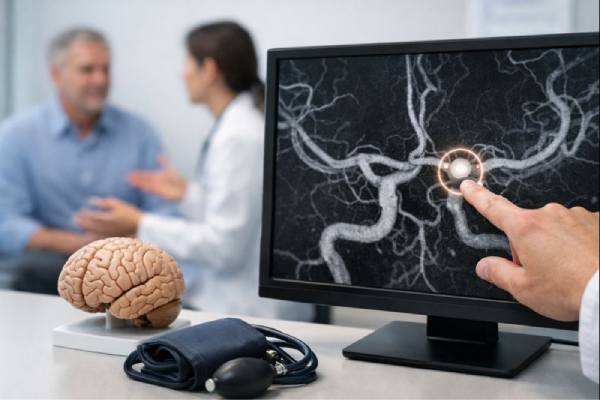
A berry aneurysm is the common name for a saccular intracranial aneurysm. “Saccular” means it looks like a small sac or berry attached to the side of an artery by a neck. Most form at branching points where blood flow creates repeated mechanical stress on the vessel wall. Over time, the wall can weaken, and the bulge can expand.
The circle of Willis is a ring-like network of arteries at the base of the brain that helps distribute blood flow. Berry aneurysms often develop on arteries connected to this circle, including the anterior communicating artery, posterior communicating artery, middle cerebral artery bifurcations, and the tip of the basilar artery. Location matters because it influences both rupture risk and the potential consequences of bleeding or nerve compression.
What actually “goes wrong” in the vessel wall is a mix of structure and biology:
- The artery’s inner lining (endothelium) may become dysfunctional under high shear stress.
- The muscular layer can thin and lose elastic support.
- Inflammation and remodeling can weaken the wall further, especially in people with smoking exposure, uncontrolled blood pressure, or genetic vulnerability.
A berry aneurysm can harm the brain in two main ways:
- Rupture and bleeding: When an aneurysm tears, blood spreads into the subarachnoid space. This irritates brain tissue and triggers a cascade of complications such as vasospasm (artery narrowing), hydrocephalus (blocked fluid circulation), seizures, and delayed brain injury.
- Mass effect without rupture: A growing aneurysm can press on nearby structures. For example, an aneurysm near the posterior communicating artery may compress the third cranial nerve, causing drooping eyelid and double vision.
A key concept that helps patients make sense of decisions is that aneurysm risk is dynamic, not static. A small, smooth, stable aneurysm in a low-risk person may be safer to monitor than to treat. A similarly sized aneurysm that is irregular, enlarging, or located in a higher-risk area may justify intervention. Modern care focuses on balancing rupture prevention against treatment risks, using detailed imaging and individualized risk assessment rather than a one-size-fits-all rule.
Why berry aneurysms form and who is at risk
Berry aneurysms do not usually arise from a single cause. They develop when long-term mechanical stress and biologic vulnerability converge. Think of it as a “weak spot” in an artery wall that is repeatedly challenged by blood pressure pulses and turbulent flow at a branch point.
Several factors increase the chance an aneurysm forms, grows, or ruptures:
Modifiable risk factors
- High blood pressure: Chronic hypertension increases wall stress and accelerates vessel remodeling.
- Cigarette smoking: Smoking promotes inflammation, damages endothelium, and is strongly associated with aneurysm formation and rupture risk.
- Heavy alcohol use and stimulant exposure: These can raise blood pressure spikes and may contribute to vascular injury in susceptible people.
- Poor sleep and untreated sleep apnea: Repeated nighttime oxygen drops and surges in blood pressure can add vascular strain.
Nonmodifiable and inherited risk factors
- Family history: Having two or more first-degree relatives with intracranial aneurysms or aneurysmal subarachnoid hemorrhage raises risk and often leads to discussions about screening.
- Certain genetic and connective-tissue conditions: Examples include autosomal dominant polycystic kidney disease, Ehlers-Danlos syndrome (vascular type), and other disorders that affect collagen or vessel integrity.
- Age and sex patterns: Aneurysms are more commonly detected in adults, and many cohorts show higher prevalence in women, particularly after midlife.
- Prior aneurysm rupture or multiple aneurysms: A history of one aneurysm can signal a broader vulnerability of intracranial arteries.
Aneurysm-specific features that change rupture probability
- Size: Larger aneurysms tend to carry higher rupture risk, but size alone is not enough. Some small aneurysms rupture; some large aneurysms remain stable.
- Location: Posterior circulation aneurysms (such as basilar tip) and certain communicating artery aneurysms are often treated with more caution.
- Shape and wall features: Irregular contours, “blebs,” and complex neck anatomy can reflect instability.
- Growth over time: Documented enlargement on follow-up imaging is one of the strongest practical warning signs.
Clinicians often use structured risk tools and a “whole picture” approach. The same aneurysm can carry different real-world risk depending on whether a person smokes, whether blood pressure is consistently controlled, and whether the aneurysm is stable over serial imaging. That is why the first appointments after incidental discovery usually focus on: confirming precise aneurysm measurements, reviewing personal risk factors, checking family history carefully, and creating a monitoring or treatment plan that is proportional to the risk.
Symptoms of unruptured and ruptured aneurysms
Most unruptured berry aneurysms cause no symptoms. When they do, it is usually because the aneurysm is large enough to irritate surrounding tissue or compress a nerve, or because it is “leaking” a small amount of blood before a larger rupture. Knowing the difference between subtle symptoms and true emergency signs is crucial.
Symptoms of an unruptured aneurysm
These may develop gradually or appear intermittently:
- Headache that feels different from usual patterns (not automatically dangerous, but worth evaluation when new and persistent)
- Double vision or blurry vision
- Drooping eyelid on one side
- A pupil that becomes enlarged or reacts poorly to light
- Pain around or behind one eye
- Facial numbness or weakness (less common)
- Seizure (uncommon, but possible with large aneurysms or associated bleeding)
A classic red flag for nerve compression is a sudden, painful third-nerve palsy: droopy eyelid, “down and out” eye position, and a dilated pupil, often with severe eye pain. This deserves urgent emergency evaluation.
Symptoms of a ruptured aneurysm
Rupture usually causes sudden bleeding and irritation of the meninges (the brain’s protective layers). Typical features include:
- Thunderclap headache: a sudden, explosive headache that peaks within seconds to a minute and is often described as the worst headache of one’s life
- Neck stiffness and pain, especially when bending the neck forward
- Nausea and repeated vomiting
- Sensitivity to light
- Confusion, severe drowsiness, or loss of consciousness
- Seizure
- Focal neurologic deficits, such as weakness, speech difficulty, or vision loss
Some people have a “sentinel headache” days to weeks before a major rupture, thought to reflect a small warning bleed. It is typically sudden and severe, different from usual headaches, and may be accompanied by nausea or neck pain. Because it is impossible to reliably distinguish a sentinel bleed from other causes at home, a sudden maximal headache should be treated as an emergency.
Complications after rupture
Even after the aneurysm is secured, brain injury can evolve:
- Rebleeding risk is highest early if the aneurysm is not treated promptly.
- Vasospasm can reduce blood flow to the brain and cause delayed stroke-like deficits.
- Hydrocephalus can raise intracranial pressure and worsen consciousness.
- Electrolyte disturbances and cardiac stress responses can complicate recovery.
The most important practical instruction is simple: if a person has a sudden, severe, rapidly peaking headache—especially with vomiting, neck stiffness, fainting, or neurologic symptoms—call emergency services immediately. Speed matters because early stabilization and early aneurysm repair are strongly tied to survival and neurologic outcome.
How berry aneurysms are diagnosed and monitored
Diagnosis depends on whether the concern is rupture (an emergency) or an incidentally discovered unruptured aneurysm (often outpatient or semi-urgent). In both situations, imaging is the cornerstone.
When rupture is suspected
Clinicians aim to confirm bleeding quickly and identify the aneurysm source:
- Non-contrast head CT: This is usually the first test in the emergency setting because it is fast and highly sensitive for subarachnoid blood early after symptom onset.
- CT angiography (CTA): A contrast-enhanced CT that maps arteries and can often identify the aneurysm and its anatomy.
- Lumbar puncture (spinal tap): If CT is negative but suspicion remains high, cerebrospinal fluid testing can detect blood breakdown products consistent with subarachnoid hemorrhage.
- Digital subtraction angiography (DSA): A catheter-based study considered the most detailed way to define aneurysm anatomy. It is often used when planning treatment or when noninvasive imaging is inconclusive.
When an unruptured aneurysm is found
The goal is to characterize it precisely and estimate future risk:
- MRI and MR angiography (MRA): Useful for screening and follow-up without radiation. Modern MRA can detect many aneurysms, though very small aneurysms and complex anatomy may still require CTA or DSA.
- CTA: Provides high-resolution detail of bone and vascular anatomy and is widely used for initial characterization.
- DSA: Often reserved for cases where treatment is being considered, where noninvasive imaging disagrees, or where precise neck and branch anatomy will change procedural planning.
What clinicians look for on imaging
A report that simply says “small aneurysm” is not enough to plan care. The details that matter include:
- Exact maximal diameter in millimeters and neck size
- Shape (smooth vs lobulated or blebbed)
- Location (anterior vs posterior circulation, communicating arteries, basilar tip)
- Relationship to branch vessels
- Evidence of prior tiny bleeds or surrounding brain changes
- Change compared with prior imaging, if available
Monitoring plan
Follow-up imaging intervals are individualized. A common approach is more frequent imaging early (to establish stability) and then spacing out scans if the aneurysm remains unchanged. Clinicians also adjust the plan based on:
- Aneurysm growth or new irregular features
- Changes in risk factors (resumed smoking, poorly controlled blood pressure)
- New symptoms suggestive of mass effect
- Family history or multiple aneurysms
A practical tip for patients is to keep a single, organized record of aneurysm measurements and imaging dates. Growth is sometimes subtle, and consistent comparison across time helps clinicians make safer decisions about whether continued observation remains reasonable or whether the risk profile has changed enough to justify intervention.
Treatment options and what to expect
Treatment choices differ sharply between ruptured and unruptured aneurysms. Rupture is an emergency that requires rapid stabilization and prompt securing of the aneurysm to prevent rebleeding. Unruptured aneurysms are managed with a risk-benefit discussion that weighs the natural history risk against procedural risk.
Emergency care for ruptured aneurysm
Immediate priorities include:
- Stabilizing breathing, blood pressure, and airway protection if consciousness is impaired
- Controlling pain and nausea while avoiding dangerous oversedation
- Preventing rebleeding with careful blood pressure management tailored to the clinical setting
- Treating or preventing secondary complications such as hydrocephalus and seizures when indicated
Securing the aneurysm usually happens early and is done by one of two main approaches:
- Endovascular coiling: A catheter is threaded through the arteries to the aneurysm, and small coils (and sometimes adjunctive devices) are placed to block blood flow into the sac. It is less invasive and often preferred in many ruptured aneurysms depending on anatomy and center expertise.
- Microsurgical clipping: A neurosurgeon places a tiny clip across the aneurysm neck via craniotomy. It can provide durable exclusion of the aneurysm and may be favored for certain locations, wide-necked aneurysms, or when associated hematoma requires surgical evacuation.
After the aneurysm is secured, intensive monitoring focuses on:
- Detecting vasospasm and delayed ischemia
- Managing hydrocephalus (sometimes requiring an external ventricular drain)
- Avoiding fever, low sodium, and low blood volume states that can worsen brain injury
- Rehabilitation planning early, since recovery often depends on coordinated physical, occupational, and cognitive therapy
Planned treatment for unruptured aneurysm
For unruptured aneurysms, options include:
- Observation with risk reduction: Appropriate when rupture risk is judged low or procedural risk is high. This includes imaging surveillance and aggressive control of modifiable risk factors.
- Endovascular treatment: Beyond coiling, modern techniques can include stent-assisted coiling, balloon remodeling, flow diversion devices, and in selected cases intrasaccular devices. These are chosen based on aneurysm shape, neck width, and branch vessels.
- Microsurgical clipping: Often considered for certain aneurysm locations or when anatomy suggests higher durability or better long-term occlusion.
What to expect depends on the chosen approach:
- Endovascular procedures may involve shorter initial recovery but can require follow-up angiography and, in some cases, antiplatelet therapy (especially when stents or flow diverters are used).
- Clipping involves a longer upfront recovery from surgery but often provides durable aneurysm exclusion with fewer long-term imaging surprises for certain aneurysm types.
No approach is “best” in the abstract. The best choice is the one that fits the aneurysm’s anatomy, the treating team’s expertise, and the patient’s overall risk profile and preferences. A helpful way to approach the decision is to ask: “What is my estimated rupture risk over the next 5–10 years, what is my estimated procedural risk, and how will we monitor success afterward?” A clear answer to those three questions usually makes the plan feel less frightening and more rational.
Long-term management, prevention, and when to seek help
Long-term management aims to keep the aneurysm stable, reduce rupture risk, and ensure that changes are detected early. Even when an aneurysm has been treated, follow-up still matters because recurrence, incomplete occlusion, or new aneurysm formation can occur in some patients.
Risk reduction that meaningfully lowers danger
- Stop smoking: If there is one lifestyle change with outsized impact, it is smoking cessation. It reduces vascular inflammation and lowers overall cerebrovascular risk.
- Control blood pressure consistently: Aim for steady control rather than occasional perfect readings. Home monitoring and medication adherence are often more important than a single clinic measurement.
- Limit heavy alcohol intake: Avoiding binge patterns helps prevent blood pressure spikes.
- Treat sleep apnea when present: If you snore loudly, have witnessed apneas, or feel unrefreshed, evaluation can be worthwhile because untreated apnea can worsen hypertension.
- Use stimulants cautiously: Discuss energy supplements or stimulant medications with a clinician if you have an aneurysm, especially if they raise blood pressure.
Monitoring and follow-up
A sensible plan usually includes:
- A defined imaging schedule (for example, an early follow-up scan to confirm stability, then periodic scans if unchanged)
- Clear triggers for earlier imaging, such as new neurologic symptoms or documented blood pressure instability
- Review of medications and vascular risk at regular intervals
- For treated aneurysms, follow-up imaging tailored to the method used (coiling and flow diversion often require closer imaging surveillance than clipping)
Daily-life questions patients often ask
- Exercise: Most people can do moderate aerobic activity. Extremely heavy lifting that causes straining and sharp blood pressure spikes should be discussed with a clinician, especially if the aneurysm is large or considered higher risk.
- Travel: Travel is usually acceptable when stable, but it is wise to carry a summary of the aneurysm type, size, location, and recent imaging dates.
- Headaches: Most headaches are not aneurysm-related. What matters is a sudden, maximal, rapidly peaking headache or a new neurologic deficit.
When to seek emergency care
Call emergency services immediately for:
- A sudden, severe headache that peaks within seconds to a minute
- Headache with fainting, confusion, seizure, stiff neck, or repeated vomiting
- New neurologic symptoms such as weakness, facial droop, trouble speaking, sudden vision loss, or severe imbalance
- Sudden painful double vision or drooping eyelid, especially with an enlarged pupil
When to contact your clinician promptly
- A new pattern of persistent headaches that is clearly different from your baseline
- New visual symptoms, facial numbness, or intermittent neurologic symptoms
- New difficulty controlling blood pressure despite adherence
- Any report suggesting aneurysm growth or new irregular shape on imaging
Living with a berry aneurysm can feel like carrying a hidden risk, but a structured plan turns fear into action: control the risks you can control, monitor the aneurysm intelligently, and treat promptly when anatomy or symptoms justify it.
References
- 2023 Guideline for the Management of Patients With Aneurysmal Subarachnoid Hemorrhage: A Guideline From the American Heart Association/American Stroke Association – PubMed 2023 (Guideline)
- The Management of Intracranial Aneurysms: Current Trends and Future Directions – PMC 2024 (Review)
- Unruptured intracranial aneurysms: Why should we focus on small aneurysms? A comprehensive update of recent findings – PMC 2024 (Review)
- Risk factors and predictive indicators of rupture in cerebral aneurysms – PMC 2024 (Review)
Disclaimer
This article is for educational purposes only and does not provide medical advice, diagnosis, or treatment. A ruptured brain aneurysm is a medical emergency. If you or someone else has a sudden, severe headache, loss of consciousness, seizure, new neurologic symptoms, or sudden painful vision changes, seek emergency care immediately. Decisions about monitoring versus treatment for an unruptured aneurysm depend on aneurysm anatomy, personal risk factors, and procedure-specific risks, and should be made with a qualified neurology and neurosurgery team.
If you found this article helpful, please share it on Facebook, X (formerly Twitter), or any platform you prefer, and follow us on social media. Your support through sharing helps our team continue producing high-quality, evidence-informed health content.